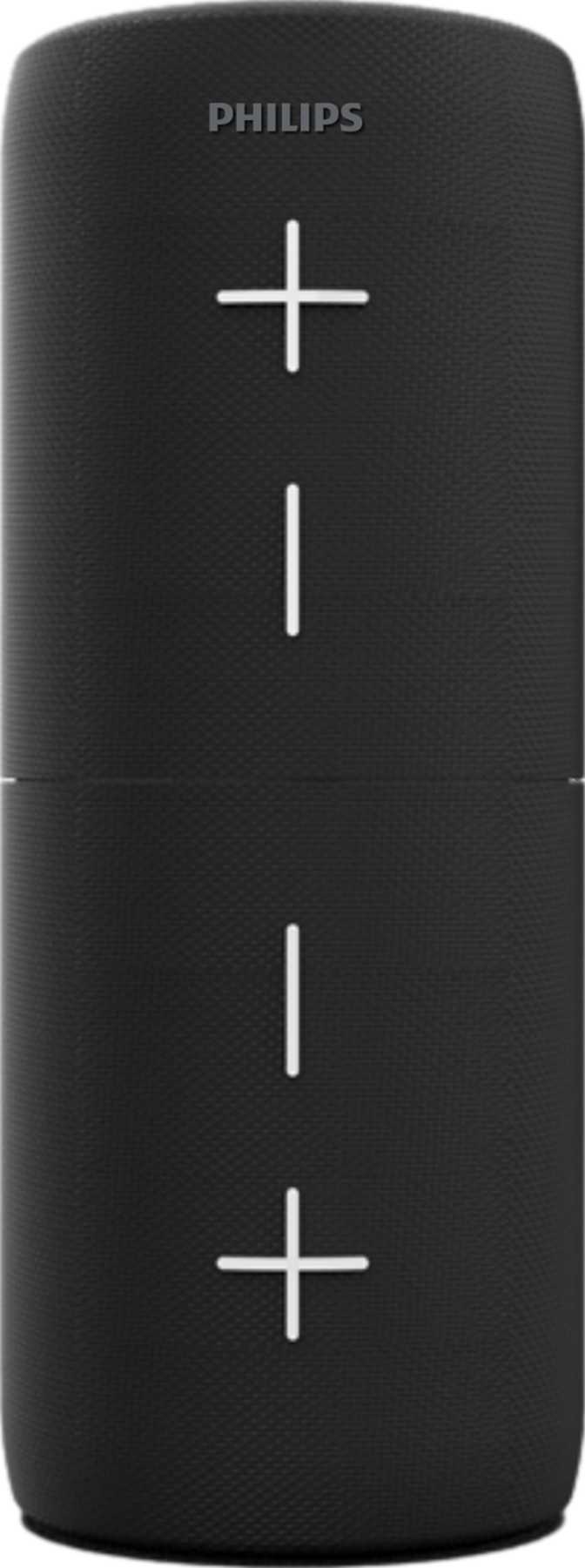
Philips TAS4400 Review: Compact Build, Serious Output Power
Portable SpeakersWhat Kind of Speaker Is the Philips TAS4400, Really?
The Philips TAS4400 occupies a specific and sometimes underappreciated corner of the portable speaker market — the straightforward, no-frills workhorse. It does not chase trendy features like multi-room audio, voice assistant integration, or light shows. Instead, it commits its engineering budget to raw output power, physical durability, and flexible playback options that most competing speakers in this size class quietly skip.
If that sounds like a trade-off you can live with, this speaker deserves a serious look. If you need the extras, that is equally important to know upfront.
Design and Build Quality
Size, Weight, and First Impressions
At 200mm tall and 80mm wide on both axes, the TAS4400 has a compact, roughly cylindrical footprint that sits comfortably on a table, shelf, or outdoor surface without demanding excessive real estate. What you will notice immediately when picking it up is the weight — 750 grams puts it on the heavier side for a portable speaker. This is not something you would clip to a backpack strap, but it is absolutely pocket-friendly in the sense of dropping it into a bag or beach tote without drama.
The weight is not wasted mass. It reflects a build that feels dense and purposeful, and it keeps the speaker from sliding or vibrating across a surface at higher volumes — a small but real quality-of-life advantage over ultra-light competitors.
Water Resistance
Tested to withstand sustained, directed water jets from any angle. Rain, poolside splashes, spilled drinks, shower steam, and a quick rinse under a tap all fall well within its tolerance. What it cannot handle is submersion — this is not a pool-bottom speaker. For beach days, garden parties, or bathroom use, IPX5 is more than adequate.
Controls and Cable
Physical buttons sit directly on the speaker body, giving you tactile, glanceable control over playback, volume, and power. There is no touch surface, which some users prefer precisely because touch controls misbehave in wet conditions — buttons simply work. A detachable cable is included, which matters more than it sounds: if the cable wears out or you need a different length, you replace the cable, not the speaker. It is a practical design choice that extends the usable lifespan of the product.
Sound Performance: What 40 Watts Actually Sounds Like
Output Power in Context
The TAS4400 runs a dual-driver configuration delivering a combined 40 watts. For reference, many popular portable speakers in this size tier operate between 10 and 20 watts total. Forty watts from a speaker this compact translates to the ability to fill a medium-sized room convincingly, project clearly across an outdoor patio, or hold its own against background noise at a garden gathering — without the speaker showing any strain at moderate-to-high volume levels.
This is not "loud for its size" in the way marketing language typically uses that phrase. It is genuinely loud, full stop, measured against real listening environments.
Punchy and present, but sub-bass rumble is limited by the cabinet size and single-driver mono design.
Voices, acoustic instruments, and upper harmonics come through with good definition — a compact dual-driver strength.
At 40W total output, the TAS4400 significantly outpowers most similarly sized speakers in this tier.
SBC only — no advanced codecs. Fine for casual streaming, limited ceiling for audiophile-grade sources.
Frequency Response and Tonal Character
The TAS4400 covers the full audible spectrum from the lowest perceptible bass to the highest treble — the complete range a human ear can detect. The absence of a dedicated subwoofer and passive radiator tells you that deep sub-bass rumble is not this speaker's priority. The low-end will be present and punchy but not the resonant, room-shaking quality you would get from a much larger cabinet. Midrange clarity and upper-frequency detail are where compact dual-driver designs like this typically shine.
Mono Output
The TAS4400 does not produce stereo sound — both drivers work together as a single mono source. For most outdoor and social listening contexts, this is invisible as a limitation. For critical listening at a desk or film watching where left-right audio separation matters, a stereo speaker would serve you better. The TAS4400 also does not support pairing two units together to create a stereo pair.
Connectivity: How You Connect and Play
Bluetooth 5 and Range
The speaker uses Bluetooth 5, which delivers a stable, low-interference connection compared to older versions. The practical wireless range is around 10 meters in open conditions — enough to leave your phone charging across the room or on the other side of a patio, but do not expect the signal to reliably penetrate multiple walls. In a typical home or outdoor setting, this range is perfectly functional.
On codec support: The TAS4400 operates on standard Bluetooth audio (SBC), without aptX, AAC, LDAC, or any high-resolution wireless transmission. For a speaker in this power class, the practical impact on perceived audio quality depends on your source. Streaming at high quality from a phone through standard Bluetooth is perfectly respectable for the genres and environments this speaker targets. Audiophiles comparing lossless file playback will notice the ceiling.
AUX Input
A wired AUX connection is available — useful when you want zero latency, need to connect a device that lacks Bluetooth, or simply prefer a wired link for reliability at a fixed installation. This also means older devices like MP3 players, turntable preamps, or laptop headphone outputs can connect directly.
External Memory Playback
A memory card or USB drive slot lets you play music stored locally without any phone, app, or Bluetooth connection involved. Load a playlist onto a USB stick or memory card, insert it into the speaker, and play. This is invaluable at events where you want a reliable, no-fuss music source that cannot be accidentally interrupted by notifications, calls, or Bluetooth drop-outs. It also makes the speaker fully functional in areas with no phone signal.
Charging
The TAS4400 charges via USB-C, the current universal standard. You can use the same charger as your phone or laptop, which reduces cable clutter. There is no wireless charging option.
Battery Life and Day-to-Day Endurance
Eight hours of continuous playback covers a full beach day, an afternoon outdoor event, or several evenings of casual indoor listening on a single charge. Replenishing the battery from flat takes approximately three hours, which means an overnight charge always starts your day at full capacity.
The built-in battery level indicator lets you check remaining charge before committing the speaker to an occasion — eliminating the frustrating ambiguity of wondering whether there is enough power for the afternoon. For a speaker drawing 40 watts of audio output, eight hours is a reasonable figure. If you need longer than a full day without charging, plan around that limitation or bring a USB-C power bank.
Features Worth Calling Out
- Smartphone App Control
- Supports control via a companion smartphone application, typically allowing EQ adjustments or playback management beyond what the physical buttons provide. App use is not mandatory — physical controls handle everyday operation.
- Voice Prompts
- The speaker uses spoken audio cues rather than ambiguous tones to confirm pairing, power status, and connectivity — a small usability detail that removes guesswork, especially in noisy outdoor environments.
- Sleep Timer
- A built-in sleep timer allows the speaker to automatically power off after a set period. For bedtime listening or falling asleep to music, this preserves battery without requiring manual intervention.
- On-Device Control Panel
- All essential controls are accessible directly on the speaker. No remote, no mandatory companion app — physical buttons handle power, volume, and playback reliably in any conditions.
Who the Philips TAS4400 Is For — and Who It Is Not
- People who want genuine volume at social gatherings without carrying something the size of a suitcase
- Outdoor enthusiasts who need reliable IPX5 protection for beach, poolside, or garden use
- Anyone who wants to play from a USB drive or memory card independently of a phone
- Users who prioritize physical buttons over touch controls in wet or cold conditions
- Anyone charging via USB-C who wants one less proprietary cable in their life
- Listeners who prioritize stereo imaging for music or film at home — this is mono with no stereo pairing
- Audiophiles who need high-resolution wireless audio transmission (aptX HD, LDAC, or similar)
- Travelers counting every gram — 750g is practical for bag travel but not ultralight
- Anyone needing extended battery beyond eight hours for multi-day off-grid use without USB-C access
How It Compares to Similar Speakers
The TAS4400 measured against common alternatives in the portable speaker category.
| Feature | Philips TAS4400 | Typical 20W Competitor | Typical Premium Portable |
|---|---|---|---|
| Total Output Power | 40W | 20W | 30–40W |
| Water Resistance | IPX5 | IPX5–IPX7 | IPX7 |
| Bluetooth Version | 5.0 | 5.0–5.3 | 5.3 |
| Audio Codecs | SBC only | SBC / AAC | aptX / LDAC |
| Memory Card Playback | |||
| Stereo Pairing | |||
| Battery Life | 8 hours | 10–12 hours | 12–24 hours |
| AUX Input | Sometimes | Sometimes | |
| USB-C Charging | Varies |
The TAS4400's strongest differentiator is raw wattage relative to its price tier. Most speakers in this size class deliver half the output power. Where it concedes ground is codec support and battery longevity, and the absence of stereo pairing is a notable gap against direct competitors that do offer it.
Honest Assessment: Strengths and Weaknesses
The TAS4400's output power is its headline advantage and it is a real one. In situations where music needs to carry across open air or fill a mid-sized room, 40 watts from a speaker this compact is a meaningful edge. Pair that with IPX5 protection and the freedom of memory card playback, and you have a speaker that handles outdoor social use exceptionally well.
The weaknesses are real and worth stating plainly. The lack of advanced audio codecs means wireless audio quality is capped at the standard Bluetooth ceiling — which is fine for casual listening but limits hi-fi potential. The mono output is a genuine limitation for home listening scenarios where stereo separation enhances the experience. Eight hours of battery will cover most single-day use cases, but competing products at comparable prices often stretch to twelve or fifteen hours. And at 750 grams, it is not the lightest option if portability by weight is your primary concern.
The absence of a travel bag in the box is a minor practical inconvenience worth noting if you plan to carry this in a bag regularly — the speaker's cylindrical build means a protective sleeve or case is worth acquiring separately.
Answers to Common Questions Before Buying
The questions real buyers search for — answered directly.
The Philips TAS4400 is a well-targeted speaker for a specific type of buyer: someone who wants serious volume in a compact, weatherproof package and values playback flexibility over audio codec sophistication. The 40-watt output is the standout specification that separates it from most competitors at this size, and the combination of IPX5 protection, memory card playback, AUX input, and USB-C charging makes it genuinely versatile for outdoor and social use.
It is not a speaker for the home audiophile, the stereo-dependent listener, or anyone prioritizing maximum battery runtime. Those buyers should look elsewhere. For outdoor gatherings, poolside use, travel to locations with unreliable connectivity, or anyone who simply wants a speaker that is louder than expected without being larger than necessary — the TAS4400 earns a confident recommendation.
- Outdoor & social gatherings
- Beach & poolside environments
- Phone-free music playback
- Stereo sound or stereo pairing
- Hi-res wireless audio codecs
- 12+ hour battery endurance