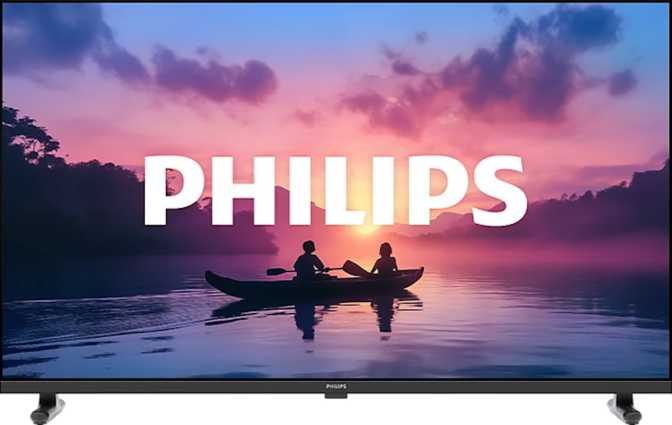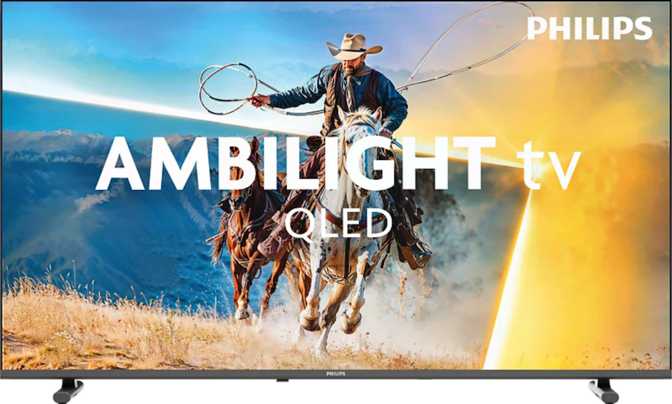
Philips 40PQS6901/12 40-Inch QLED TV – An Honest Full Review
TVsForty inches sits at an interesting crossroads in the TV market. Too large to be dismissed as a secondary screen, yet compact enough to fit spaces where a 55-inch panel would simply dominate — the Philips 40PQS6901/12 targets exactly that gap. A genuine smart TV experience backed by QLED picture technology, without the footprint or price of a larger flagship. Whether that balance holds up under scrutiny is what this review unpacks.
At a Glance
Six defining characteristics of the Philips 40PQS6901/12 before the full analysis.
Design and Build Quality
Physical dimensions, weight, and what living with this TV actually feels like.
The 40PQS6901/12 measures just over 71 centimetres wide and sits under 42 centimetres tall — dimensions that translate well to a bedroom dresser, kitchen counter, or compact living room setup. At under five kilograms with the stand, it is light enough for one person to position without assistance, which matters more than it sounds when rearranging furniture or wall-mounting solo.
The depth of just over six centimetres is typical for a value-tier LED-backlit panel and poses no problem unless you are fitting it into a tight shelving recess. VESA mount compatibility is included, meaning standard third-party wall brackets fit without adapter plates — the kind of detail that separates a TV you can live with long-term from one that locks you into proprietary accessories.
The remote control is conventional and battery-powered. There is no rechargeable remote option here, so keeping spare batteries on hand is a practical reality of day-to-day use.
| Width | 718 mm (71.8 cm) |
| Height | 419 mm (42 cm) |
| Depth | 61 mm (6.1 cm) |
| Weight | 4.7 kg |
| VESA Mount | Supported |
| Operating Range | 5°C – 35°C |
Picture Quality
QLED technology, resolution, HDR, and the complete viewing experience — analysed.
QLED Technology: What It Actually Means
QLED — Quantum Light Emitting Diode — means the LED backlight passes through a layer of quantum dot particles before it reaches the screen. These particles expand the colour range the panel can produce, delivering visibly more saturated and lifelike images, particularly in reds and greens, compared to a standard LED LCD. The result is richer, more natural colour without the cost premium of an OLED panel.
The display renders over 16 million distinct colours through an 8-bit colour pipeline. For everyday content — streaming services, broadcast television, and standard gaming — this is entirely sufficient. Most viewers will not feel any limitation.
Full HD at 40 Inches: Is the Resolution Sharp Enough?
Full HD (1920 × 1080 pixels) across 40 inches produces roughly 55 pixels per inch. At a typical viewing distance of six to ten feet, the image is clean and comfortable — text is legible, motion reads clearly, and there is no visible pixelation. Viewers sitting unusually close (within about four feet) may notice the pixel structure on detailed scenes, but this is not a real-world concern at standard distances.
4K content from a streaming service or external player will be downscaled to 1080p before display. The TV handles this conversion automatically, but buyers prioritising 4K output should consider a different panel.
HDR Support: What Is and Is Not Covered
HDR10 covers most streaming services and current consoles natively. HLG handles broadcast HDR events such as live sport. Dolby Vision content from Apple TV+ or select Netflix titles will fall back to HDR10 — still a meaningful upgrade over standard dynamic range, but not the highest quality those titles can deliver on a Dolby Vision-capable display.
Refresh Rate and Motion
The panel refreshes at 60 frames per second — the standard for broadcast television, streaming services, and casual console gaming. Film, sport, and standard TV content all behave exactly as intended. There is no adaptive synchronisation technology, making this TV a poor fit for competitive PC gaming but entirely irrelevant for any other common use case.
Viewing Angles and Anti-Glare
At 178 degrees in both horizontal and vertical planes, picture quality stays consistent whether you are sitting directly in front of the screen or at a significant angle from either side. For shared seating arrangements or rooms where the TV cannot be perfectly centred, this is a practical advantage over cheaper panels that wash out noticeably off-axis.
An anti-reflection coating reduces the impact of windows and overhead lighting. An ambient light sensor adjusts screen brightness automatically as room conditions change — protecting eyesight in darker environments and maintaining clarity in bright rooms without manual intervention.
Connectivity
Ports, wireless protocols, and broadcast tuners — every way this TV connects to your world.
Three HDMI 2.1 ports provide generous connectivity for consoles, set-top boxes, and media players. One port supports ARC (Audio Return Channel), allowing a compatible soundbar or receiver to carry TV audio over the same HDMI cable used for video — eliminating a separate optical cable.
Two USB ports handle direct media playback and live broadcast recording. Connect a USB hard drive and the TV acts as a basic DVR — recording scheduled programmes without a separate set-top box. There is no external memory card slot; all external storage routes through USB.
A wired Ethernet port and Wi-Fi 4 (802.11n) are both available. Wi-Fi 4 is adequate for HD streaming and general smart TV use, but in congested apartment environments a wired Ethernet connection will deliver more consistent performance and fewer interruptions.
Bluetooth enables wireless pairing for headphones, soundbars, and speakers. Miracast allows compatible Android phones and Windows PCs to mirror their screen wirelessly without a streaming dongle. iOS devices cannot use Miracast natively — iPhone users require a cable.
The built-in tuner covers DVB-T and DVB-T2 (terrestrial), DVB-C (cable), and DVB-S and DVB-S2 (satellite). Most European broadcast formats are fully supported — no external set-top box is required for any of these signal sources.
A standard 3.5mm headphone jack provides private listening independent of Bluetooth. A digital optical output connects directly to a dedicated amplifier or AV receiver without routing through HDMI — useful for older audio setups or dedicated hi-fi systems.
Smart TV Platform and Voice Control
Built-in intelligence, voice assistant compatibility, and smart home integration.
What Is Supported
- Built-in Smart TV Platform
Full streaming app access, an internet browser, and on-screen guides without any external device. - Google Assistant
Integrates natively with Google Home smart home ecosystems for hands-free control. - Amazon Alexa
Full Alexa integration for Amazon Echo households and smart home automation. - Smartphone Remote Control
Use a companion app on your phone to control the TV — particularly useful for typing search queries. - USB Recording, Sleep Timer, and Child Lock
Schedule recordings, set auto-off timers, and restrict content — all managed from the smart interface.
What Is Not Supported
- AirPlay
Apple AirPlay is not supported. Wireless screen mirroring from iPhone or iPad is not available. - Apple HomeKit and Siri
This TV does not integrate into Apple's HomeKit ecosystem and does not respond to Siri voice commands. - Native iOS Screen Mirroring
Miracast is supported, but iOS does not support it natively. iPhone and iPad users need a physical HDMI adapter cable.
Audio Performance
What the built-in speakers deliver — and where an external upgrade makes sense.
The 40PQS6901/12 includes a stereo speaker system with Dolby Audio processing applied. Dolby Audio enhances spatial presence and dynamic range on the built-in drivers, producing a more open and balanced sound than untreated stereo at equivalent hardware. Dialogue is clear, general TV audio is comfortable, and news or everyday content sounds entirely acceptable.
There is no built-in subwoofer and no Dolby Atmos support. For action films, music-heavy content, or anyone who prioritises audio quality, the built-in speakers will leave something to be desired. An external solution — a soundbar connected via HDMI ARC, an AV receiver through the digital optical output, or a Bluetooth speaker — will deliver a meaningfully better experience.
Both the ARC port and the digital optical output make connecting external audio straightforward. Given the TV's audience and price point, these connections make a sound upgrade practical rather than complicated.
- Stereo Speakers
- Dolby Audio Processing
- HDMI ARC
- Digital Optical Out
- Dolby Atmos
- Built-in Subwoofer
- HDMI eARC
Power Consumption and Efficiency
Running costs and environmental performance at a glance.
In standby mode the 40PQS6901/12 draws just 0.5 watts — low enough that leaving it plugged in between uses has no meaningful impact on your electricity bill. This is a point of genuine care in the design and reflects well against category norms for this screen size.
The TV carries an EU energy label of D, placing it in the middle tier of efficiency for a 40-inch panel. It is not the most efficient option in its category, but the gap to higher-rated alternatives is typically small in absolute consumption terms. The operating temperature range of 5°C to 35°C covers every standard indoor home environment without exception.
Who Should Buy This TV — and Who Should Not
Matching the right buyer to the right product saves both money and disappointment.
- Bedroom or kitchen TV — The 40-inch size and sub-five-kilogram weight make positioning easy in rooms where a larger screen would feel overwhelming.
- Free-to-air and satellite viewers — The comprehensive DVB tuner covers terrestrial, cable, and satellite formats with no external box required.
- Budget DVR users — USB recording eliminates the need for a separate recording device for scheduled live TV.
- Google or Amazon smart home households — Native support for both assistants enables smooth voice and ecosystem control without compromise.
- Colour-quality seekers on a compact budget — QLED colour enhancement at this screen size and price point is a genuine differentiator over standard LED alternatives.
- Apple ecosystem users — No AirPlay, no HomeKit, and no Siri. iPhone and iPad screen mirroring requires a physical cable and adapter.
- 4K content enthusiasts — The display is Full HD. 4K source content will be downscaled before display, and native 4K resolution is absent entirely.
- Competitive or enthusiast gamers — No variable refresh rate, no adaptive sync, and a 60Hz ceiling make high-frame-rate PC gaming unsuitable.
- Large living rooms — At 40 inches and 1080p, viewers seated more than ten to twelve feet away may find the image smaller and less immersive than desired.
- Audiophiles — The built-in stereo system handles daily use without embarrassment, but anyone serious about sound will need to budget for external speakers or a soundbar.
How It Compares to the Alternatives
The Philips 40PQS6901/12 measured against the two most logical alternatives at similar price points.
| Feature | Philips 40PQS6901/12 | Typical 40″ Standard LED | Typical 43″ 4K Smart TV |
|---|---|---|---|
| Screen Size | 40″ | 40″ | 43″ |
| Panel Technology | QLED | Standard LED | LED (VA or IPS) |
| Resolution | Full HD 1080p | Full HD 1080p | 4K Ultra HD |
| HDR Formats | HDR10 + HLG | HDR10 only (typically) | HDR10, HLG, often Dolby Vision |
| HDMI Ports | 3× HDMI 2.1 | 2–3× HDMI 1.4 | 3–4× HDMI 2.0/2.1 |
| USB Recording | Yes | Rare at this price | Varies |
| Smart Platform | Google + Alexa | Varies | Android TV / Tizen / webOS |
| Viewing Angles | 178° both axes | Typically 160–170° | Varies by panel type |
Competitor figures represent typical offerings at comparable price points. Always verify specifications for any specific model before purchasing.
Honest Assessment: Strengths and Limitations
What this TV genuinely does well, and where it falls short — written plainly.
The single strongest argument for this TV is the combination of QLED colour quality and comprehensive broadcast tuner support at a compact size. These two features together are not universally available in the 40-inch category — many budget TVs offer one or the other, rarely both.
Three HDMI 2.1 ports and built-in USB recording create a connectivity story that is genuinely generous for the price. The near-perfect 178-degree viewing angles outperform cheaper panels at comparable sizes. The anti-reflection coating and ambient light sensor both add daily-use comfort that only becomes obvious when you use a TV without them.
Supporting both Google Assistant and Alexa simultaneously is a practical benefit — this TV slots into either smart home ecosystem without compromise or adapter hardware.
The limitations are real but specific. The wireless module is a generation behind current standard — in environments with heavy network congestion, the absence of dual-band or newer Wi-Fi capability can translate to buffering. Using the Ethernet port wherever a wired connection is possible eliminates this risk entirely.
Apple users face a meaningful gap. No AirPlay, no HomeKit, and no Siri means this TV has made a deliberate platform choice in favour of Google and Amazon. Buyers invested in the Apple ecosystem need to factor this in before purchasing.
The one-year warranty sits on the shorter end compared to competitors offering two or three years as standard. Extended warranty options from retailers are worth considering at the point of purchase.
Frequently Asked Questions
Real questions that buyers search for before purchasing — answered directly.
Final Verdict
The bottom line — who this TV is right for and whether it earns a recommendation.
The Philips 40PQS6901/12 makes a coherent, well-reasoned case for itself in the 40-inch segment. QLED colour quality, wide 178-degree viewing angles, a thorough broadcast tuner, three HDMI 2.1 ports, and built-in USB recording create a package that punches above its category in several areas that genuinely matter to everyday users.
The limitations are real but specific: no 4K, no AirPlay, an ageing Wi-Fi standard, and modest built-in audio. None of these are dealbreakers for the buyer this TV is designed for — someone furnishing a secondary room, replacing an older bedroom set, or wanting a reliable and feature-complete compact TV without paying flagship prices.
- You want QLED colour quality at a compact size
- You rely on free-to-air, cable, or satellite broadcasts
- You want built-in DVR functionality without extra hardware
- Your smart home runs on Google or Amazon
- 4K resolution is a priority for you
- Your household is primarily Apple
- You need a primary TV for a large room
- High-frame-rate gaming is a requirement
For its intended audience, this is a confident recommendation. The 40PQS6901/12 delivers exactly what it promises — a compact, colour-rich smart TV with complete broadcast capability and solid all-round connectivity — without asking for flagship money in return.