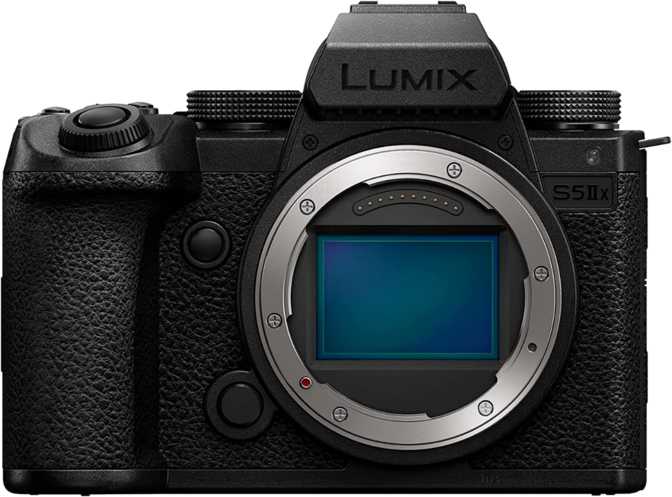
Panasonic Lumix DC-S5IIX Review: Full-Frame Hybrid Done Right
CamerasThe Panasonic Lumix DC-S5IIX sits at the precise intersection of professional still photography and broadcast-grade video — a full-frame mirrorless body that refuses to compromise either discipline. With an 800 Mbps internal recording ceiling, phase-detection autofocus, and 5.5 stops of sensor-shift stabilization, it is one of the most complete hybrid tools in its class.
Overall Rating
Most cameras market themselves as hybrid photo-video tools and then quietly compromise on one side. The Panasonic Lumix DC-S5IIX refuses that trade-off — it is built with the specific intent of serving photographers who shoot serious video and videographers who need equally serious still capability. This is not a camera for someone who occasionally records a birthday party in between portraits. It is a full-frame mirrorless system designed for working professionals and dedicated enthusiasts who cannot afford to pull out two separate bodies on a job.
What separates the S5IIX from its sibling, the S5II, is a deliberate shift in emphasis toward broadcast-grade video tools without stripping the photographic capability that makes the platform credible. Understanding that distinction is the key to knowing whether this camera deserves space in your bag.
Build Quality and Physical Design
Body construction, weather sealing, screen, and viewfinder
A Body Built for Unpredictable Conditions
Pick up the S5IIX and the first thing you notice is that it feels like a professional instrument — dense, purposeful, and composed. At 740 grams body-only, it sits in a middle territory that full-frame shooters will recognize: heavy enough to feel substantial and stable with large lenses, light enough that a full day of handheld work does not destroy your arms. It is noticeably more compact than traditional full-frame DSLRs while offering a grip depth that actually accommodates adult-sized hands.
The body measures roughly 134 mm wide, 102 mm tall, and 90 mm deep — producing a camera that fits naturally into a medium-sized bag without requiring a dedicated roller. That depth is worth noting: the body is thicker than some mirrorless competitors, which is partly a function of the weather sealing and the heat management the video performance demands.
740g
Body Weight
134×102×90
Dimensions (mm)
Sealed
Splash/Dust Proof
Weather sealing is present and genuinely robust. This is splash-proof construction, meaning you can shoot confidently in light rain, dusty environments, or high-humidity conditions without babying the camera. It is not rated for submersion, but for outdoor documentary, event, and travel shooting, the environmental protection is real and appreciated.
There is no built-in flash — which, at this level of camera, is entirely appropriate. The included hot shoe accommodates external flash units, and the overall design prioritizes clean integration of professional accessories over beginner-friendly on-body gimmicks.
The Screen and Viewfinder Experience
The fully articulating rear screen is one of the S5IIX's most practical physical attributes. Unlike a tilting screen that only moves on one axis, the flip-out panel swings fully to the side, enabling shooting at any angle — waist-level, overhead, self-facing for vlogging or monitoring, or flush to the body when not needed. For video work especially, this freedom of positioning eliminates the need for a dedicated monitor in many run-and-gun scenarios.
Rear LCD Screen
- 3-inch fully articulating flip-out panel
- 1,840,000-dot resolution for sharp detail review
- Full touchscreen — tap-to-focus, swipe, menu navigation
- Angle-free composition for video and stills
Electronic Viewfinder
- 100% frame coverage — no framing surprises
- Electronic display with real-time exposure preview
- Accurate representation of final captured image
- Ideal for precise composition in tight spaces
Sensor and Image Quality
Full-frame BSI CMOS — what the technology means for your images
Full-Frame Without Compromise
The S5IIX uses a 24.2-megapixel full-frame BSI CMOS sensor. Each part of that description carries real weight for image quality. Full-frame refers to a sensor the same size as a traditional 35mm film frame — a larger surface area meaning each individual photosite can be physically larger than on smaller-format sensors, which translates directly into better low-light performance, shallower depth of field for subject isolation, and a richer, more three-dimensional rendering of light that has made full-frame the preferred format for portrait, wedding, and commercial photographers.
The BSI (Back-Side Illuminated) construction moves the sensor's wiring to the back of the silicon layer, allowing more surface area to be dedicated to collecting light rather than routing electrical signals. The practical result is cleaner images at higher sensitivity levels — less noise, better color accuracy in challenging light — compared to a conventionally constructed sensor at the same resolution.
Why 24.2 Megapixels is a Deliberate Choice
Pushing beyond this resolution on a non-stacked sensor at the frame rates this camera maintains would create significant heat and bandwidth challenges, particularly for video. At 24 megapixels, you get enough resolution for large print output, significant cropping flexibility, and clean downsampling for high-quality video — without generating file sizes that overwhelm storage budgets on extended shoots.
Dynamic Range and Sensitivity
The native sensitivity range extends to ISO 51,200, with an expanded ceiling reaching approximately six stops higher for extreme situations. In practice, this means shooting in candlelit venues, nighttime documentary work, or any environment where you simply cannot add light is genuinely viable — not just technically possible but practically useful.
ISO 51,200
Native Maximum Sensitivity
ISO 204,800
Expanded Maximum Sensitivity
Autofocus: Phase Detection Finally Arrives
779-point hybrid AF system — stills and video
For Panasonic's full-frame line, the inclusion of phase-detection autofocus marks a significant evolution. Earlier Lumix full-frame bodies relied entirely on contrast-detection AF, which — while accurate — was slower to acquire and less reliable when tracking moving subjects. The S5IIX uses a hybrid system with 779 phase-detection points covering the frame.
Phase detection works by splitting incoming light and measuring the directional difference between two image samples, allowing the camera to calculate both the direction and approximate magnitude of the focus correction needed — rather than simply hunting back and forth until contrast peaks. The result is noticeably snappier acquisition and dramatically improved tracking of subjects in motion.
779
Phase-Detection Points
Subject Tracking
Active for Stills and Video
Touch AF
Tap Screen to Redirect Focus
AF tracking is active for both stills and video, and touch-to-focus via the rear screen gives you an intuitive way to redirect focus to any area of the frame without taking your eye away from the composition. For video specifically, continuous AF during recording is supported, and the phase-detection underpinning means focus transitions happen smoothly rather than with the abrupt, searching behavior that plagued Panasonic cameras in previous generations.
In-Body Stabilization: What 5.5 Stops Actually Means
Five-axis sensor-shift system with combined stabilization support
The sensor-shift stabilization system is rated at 5.5 stops of compensation, and this number deserves real-world context. Camera shake introduces blur when the shutter is open. Each stop of stabilization compensation roughly doubles the shutter speed margin you can safely use — meaning 5.5 stops of effective stabilization allows you to handhold at shutter speeds approximately 45 times slower than would normally produce sharp results.
Real-World Stabilization Benefit
Illustrative comparison — actual results vary by focal length and technique.
The system operates on five axes — pitch, yaw, roll, and lateral X/Y movement — meaning it handles the full range of natural hand motion. The S5IIX also supports combined stabilization, merging the in-body system with lens-based optical stabilization for an even higher combined rating when using compatible lenses. For video, this combination reduces the need for a gimbal in walking or slow-movement shots, making solo production setups genuinely viable.
Video Performance: Where the "X" Earns Its Name
Resolution, bitrate, audio, and professional video features
Resolution, Frame Rate, and Bitrate
The S5IIX records video at a maximum resolution of approximately 3,968 pixels wide — an open-gate readout that captures more of the sensor's imaging area than standard 4K crops. Recording from the full width of a full-frame sensor provides footage with a field of view that matches your lens's true focal length and maximizes image quality by using as much of the sensor as possible.
3968px
Max Recording Width
800 Mbps
Max Internal Bitrate
24p
Cinema Frame Rate Mode
Why 800 Mbps Matters to Editors and Colorists
Most cameras in this class record at a fraction of this throughput. Higher bitrate means more data preserved per frame — which translates into better color gradability in post-production, cleaner chroma information for compositing, and more detail in fine textures. For editors working in professional pipelines, this is the difference between footage that holds up under a heavy color grade and footage that starts breaking apart at the first correction node.
Professional Audio Capabilities
The S5IIX takes audio as seriously as it takes image quality. A 3.5mm microphone input accepts professional external microphones — lavalier systems, shotgun mics, recorder feeds — without adapters. A matching 3.5mm headphone jack allows real-time audio monitoring during recording, which is essential for catching gain issues or equipment problems before they ruin a take.
Audio Inputs and Monitoring
- 3.5mm microphone input — external pro mics
- 3.5mm headphone jack — real-time monitoring
- Built-in dual-capsule stereo microphone
Extended Video Features
- Native live streaming support — no capture card needed
- Slow-motion recording for temporal effects
- Built-in timelapse mode — no intervalometer required
Continuous Shooting and Electronic Shutter
Burst rate, shutter speed range, and silent shooting
The mechanical shutter delivers 9 frames per second at continuous burst — a respectable cadence for wildlife, sports, and any subject that moves unpredictably. This is not the 20-plus frames per second that stacked-sensor cameras in the sports-focused tier achieve, but for the vast majority of moving-subject scenarios, 9 fps provides enough frames to guarantee sharp captures within each burst sequence.
9 fps
Continuous Burst (Mechanical)
1/8000s
Fastest Shutter Speed
The electronic shutter matches the mechanical shutter's fastest speed — 1/8000 second — and provides a silent alternative for situations where shutter noise would be intrusive: theater performances, ceremonies, wildlife at close range, or any environment where discretion matters. A 60-second maximum exposure enables long-exposure landscape and astrophotography without external timers.
Lens System: The Leica L Alliance
L-mount ecosystem — Panasonic, Leica, and Sigma
The S5IIX uses the Leica L mount, shared across Panasonic's full-frame Lumix S series, Leica's SL-series cameras, and Sigma's fp bodies. This alliance means the native lens ecosystem is considerably larger than what a single brand could build independently — covering different pricing tiers and optical philosophies.
Panasonic
S-series lenses for video-oriented shooters and hybrid professionals
Sigma
Art-series primes and zooms at competitive prices within the ecosystem
Leica
Reference-grade SL optics for the highest optical standard
The L mount's wide throat diameter and short flange distance accommodate large-diameter optics for full-frame coverage and create a foundation for adapting lenses from virtually any other mount system. Canon EF, Nikon F, Sony A-mount, Leica M, and many others can be adapted with full or partial electronic control.
Connectivity and Workflow Integration
Wireless, wired transfer, dual cards, and missing features
Wireless Connectivity
- Wi-Fi 5 (5GHz) for fast file transfer to computer or NAS
- Wi-Fi 4 (2.4GHz) for broader device compatibility
- Bluetooth 5 for low-power remote control and pairing
- Smartphone remote control via companion app
Wired Connections
- USB 3.2 Type-C — fast wired transfer and tethered shooting
- USB-C power delivery — charge or run continuously from a power bank
- HDMI output — clean signal to external recorder or monitor
- Dual card slots — redundant backup or overflow recording
Missing Connectivity Features
The S5IIX does not include GPS for automatic location tagging or NFC for tap-to-pair device connection. Neither omission is likely to concern the target professional audience — GPS tagging is frequently handled by smartphone geotagging in post, and NFC pairing is a convenience feature rather than a workflow necessity. Worth knowing before you buy, however.
Pixel Shift and Advanced Shooting Modes
High-resolution compositing for specialist use cases
The pixel shift mode captures multiple frames while micro-shifting the sensor position between each exposure, then combines the results into a composite image with substantially higher spatial resolution and color accuracy than a single frame provides. The final output resolves detail at a level far beyond what the native 24.2 megapixel resolution delivers in a single capture.
Best Use Cases for Pixel Shift
- Product photography — stationary objects, maximum detail
- Fine art and document reproduction
- Architecture with no traffic or movement
- Landscape and macro on a tripod
Requirements and Limitations
- Requires a completely motionless subject
- Tripod is mandatory — any camera movement causes artifacts
- Not suitable for any action or people photography
Battery Life: Realistic Expectations
Endurance, USB charging, and professional planning
Under standardized testing conditions, the S5IIX delivers approximately 370 frames per charge — a figure that reflects a mixed shooting pattern of EVF use, live view, and typical operation. This is not a figure that should cause alarm but also not one that should inspire complacency.
Estimated Endurance by Use Case
Illustrative estimates — results vary by temperature, EVF use, and recording format.
For still photographers on a moderate shooting day, a single charge will comfortably cover a street photography session or a portrait shoot. Wedding or event photographers shooting high volumes should plan for at least two batteries, bringing the second into rotation during reception coverage.
Video recording draws considerably more power than still photography — the processor, sensor, and display are all working continuously. Extended recording sessions should leverage the USB-C charging capability: connecting a high-capacity power bank allows continuous operation during timelapses, long interviews, or multi-hour event coverage. The battery is removable and user-replaceable, and the remaining charge is shown as a precise percentage rather than a vague multi-bar icon.
Who This Camera Is For — and Who It Is Not
Ideal users and genuine mismatches
Ideal Users
-
Hybrid Documentary and Commercial Shooters
Need broadcast-quality video and professional stills from a single body, without visible compromise on either side.
-
Solo Video Producers and Content Creators
Benefit from built-in stabilization, continuous AF, flip-out screen, and native streaming — a complete one-person production setup.
-
Wedding and Event Photographers
Who also deliver highlight videos — a single body produces album-quality stills and cinematic video without requiring a second specialist system.
-
Low-Light Specialists
Photojournalists, concert photographers, available-light portrait workers — the full-frame BSI sensor and deep stabilization handle difficult light with authority.
Consider Alternatives If...
-
Your Work is Exclusively Fast Action
Sports, wildlife, motorsport — the 9 fps limit and non-stacked sensor put it at a disadvantage against dedicated speed cameras with 20+ fps and near-zero rolling shutter.
-
You Are on a Strict Budget
The L-mount ecosystem, particularly for native Panasonic S-series glass, sits at the upper end of the market. Budget shooters may find other systems provide a more affordable entry into full-frame.
-
Your Work is Purely Stills
No video ambitions means paying a premium for video capabilities that return no value for your use case. A stills-focused body at the same price may serve you better.
Competitive Positioning
How the S5IIX stacks up against logical alternatives
| Feature | Panasonic Lumix S5IIX | Typical APS-C Competitor | Typical FF Speed Body |
|---|---|---|---|
| Sensor Format | Full Frame | APS-C | Full Frame |
| Resolution | 24.2 MP | 24–33 MP | 24–45 MP |
| Internal Video Bitrate | Up to 800 Mbps | 100–200 Mbps | 200–400 Mbps |
| Sensor Architecture | BSI CMOS | Varies | Stacked CMOS |
| Stabilization (IBIS) | 5.5 stops | 5–6 stops | 5–8 stops |
| Continuous Burst | 9 fps | 10–30 fps | 20–40 fps |
| Audio I/O | Mic + Headphone | Often mic-in only | Varies |
| Live Streaming | Native | Rare | Rare |
| Weather Sealing | Varies | ||
| Dual Card Slots | Varies |
Competitor values are representative category estimates. Actual specifications vary by model.
Strengths and Honest Weaknesses
A balanced assessment — not just a pros and cons list
Where the S5IIX Excels
The video specification package is the camera's defining strength, and it is genuinely impressive by the standards of this market segment. An 800 Mbps internal recording ceiling, open-gate full-frame readout, 24p cinema mode, professional audio I/O, and native streaming capability constitute a specification set that most cameras at any price cannot match for internal recording quality. Serious video producers will recognize this as a body that can drive a professional production workflow without immediately needing an external recorder.
The stabilization system is equally strong. A 5.5-stop rating from the in-body system, combined with the ability to merge with lens-based optical stabilization, means the S5IIX is exceptionally capable for handheld work — both video and stills — in conditions where other systems would require a tripod or gimbal.
The phase-detection AF represents a meaningful step forward for Panasonic's full-frame line. Its implementation in video — continuous, smooth, reliable — directly addresses the most significant criticism leveled at earlier Lumix bodies. Dual card slots, USB 3.2 charging and data transfer, and the flip-out touchscreen are professional-grade provisions that competitors at this price point sometimes exclude.
Genuine Limitations Worth Considering
Battery efficiency is the most frequently cited limitation, and it deserves direct acknowledgment. Around 370 shots under standardized testing represents modest endurance by full-frame mirrorless standards, and video recording pulls the battery down considerably faster. Multiple batteries are not optional accessories for professional use — they are necessities.
The absence of lossless compressed RAW recording means raw files are either uncompressed — large — or compressed with lossy compression. For photographers shooting high volumes of raw frames, storage costs and card speeds become relevant considerations that lossless compression would otherwise mitigate.
Burst rate at 9 fps is adequate for most photography disciplines but is a real constraint for fast-action specialists. And while the Leica L ecosystem is solid and growing, it remains smaller in native lens selection than Sony E-mount or Canon RF, both of which have had more time to mature with a larger installed base.
Questions Real Buyers Ask Before Purchasing
Straight answers to the queries buyers search for most
Purchase Verdict
Final Recommendation
The Panasonic Lumix DC-S5IIX is a camera with a clearly defined purpose: full-frame image quality and professional-grade video capability in a body that works for both disciplines without asking you to compromise either. The execution backs up that ambition credibly.
Its internal video recording specification — particularly the 800 Mbps bitrate ceiling — stands as the most distinctive feature in its competitive tier, one that directly matters to editors and colorists working in demanding production pipelines. Pair that with the full-frame BSI sensor's low-light capability, a genuinely effective 5.5-stop stabilization system, improved phase-detection autofocus, and a growing L-mount lens ecosystem, and you have a complete system that can sustain professional work across photography and video.
The honest caveats are manageable but real: battery endurance requires proactive planning, burst speed is not competitive with stacked-sensor bodies designed for speed, and the absence of lossless compressed RAW imposes a storage overhead for high-volume raw shooters.
Recommended For
Hybrid documentary, commercial, and event photographers with serious video needs
Bottom Line
If your work lives at the intersection of professional still photography and serious video production, the S5IIX is among the most capable and complete tools in its class. It asks for real investment in return for real performance, and the balance it strikes between disciplines is more honest than most cameras claiming the same hybrid territory.