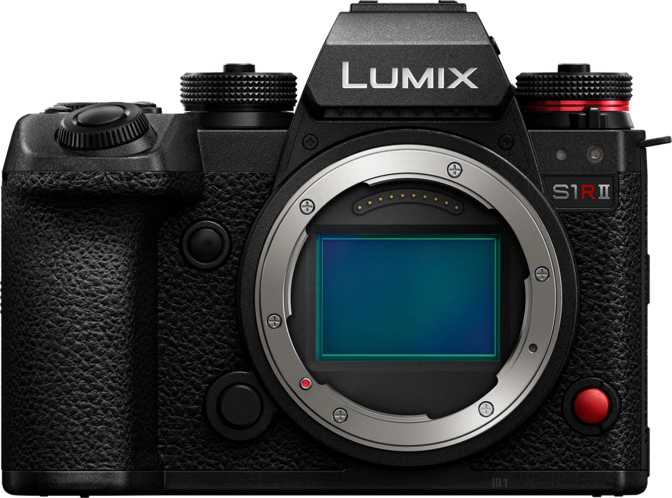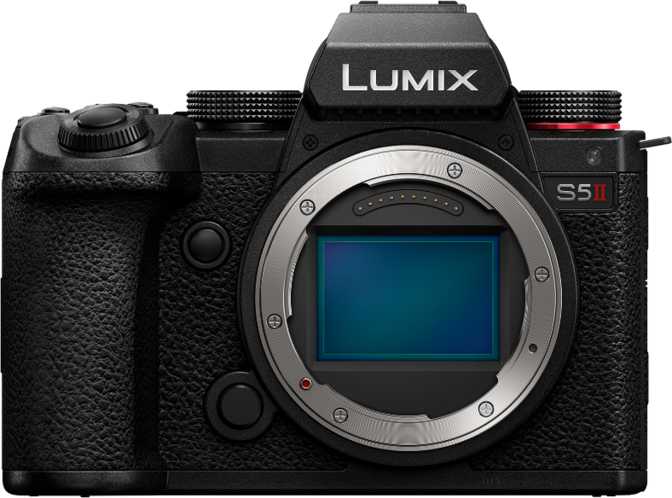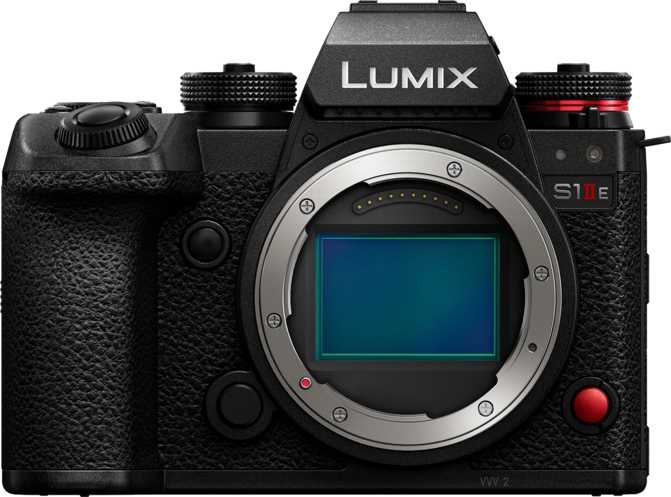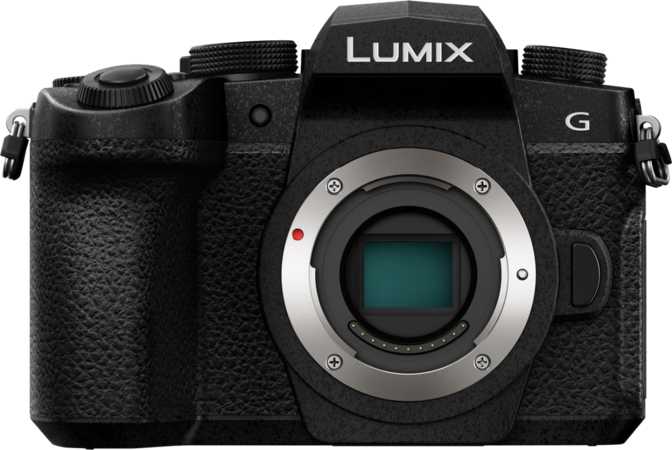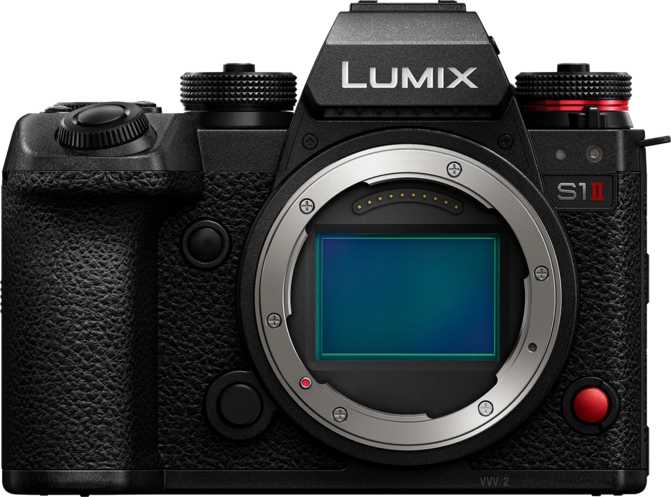
Panasonic Lumix DC-S1 II Full Review: Built for Hybrid Professionals
CamerasEditors' Verdict — Hybrid Professional Camera
Full-frame mirrorless cameras have become a crowded category, but most force a choice: a stills-first body with competent video, or a video-first body with acceptable photos. The Panasonic Lumix DC-S1 II refuses that compromise. It arrives with a stacked sensor architecture, phase-detection autofocus across both photos and video, a stabilization system that sits at the top of its class, and video bitrate numbers that make dedicated cinema cameras uncomfortable. Whether that combination justifies the investment depends entirely on what you actually shoot — and this review will tell you exactly who it is built for.
Design and Build: A Professional Tool That Means Business
Physical experience, weather protection, and viewing systems
Physical Presence
At 134.3 × 102.3 × 91.8 mm and 800 grams body-only, the S1 II has the proportions of a traditional DSLR. This is not a camera you slip into a jacket pocket — it is a working professional's tool shaped accordingly.
The grip depth pays off in long-day handling comfort and good balance against larger lenses. Photographers who spend hours shooting will appreciate this far more than those carrying light for travel.
Weather Sealing
Full weather sealing is standard, and the operating temperature range reflects Panasonic's seriousness about outdoor use. The S1 II functions in conditions as cold as −10°C — well beyond the 0°C floor common on many weather-sealed bodies.
Alpine environments, cold-morning wildlife sessions, and winter landscapes are all within operational range. The 40°C upper limit covers tropical and desert conditions without thermal concerns.
Screen & Viewfinder
The 3.2-inch rear touchscreen resolves approximately 1.84 million dots and uses a fully articulating flip-out mechanism — not a simple tilt panel. It can face forward for solo shooting, fold flat for transport, or angle to any position for low or overhead compositions.
The electronic viewfinder delivers 100% frame coverage. What you see through the eyepiece is exactly what the sensor captures — no clipping, no approximation.
The Sensor: Why "Stacked" Changes Everything
Architecture, resolution strategy, and real-world imaging implications
Understanding the Architecture
The S1 II uses a 24.1-megapixel back-illuminated stacked CMOS sensor, and the word "stacked" carries significant weight here. In a conventional sensor, the photodiodes that capture light sit on top of the readout circuitry. In a stacked design, the readout layer is built into a separate tier beneath the sensor itself — allowing the camera to push image data off the chip dramatically faster than conventional designs.
Faster readout effectively eliminates or substantially reduces rolling shutter — the wobbly distortion visible when panning quickly or when fast objects cross the frame during video. It is also the enabling technology behind 10 fps burst shooting and 60 fps high-resolution video. Without the stacked architecture, these would be engineering compromises. With it, they are first-class features.
Resolution as a Deliberate Choice
24.1 megapixels on a full-frame sensor is a deliberate choice, not a limitation. At this pixel pitch, each individual photodiode captures more light than it would on a higher-density chip of the same physical size — the result is better low-light performance and cleaner high-sensitivity output. This resolution is generous for most professional workflows and adequate for those who need large-format output, though it is not the answer for commercial work demanding 45–60 MP files.
Sensor at a Glance
| Type | Stacked BSI CMOS |
| Format | Full Frame |
| Resolution | 24.1 Megapixels |
| Focus Points | 779 Phase-Detection |
| Native ISO Ceiling | 51,200 |
| Expanded ISO | 204,800 |
| Burst Rate (Mech.) | 10 fps |
| Fastest Mech. Shutter | 1/8,000s |
| Fastest Elec. Shutter | 1/16,000s |
| Flash Sync Speed | 1/250s |
Autofocus: Panasonic's Long-Awaited Arrival
Phase-detection AF system for stills and video — and why it matters
For years, Panasonic's autofocus was the most commonly cited weakness of the Lumix system. The previous contrast-detection approach worked, but it could not match the speed and reliability of phase-detection systems from Sony or Canon. The S1 II represents Panasonic's full transition to phase-detection autofocus — and it applies to both photography and video recording.
The 779 focus points distributed across the frame provide dense coverage, including near the edges where subjects near the frame boundary are tracked reliably. Touch autofocus via the rear touchscreen allows you to tap a subject to initiate focus — particularly useful during video work where repositioning at the viewfinder during a shot is impractical.
Continuous AF in Video
Continuous autofocus during video recording uses phase-detection rather than the older contrast-detection system. Focus transitions during a clip are smoother and faster to acquire. For run-and-gun documentary work, interviews with moving subjects, or any scenario where a dedicated focus puller is unavailable, this is a material improvement over what any previous Lumix body offered.
AF System Capabilities
-
779 Phase-Detection PointsDense frame-wide coverage including edge zones for reliable tracking
-
AF Subject TrackingContinuous tracking of moving subjects across the full frame
-
Touch AutofocusTap-to-focus on rear screen — ideal for solo video monitoring
-
Phase-Detection in VideoSmoother, faster transitions versus contrast-detect-only systems
-
Full Manual Focus OverrideComplete manual focus control with two-stage shutter button
Image Stabilization: 8 Stops Is Not a Marketing Number
In-body stabilization performance and combined system capability
An 8-stop CIPA-rated stabilization advantage means that a shot requiring 1/500s to freeze hand movement can potentially be captured at 1/2s while remaining sharp. That is the practical difference between needing a tripod for low-light scenes and walking handheld into a dimly lit space with total confidence.
The system can also combine with optically stabilized lenses, meaning the in-body and optical mechanisms work together rather than in competition. This further extends the effective compensation range — particularly valuable at telephoto focal lengths where hand movement is amplified.
For video, sensor-based stabilization produces smooth footage without the crop penalty that digital stabilization imposes. Shooting in tight interiors, on boats, or in crowded venues becomes significantly more practical. For photographers who frequently work in conditions where a tripod is impractical, this single feature justifies serious consideration of the S1 II.
Video Specifications: The Headline Feature
Resolution, bitrate, cinema capabilities, and professional audio
What 1900 Mbps Actually Means
The 1,900 Mbps ceiling is one of the highest available on any full-frame mirrorless body. Professional cinema cameras and broadcast recorders typically operate well below this figure. At that data rate, every second of footage preserves enormous detail for post-production — color grading, shadow recovery, and highlight rollback all benefit substantially.
The trade-off is infrastructure: you need high-speed CFexpress or UHS-II SD cards rated for sustained write speeds at your chosen quality setting. Standard V30 cards are insufficient for the highest modes. Proxy workflows or hardware-accelerated editing software are worth planning for on the post-production side.
Complete Video Feature Set
- 24p cinema mode for theatrical deliverables
- Slow-motion recording for creative flexibility
- Native timelapse recording built in
- Phase-detection continuous AF during recording
- External microphone input (3.5 mm)
- Headphone monitoring output (3.5 mm)
- Built-in stereo microphones (2 capsules)
- HDMI output for external monitors and recorders
Connectivity and Memory
Dual card storage, wireless capabilities, and wired I/O
Dual Card Slots
Two card slots mean two things in professional use: simultaneous backup recording with identical files written to both cards in parallel, or overflow recording where the second card picks up when the first fills. Neither scenario involves the anxiety of a single card failure costing you an irreplaceable shoot.
- Simultaneous dual-slot backup recording
- Overflow mode for uninterrupted long sessions
- High-speed cards required for maximum video bitrate modes
Wired and Wireless I/O
- Wi-Fi
- Wi-Fi 5 (802.11ac) + Wi-Fi 4 support — faster file transfer to connected devices versus older single-band cameras
- Bluetooth
- Bluetooth 5 — handles remote control, phone pairing, and smartphone-based location tagging
- USB
- USB 3.2 Type-C — high-speed tethered shooting, fast file transfer, and in-field charging
- HDMI
- Full HDMI output for external monitors and field recorders in professional video workflows
- Hot Shoe
- Standard hot shoe for external flash — no built-in flash included, as expected at this level
- GPS / NFC
- AbsentNo built-in GPS or NFC — location tagging requires an active smartphone connection
RAW Files and Image Quality Control
File formats, lossless compression, and ISO sensitivity range
The S1 II shoots RAW files and supports lossless compressed RAW — meaning files are reduced in size through compression that can be perfectly reversed, with no image data discarded. You get the full editing latitude of uncompressed RAW at a smaller file footprint. This is distinct from lossy compressed RAW, where data is permanently sacrificed for smaller sizes.
Manual control is complete across ISO, shutter speed, white balance, and exposure. The two-stage shutter button, standard on serious cameras, allows half-press focus confirmation before committing to a frame. Flash sync via the hot shoe means professional strobe systems are assumed rather than included.
ISO Sensitivity Range
Optimal image quality — stacked BSI architecture supports strong mid-ISO output with favorable pixel pitch for light gathering
Maximum sensitivity for when any exposure is preferable to none — quality trade-offs apply at the extreme end
Battery Life: The Honest Assessment
Managing expectations and planning for a full day of professional shooting
The CIPA-rated 350 shots per charge deserves straightforward discussion. CIPA ratings are standardized and consistent across manufacturers — they represent a moderate usage pattern that does not reflect heavy video recording, extended live-view use, or continuous wireless-on scenarios. In video-heavy workflows, expect meaningfully lower results than the rated figure.
The 2,400 mAh removable battery is smaller than some competing full-frame bodies, and the high-performance stacked sensor and processing pipeline draws power accordingly. For photographers coming from bodies with 500–700 shot ratings, this requires a genuine habit adjustment — not just awareness.
The silver lining: the battery is removable, and USB-C charging means you can top up from any compatible power bank or charger during transport. For serious work, carrying two or three spare batteries is not excessive — it is standard professional practice at this level. The on-screen battery level indicator removes guesswork about remaining charge mid-shoot.
- Removable and hot-swappable
- USB-C charging from power banks
- On-screen charge level indicator
- 2–3 spares recommended for full-day shoots
The Leica L Mount: What It Means for Lens Choice
The L-Mount Alliance ecosystem and third-party compatibility
The Leica L mount is shared by Panasonic, Leica, and Sigma through the L-Mount Alliance. This gives the S1 II access to lenses from all three manufacturers — a growing ecosystem that includes Panasonic's own S-series lenses, Sigma's competitively priced I-series and Art-series L-mount options, and Leica's premium SL-series glass.
The mount itself features a large throat diameter, which benefits optical design — particularly wide-angle and fast-aperture lenses that can be engineered without the compromises a smaller mount diameter would impose.
The ecosystem is smaller than Sony E-Mount or Canon RF, but it covers the focal lengths and apertures that most professional photographers need. Third-party adapter compatibility with lenses from other systems is available, though autofocus performance with adapted glass varies considerably by adapter and lens combination.
L-Mount Alliance Members
-
PanasonicS-series lenses — full-frame native, optimized for Lumix S bodies
-
SigmaArt-series and I-series L-mount — price-competitive with strong optical performance
-
LeicaPremium SL-series glass — highest build quality and optical refinement at a premium price
-
Third-Party AdaptersLenses from other mounts are adaptable — autofocus performance varies by combination
Who Should Buy the Panasonic Lumix DC-S1 II
The Right Buyers
Look Elsewhere If…
Competitive Positioning
How the S1 II stacks up against typical full-frame mirrorless alternatives in its tier
| Feature | Panasonic Lumix DC-S1 II | Typical Full-Frame Rival A | Typical Full-Frame Rival B |
|---|---|---|---|
| Sensor Type | Stacked BSI CMOS | BSI CMOS (non-stacked) | Stacked BSI CMOS |
| Resolution | 24.1 MP | 24–33 MP | 24 MP |
| IBIS Rating | 8 stops (CIPA) | 5–7 stops | 6–8 stops |
| Max Video Bitrate | 1,900 Mbps | 200–600 Mbps | 800–1,200 Mbps |
| Phase-Detection AF | Stills & Video | Yes | Yes |
| Screen Mechanism | Fully Flip-Out | Tilt-Only / Flip-Out | Tilt-Only |
| Weather Sealing | −10°C rated | Yes | Yes |
| CIPA Battery Life | ~350 shots | 400–600 shots | 300–450 shots |
| Built-in GPS | Via smartphone only | No | Some models |
| Lens Ecosystem | L-Mount Alliance | Sony E / Nikon Z / Canon RF | Sony E / Nikon Z |
Strengths and Weaknesses
Where the S1 II Excels
The S1 II earns its place in a professional kit through the coherence of its design decisions. The stacked sensor, phase-detection autofocus, class-leading stabilization, and video-professional specifications are not a random collection of features — they form a consistent answer to the needs of hybrid shooters who cannot afford to carry two separate camera systems.
The stabilization system alone justifies serious consideration for photographers who frequently shoot in conditions where a tripod is impractical. Eight stops of CIPA-rated compensation, combinable with optically stabilized lenses, represents a meaningful creative expansion for handheld low-light and telephoto work that few bodies in any category can match.
The video specifications — particularly the bitrate ceiling — place the S1 II in a category previously occupied only by cameras that lack the photographic versatility of a full-frame mirrorless body. For a videographer who also needs to deliver still images from the same assignment, this is a compelling single-body solution.
Where It Asks for Patience
Battery management requires daily planning. Three hundred fifty shots per charge is honest, not impressive. Shooters migrating from bodies with 500–700 shot ratings will need to adjust their habits and invest in spare batteries. This is a real operational constraint, not a minor footnote.
The absence of GPS is a genuine omission for travel photographers who want automated geotagging. The Bluetooth 5 pairing with a smartphone addresses this, but it requires the phone to be connected and the relevant app running — an added step that GPS-equipped competitors eliminate entirely.
Weight and physical dimensions will be dealbreakers for some. At 800 grams before a lens is attached, the S1 II demands a capable bag and strap. Mirrorless photographers who moved away from DSLRs specifically for physical relief will not find that relief here.
Frequently Asked Questions
Answers to what buyers actually search for before purchasing
Final Verdict
Panasonic Lumix DC-S1 II
The Panasonic Lumix DC-S1 II is one of the most complete hybrid cameras available at its tier — not because it does everything, but because everything it does is executed at a high level and in service of a coherent user profile.
Hybrid shooters who need professional-grade video specifications, stabilization that opens creative options unavailable on other bodies, and full-frame reliability in a single camera. The video bitrate, IBIS system, and phase-detection autofocus make this a body that removes compromises rather than introducing them.
Battery longevity, compact size, built-in GPS, or pure stills output are your priorities — or if video is something you will never use. The S1 II asks you to pay for specifications you will not reach, and the market offers better-matched alternatives for those profiles.
For its intended audience, the recommendation is straightforward: this camera delivers what it promises, and what it promises is substantial.