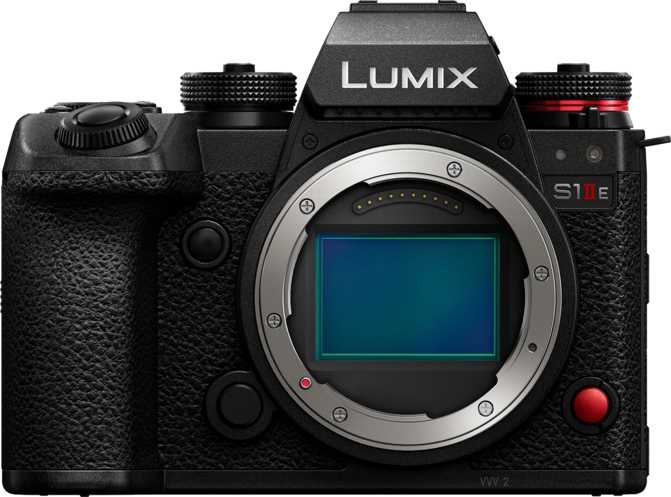
Panasonic Lumix DC-S1 IIE Review: Full-Frame Power for Hybrid Shooters
CamerasThe Lumix DC-S1 IIE is a professional-tier full-frame mirrorless camera engineered for hybrid shooters who refuse to compromise between still image quality and video capability. Its headline achievements — class-leading stabilization and extraordinary internal recording bandwidth — set it apart from nearly every rival at this price point.
Overall Rating
Design and Build Quality
Physical experience, construction, and handling
A Professional Body That Means Business
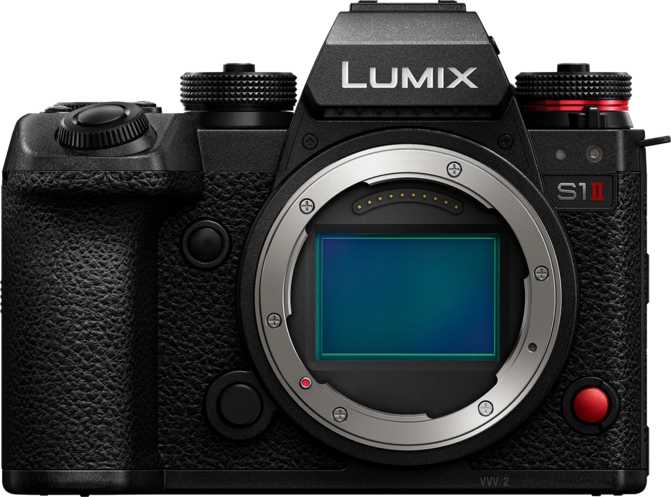
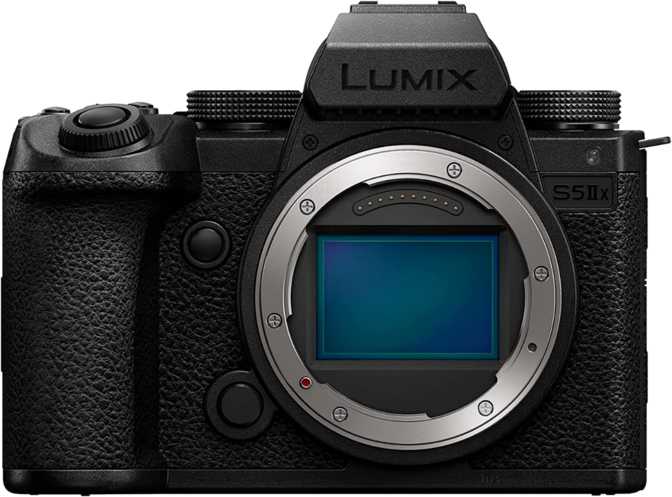
The S1 IIE is not a small camera, and it makes no apology for that. At 795 grams with dimensions of 134.3 × 102.3 × 91.8 mm, this is a camera that fills your hand with purpose. The depth of nearly 92 mm reflects a grip engineered for extended shooting sessions rather than jacket-pocket portability. Shooters coming from compact mirrorless systems will feel the difference immediately, but those transitioning from DSLRs will find the proportions instinctively familiar and ergonomically satisfying.
Weather sealing is rated for operation between -10°C and 40°C, covering everything from winter mountain shoots to summer festival work. This is not token splash resistance — it is a body engineered for photographers who shoot through conditions rather than waiting for them to improve.
The body does not include a built-in flash, which is standard for a camera at this tier. The hot shoe accommodates external flash units, and Panasonic's flash ecosystem integrates fully. Shooters who rely on on-camera flash for quick event work should factor an external unit into their accessory budget.
Physical Specifications
- Type
- Full-Frame Mirrorless
- Weight
- 795 g
- Width
- 134.3 mm
- Height
- 102.3 mm
- Depth
- 91.8 mm
- Weather Sealed
- Yes
- Operating Range
- -10°C to 40°C
- Built-in Flash
- No
- Hot Shoe
- Yes
- Lens Mount
- Leica L
Screen and Viewfinder
3.2-inch Flip-Out Touchscreen
The rear display resolves at 1,840,000 dots — genuinely sharp for image review and menu navigation. More importantly, it articulates fully outward, a feature that proves its worth when shooting at waist level, recording video to camera, or positioning the body in tight spaces. The flip-out mechanism puts live view where your eyes actually are, not where the camera happens to be pointing.
100% Coverage Electronic Viewfinder
The EVF offers 100% frame coverage with no cropping at the edges — what you see through the eyepiece is exactly what the sensor captures. For photographers who compose precisely to frame boundaries, this is a fundamental accuracy requirement, not a premium upgrade. The viewfinder does not tilt, which is worth noting for shooters who prefer overhead angle composition through the EVF.
Sensor Performance and Image Quality
Full-frame optics, resolution, and low-light capability
Full Frame, Done Properly
The S1 IIE uses a 24.1-megapixel back-illuminated CMOS sensor — not a stacked design, which is worth discussing honestly. A back-illuminated (BSI) architecture repositions the sensor's wiring layer behind the photodiodes, allowing more light to reach each pixel directly. The result is improved low-light performance and dynamic range compared to conventional front-illuminated designs. At 24 megapixels spread across a full-frame surface, each individual pixel is physically large — an inherent advantage for light gathering that no processing algorithm can replicate.
The Stacked Sensor Consideration
The absence of a stacked CMOS sensor has a real implication: stacked designs enable faster data readout, which reduces rolling shutter distortion when panning or photographing fast lateral movement. With the electronic shutter engaged, shooters photographing fast cars or performers with rapid lateral movement may encounter some warping in certain conditions. For the majority of photography genres, this is a non-issue. For motorsport or certain sports specialists, it warrants honest consideration before committing.
24.1 Megapixels
Files large enough for substantial large-format prints while remaining manageable for high-volume shooting workflows. The professional sweet spot preferred by photojournalists, portrait photographers, and wedding shooters alike.
Up to ISO 51,200 Native
The native sensitivity ceiling extends to ISO 51,200, with expansion reaching ISO 204,800 for extreme low-light emergencies. The BSI architecture ensures high-sensitivity files retain detail and tonal gradation rather than collapsing into noise.
Lossless Compressed RAW
Every bit of sensor data is preserved while occupying meaningfully less storage space than uncompressed files. Combined with dual card slots, this extends practical shooting duration considerably for event and documentary photographers.
Shutter Speed and Burst Performance
The maximum shutter speed of 1/16,000s — available via both mechanical and electronic shutter — allows wide-aperture lenses to operate freely in bright daylight without requiring a neutral density filter. Portrait and natural light photographers who prefer to work at f/1.4 or f/1.8 in direct sun gain a meaningful practical advantage. The mechanical burst rate of 10 frames per second provides enough frame density across a sequence to isolate the decisive moment in fast-action scenarios.
Autofocus: A Turning Point for Lumix
Phase-detection AF, tracking, and real-world reliability
Phase Detection Changes the Story
Historically, Panasonic's contrast-detection autofocus approach was a genuine friction point. The S1 IIE changes that conversation definitively. With 779 phase-detection AF points covering the frame, the camera calculates focus distance and direction simultaneously rather than hunting back and forth. The practical effect is faster initial acquisition, more confident subject tracking, and improved performance in lower ambient light.
Phase detection is active for both still photography and video recording — not a feature reserved for one mode at the expense of the other. AF tracking is continuous in both contexts, and touch autofocus allows the shooter to tap the screen and direct focus to a specific point or subject — a workflow that videographers and portrait shooters find particularly natural and immediate.
Candid assessment: the AF system performs confidently for straightforward subject tracking — a person moving toward you, an athlete following a predictable path. For chaotic multi-subject scenes or unpredictable wildlife behavior, the gap between this and the category's most mature tracking systems narrows but does not fully disappear. It is a step-change improvement for Lumix, not yet the undisputed best in class.
AF System at a Glance
- AF Points779
- Phase Detection (Stills)Yes
- Phase Detection (Video)Yes
- AF TrackingYes
- Touch AFYes
- Continuous AF in VideoYes
In-Body Image Stabilization: Eight Stops of Latitude
CIPA-rated IBIS and what it means in daily shooting
What Eight Stops Actually Means in Practice
The S1 IIE's in-body stabilization system carries a CIPA rating of eight stops — a figure that deserves plain-language explanation because it is easy to treat as a marketing claim without understanding its real-world meaning. CIPA ratings measure how many shutter speed steps below the traditional hand-holding threshold the stabilization system can compensate for while maintaining sharp results.
Eight stops means that with a 50mm lens, where blur would traditionally appear below 1/50s, this system can theoretically maintain sharpness at exposures approaching one second in a steady shooter's hands. In practice — accounting for real-world technique rather than laboratory conditions — four to five stops of reliable compensation represents a significant, tangible benefit. Shooting in dim restaurant light, candlelit venues, or pre-dawn landscapes without a tripod becomes far more viable.
The system coordinates with optically stabilized lenses in the Leica L mount ecosystem, combining sensor-shift and lens-based stabilization simultaneously. This is particularly effective at telephoto focal lengths where camera movement is amplified and even small vibrations translate to visible blur.
Eight stops is not incremental — it is the highest CIPA-rated stabilization in this camera's competitive tier. Comparable full-frame rivals typically achieve five to six stops.
Video Capabilities
Internal recording, audio, and cinema-grade specifications
Serious Internal Recording
The S1 IIE's video specification is not a footnote — it is a primary design priority. The headline capability is 4K recording at up to 60 frames per second, with an internal bitrate reaching approximately 1,900 Mbps. To put that number in context: many cameras at this price tier record internally at 200–600 Mbps. Nearly 1,900 Mbps represents an enormous volume of data captured per second, preserving considerably more tonal and color information in each recorded frame. For colorists working in post-production, this is the difference between footage that grades with depth and flexibility versus footage that breaks apart under heavy correction.
A 24p cinema mode records at 23.976 frames per second — the standard cadence for film-look content and the delivery format expected by broadcast and streaming platforms for narrative and documentary work. Slow-motion recording expands the creative toolkit for action sequences and product footage.
4K / 60p
Maximum video resolution at 3840 × 2160 pixels, 60 frames per second
~1,900 Mbps
Internal recording bitrate — class-leading for this price tier without an external recorder
24p Cinema Mode
Native 23.976 fps for broadcast-standard film-look content delivery
Slow Motion
High-frame-rate slow-motion modes for action, sports, and commercial footage
Audio Chain
The audio specification matches the ambition of the video system. A 3.5mm microphone input accepts professional external microphones. A dedicated 3.5mm headphone output enables real-time audio monitoring while recording — discovering a faulty audio signal in post-production is not acceptable on a professional assignment. The built-in stereo microphone (two capsules) provides a reliable scratch track or a capable audio source when external microphone rigging is impractical.
3.5mm Mic Input
Accepts professional external microphones
3.5mm Headphone Jack
Real-time audio monitoring during recording
Built-in Stereo Mic
Dual capsule for scratch track or run-and-gun audio
The Leica L Mount Ecosystem
Why the lens mount matters as much as the body
The Leica L mount is a three-brand alliance between Panasonic, Leica, and Sigma. This means the S1 IIE is compatible with a growing library of lenses from all three manufacturers — from Panasonic's Lumix S series, to Sigma's Art and Contemporary primes and zooms, to Leica's native glass at the premium tier. For photographers building a long-term system, this breadth of options at varying price points is a meaningful advantage over proprietary mounts with limited third-party support.
The flip side is mount exclusivity: native adapters are required for Canon EF, Nikon F, or Sony E-mount lenses. Adapted glass works with varying degrees of autofocus compatibility depending on the adapter chosen. Photographers with substantial investments in other manufacturers' lenses should budget for quality adapters and verify autofocus performance expectations before committing.
L Mount Alliance Partners
-
Panasonic Lumix S Series
Native first-party lenses across wide to telephoto focal lengths
-
Sigma Art & Contemporary
Exceptional optical quality across a wide price range
-
Leica SL / TL Series
Premium optics for those investing at the top of the market
Connectivity and Workflow
Getting files off the camera and into your pipeline
The S1 IIE connects via USB Type-C at USB 3.2 speeds — fast enough that tethered shooting and high-speed file transfer to a laptop or external drive are genuinely practical on set or in the studio. The single cable handles battery charging as well, eliminating the need for a dedicated charger in travel situations.
Wi-Fi 5 (802.11ac) enables wireless image transfer and remote control via smartphone, with Bluetooth 5 maintaining an always-on low-power connection for quick remote operation. The absence of NFC is minor — the smartphone app pairing process is straightforward without it. The absence of GPS means location data cannot be embedded into EXIF metadata natively; photographers requiring geolocation must use a smartphone connection to log coordinates or adopt a post-processing workflow.
Dual card slots are non-negotiable for professional work. Simultaneous backup recording, overflow to a second card, or separation of RAW and JPEG files across storage cards — the architecture accommodates all of these workflows. A single card failure on assignment with no backup is an unacceptable risk, and this camera eliminates it.
Battery Life: The Honest Assessment
What to expect on a full day of shooting
Plan Around 380 Shots
The CIPA-rated battery life of 380 shots demands honest commentary. CIPA methodology is standardized and consistently applied across manufacturers, but it reflects a controlled testing scenario — not an all-day documentary shoot or a full wedding reception. In real-world use with heavy EVF use, sustained 4K video recording, or continuous Wi-Fi connectivity, a single charge depletes faster than 380 shots suggests.
The battery is removable and rechargeable — carry spares. For any professional engagement, two or three batteries in rotation is the sensible minimum. USB-C charging means a power bank can top up the battery between sessions, which genuinely helps in run-and-gun or travel scenarios where a wall outlet is not always available.
In stills-focused use without constant live view, experienced shooters extend range considerably through disciplined EVF management and power-saving settings. The battery situation is not dire — but it demands awareness and planning, not improvisation.
380
CIPA-rated shots per charge
Capacity
2,400 mAh
Removable
Yes
USB-C Charging
Yes
Power Bank Compatible
Yes
Who Should Buy the Panasonic Lumix DC-S1 IIE
Ideal use cases and honest mismatches
Strong Match For
-
Hybrid Photo-Video Shooters
Those who split work between stills and video and need both disciplines to perform at a professional level without compromise.
-
Portrait, Wedding, and Documentary Photographers
The combination of full-frame image quality, 8-stop stabilization, and reliable phase-detection AF covers these demanding disciplines confidently.
-
Videographers with Demanding Post Pipelines
The high-bitrate internal recording and proper audio monitoring chain match the requirements of broadcast, documentary, and commercial video work.
-
Leica L Mount Ecosystem Users
Photographers already invested in L-mount glass gain a body upgrade with substantially improved autofocus over previous Lumix generations.
-
Landscape and Travel Photographers
Those who shoot in challenging weather require a genuinely weather-sealed body, not a camera that tolerates light rain while crossing fingers.
Not the Best Fit For
-
Compact System Seekers
At 795g with near-92mm body depth, street photographers working in environments where a large camera attracts attention will find other systems more suitable.
-
Pure Action and Sports Specialists
The BSI-only sensor means rolling shutter is a real consideration with the electronic shutter. Stacked CMOS rivals have a measurable advantage for this specific discipline.
-
First-Time Mirrorless Buyers on a Budget
This is a professional-tier investment. The Leica L mount ecosystem requires lens investment that compounds the total system cost significantly.
-
Travelers Requiring Native GPS
Without built-in GPS, location tagging requires a phone tether or a dedicated post-processing geolocation workflow.
Competitive Positioning
How the S1 IIE compares to full-frame mirrorless alternatives
| Feature | Panasonic S1 IIE | Sony A7 IV Class | Nikon Z6 III Class |
|---|---|---|---|
| Sensor Type | BSI CMOS (24 MP) | BSI CMOS (33 MP) | Partially Stacked (24 MP) |
| IBIS Rating | 8 stops (CIPA) | ~5.5 stops | ~6 stops |
| Internal Video Bitrate | ~1,900 Mbps | ~600 Mbps | ~600 Mbps |
| 4K / 60p Internal | |||
| Flip-Out Screen | |||
| Phase Detection AF | |||
| Lens Ecosystem | L Mount (3 brands) | E Mount (broadest) | Nikon Z |
| Stacked Sensor | Partial | ||
| Body Weight (approx.) | 795 g | ~659 g | ~760 g |
| Built-in GPS | |||
| Dual Card Slots |
The S1 IIE's clearest competitive advantage lies in its internal video recording specification — the bitrate figure alone sets it apart from rivals in this price tier. The 8-stop stabilization is also class-leading. Where it gives ground is lens ecosystem breadth — Sony's E-mount holds the widest third-party support available — and in rolling shutter performance compared to cameras with fully stacked sensors.
Honest Strengths and Weaknesses
A candid assessment — not a spec recitation
Where It Excels
The stabilization system is exceptional — not marginally better than competitors, but categorically so. In real shooting conditions, the difference between a sharp image and a blurred one is frequently one stop of light. Eight stops of reliable compensation changes how you can approach available-light photography in fundamentally practical ways.
The video recording capability inside this body is what many shooters spend significantly more on an external recorder to achieve elsewhere. The bitrate ceiling, the proper headphone monitoring, the 24p cinema mode, and continuous phase-detection tracking during recording combine into a package that is difficult to replicate at this cost without additional hardware.
The phase-detection autofocus represents a legitimate milestone for Lumix. It works, it tracks, and it keeps pace with action in a way that previous Lumix bodies could not. For portrait, wedding, and documentary applications — the camera's core audience — it performs confidently and consistently.
Where It Falls Short
The autofocus system is improved, but it does not yet match the subject recognition depth or predictive tracking sophistication of the most mature systems in this category. For chaotic multi-subject scenes or unpredictable wildlife behavior, the gap between this and the best-in-class AF narrows but does not close.
Battery endurance is the most practically limiting characteristic for demanding professional use. Heavy video recording days require multiple spare batteries and a deliberate charging strategy. This is not unusual for a camera at this tier — but it demands planning, not improvisation.
The weight and body size reflect deliberate engineering — the depth provides thermal headroom for sustained 4K recording and a more comfortable grip for long sessions. But photographers who have migrated toward lighter systems for fatigue reasons will find the S1 IIE pulls in the opposite direction, not with it.
Questions Real Buyers Ask
Answers to the most common pre-purchase concerns
Final Recommendation
The Panasonic Lumix DC-S1 IIE is a camera for professionals and serious enthusiasts who know exactly what they need and will not compromise on the two areas where this body genuinely excels: video recording fidelity and stabilization performance. If those two pillars are central to your work, nothing at this price category matches what the S1 IIE delivers internally — without external recorders or optical stabilization workarounds.
For stills-focused photographers who do not need exceptional video, the value proposition requires more careful consideration against lighter, more compact full-frame alternatives with comparable image quality. The weight commitment is real, and while the autofocus system has genuinely improved, it trails the absolute leaders for complex tracking scenarios.
For hybrid shooters, documentary filmmakers, wedding videographers, and photographers who shoot regularly in harsh conditions — the S1 IIE is not a compromise. It is a deliberate, capable professional tool that covers a remarkable range of professional demands in a single body.
Best For
Hybrid photo-video professionals, landscape & portrait photographers shooting in demanding conditions, Leica L mount system builders.