Panasonic Lumix DC-S5 II Full Review: Hybrid Shooting Done Right
CamerasExpert Rating
The Lumix DC-S5 II is Panasonic's most complete full-frame mirrorless yet — a genuine hybrid body that no longer forces you to choose between still image quality and video performance. It is the camera the S5 line always had the potential to be.
Build Quality and Physical Design
Ergonomics, Weather Sealing, and Viewfinder
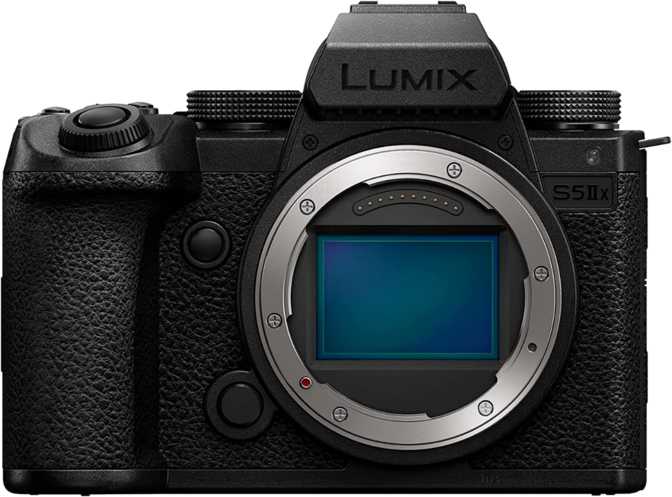
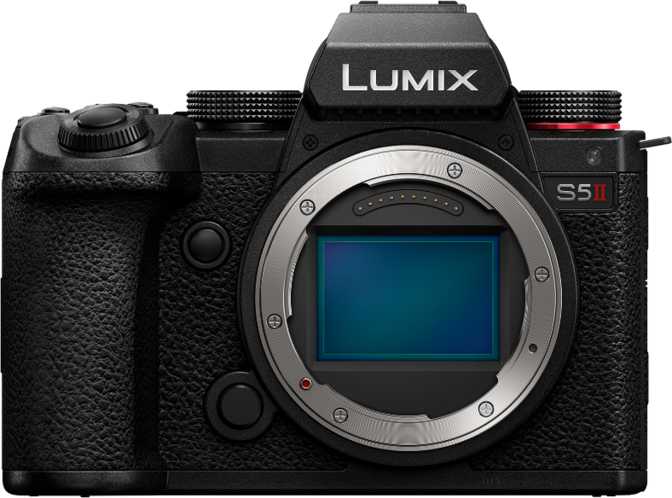
Pick up the S5 II and the first thing you notice is that it has real weight to it. At just over 740 grams body-only, this is not a camera that pretends to be compact. It occupies roughly the same physical footprint as a traditional DSLR — which is actually a compliment. The grip is deep, the controls fall naturally under the fingers, and the body communicates permanence. At 134 mm wide, 102 mm tall, and 90 mm deep, it sits solidly mid-sized among full-frame mirrorless bodies.
Weather Sealing
The weather sealing is a practical asset, not a marketing bullet point. Photographers who shoot outdoors regularly — weddings, events, travel, wildlife — will appreciate a body rated against both moisture and dust. Combined with operating tolerances from 0°C to 40°C, the camera covers the conditions that matter for most real-world assignments. Light drizzle and dusty environments are genuinely within its comfort zone.
Screen and Viewfinder
The fully articulating rear screen swings completely to the side — enabling front-facing monitoring for self-recording or waist-level shooting that a tilt-only screen cannot match. It is a touchscreen throughout, supporting tap-to-focus and menu navigation. The electronic viewfinder delivers 100% frame coverage, meaning every pixel in the eyepiece corresponds exactly to what the sensor captures. No guessing at edge content.
There is no built-in flash — the right call at this level. A hot shoe on top of the body accepts external speedlights, a far more useful arrangement for professional and enthusiast work. The EVF does not tilt, a minor limitation for overhead shooting that is shared by most cameras in this category.
Sensor and Image Quality
Full-Frame BSI CMOS, Low-Light Performance, and Stabilisation
The Core Imaging Engine
The S5 II uses a back-illuminated, full-frame CMOS sensor delivering 24.2 megapixels of resolution. Before anyone dismisses that figure as modest in an era of higher-resolution competitors, it is worth understanding what it means in practice.
Twenty-four megapixels on a full-frame sensor is large enough to print poster-sized without compromise, to crop significantly while retaining publishable resolution, and to deliver at any digital screen size. What the sensor gains by not chasing a higher pixel count is larger individual photosites — the tiny light-gathering sites across the sensor — which translates directly into lower noise at high sensitivities and better dynamic range in difficult lighting.
Back-illuminated sensor architecture places the wiring layer behind the light-sensitive layer rather than in front of it, allowing more light to reach each photosite. The practical result is cleaner images in challenging light, with the ability to shoot comfortably in sensitivity ranges that would produce unusable noise in lesser sensors.
Low-Light Capability
The native sensitivity ceiling is substantial, with an extended setting providing headroom for genuinely extreme conditions. Real-world usable sensitivity stretches well into territory that handles candlelit reception halls, concert venues, and night street photography without the image falling apart. The colour depth measurement at 10 bits indicates strong colour fidelity and tonal gradation — particularly important for skin tone accuracy in portrait and event work.
In-Body Stabilisation
The sensor-shift stabilisation is rated at 5.5 stops of compensation — one of the stronger ratings in this class. This means handholding at shutter speeds that would normally demand a tripod while still producing sharp images.
Low-light architectural photography, travel shooting in dim interiors, and handheld video all benefit directly from this system.
Autofocus: The Second-Generation Story
Phase-Detection, Subject Tracking, and Burst Speed
The original S5 had a reputation problem: its contrast-detect autofocus, while capable, was visibly slower than the phase-detection systems in competing cameras. Panasonic addressed this directly in the S5 II with a full shift to phase-detection autofocus — a first for Lumix full-frame cameras at this level.
Phase-detection works by splitting incoming light and measuring whether the subject sits in front of or behind the focus plane, allowing the camera to drive the lens directly to the correct position rather than hunting back and forth for the sharpest contrast reading. The result is faster acquisition, more reliable tracking, and better performance when subjects move unpredictably.
Phase-Detection is a Structural Fix
This is not an incremental improvement — it represents a fundamental change to how the camera focuses. For the hybrid and event market the S5 II targets, autofocus is a resolved problem.
Dense grid covering the vast majority of the image area
Locks and maintains focus on moving subjects through the shot
Tap the screen to designate your focus subject — ideal for video recompose mid-shot
Sufficient for athletes, wildlife in motion, and fast action subjects
AF holds subject lock as the camera rolls — no hunting during footage
Video Capabilities: Where the S5 II Truly Competes
4K Recording, Bitrate Quality, and Audio Connectivity
4K Recording and Codec Quality
The S5 II records at resolutions up to approximately 3,968 pixels on the long edge at up to 30 frames per second — firmly in the 4K class that production and content creation workflows expect. Broadcast television, YouTube, streaming platforms, and the majority of commercial video delivery standards operate comfortably within this envelope.
The maximum internal recording bitrate of 200 megabits per second is a significant number. Higher bitrate means more data captured per second of footage, translating into better detail retention, reduced compression artefacts, and more flexibility during colour grading. For videographers who do colour work in post, the information captured at this bitrate gives the grade a genuine foundation to work from.
A cinema-standard 24-frames-per-second mode is included, producing the frame cadence most film-trained eyes associate with cinematic motion. Slow-motion recording is also supported for creative emphasis shots.
Audio: Treated as a First-Class Priority
A 3.5 mm microphone input accepts external microphones — a necessity for interview work, documentary filming, or any scenario where the built-in stereo microphone is insufficient. A headphone output allows real-time audio monitoring during recording, so problems are caught as they happen rather than discovered in editing. This combination is the minimum expected in a professional-level hybrid camera, and the S5 II delivers it without omission.
Video Specification Summary
| Max Resolution | ~4K (3968 px) |
|---|---|
| Max Frame Rate (4K) | 30 fps |
| Internal Bitrate | 200 Mbps |
| Cinema Mode | 24p Supported |
| Slow Motion | Supported |
| Timelapse | Supported |
| Video AF System | Phase-Detection |
| Mic Input | 3.5 mm Jack |
| Headphone Out | 3.5 mm Jack |
| Built-in Stereo Mic | Yes (2 mics) |
Lens System and Connectivity
Leica L Mount Alliance, Dual Card Slots, and Wireless Options
The Leica L Mount Alliance
The S5 II uses the Leica L-mount — a standard shared by Leica, Panasonic, and Sigma through a formal alliance. This is a consequential detail for long-term ownership. It means the lens ecosystem is not locked to Panasonic alone: Sigma's growing Art series for L-mount offers exceptional optical quality at competitive prices, and Leica's own glass is available to those with the budget.
The mount is physically large — designed from the outset for full-frame sensors — giving lens designers freedom in their optical engineering. New buyers starting fresh will find a credible and growing library of native glass to choose from, at a range of price points.
Connectivity and Workflow
-
Dual Memory Card SlotsShoot with a simultaneous backup — a professional safeguard against card failure during critical assignments. Also supports overflow shooting and separating RAW files from JPEGs.
-
USB 3.2 Type-C with In-Body ChargingFast tethered shooting and quick card transfers. The Type-C port supports in-body charging, eliminating the need for a dedicated charger on travel.
-
Wi-Fi 5 and Bluetooth 5Remote control via smartphone for self-portraits, tripod work, or difficult positions. Bluetooth 5 enables persistent low-energy pairing for fast connection.
-
HDMI Output and RAW CaptureFeed a monitor, recorder, or switcher in production setups. RAW file capture gives full control over processing in post rather than relying on in-camera decisions.
Battery Life: Honest Expectations
Endurance, Real-World Use, and Charging Options
Shots per charge
Under CIPA standardised conditions
The battery delivers approximately 370 shots per charge under standardised testing conditions. That figure warrants context: standardised ratings tend to be somewhat conservative against real-world use if you minimise screen usage, but optimistic if you shoot video extensively or leave the camera in live-view continuously.
For a full-frame mirrorless camera, 370 shots is competent without being exceptional. Photographers shooting all-day events — weddings, conferences, sports — will want at least one spare battery as standard practice. Travel photographers doing moderate daily shooting should find a single charge manages a typical day.
- The battery is removable and rechargeable via the Type-C port — a meaningful convenience when a wall outlet is available but a dedicated charger is not packed
- A battery level indicator keeps you informed throughout the shooting day so depletion is never a surprise
- Video shooters drawing more continuously from the battery will deplete it faster — budget one spare per half-day of video production as a baseline
Who Should Buy the Lumix DC-S5 II
Ideal Users and Who Might Look Elsewhere
This Camera is For You If…
-
You are a hybrid photographer and filmmakerThe balance the S5 II strikes between still imaging quality and video capability is genuine, not aspirational. If your work regularly crosses both disciplines, this body handles each without forcing compromise.
-
You shoot events or weddings professionallyReliable phase-detection AF, weather resistance, and dual card redundancy make the S5 II capable of professional event deployment — the concern that once steered event photographers away is resolved.
-
You create content for YouTube or commercial clientsA single body that handles high-quality video production and a professional portrait or product session delivers genuine value. The S5 II does both without asking you to give up either.
-
You are upgrading from a crop-sensor cameraThe image quality improvement — particularly in low light — will be immediately apparent. The ergonomics of a deep grip body are also more comfortable than compact mirrorless alternatives.
Consider Alternatives If…
-
You need maximum resolutionLandscape, architectural, or fine-art work where extreme print sizes or aggressive cropping are the norm may be better served by bodies offering 45 or 60 megapixels.
-
You shoot fast action professionallySports and wildlife photographers who need 20+ frames per second and class-leading subject tracking will find this camera's burst rate respectable but not the fastest available at this price point.
-
You have significant lens investment elsewherePhotographers already invested in Sony E, Canon RF, or Nikon Z mounts face a real switching cost. The Leica L ecosystem is strong but requires starting fresh.
-
You rely on automatic GPS geotaggingThere is no built-in GPS receiver. Photographers who rely on automatic location data in their EXIF metadata will need a third-party solution or a manual geotagging workflow.
How It Compares to the Competition
Full-Frame Hybrid Mirrorless Comparison
| Feature Area | Panasonic Lumix DC-S5 II | Sony a7 IV Class | Nikon Z6 III Class |
|---|---|---|---|
| Sensor Resolution | 24.2 MP | ~33 MP | ~24 MP |
| Autofocus System | Phase-detection, 779 pts | Phase-detection, wide | Phase-detection, wide |
| In-Body Stabilisation | 5.5 stops (CIPA) | ~5.5 stops | ~6+ stops |
| Internal Video Bitrate | 200 Mbps | ~600 Mbps (XAVC HS) | ~120–600 Mbps |
| Articulating Screen | Fully articulating | Fully articulating | Partially tilting |
| Lens Ecosystem | L-Mount (Pana / Sigma / Leica) | Sony E (very broad) | Nikon Z (growing fast) |
| Dual Card Slots | |||
| Weather Sealing | |||
| Built-in GPS |
Competitor specifications represent typical configurations in the same market segment. Verify current models and regional availability before purchasing.
An Honest Assessment
What the S5 II Gets Right and Where It Falls Short
Where It Excels
The S5 II's strongest attribute is coherence. Panasonic built it with a clear purpose: to be a full-frame hybrid camera that takes both stills and video seriously at the same time. The phase-detection autofocus makes the camera the most well-rounded Lumix body Panasonic has produced at this tier.
- Phase-detection AF transforms the camera from a compromise into a genuinely reliable tool for demanding shooting situations including events and run-and-gun video
- 5.5-stop IBIS is class-competitive and pairs with compatible lenses for combined correction that exceeds either system working alone
- 200 Mbps internal video codec outpaces several competitors at this price tier, giving colour graders a strong and flexible foundation to work from
- Full-frame BSI sensor with large photosites delivers clean low-light performance that higher-megapixel alternatives at the same price cannot match
- Build quality and weather sealing are substantive — this is a camera that feels professional in the hand and survives real field conditions
- Fully articulating screen, dual card slots, and complete audio I/O tick every professional hybrid workflow checkbox
Where It Falls Short
The weaknesses are real but specific. None is a dealbreaker for the audience the S5 II targets, but each deserves honest evaluation against your actual shooting patterns before committing.
- Battery endurance of around 370 shots is adequate rather than comfortable — demanding shooters must manage spares as part of their standard kit, not as an afterthought
- No built-in GPS means no native geotagging — photographers who rely on automatic location data in their EXIF metadata need a workaround or manual workflow
- 4K at 30p meets current delivery standards, but competitors are beginning to offer higher video resolutions internally — a consideration for multi-year planning
- The Leica L mount ecosystem, while strong and growing, requires buyers switching from other systems to rebuild their lens collection from scratch
- A burst rate of 9 fps, while capable for most scenarios, does not match the fastest bodies at this price point for dedicated sports and wildlife work
Questions Real Buyers Are Asking
Straight Answers Before You Buy
The Camera Panasonic Should Have Made First
out of 5 — Highly Recommended
The Panasonic Lumix DC-S5 II is the camera Panasonic should have made first — but the fact that it is a generational improvement rather than a ground-up redesign does not diminish it. The phase-detection autofocus transforms the camera from one requiring the buyer to accept a meaningful compromise into one that genuinely delivers across its stated brief.
For hybrid creators, event photographers, and serious enthusiasts who want full-frame image quality without choosing between stills and video, the S5 II is one of the most convincing single answers on the market.
Its weaknesses — battery life, the absence of GPS, and a 4K resolution ceiling that rivals are beginning to push past — are real but rarely disqualifying for the audience this camera is built for. If the Leica L mount ecosystem fits your existing glass or you are starting fresh, the S5 II earns a strong recommendation. For most hybrid shooters reading this: it belongs on your shortlist, and for many of you, it belongs in your bag.