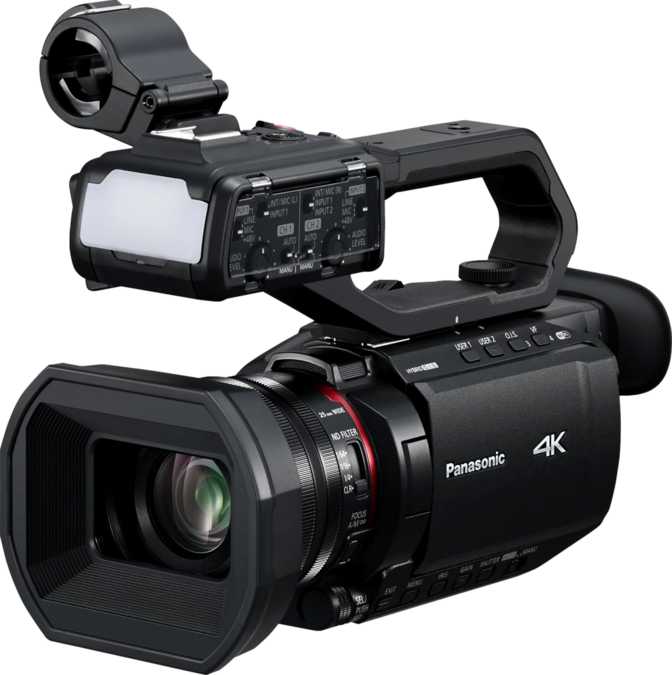
Panasonic HC-X2100 Review: Built for Professional Videographers
CamcordersHC-X2100 at a Glance
Key specifications translated into real-world meaning
Who the Panasonic HC-X2100 Is Built For
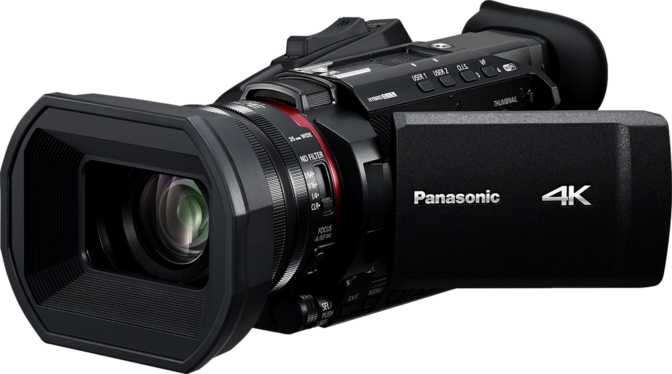
Shoulder-mount cinema cameras get the glamour. Consumer camcorders get dismissed. The HC-X2100 lands squarely between those two worlds, and that's exactly what makes it interesting. This is a professional-grade 4K camcorder designed for videographers who need broadcast-quality footage, genuine manual control, and a form factor that can be carried through a full wedding, corporate event, or documentary shoot without fatigue or logistical chaos. It's not a cinema camera, and it's not trying to be. It's a serious production tool aimed at one-person crews, event videographers, content creators stepping up from consumer gear, and small production houses that need reliability above all else.
Build Quality and Physical Design
Size, Weight, and Handling
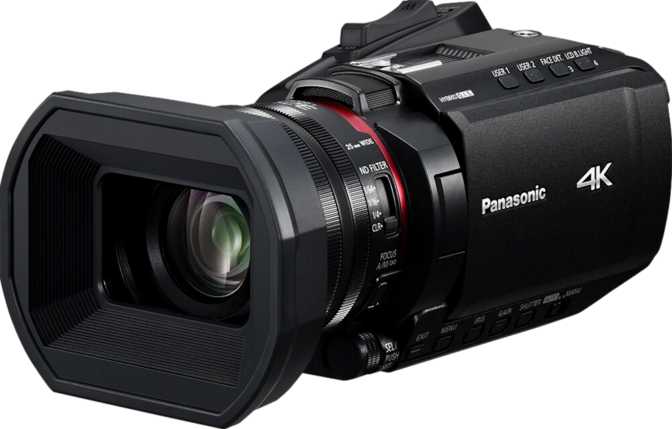
At 850 grams, the HC-X2100 sits in what might be called the "serious shoulder" category — heavy enough to feel substantial and reduce unwanted shake in handheld shooting, light enough to carry through a full day without your wrist staging a protest. For context, this is noticeably lighter than a broadcast ENG camcorder, but meaningfully heavier than a mirrorless camera rig. That balance is intentional: the body mass itself contributes to smoother footage.
The physical footprint — roughly 267mm in length — is sized for a two-handed grip. This isn't a jacket-pocket device. It's designed to be operated the way a working videographer actually shoots: one hand on the grip, fingers on the zoom and record controls, the other hand available for focus rings or rigging adjustments.
The Viewfinder Display
The 3.5-inch flip-out touchscreen offers a display resolution of approximately 2.76 million dots — sharp enough for accurate color and focus evaluation in the field, not just a rough preview monitor. The flip-out mechanism is a practical necessity for event work: whether you're shooting low to the ground at a ceremony or raising the camera above a crowd, the articulating screen means you're never guessing at your frame. Touch functionality adds the ability to set focus points or navigate menus without taking your eye off the shot.
The HC-X2100 does not feature branded damage-resistant glass on the monitor. A screen protector is a practical investment for anyone shooting in rough or unpredictable environments.
Hot Shoe and Accessory Mounting
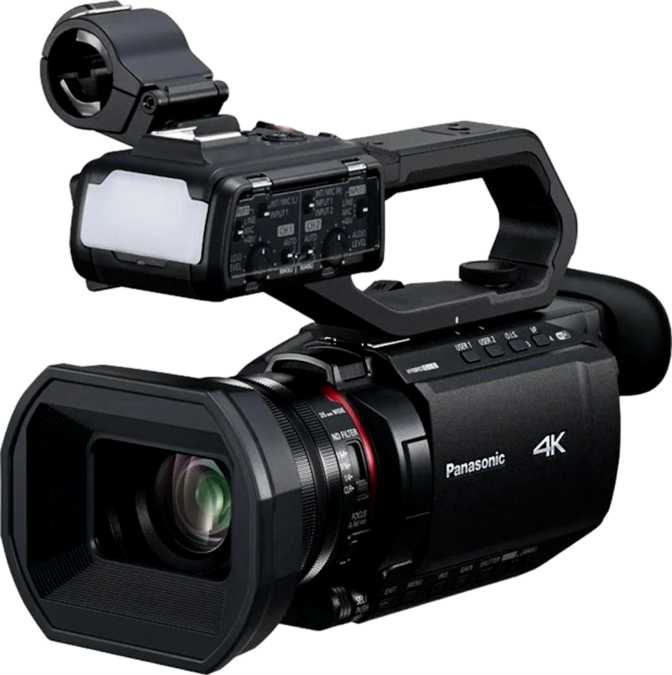
The included hot shoe gives this camera a meaningful expansion path. An external monitor, follow focus motor controller, or additional lighting can all attach directly to the body without requiring a full cage. For run-and-gun event work, this matters — extra hardware needs a stable, native mounting point, not a workaround. There is no dedicated bike mount, no built-in projector, and no NFC. None of those omissions will matter to the intended buyer.
Video Performance: What 4K at 60fps Actually Means
Resolution and Frame Rate
The HC-X2100 records at full 4K (3840×2160 pixels) at up to 60 frames per second. 4K at 60fps means two things simultaneously. First, you're capturing footage detailed enough to reframe in post — if you need to punch in on a subject or stabilize a shot digitally, you're working with enough resolution that a 1080p or even cropped 4K delivery output still looks clean. Second, 60fps at 4K means smooth, high-frame-rate footage for fast-moving subjects: sports coverage, live events, action sequences. Shoot at 60fps and deliver at 30fps, and you have a 2x slow-motion option without ever leaving 4K recording.
For videographers used to working in 1080p, recording 4K and delivering 1080p is a proven professional workflow called "oversampling" — and it produces noticeably cleaner results than native 1080p recording.
24p Cinema Mode
Recording at 24 frames per second — the frame rate of theatrical film — produces the cinematic motion cadence audiences associate with high-end documentary and narrative work. For wedding films, short documentaries, or branded content where the "film look" matters, native 24p recording is a workflow requirement, not a bonus.
Slow Motion Recording
Slow-motion recording is supported, opening up impact shots, highlight reels, and dramatic emphasis cuts. For event and narrative work, a single slow-motion cutaway can elevate an entire sequence — and this camera handles it without switching to a secondary device.
What the HC-X2100 Does Not Shoot
There is no RAW video output. Every file is processed, compressed footage — not raw sensor data. For color scientists and post-production workflows built around RAW grading, this is a meaningful limitation.
Dolby Vision recording is also not supported. If you're producing content specifically for HDR streaming platforms that require it, plan accordingly. For broadcast, event, and corporate work where fast turnaround matters more than maximum grading latitude, this trade is entirely reasonable.
Optics and Image System
The Lens: 24x Optical Zoom
The integrated 24x optical zoom lens is one of the strongest arguments for this camera over a traditional interchangeable-lens setup. At an event — a conference, a ceremony, a sports match — you may need to go from a wide establishing shot to a tight close-up on a speaker's face without moving your position or swapping glass. 24x optical zoom covers that range convincingly.
Crucially, this is optical zoom, not digital zoom. Optical zoom uses actual glass movement to magnify the subject, preserving full image quality at every focal length. Digital zoom degrades image quality proportionally — it's just cropping into the sensor. The HC-X2100's optical range is the real thing.
Optical Image Stabilization
Built-in optical image stabilization physically compensates for camera movement, shifting optical elements to counteract shake. For a camera in this weight class used handheld or on a monopod at long focal lengths, this is not optional — it's the difference between usable footage and footage that makes viewers nauseous. At maximum zoom, even a slight tremor translates to significant image movement without stabilization. The HC-X2100 handles this in-lens, which is the most effective stabilization method available.
Autofocus with Subject Tracking
AF tracking allows the camera to lock onto a moving subject and follow it through the frame — a presenter walking across a stage, a couple moving through a reception, an athlete in motion. For solo operators who can't simultaneously manage focus, zoom, and framing while also monitoring audio cues, reliable AF tracking is close to essential.
Manual focus and manual white balance are both available for operators who prefer full control. In mixed lighting — a reception with candles, LEDs, and uplighting all in the same room — manual white balance locks your color to a known reference and prevents the camera from hunting or shifting mid-shot.
The Sensor
At 8.29 megapixels, the sensor is sized appropriately for 4K video capture. Video resolution doesn't demand the megapixel counts required for photography, and a sensor optimized for video acquisition is doing different work than one optimized for stills. This camera is not a photography tool; its sensor choices reflect a video-first design priority. There is a single sensor, no dual-sensor arrangement, and no built-in HDR mode at the sensor level — any HDR-style processing would need to be handled in post.
Audio: A Serious Set of Inputs
Audio is where consumer camcorders typically fall apart, and it's one of the clearest indicators of the HC-X2100's professional positioning.
Microphone Connectivity
The camera provides a full-size microphone input, a 3.5mm stereo input, and a built-in stereo microphone. That combination covers a serious range of production scenarios:
- Full-size mic input (XLR-style) — accepts professional balanced microphones: interview mics, shotgun mics, and lavalier systems with XLR transmitters used in broadcast and documentary work.
- 3.5mm stereo input — connects consumer-grade wireless receivers, camera-mounted shotgun mics, and secondary audio sources.
- Built-in stereo microphone — handles ambient sound capture and provides a reliable backup track. Running a wireless lavalier through one input while capturing room ambience through the internal mic is a standard dual-track approach this camera fully supports.
Real-Time Headphone Monitoring
A 3.5mm headphone jack is present. Listening to exactly what the camera is recording while you shoot — in real time — is a professional standard that consumer cameras often skip. Discovering bad audio after an event is not recoverable. The HC-X2100 lets you catch it while you can still fix it.
The camera has no stereo speaker output. Playback audio requires headphones or an external speaker connection — a minor point for a production camera, since footage review happens in an edit suite, not from the camera body.
- Full-size mic input (XLR-style)
- 3.5mm stereo audio input
- Built-in stereo microphone
- 3.5mm headphone monitoring jack
- Dual-track recording supported
- No stereo speaker output
Battery Life and Power Management
Endurance in Practice
The integrated battery holds a charge large enough to support extended continuous recording. Paired with a 4K recording workflow, it can typically sustain several hours of intermittent shooting — covering a ceremony, cocktail hour, and portions of a reception without a swap, under normal conditions. Heavy Wi-Fi use, continuous display brightness, and sustained image stabilization motor activity will all reduce that estimate.
The battery is built-in and cannot be swapped in the field. Carrying a portable charging bank and building charging windows into your production schedule is the recommended approach for marathon shoots.
Memory Storage
An external memory card slot handles all footage storage. The camera does not rely on internal fixed storage, meaning your recording capacity is limited only by the cards you carry — a practical advantage for long events where swapping cards mid-shoot is standard practice.
Power at a Glance
Substantially above average for the camcorder category
- Battery level indicator on-camera — no guessing remaining capacity
- Rechargeable via included adapter
- External memory card slot — capacity limited only by cards carried
- Non-removable — cannot hot-swap batteries mid-shoot
Connectivity: Built for Modern Production Workflows
HDMI Output
Feed footage to an external monitor or recorder during shooting — useful for directors or clients who need a clean, full-resolution feed on a larger display, or for operators using an external recorder as a backup or alternative capture format.
USB-C Port
Handles data transfer and charging through a universally available cable standard. No proprietary ports to track down in the field — a practical advantage on multi-day shoots where gear logistics already compete for attention.
Dual-Band Wi-Fi
Supports both 2.4GHz (Wi-Fi 4) and 5GHz (Wi-Fi 5 / 802.11ac). The faster 5GHz band means less interference in crowded event venues where every other device in the building competes on 2.4GHz.
Native Live Streaming
First-party live streaming is built into the camera — not a workaround or third-party app. For houses of worship, corporate events, and conferences where simultaneous broadcast is part of the deliverable, this removes an entire layer of external hardware from the signal chain.
iOS & Android Support
Wireless connectivity works with both major mobile platforms — control the camera or manage transfers from your smartphone regardless of what's in your pocket.
Remote Control Included
An included remote is useful for solo operators working from a fixed camera position — controlling record start/stop or zoom from a distance without touching the body and introducing vibration into the shot.
Real-World Usage Scenarios
Who This Camera Is Ideal For
Weddings, corporate conferences, live performances — virtually every design decision serves this use case. The long optical zoom, audio inputs, flip-out monitor, live streaming, and all-day battery all point here.
AF tracking and optical stabilization reduce the complexity of managing all systems simultaneously when there's no camera assistant on set.
A single camera capable of high-quality local recording and simultaneous live broadcast over Wi-Fi — purpose-built for this environment.
Reliable, repeatable 4K footage with fast turnaround and no RAW-workflow complexity. Out-of-camera file quality is sufficient for most corporate deliverables.
Who Should Look Elsewhere
Those who require RAW output for extensive color grading, or who want large-sensor depth-of-field rendering, will find this fixed-lens, processed-output design limiting. A mirrorless cinema camera is a better match.
Those who need strong still image performance alongside video will find the stills capability here secondary — 8.29 megapixels and a video-optimized sensor are not built for photography.
Those who need weather-sealed, truly rugged bodies will want to verify durability claims beyond what the specification data confirms before committing.
How the HC-X2100 Compares to Its Alternatives
| Feature | Panasonic HC-X2100 | Consumer 4K Camcorder | Professional Cinema Camera |
|---|---|---|---|
| 4K Frame Rate | Up to 60fps | Often 30fps max | Up to 120fps (varies) |
| Optical Zoom | 24x | 20–30x | Fixed or interchangeable |
| RAW Recording | Typically | ||
| XLR Audio Input | Rarely | ||
| Live Streaming | Native | Rarely | External hardware required |
| Sensor Size | 1/2.5" class | Smaller | Larger (S35, MFT, full-frame) |
| Body Weight | 850g | 300–500g | 1.5–3kg (body only) |
| Form Factor | Fixed-lens camcorder | Fixed-lens camcorder | Interchangeable lens |
The HC-X2100 occupies a position that consumer camcorders can't match on professional features, and that cinema cameras can't match on portability, zoom range, and operational simplicity. That middle space is precisely where working event and broadcast videographers live.
Honest Assessment: Strengths and Limitations
Where It Excels
The HC-X2100's strengths are concentrated in the areas that matter most to its target audience. The 24x optical zoom range is genuinely versatile and covers real production scenarios without compromise. The audio input set is professional-grade — something that separates this from the consumer tier more meaningfully than any video specification.
The native 4K/60p recording covers both high-frame-rate smooth footage and slow-motion options in a single recording mode. The live streaming capability is built in, not bolted on. And the flip-out touchscreen with its high dot-count display is a practical field tool, not a checkbox feature.
Real Limitations
The non-removable battery is a genuine operational constraint for long-form event coverage — it requires planning that a removable-battery system doesn't. The absence of RAW output closes this camera off from high-end post-production workflows where color grading latitude is the primary deliverable. The sensor size and resolution, while appropriate for video work, mean that operators expecting photographic versatility will be disappointed.
There is no built-in HDR mode at acquisition, and no Dolby Vision recording. The lack of NFC is a minor inconvenience for wireless pairing — but it barely registers as a complaint against the camera's overall capability.
Questions Buyers Ask Before Purchasing
A Clear, Confident Recommendation
The Panasonic HC-X2100 is a well-considered professional camcorder that makes a clear, coherent case for the working videographer who needs 4K quality, a professional audio chain, live streaming capability, and an all-day form factor in a single, portable package.
It is not a cinema camera, and buyers who need RAW output, large-sensor depth-of-field rendering, or extreme slow-motion frame rates should be looking at a different category of equipment entirely. But for event videographers, documentary-style one-person crews, house-of-worship AV teams, and corporate videographers, the HC-X2100 addresses the actual daily requirements of that work with a degree of completeness that's genuinely rare at this form factor.
The non-removable battery deserves respect as a real operational consideration — plan around it, and it becomes manageable. The rest of the camera's design is purpose-built for the job it's being sold to do. If your primary work is events, live streaming, or documentary-style corporate production, the HC-X2100 earns a confident recommendation. Buy it for what it is, use it in the context it was designed for, and it will deliver.