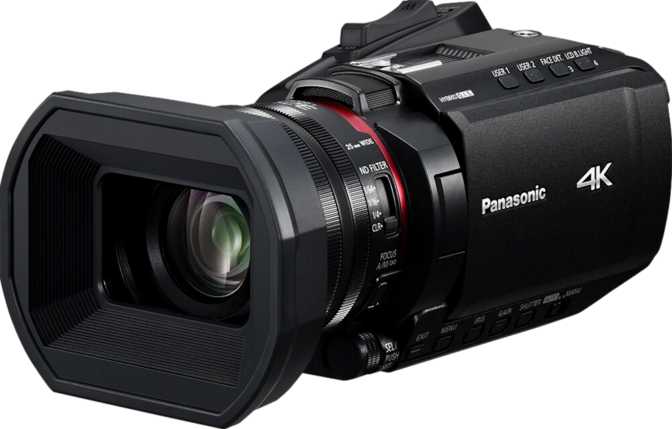
Panasonic HC-X1200 Review: A Professional Camcorder Built for Real Work
CamcordersThe HC-X1200 is a purpose-engineered professional camcorder that delivers broadcast-ready 4K footage, an exceptional optical zoom range, and professional audio connectivity in a portable, field-proven body. It rewards operators who know exactly what they need.
Overall Rating
4.5 / 5
Professional Event & Documentary Use
Who the Panasonic HC-X1200 Is Built For
Professional camcorders occupy a specific, unforgiving space in the market. They are not bought on impulse, and the people considering them are rarely first-time video shooters. The Panasonic HC-X1200 is a shoulder-friendly, high-zoom professional camcorder designed for broadcast-adjacent work — event videography, documentary fieldwork, live multi-camera setups, and corporate production. It is a tool that earns its value through reliability, optical reach, and a recording specification that holds up in professional post-production pipelines.
Before spending serious money on a camcorder at this level, buyers deserve a clear-eyed, complete picture of what this camera does well, where it falls short, and whether it is the right fit for their specific workflow. That is exactly what this review delivers.
Ideal For
- Event videographers — weddings, conferences, live performances
- Documentary and news-gathering crews
- Corporate video production teams
- Multi-camera live event production
Not Ideal For
- Cinematic narrative filmmakers needing RAW and interchangeable lenses
- Live streaming operators without an external encoder
- Hybrid stills-and-video shooters needing high-res photography
Design and Build: Form That Follows Function
Physical Profile and Handling
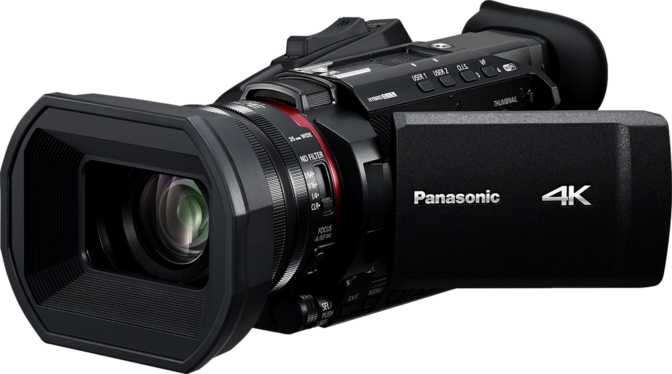
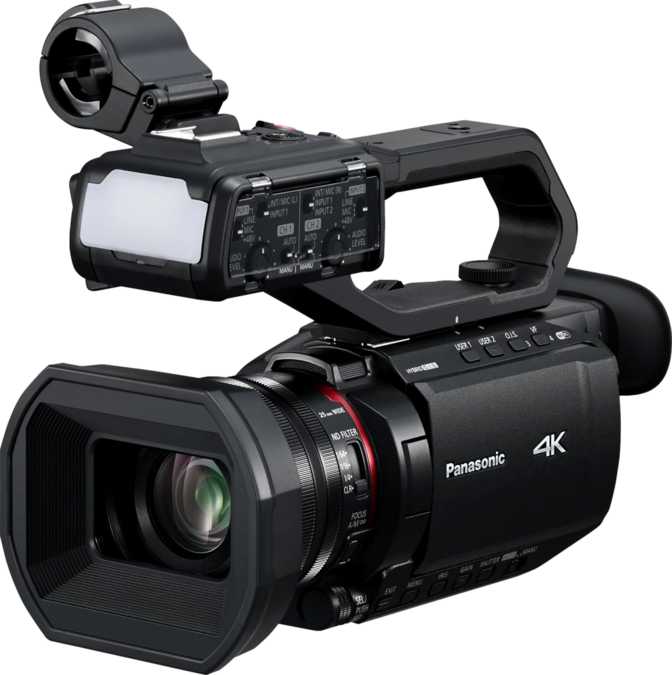
The HC-X1200 follows the traditional shoulder-style camcorder form factor, and every dimension of its body reflects an intent toward long-duration, hands-on shooting. At approximately 1.1 kilograms, it sits in a weight class that is heavy enough to feel substantial and stable in hand, but light enough that it will not become a liability during extended event shoots or run-and-gun documentary work. Operators used to mirrorless hybrids will feel the difference immediately — this is a camera you grip and command, not cradle.
The body dimensions — roughly 209mm deep, 129mm wide, and 93mm tall — produce a camera that fits naturally against the face with the viewfinder, or rides comfortably on a monopod or fluid head. The volume it occupies is purposeful: there is space inside for proper cooling, a large battery, and the kind of lens barrel that makes 24x optical zoom physically possible.
The chassis is engineered for professional use, not lifestyle photography. It is the kind of body that gets loaded into a production bag without anxiety.
| Weight | 1,100 g |
| Depth | 209 mm |
| Width | 129 mm |
| Height | 93 mm |
| Screen Size | 3.5 inches |
| Screen Resolution | 2,760k dots |
The Flip-Out Touchscreen
The 3.5-inch articulating monitor is one of this camera's most practical physical assets. It flips out to allow low-angle and high-angle framing without contorting your body — a genuine workflow benefit for solo operators covering fast-moving events. At a resolution of approximately 2.76 million dots of display clarity, it delivers more than enough precision to pull accurate manual focus, evaluate exposure, and catch blown highlights in real time.
The touchscreen functionality means focus points can be set with a tap during a shot — no need to navigate physical buttons when the subject moves unexpectedly. For documentary and event work where spontaneity is routine, this is not a luxury feature; it is a practical necessity.
The screen does not use a branded impact-resistant glass coating. A screen protector film is inexpensive insurance for field use.
Core Video Performance: What the Numbers Actually Mean
4K / 60p
UHD Resolution at 60 Frames Per Second
100 Mbps
Maximum Recording Bitrate
24p
Cinema Frame Rate Mode
4K at 60 Frames Per Second — Not Just a Resolution Claim
The HC-X1200 records at 3840x2160 (UHD 4K) at up to 60 frames per second. To understand why that matters, consider the alternative: many cameras in adjacent price brackets cap 4K at 30fps and reserve 60fps for 1080p. This camera does not ask you to choose between resolution and frame rate at the top of its range.
For broadcast delivery, sports coverage, and live-event documentation, 4K/60p means your footage is future-proof and flexible. In post-production, 60fps at full resolution gives editors the option to perform smooth slow-motion at 50% playback while retaining 4K quality — a technical detail that saves time and money when a client asks for a highlight reel with impact moments stretched out.
100 Mbps: The Bitrate That Keeps Editors Happy
Raw resolution numbers mean little if the codec compresses away the fine detail that professional work demands. The HC-X1200 records at a maximum of 100 megabits per second — a data rate that preserves enough tonal gradation and fine texture to survive color grading, chroma keying, and the compression introduced by broadcast encoding or streaming platforms downstream.
At 100Mbps, the files are large by consumer standards, but they are a known quantity in professional workflows. Color correction work in DaVinci Resolve or Adobe Premiere Pro will behave predictably. Skin tones will hold up under grading. Fine gradations in sky and shadow detail will survive the round trip from acquisition to delivery.
Important for cinematic buyers: The HC-X1200 does not shoot RAW files. Buyers who require maximum post-processing latitude for cinematic color work should weigh this limitation carefully. For bread-and-butter corporate, broadcast, and event deliverables, however, 100Mbps is a highly capable capture format.
24p Cinema Mode
The inclusion of a dedicated 24p recording mode signals that Panasonic designed this camera with more than just broadcast in mind. The 24 frames-per-second cadence is the foundational look of cinema — it produces a characteristic motion quality that separates cinematic aesthetics from broadcast or live video. Corporate films, short documentaries, and creative branded content all benefit from 24p when the goal is a more deliberate, film-influenced feel.
Switching between 24p for cinematic passages and 60p for slow-motion inserts within a single project is a legitimate professional technique, and this camera supports both within the same body.
Slow Motion Capability
The camera's slow-motion recording mode extends creative options for highlight footage and impact moments. Depending on the frame rate and resolution combination selected, operators can capture footage intended for smooth, stretched playback — useful in event coverage, sports documentation, and branded content where certain moments deserve visual emphasis.
Optical System: The Lens That Defines This Camera's Value
24x Optical Zoom — What That Range Actually Covers
A 24x optical zoom range is genuinely exceptional. In practical terms, it means this camera can go from a wide establishing shot that encompasses a full stage or conference room to a tight close-up of a subject across a large venue — without moving, without swapping lenses, and without any digital degradation.
Consumer camcorders offer digital zoom that multiplies numbers while multiplying pixel noise. The HC-X1200's reach is entirely optical, which means image quality at maximum zoom is constrained only by diffraction and atmospheric conditions — not by software upscaling artifacts.
For event videographers covering weddings, concerts, or conferences, this range eliminates the anxiety of being locked to a fixed shooting position. For documentary and news-gathering work, it provides the flexibility to capture candid moments from a respectful working distance.
Optical Image Stabilization
Camera shake is the enemy of professional footage, and at the long end of a 24x zoom range, even the steadiest hand produces unusable footage without compensation. The HC-X1200 uses optical image stabilization — a system that physically adjusts lens elements to counteract movement, rather than cropping and shifting the digital image.
Optical stabilization preserves the full sensor image area. Digital stabilization trades field of view for smoothness. In a professional context, where framing decisions are deliberate and every pixel of the 4K image represents investment, optical correction is the correct approach.
Autofocus Tracking
The AF tracking system follows a moving subject through the frame automatically, adjusting focus as the subject repositions. For solo operators — a single videographer covering an entire wedding ceremony or a journalist filming a press conference without a dedicated focus puller — this capability is not a convenience feature. It is the difference between usable and unusable footage when subjects behave unpredictably.
Touch autofocus allows the operator to designate a focus target by tapping the monitor. This combines well with the tracking system: select your subject, and the camera maintains focus as they move. The result is a level of focus control that used to require a dedicated camera assistant.
Sensor Resolving Power
The main imaging sensor captures approximately 8.3 megapixels of data — a figure calibrated specifically for 4K video output rather than for high-resolution stills. This is a deliberate engineering choice, not a limitation. Video-optimized sensors are designed to maximize dynamic range, low-light sensitivity, and readout speed within the specific resolution requirements of the recording format. Note that HDR recording mode is not present on this camera — operators whose projects require HDR deliverables should factor this into their evaluation.
- Optical Zoom 24x
- Sensor 8.29 MP (video-optimized)
- OIS Optical
- Touch AF Yes
- AF Tracking Yes
- HDR Mode No
- RAW Recording No
Audio Capabilities: Where This Camera Separates From Consumer Gear
Professional Audio Input Options
Audio is frequently where consumer and prosumer camcorders reveal their limitations. The HC-X1200 addresses this directly with a combination of connectivity that serves professional production sound workflows.
A dedicated XLR-compatible microphone input allows connection to professional-grade external microphones and audio mixers. This is the standard in broadcast and documentary production for a reason: XLR connectors carry balanced audio that rejects the interference and ground hum that plagues consumer-grade connectors over longer cable runs or in electrically noisy environments like wedding receptions, live stages, or outdoor events.
The 3.5mm headphone and audio jack provides compatibility with standard consumer and semi-professional audio accessories, offering flexibility when XLR gear is not available or when the shoot does not require broadcast-grade audio isolation.
Built-In Stereo Microphone
The internal stereo microphone handles ambient sound capture and serves as a reliable backup when external audio connections are not practical. It records a stereo image — left and right channels independently — rather than the monaural center channel that many built-in microphones collapse to. For run-and-gun situations where setting up external mics is not feasible, this preserves directional sound information in the recording.
Audio Connectivity Summary
- XLR microphone input (professional balanced audio)
- 3.5mm audio jack (consumer / semi-pro accessories)
- Built-in stereo microphone (ambient capture / backup)
- No stereo speakers — headphone monitoring required for playback
Battery Life and Power: Built for Long Days
The HC-X1200 carries a removable battery with substantial capacity designed for professional production schedules. A typical corporate event, wedding ceremony, or documentary shooting day runs 6 to 10 hours of combined standby and active recording time. The battery's capacity is engineered to survive deep into a full day's work.
Critically, the battery is removable and rechargeable — meaning operators can carry a charged spare and swap mid-shoot without interrupting the production. This is standard professional practice, and cameras that do not support quick-swap battery changes impose a real workflow penalty on long-format productions. The HC-X1200 eliminates that constraint entirely.
A real-time battery level indicator provides capacity feedback so operators never lose track of remaining power during a shoot — a detail that matters more than it sounds when you are 90 minutes into a wedding ceremony with no opportunity to pause.
Excellent capacity for full-day professional use
- Removable — hot-swap mid-shoot
- Rechargeable in-camera or via charger
- Real-time level indicator on screen
Connectivity: Where the HC-X1200 Connects — and Where It Does Not
What Is Present
- HDMI Output
- Feeds a live signal to an external monitor, video switcher, or capture device. Essential for multi-camera event production where the camera's output needs to appear on a director's monitor or a live switch feed.
- USB Type-C
- Modern file transfer via a universal connector that is increasingly standard across professional production equipment. Speeds file offload and simplifies the cable kit an operator needs to carry.
- External Memory Slot
- Recording to removable media means footage can be offloaded, backed up, and transferred without a direct camera connection — a standard practice in professional production.
- XLR / 3.5mm Audio
- Dual-path audio connectivity — covered in depth in the audio section — is one of the most professionally relevant hardware features on this camera.
What Is Absent
-
No Wi-FiThe most significant gap relative to some competitors. Solo live streaming operators will need an external encoder. For productions with a dedicated technical director managing a streaming encoder, this is a non-issue.
-
No GPSLocation metadata is not embedded in recordings. Relevant only if geographic tagging is a post-production or archival requirement.
-
No Native Live StreamingFirst-party platform streaming is not supported. Requires an external encoder for direct-to-CDN delivery.
-
No Remote ControlPan-tilt-head remote operation is not supported natively. The camera must be operated directly.
Competitive Positioning
How the HC-X1200 measures up against logical alternatives in the same purchasing consideration set.
| Feature | Panasonic HC-X1200 | Prosumer Mirrorless Hybrid | Higher-Tier Broadcast Camcorder |
|---|---|---|---|
| 4K Resolution | UHD 4K / 60p | UHD 4K / 60p (varies by model) | UHD / Cinema 4K |
| Optical Zoom | 24x | 3–5x (kit lens) | 20–25x |
| Max Bitrate | 100 Mbps | 100–400 Mbps (varies) | 100–600 Mbps |
| RAW Video | No | Often Yes | Sometimes |
| XLR Audio Input | Yes | Rarely (adapter needed) | Yes |
| Removable Battery | Yes | Yes | Yes |
| Built-in OIS | Optical | Varies by model | Yes |
| Wi-Fi / Streaming | No | Typically Yes | Varies |
| 24p Cinema Mode | Yes | Yes | Yes |
| Lens Flexibility | Fixed zoom (24x range) | Interchangeable lenses | Fixed or interchangeable |
Against mirrorless hybrids, the HC-X1200's primary advantage is the 24x optical zoom in a single stabilized barrel — no lens swapping, no optical quality trade-off, and no separate stabilization accessory. Against higher-tier broadcast camcorders, it trades RAW capability and higher bitrate options for a more accessible price point and a lighter, more portable chassis.
Questions Real Buyers Ask Before Purchasing
Final Verdict: Who Should Buy the Panasonic HC-X1200
The Panasonic HC-X1200 is a professional camcorder that rewards operators who know what they need and why. Its 24x optical zoom, 4K/60p recording at 100Mbps, professional XLR audio input, optical image stabilization, and long-run removable battery are not marketing checkboxes — they are functional assets that directly serve the event, documentary, and corporate videography workflows this camera was designed for.
It is not the right tool for cinematic narrative production that demands RAW acquisition and interchangeable optics. It is not ideal for operators who need native Wi-Fi connectivity or live streaming output without external hardware. And it will not satisfy photographers who want a hybrid stills capability alongside video.
For the working professional videographer who needs a dependable, optically capable, audio-ready camera that can handle a full production day and deliver broadcast-quality footage — the HC-X1200 is a purposeful, well-executed instrument that justifies serious consideration.
Overall Score
Out of 5 — Professional Event & Documentary Use
Recommended for professional event, documentary, and corporate videographers.