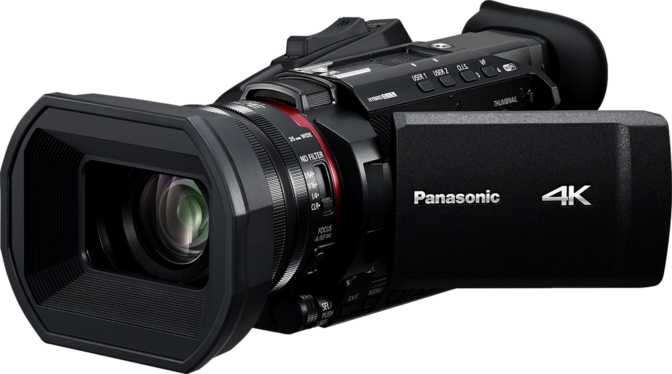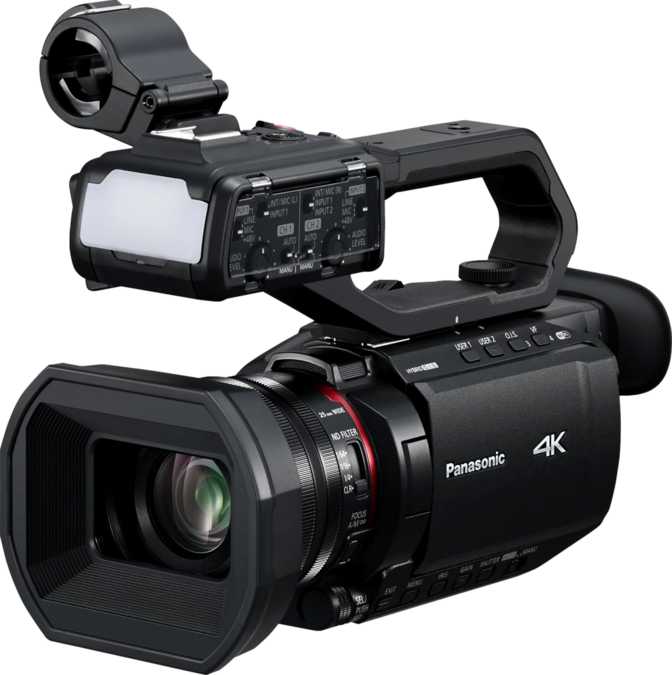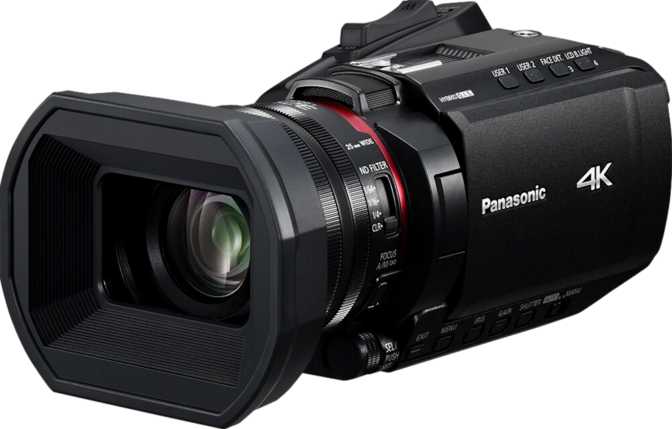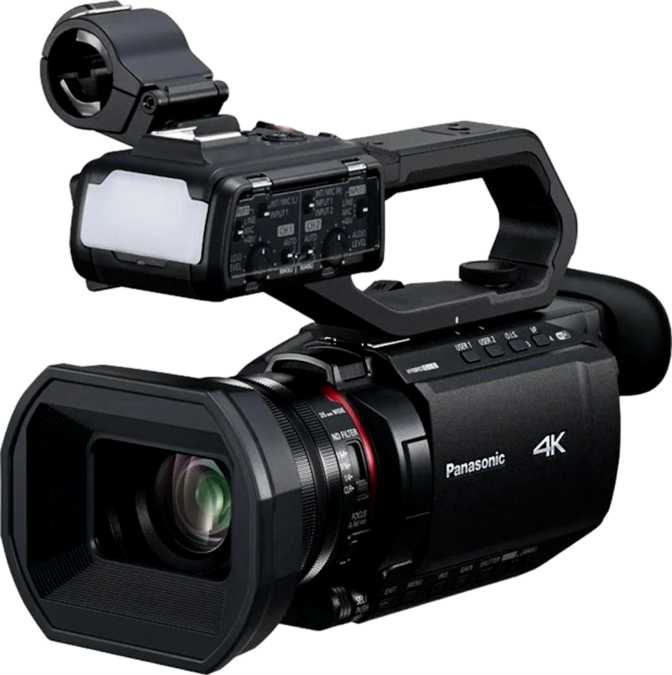
First Impressions: A Camcorder Built With a Purpose
Hand someone a smartphone and ask them to film a two-hour wedding reception, and by the halfway point you'll see the problem: the battery is dying, the autofocus is hunting between faces, the built-in microphone is picking up everything except the toast being given six feet away, and their arm is shaking from holding the same position for too long. The Panasonic AG-CX20 exists to solve that exact problem.
It's a single-grip, single-lens camcorder engineered for people who need to point, shoot, and trust the footage - for hours, not minutes.
This is not a hybrid stills-and-video camera wearing a video hat. Every decision in its spec sheet - the fixed superzoom lens, the long-haul battery, the dedicated audio inputs, the built-in live-streaming support - points toward one audience: people who shoot video for a living or for an organization, and who need the camera to simply work, repeatedly, without babysitting. Whether that audience includes you is what the rest of this review is here to answer.
Quick Facts at a Glance
- 4K60p Video
- Smooth motion, sharp detail
- 24x Optical Zoom
- No lens changes needed
- f/1.8 Aperture
- Bright in low light
- Removable Battery
- Built for long shoot days
- Live Streaming
- First-party, no extra encoder
- Audio Monitoring
- Headphone jack included
Design, Build Quality, and Handling
Size, Weight, and Grip Comfort
The AG-CX20 has the classic silhouette of a handheld camcorder rather than a mirrorless camera: a long, lens-forward body with a side grip, rather than a compact rectangular block. Most of its length comes from the lens barrel itself, which houses a substantial zoom mechanism. At a body weight that sits in a comfortable middle ground, it's heavier than a point-and-shoot or a phone-and-gimbal rig, which gives it the stability and balance you want for handheld shots, but nowhere near the bulk of a shoulder-mount broadcast camera.
In practice, that weight works in the camera's favor. A camcorder that's too light tends to amplify hand-shake, especially at long zoom ranges; a little heft, properly balanced through the grip, actually helps you hold steadier shots over a long event. You'll feel it after an hour of handheld shooting, but it's far more forgiving than a heavier rig over a full day of work.
The Flip-Out Touchscreen Display
A 3.5-inch touchscreen sits on a flip-out hinge that rotates outward and swivels rather than staying fixed to the body. A fixed screen forces you into one shooting position, while a flip-out panel lets you frame shots from above your head, down at waist level, or even facing forward toward yourself for presenter-style recording.
The panel itself renders at a high enough dot density that you can trust it for critical focus checks by eye, not just rough framing. Combined with touch autofocus, you can simply tap a face or object on the screen and the camera will lock and follow it - far faster than fumbling with a focus ring under time pressure, though that ring is still there when you want it.
Build Quality and Weather Resistance
This is not an action camera; there's no dedicated mounting hardware for handlebars or helmets, and the screen isn't built with a branded scratch-resistant glass coating, so normal handling care is worth the investment.
Video Performance: What the Footage Actually Looks Like
4K Resolution and Frame Rates
The headline capability here is 4K recording at up to 60 frames per second. For straightforward documentation - interviews, presentations, ceremonies - 4K at standard frame rates gives you resolution to spare, meaning you can crop in during editing or reframe a shot after the fact without visibly losing detail. For motion-heavy footage - sports sidelines, dance performances, fast-moving b-roll - the 60fps option captures noticeably smoother motion, and gives editors the option to slow that footage down for emphasis without it looking choppy. The camera also includes dedicated slow-motion recording modes plus a built-in timelapse function for compressing long events into a short, watchable sequence.
Bitrate and Image Detail
The AG-CX20 records at up to 200 megabits per second, a meaningfully high data rate for a camera in this class. More visual information is captured for every second of footage - fine detail in foliage, water, fabric texture, and crowd scenes survives compression far better than it would at lower bitrates. The trade-off is practical: high-bitrate footage produces large files quickly, so fast, high-capacity memory cards and a real storage plan matter.
One limitation worth flagging clearly: the AG-CX20 does not shoot RAW video. For run-and-gun, broadcast, and event work, that's a sensible trade, but anyone depending on extensive color-grading flexibility should know that ceiling exists before buying.
24p Cinema Mode and Color
Alongside its higher frame rate options, the camera includes a dedicated 24p mode - the classic frame rate associated with film, as opposed to the smoother, more video-like look of 30 or 60fps. For documentary work or anything where footage should feel more like a film than a broadcast, this is the mode to reach for. The camera does not support Dolby Vision recording, so footage comes out in standard dynamic range rather than the expanded brightness range used in HDR displays - a non-issue for most broadcast, web, and event delivery, and only relevant if your pipeline is built around HDR mastering.
Autofocus That Keeps Up With You
This is where the AG-CX20 earns its keep for solo operators. Continuous autofocus, subject tracking, and touch-to-focus combine into one system: tap a subject and the camera keeps them in focus as they move, without a manual pull mid-shot. A manual focus ring remains available for deliberate, cinematic pulls. There's no built-in HDR photo blending and no burst shooting mode - reasonable omissions, since this is fundamentally a video tool rather than a stills camera.
The Lens: One 24x Zoom Instead of a Bag of Glass
The AG-CX20 is a fixed-lens camera - there's no swapping glass, no lens mount, no system of accessories to buy into. That's a deliberate trade-off. What you lose in optical flexibility, you gain in reliability and speed: no dust working its way onto a sensor during a lens change, no fumbling through a bag mid-event, no risk of being caught with the wrong lens on when the moment happens.
In exchange, the built-in lens covers an unusually wide 24x optical zoom range - from wide establishing shots all the way to tight telephoto reach, without ever switching to digital zoom. At the wide end, the lens opens up to a bright f/1.8 maximum aperture, letting in more light than most fixed-lens cameras in dim interiors or evening events, and helping separate a subject from its background more than a narrower aperture would. As with virtually any superzoom lens, that aperture narrows somewhat toward the telephoto end. Built-in optical image stabilization helps keep handheld footage steady throughout the zoom range, increasingly important the further you zoom in.
Audio Quality and Sound Capture
Video professionals will tell you the same thing: bad audio ruins good footage faster than bad video does. The AG-CX20 treats sound as a first-class concern rather than an afterthought. It includes a built-in stereo microphone for capturing natural ambient sound, a dedicated external microphone input for connecting a professional mic when on-camera audio isn't good enough, and a 3.5mm headphone jack for real-time audio monitoring while you record.
That monitoring jack matters more than it might seem. Without it, you're recording audio blind, hoping levels are correct and nothing's clipping or cutting out, and only finding out you were wrong once you're back at the edit bay with no way to fix it. With it, you catch problems - a disconnected mic, a wind gust, a clipped level - in the moment, while you can still do something about it.
Battery Life and Storage for Long Shooting Days
The AG-CX20 uses a removable, rechargeable battery with a notably large capacity - meaningfully bigger than what you'd find in a compact camera or hybrid mirrorless body. That capacity is purpose-built for multi-hour ceremonies, full-day conferences, extended live-streamed services, and event coverage where stopping to recharge mid-shoot simply isn't an option. Because the battery is removable rather than sealed in, you can carry spares and swap between them in seconds rather than waiting out a recharge cycle.
- Real-time battery level indicator
- External memory card slot
- Swappable spare batteries
Connectivity, Streaming, and Remote Control
This is arguably where the AG-CX20 separates itself most clearly from a typical consumer camcorder. It includes first-party live streaming support, meaning it's built to stream directly without a separate encoder box bolted onto the workflow - a significant convenience for churches, conferences, corporate events, and creators who broadcast live rather than just recording for later editing.
A physical remote control is supported, useful for fixed-position shooting - a podium, a lectern, a stage-front static shot - where you need to start, stop, or adjust the camera without walking up to it. Voice commands extend that same hands-free philosophy further, letting you trigger functions like starting a recording without physically touching the camera.
What's Not Included
- No hot shoe for mounting accessory lights or mics
- No built-in GPS for geotagging footage
- No NFC for one-tap device pairing
- No DLNA certification for home network streaming
Who Should Buy the Panasonic AG-CX20
Built For
- Live streaming and AV production teams - churches, conferences, corporate events, and venues that need built-in streaming and HDMI output without bolting on extra encoding hardware.
- Event and wedding videographers - long battery life, swappable batteries, and a wide zoom range cover ceremonies and receptions without lens changes mid-event.
- Solo video journalists and documentarians - continuous autofocus, subject tracking, and voice commands are built around one person handling the whole shoot.
- Organizations needing a grab-and-go camera - reliable, mostly-automatic 4K footage without a learning curve around lens selection or manual exposure.
Look Elsewhere If
- Stills photographers - no RAW photo capture, no burst shooting, no flash, and a sensor tuned for video rather than maximizing photo resolution.
- Outdoor and adventure shooters working in rain, dust, or rugged conditions need weather-sealed gear; this camera needs extra protection beyond mild conditions.
- Cinema and narrative productions that depend on RAW or log-format footage for heavy color grading will hit a ceiling here.
- Photographers wanting lens flexibility - wide primes, macro glass, super-telephoto reach beyond 24x - won't get that from a fixed-lens body.
How the AG-CX20 Compares to Other Video Tools
| Category | Lens Flexibility | Zoom Reach | Solo-Operator Ease | Audio Monitoring | Weather Sealing | Live Streaming Ready | Best For |
|---|---|---|---|---|---|---|---|
| Panasonic AG-CX20 (fixed-lens camcorder) | None (fixed) | Very high (24x optical) | Strong - tracking AF, voice commands | Yes - headphone jack, mic input | No | Yes, first-party | Events, streaming, ENG, documentary |
| Interchangeable-lens hybrid camera | High | Depends on lens owned | Moderate - often needs lens changes | Varies by model | Varies by model | Usually needs extra hardware | Cinematic look, creative control |
| Smartphone + gimbal | None | Low to moderate (often digital) | High - very lightweight | Limited, usually needs add-ons | Varies, generally low | Possible via apps | Casual content, quick social clips |
| Shoulder-mount ENG camera | High, professional mounts | High with appropriate lens | Lower - typically a two-person job | Yes, professional grade | Often weather-resistant | Usually needs add-on gear | Heavy broadcast production |
Strengths and Weaknesses: The Honest Take
What Works Well
What stands out most about the AG-CX20 is how coherently it's built around a single use case rather than trying to be everything to everyone. The autofocus system genuinely earns its keep for solo shooters - the combination of touch selection, continuous tracking, and a manual override gives you both speed and control, which is a harder balance to strike than it sounds. The audio setup, with real monitoring rather than just an input jack, reflects an understanding that professional buyers actually care about sound, not just image. The battery situation - large capacity, removable, swappable - means this camera can realistically cover a full event day without becoming the limiting factor, and the built-in live streaming support removes a piece of hardware that competing setups often require buying separately.
Where It Falls Short
The lack of weather sealing is a real constraint for a camera aimed partly at event and outdoor coverage, and it means budgeting for protective accessories rather than shooting freely in light rain or dusty venues. The absence of a hot shoe is a genuine inconvenience for anyone wanting to mount accessory lights or wireless audio receivers directly to the body - a feature common enough elsewhere in this category that its absence stands out. And the lack of RAW video recording, while a sensible trade-off for file size and workflow speed, will frustrate anyone whose post-production process depends on maximum color-grading latitude.
Frequently Asked Questions
Final Verdict: Is the Panasonic AG-CX20 Worth Buying?
The Panasonic AG-CX20 succeeds because it doesn't try to be a hybrid stills-and-video do-everything camera - it's a focused tool for people who record video professionally and need that recording to be dependable, well-monitored, and ready to stream or deliver without extra hardware bolted on.
If your work involves live streaming, event coverage, documentary-style solo shooting, or organizational AV production, this camera's combination of long battery life, capable autofocus, real audio monitoring, and an unusually long zoom range makes it a genuinely strong, confident recommendation. If your priorities lean toward rugged outdoor durability, interchangeable lenses, RAW video for heavy color grading, or still photography, this isn't the camera built for that job. But for the buyer it's actually built for - the person who needs to point this camera at something important, hit record, and trust the result - the AG-CX20 delivers exactly what it promises.