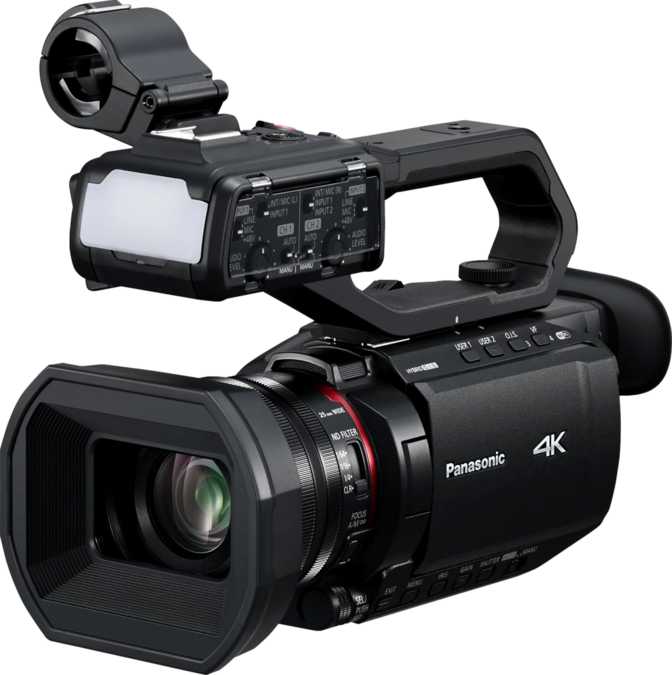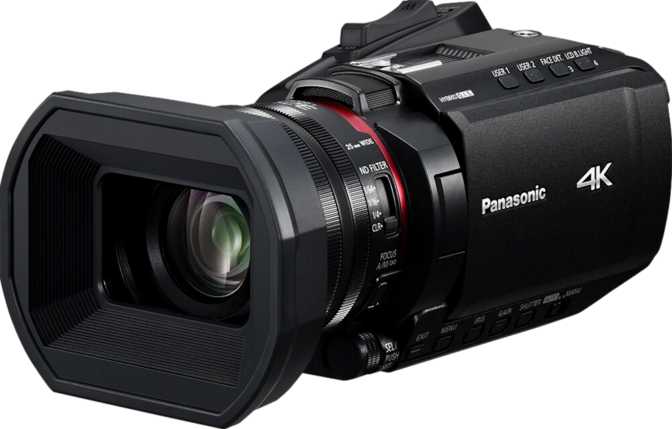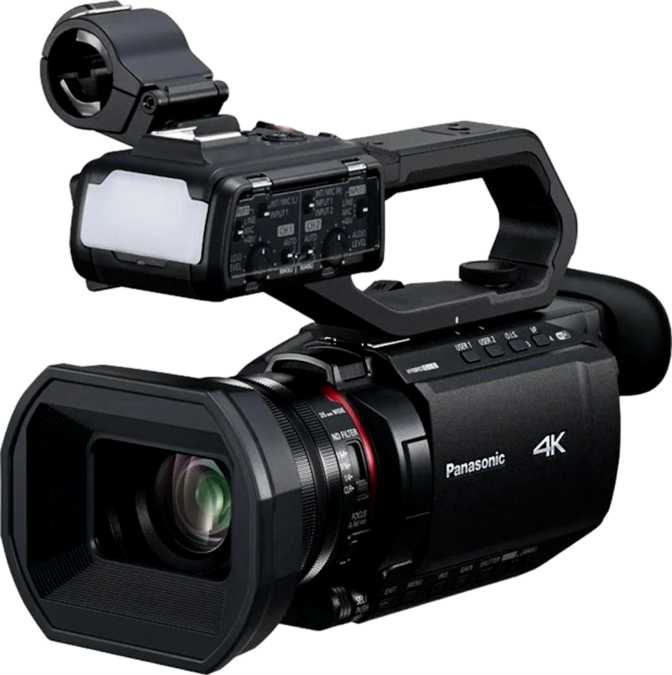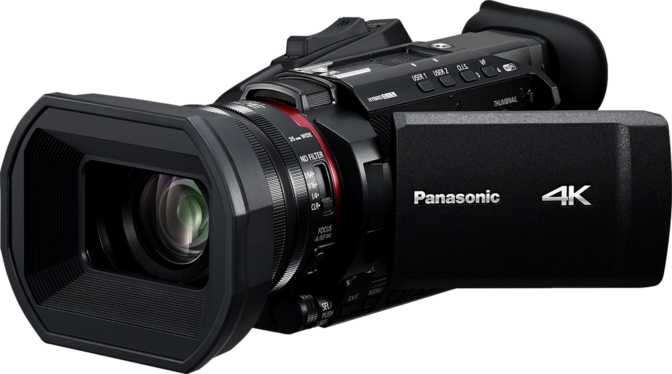
Panasonic HC-X1600 Review: Pro 4K Camcorder for Event Videographers
CamcordersThe smartphone era quietly convinced a generation that a pocket-sized device could handle all their video needs. For casual clips and social posts, that's mostly true. But the moment you're shooting a wedding ceremony in a dimly lit venue, livestreaming a corporate event to thousands, or capturing a youth sports tournament from across a field, the gap between a phone and a purpose-built professional camcorder becomes impossible to ignore. The Panasonic HC-X1600 is aimed squarely at that gap — built for serious content creators, event videographers, and broadcast-adjacent professionals who need reliable, cinema-quality footage in a form factor they can operate solo, all day, without stopping to recharge or reconfigure.
Key Specifications at a Glance
What these numbers mean in real-world use
Design and Build: A Tool Built to Be Used, Not Admired
Form factor, ergonomics, and physical experience
Physical Footprint and Ergonomics
At 850 grams, the HC-X1600 sits in a meaningful middle ground. It's heavier than a consumer camcorder — which is actually a feature. That weight contributes to stability during handheld shooting and signals a chassis built from materials intended to last through years of professional use. It won't disappear into a bag, but it will sit comfortably on a shoulder mount or tripod without flex or wobble.
The body measures 267mm in depth with a 129mm width and 93mm height — dimensions that reflect a traditional camcorder form factor optimized for grip and lens reach rather than compactness. If you're accustomed to mirrorless cameras, this will feel substantial. If you're coming from broadcast production, it will feel immediately familiar.
The Monitoring Screen Experience
The flip-out LCD monitor measures 3.5 inches and resolves at approximately 2.76 million dots. To put that in perspective: most mid-range camcorders in this class ship with screens around 1.15 to 1.55 million dots. Nearly 2.76 million dots means fine detail in your composition is actually visible while monitoring — you can check focus, skin tones, and highlight rolloff on the screen rather than relying on guesswork or an external monitor.
The screen swings out from the body, which matters enormously in real-world use. Shooting from a low angle at a ceremony? Swing the screen up. Mounting the camera above a crowd? Swing it down to face you. Touch control is built in, so navigating menus, adjusting focus, or triggering recording is possible without fumbling for buttons — critical when you're operating solo under time pressure.
Port and Connectivity Layout
Optical Performance: What 24x Zoom Actually Means in the Field
Zoom reach, sensor design, and hardware stabilization analyzed
The optics package on the HC-X1600 is where this camera most clearly differentiates itself from alternatives. The 24x optical zoom isn't a marketing figure — it's a capability that fundamentally changes what a solo operator can accomplish without moving from position. Pair that with a video-optimized sensor and hardware stabilization, and you have an optical system designed for professional field use.
24x Optical Reach
Fill the frame with a speaker's face from the back row of a 300-seat auditorium, capture wildlife from a non-disruptive distance, or track a performer across a large stage — all without cutting away or repositioning. Optical zoom preserves full image quality at every focal length, unlike digital zoom, which degrades the picture. At 24x, the HC-X1600 delivers usable telephoto range that most competitors cap well short of.
Video-Optimized Sensor
The 8.29-megapixel imaging sensor is calibrated specifically for video, not stills — an important distinction. At 4K resolution, you only need roughly 8.3 megapixels of sensor data, and the HC-X1600's sensor is sized to deliver exactly that, prioritizing color science, dynamic range, and low-light sensitivity over excess pixel density. Buyers expecting high-resolution still photography capability should temper expectations — this is a video-first instrument.
Optical Stabilization
The built-in optical image stabilization (OIS) compensates for camera shake at the hardware level — physically moving lens elements to counteract movement before the image is even recorded. At the long end of a 24x zoom, even a small hand tremor is amplified dramatically. OIS makes handheld shooting at telephoto distances usable rather than unwatchable. For event shooters who can't always reach for a tripod, this is foundational to consistent, professional results.
Video Capabilities: The Core of the Machine
Recording formats, frame rates, and creative modes explained
4K at 60 Frames Per Second
The headline recording specification — 4K at 60 frames per second — is more consequential than it first appears. Most camcorders in adjacent price brackets offer 4K, but many cap it at 30fps. The 60fps ceiling means two things: first, motion in your footage is dramatically smoother, which matters for sports, live events, and anything with fast movement; second, you have the raw material to create slow-motion sequences in post-production by slowing 60fps footage to 24fps or 30fps, getting usable, artifact-free results without a dedicated high-speed camera.
Cinema-Mode 24p Recording
The 24p cinema mode (24 frames per second, progressive scan) is not just a marketing feature — it's a creative choice with a specific aesthetic outcome. The 24fps frame rate is the standard for theatrical film and high-end narrative video. It produces the motion cadence that trained audiences subconsciously associate with "cinematic" content. For documentary filmmakers, corporate storytellers, or anyone whose final delivery is a finished film rather than a live broadcast, 24p is not optional — it's essential.
Slow Motion, Timelapse, and AF Tracking
The native slow-motion recording mode captures high-frame-rate footage intended for reduced-speed playback — useful for product detail shots, emotional highlight reels, or sports analysis. Quality is preserved because it's hardware-native rather than a digital interpolation trick.
Timelapse recording compresses extended time periods into short sequences — useful for construction documentation, event setup coverage, or atmospheric establishing shots. Autofocus tracking locks onto a subject and continuously adjusts focus as that subject moves through the frame. In solo operation, this is the difference between keeping a speaker sharp across a stage and spending your entire shoot manually hunting focus.
Two Notable Absences
No RAW Video Recording. RAW capture records unprocessed sensor data, giving colorists maximum flexibility in post-production. It's the format of choice for high-end film and commercial production. If your workflow demands it, this camera doesn't provide it.
No Dolby Vision Recording. The high dynamic range format increasingly required for streaming delivery is not supported. Shooters targeting Dolby Vision deliverables for streaming platforms will need to look elsewhere or apply a conversion workflow in post.
Audio: Professional Inputs for Serious Production
Where many cameras quietly fail, the HC-X1600 doesn't
Audio is where many otherwise capable cameras quietly fail, and it's often where professionals first identify whether a piece of gear was designed by people who understand production. The HC-X1600 ships with a built-in stereo microphone which handles ambient recording reasonably well in controlled environments. But the more important feature is what the camera accepts externally.
The dedicated microphone input allows connection to professional-grade microphones beyond the 3.5mm consumer ecosystem — a capability that signals real-world usability for events, interviews, and documentary work. The 3.5mm jack sits alongside it for lavalier mics and wireless receivers. Stereo speakers are included for immediate audio playback review on location — not reference monitors, but sufficient to confirm audio was captured cleanly before you move on.
Audio Feature Summary
Battery Life and Power: Extended Shooting Without Anxiety
How the HC-X1600's capacity stacks up against the category
The battery powering the HC-X1600 carries a 5,900mAh capacity — generous by professional camcorder standards. The average prosumer camcorder battery runs between 3,000 and 4,500mAh, meaning this pack offers meaningfully more shooting time between changes.
For a typical event videographer shooting a wedding ceremony and reception, a capacity at this level supports sustained shooting across multiple hours without interruption — though exact runtime varies with screen brightness, zoom motor use, Wi-Fi activity, and recording resolution. The practical implication is that a single charge is realistic for half-day shoots, and carrying one spare covers almost any full-day production.
Critically, the battery is removable. During a ten-hour corporate event or multi-day conference, you can swap batteries in seconds without powering down — something impossible with sealed-battery systems. A built-in battery level indicator means you're never caught off-guard by an unexpected shutdown.
Battery Capacity Comparison
Category figures represent typical prosumer camcorder range at this tier. Actual runtime varies by use conditions.
Connectivity and Live Production Features
Wi-Fi 5, native streaming, remote control, and I/O capabilities
Wi-Fi 5 and Native Live Streaming
The HC-X1600 supports Wi-Fi 5 (802.11ac) — capable of fast enough throughput for video transfer and remote control applications. More significantly, the camera includes first-party live streaming support. This means the camera can send video directly to a streaming platform or encoder without requiring an external capture card or HDMI adapter setup. For solo operators livestreaming a church service, a school event, or a corporate presentation, this built-in capability dramatically simplifies the production chain.
Remote Control and Mobile Integration
The remote control compatibility extends the operational range of a solo shooter — useful when the camera is locked off on a tripod at the back of a room and the operator needs to start recording, adjust zoom, or trigger a new take without walking to the camera. Both iOS and Android devices are compatible with the HC-X1600's companion app ecosystem, enabling remote monitoring, camera control, and file transfer over the Wi-Fi connection — the practical layer that makes single-person production feasible at a professional level.
Who This Camera Is For — and Who Should Look Elsewhere
Honest use-case matching before you commit to a purchase
Ideal Users
Who Should Look Elsewhere
Competitive Positioning: Where the HC-X1600 Stands
HC-X1600 vs. typical prosumer camcorder competition at this tier
| Feature | Panasonic HC-X1600 | Typical Prosumer Competitor |
|---|---|---|
| Maximum 4K Frame Rate | 60fps | Often 30fps at this price tier |
| Optical Zoom Range | 24x | 12x–20x is more common |
| Battery Capacity | 5,900 mAh (removable) | 3,000–4,500 mAh, often removable |
| Touchscreen Resolution | ~2.76M dots | 1.15M–1.55M dots typical |
| Live Streaming Support | Yes, first-party | Often requires external hardware |
| RAW Video Recording | Not available | Also absent in most competitors |
| Dolby Vision Recording | Not available | Rare at this tier |
The HC-X1600 differentiates primarily through its 4K 60fps ceiling, zoom reach, screen quality, and live streaming integration. Competitors at a similar tier typically compromise on at least one of those four attributes.
Honest Assessment: Strengths and Weaknesses in Practice
The full picture before you decide
Where the HC-X1600 Earns Its Place
Where the HC-X1600 Falls Short
Common Buyer Questions Answered
Real questions buyers search before purchasing
A Professional Workhorse With a Clear Purpose
The Panasonic HC-X1600 doesn't try to be everything. It is a 4K professional camcorder designed for event videographers, livestream operators, and institutional content producers who need long zoom reach, extended battery runtime, quality audio inputs, and direct streaming capability — packaged in a form factor that can survive a full production day and be operated solo.
It earns its positioning clearly. The 4K 60fps ceiling, 24x optical zoom, removable high-capacity battery, and broadcast-quality monitoring screen are a combination that justifies serious consideration over competitors that compromise on one or more of those attributes. The first-party live streaming integration is an added advantage that once required external hardware most shooters couldn't justify purchasing separately.
If your work involves RAW video workflows, Dolby Vision deliverables, or high-resolution still photography, the HC-X1600 isn't your camera. But if your work looks like a wedding, a corporate event, a livestream broadcast, or a documentary in the field — and you need to do it reliably, repeatedly, and without a crew — the HC-X1600 is built precisely for you, and it shows in every specification that matters.