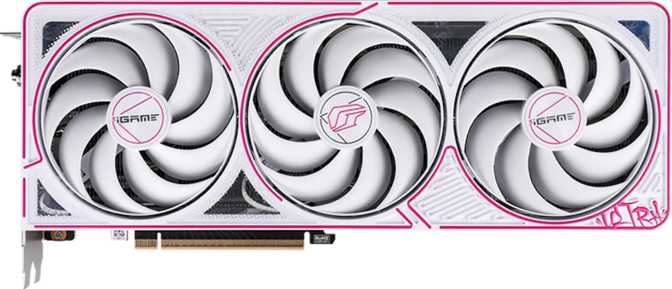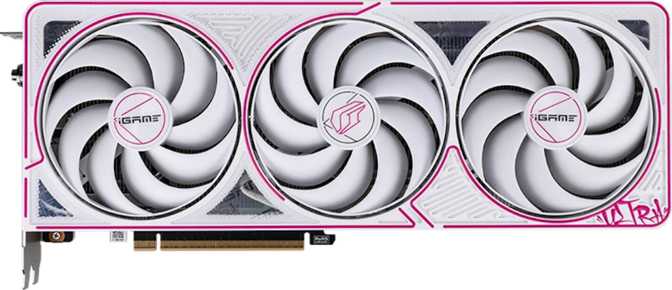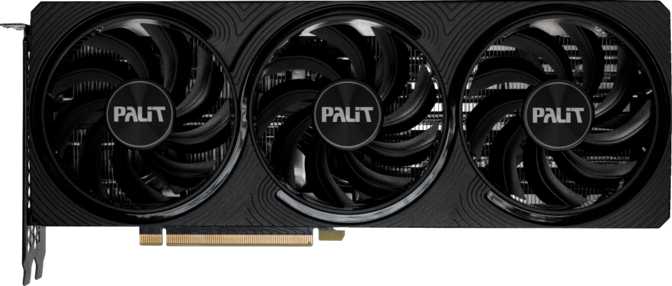
Palit GeForce RTX 4070 Ti Super Infinity 3 OC: An Honest Full Review
Graphics CardsAt a Glance
Overview
The RTX 4070 Ti Super Tier: Why This Is Where Serious Buyers Land
Most GPU purchases come down to the same uncomfortable calculation: spend too little and face regret within a year, or spend too much on performance that no game or application you actually run will ever fully consume. The Palit GeForce RTX 4070 Ti Super Infinity 3 OC targets the productive middle of that tension — a card with genuine headroom, a memory configuration that ages better than most of its competition, and a factory tune that earns its place without inflating expectations.
Whether the price makes sense depends on your resolution target, your workload, and an honest read of where your requirements are headed. This review gives you everything to answer those questions.
Editorial Rating
Our Verdict Score
Design & Build
Design and Build: Function Over Flash
At roughly 294mm in length and 116mm in height, the Infinity 3 OC slots comfortably inside most standard mid-tower cases with meaningful clearance to spare. Compact mini-ITX enclosures or cases with explicit GPU length limits deserve a measurement before purchasing, but for a card at this performance tier, the footprint is notably conservative.
The design philosophy here is straightforward and unapologetic: this card has no RGB lighting. None. If your build features synchronized RGB across fans, RAM, and peripherals, the Infinity 3 OC will not participate — it sits in its bay quietly and uniformly dark. For builders who want clean aesthetics or an all-black interior, this is exactly right. For those whose build centers on ARGB coordination, that decision should be made before anything else is considered.
The triple-fan air cooling solution handles thermal load without liquid or hybrid cooling. Fan noise under extended full load is something to plan for, particularly in systems with limited case airflow. The cooler mass and fin density should maintain safe temperatures during normal gaming sessions, but buyers expecting near-silence at peak load should assess their case setup before installation.
| Length | 294 mm (~30 cm) |
| Height | 116 mm |
| Cooling | Triple-fan air |
| RGB Lighting | None |
| PCIe Slot | PCIe 4.0 (3.0 compatible) |
| Hybrid Option | Air only — no liquid |
Architecture
Ada Lovelace Architecture: Why the Foundation Matters
The RTX 4070 Ti Super Infinity 3 OC is built on NVIDIA’s Ada Lovelace architecture, fabricated at the 5-nanometer process node. A smaller nanometer figure means more transistors fit into the same physical die area, which generally produces better performance per watt and allows higher clock speeds within a given power envelope compared to older process generations.
This chip contains over 76 billion transistors — and the significance isn’t the number itself but what those transistors do. Ada Lovelace separates its processing resources into distinct hardware blocks: shaders for general graphics computation, dedicated ray tracing accelerators, and tensor cores for AI workloads like DLSS. These blocks operate simultaneously without stealing resources from each other, which is why Ada Lovelace ray tracing performance is categorically different from earlier generations.
Together this configuration produces just over 44 trillion floating-point operations per second. Cards in this compute range handle demanding 4K workloads and are not meaningfully constrained by raw throughput at 1440p in any current title — that number is a tier indicator, not a frame rate prediction.
Memory
Memory: The 16GB Argument, Explained Properly
The memory configuration deserves more than a headline figure. Sixteen gigabytes of GDDR6X is meaningful, and understanding why requires understanding what video memory actually does under pressure.
Bandwidth in Real Terms
GDDR6X is the higher-performance variant of the consumer graphics memory standard. Operating at effective speeds near 21 gigahertz over a 256-bit data bus, this memory system delivers peak transfer rates that allow the GPU to consume the entire contents of a high-capacity, high-performance solid-state drive in roughly a second and a half. For practical purposes: the GPU is not sitting idle waiting for texture and frame data to arrive. The pipeline stays fed.
Why 16GB Matters Going Forward
Several current high-profile releases — particularly open-world titles, games with high-resolution texture packs, and titles with hardware ray tracing enabled — have shown VRAM usage that approaches or reaches 12 gigabytes at maximum settings on high-resolution displays. A card with 12GB has a ceiling some software is beginning to touch. This card’s capacity sits meaningfully above that ceiling.
Buyers planning to hold onto a GPU for several years, who want maximum settings to remain accessible throughout that period, have a concrete reason to value the extra headroom. This is the 4070 Ti Super’s most durable advantage.
| Capacity | 16 GB |
| Type | GDDR6X |
| Bus Width | 256-bit |
| Bandwidth | 672 GB/s |
| Eff. Speed | 21,000 MHz |
| ECC Support | Yes |
Error Correcting Code support automatically detects and corrects certain memory errors — a feature normally found on workstation hardware. Valuable for scientific compute, simulation, and data-critical workloads.
Features
Key Features Explained: What Ada Lovelace Does in Practice
Ray Tracing
Ada Lovelace’s dedicated RT hardware handles ray tracing on a separate processing path, leaving shader cores free for everything else. In supported titles you can enable shadow ray tracing, global illumination, and screen-space reflections simultaneously at playable frame rates — something genuinely impractical on consumer hardware just a few years ago.
DLSS 3
Renders at a lower internal resolution, then uses a neural network to reconstruct the final frame at a quality that competes with or exceeds native resolution. Running DLSS Quality mode, a game renders internally at roughly 1440p while outputting at 4K with marginal perceptual difference from native during motion.
Frame Generation — also part of DLSS on Ada Lovelace — synthesizes intermediate frames via AI to increase smoothness well beyond what the raw rendered frame rate alone provides.
DirectX 12 Ultimate
Full DX12U compliance means access to every advanced rendering technique modern developers can use: mesh shaders, sampler feedback, variable rate shading, and DirectX Raytracing. These capabilities function transparently — the game engine uses them without requiring any user configuration.
Resizable BAR
Intel Resizable BAR allows the CPU to address the entire VRAM pool simultaneously rather than through a narrow 256MB window. Games optimized for this technology show measurable frame rate improvements — typically in a modest but real range — without any user configuration required.
Multi-Display
Four simultaneous display outputs are supported: three full-size DisplayPort connections and one HDMI 2.1a port. Whether running a multi-monitor productivity setup, a sim-racing triple-screen rig, or driving a single high-refresh 4K panel, the connection options are covered without compromise.
FP64 / DPFP
Double-precision floating-point hardware is present — relevant for scientific computing, physics simulation, and engineering applications. Consumer GPUs run DPFP at a reduced fraction of their single-precision throughput, so professionals with intensive requirements should verify the card meets their specific workflow targets before purchasing.
Overclocking
Factory Overclock: What Palit’s OC Designation Actually Means
The reference RTX 4070 Ti Super sets a boost clock ceiling of 2610 MHz. Palit ships the Infinity 3 OC with that ceiling raised to 2640 MHz — a 30 MHz increase validated and tested for stable operation before the card ships.
To be honest about the magnitude: 30 MHz is not a transformative overclock. It will not produce differences visible in any single gaming session. What it represents is a card selected for operating above reference specification and verified for stable operation at that frequency. Buyers who want to push further have a slightly elevated starting point; buyers who want plug-and-play reliability get that guarantee without any manual configuration.
Power
Power Requirements and System Compatibility
The Infinity 3 OC draws up to 285 watts under full gaming or compute load. This is the honest figure to build around. Buyers upgrading from a system built around a 600-watt PSU should conduct a full power audit before this card is installed.
| Configuration | Min. PSU | Recommended |
|---|---|---|
| Mid-range CPU + GPU | 750W | 850W |
| High-end CPU + GPU | 850W | 1000W |
| Multi-drive workstation | 850W | 1000W |
PCIe 4.0 is recommended for full bandwidth. PCIe 3.0 compatibility is maintained with minimal gaming performance impact, but sustained large-bandwidth compute workloads may be more sensitive to the difference.
Connectivity
Display Connectivity: What You Can and Cannot Plug In
Four display outputs are available: three full-size DisplayPort connections and one HDMI 2.1a port. All four can drive monitors simultaneously. The HDMI 2.1a port supports 4K at refresh rates well above what most current displays offer and provides a forward-compatible pathway for 8K display connectivity as that market matures.
One genuine omission is USB-C display output. Buyers using USB-C monitors, connecting modern creative tablets as secondary displays, or working in configurations where USB-C is the native display interface will need an active adapter. This affects a minority of configurations but is worth flagging clearly before purchasing.
| Output | Count | Version |
|---|---|---|
| DisplayPort | 3 | Full size |
| HDMI | 1 | 2.1a |
| USB-C | 0 | N/A |
| DVI | 0 | N/A |
| Max Displays | 4 | Simultaneous |
Target Audience
Who This Card Is For — And Who Should Look Elsewhere
- Gamers targeting 1440p at 144Hz and above who want maximum settings without compromise or trade-offs
- 4K gamers who intend to use DLSS as the primary rendering path — the combination delivers a genuine 4K experience at playable frame rates
- Creative professionals doing video editing, 3D rendering, or simulation who want workstation-adjacent VRAM without workstation pricing
- Builders who prefer clean, RGB-free aesthetics and don’t want a lighting element inside the case
- Anyone upgrading from hardware two or more generations old who wants a comprehensive capability jump across every dimension
- Your primary gaming target is 1080p — this card is overbuilt for that resolution and the price premium buys essentially no practical benefit
- You have a compact case with GPU length restrictions — measure clearance before purchasing, especially for small form-factor enclosures
- Your workflow requires certified workstation drivers or guaranteed DPFP throughput at specific rates
- You are running a power supply below 750W with no plans to upgrade — do not force this card into an undersized electrical budget
Comparison
Competitive Positioning
How the Infinity 3 OC sits against logical alternatives at nearby price points.
| GPU | VRAM | Bandwidth | Compute | DLSS | Best For |
|---|---|---|---|---|---|
| Palit RTX 4070 Ti Super Infinity 3 OC | 16GB GDDR6X | 672 GB/s | ~44.6 TFLOPS | DLSS 3 + FG | 1440p max / 4K DLSS |
| RTX 4070 Super | 12GB GDDR6X | ~504 GB/s | ~35.5 TFLOPS | DLSS 3 + FG | Budget-conscious 1440p |
| RTX 4080 Super | 16GB GDDR6X | ~736 GB/s | ~52.2 TFLOPS | DLSS 3 + FG | Native 4K without upscaling |
| AMD RX 7900 GRE | 16GB GDDR6 | ~576 GB/s | ~45.8 TFLOPS | No DLSS | Rasterization-focused builds |
The 4070 Super saves money and draws less power but ships with less VRAM and significantly less bandwidth. At 1440p the gap is modest. For 4K or VRAM-heavy workloads, the Ti Super’s advantages are tangible and real.
The 4080 Super delivers higher raw throughput at a substantial premium. With DLSS in play on both cards, practical frame rate gaps narrow for gaming. The upgrade pays off most for consistently GPU-bound 4K without upscaling.
AMD’s 16GB option offers competitive rasterization. The key gap is the DLSS ecosystem — especially Frame Generation — which is NVIDIA-exclusive. Ray tracing hardware performance also favors the Ti Super in this comparison.
Balanced Assessment
Honest Assessment: Strengths and Where to Temper Expectations
The 16GB GDDR6X memory configuration is the card’s most durable advantage. It addresses the most legitimate concern buyers have about mid-range cards aging poorly — VRAM constraints appearing before the GPU itself becomes obsolete — and it does so decisively. This is not incremental headroom; it is a meaningful tier above what competing cards at lower price points provide.
DLSS adds value that manifests in actual gameplay, not just specification sheets. Ada Lovelace’s implementation is mature, broadly supported by developers, and efficient relative to the performance it delivers. The architecture is not new and uncertain — it is proven across a substantial game library.
The factory overclock is genuine, modest, and stable. Palit has delivered a validated above-reference card that buyers can use immediately without risk. The clean, RGB-free design serves a specific aesthetic intent and does so without any functional compromise.
The factory overclock is real but modest. Buyers expecting a dramatically elevated clock profile will need to do that tuning themselves — the Palit OC is a conservative validation result, not a headline-seeking push.
The 285-watt power draw requires honest system planning. It is not excessive for this performance tier, but it exposes any PSU that was coasting on comfortable margins at a lower tier. The card is entirely air-cooled, meaning fan noise under sustained load is a genuine consideration, particularly in quieter build environments.
The absence of RGB will eliminate this card from consideration for a segment of buyers. That is not a quality criticism, but it is a concrete product characteristic that matters to how a build looks and feels.
USB-C display output is absent. For most buyers this is irrelevant. For the minority whose primary or secondary display is USB-C native, an active adapter is required and the compatibility considerations that come with it.
FAQ
Questions Real Buyers Search for Before Purchasing
Final Verdict
Our Final Recommendation
The Palit GeForce RTX 4070 Ti Super Infinity 3 OC earns a clear recommendation for the buyer it is designed for. If your target is 1440p at maximum settings and high refresh rates, or 4K with DLSS as the intended rendering path, this card delivers that experience without reservation.
The 16GB GDDR6X memory configuration removes the most legitimate concern about this performance tier aging prematurely. The Ada Lovelace architecture is mature and developer-supported. DLSS provides tangible frame rate and image quality benefits that justify the NVIDIA ecosystem choice on feature merit, not brand preference alone. The factory overclock is real, stable, and adds value without demanding anything from the buyer.
The clean, RGB-free design is right for some builds and wrong for others — that decision should be made before anything else. The power requirements demand an appropriately specified PSU. USB-C display output is absent. These are honest characteristics of the product, not hidden limitations, and buyers who know them going in will have no surprises.
The 4070 Ti Super is the right card when the step-down option feels like a compromise and the step-up card’s premium doesn’t match your actual workload. That is a specific recommendation, and it is an honest one.
- Best for
- 1440p high-refresh & DLSS-assisted 4K gaming
- Not ideal for
- 1080p gaming, sub-750W systems, RGB builds
- Key strength
- 16GB GDDR6X with 672 GB/s bandwidth
- Key limitation
- No USB-C output, no RGB, air cooling only