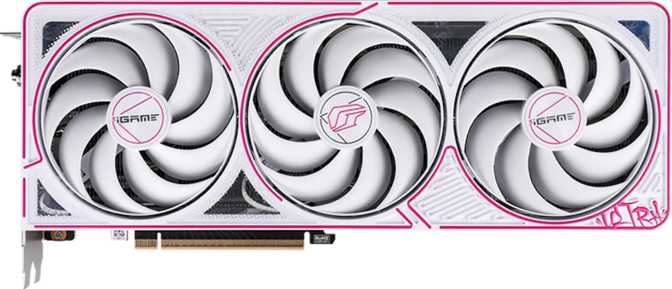
Colorful iGame GeForce RTX 5070 Ti Ultra Z OC: Full Review
Graphics CardsThe GPU market has a compelling tier just below the flagship — capturing most of the performance at substantially lower cost. The Colorful iGame GeForce RTX 5070 Ti Ultra Z OC lands precisely in that space, though with specifications that make the comparison flattering at best. Built on NVIDIA's Blackwell architecture and wrapped in Colorful's flagship iGame Ultra Z treatment, this card is engineered around enthusiast 4K gaming and demanding creative workloads. Whether Colorful's custom execution — a factory overclock, premium cooling infrastructure, and flagship-tier aesthetics — justifies choosing it over competing board partner variants or stepping to the tier above is exactly what this review answers.
Performance at a Glance
Core specifications translated into real-world meaning
Design & Build Quality
Physical Presence and Build Standards
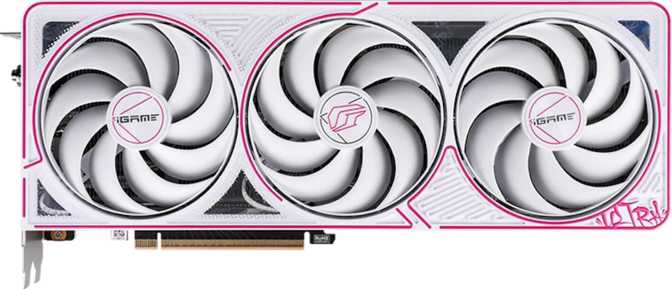
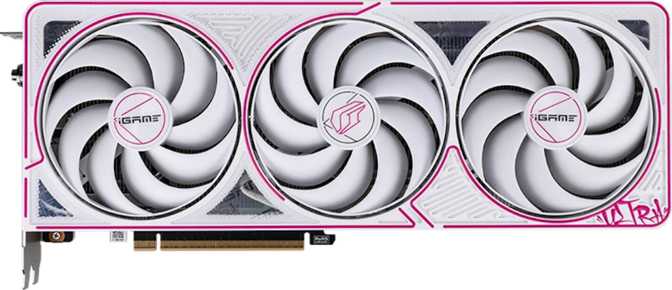
At just over 300mm long and 120mm tall, the Ultra Z OC fits the profile of a premium triple-slot card. Mid-tower and full-tower cases with at least 310mm of GPU clearance accommodate it without repositioning — compact builds require a specific measurement before committing. The difference between the Ultra Z tier and standard board partner implementations starts here: the shroud uses angular paneling and metallic accents that genuinely read as flagship-grade rather than an LED-heavy entry-level aesthetic. There is no flex in the cooler assembly, the backplate is solid, and the fans spin without imbalance at idle.
Cooling Configuration
The card is air-cooled — no hybrid liquid option. Given the 300W thermal load this chip demands under gaming conditions, Colorful has engineered the Ultra Z cooler for sustained workloads rather than short benchmark bursts. The fan array, dense heatpipe routing, and full-length fin stack work together to hold the GPU at stable temperatures during extended multi-hour sessions. Adequate case ventilation — two intake fans and at least one exhaust — is essential; the cooler performs as designed only when surrounding air stays cool.
RGB Lighting
Addressable RGB zones integrate with standard ARGB control ecosystems and Colorful's own iGame Center software. For builders running a synchronized lighting setup, the card fits in naturally. For those who prefer no illumination, disabling it carries no performance trade-off.
| Card Length | 300.5 mm |
| Card Height | 120 mm |
| Cooling Type | Air (Triple Fan) |
| RGB Lighting | Addressable ARGB |
| Product Line | iGame Ultra Z Flagship |
| Architecture | NVIDIA Blackwell |
| Process Node | 5 nm |
| Transistors | 45.6 Billion |
Blackwell Architecture & Core Performance
What the Generation Shift Actually Means
The Blackwell GPU architecture is manufactured on a 5 nanometer process node — a transition that allows NVIDIA to pack more transistors into the same physical space, extracting greater computational output within a comparable power envelope. The RTX 5070 Ti's 45.6 billion transistors represent the engineering complexity that makes Blackwell's performance tier possible.
For buyers upgrading from two or more GPU generations back, Blackwell's improvements span every layer of the rendering pipeline: rasterization throughput, ray tracing hardware, AI compute, and memory subsystem efficiency have all received meaningful revisions over the previous Lovelace generation. This is not a generational refresh — it is an architectural rebuild.
44.75 TFLOPS in Real Terms
This compute figure translates directly into the ability to handle the most demanding game scenes — large open worlds, dense particle systems, complex shader workloads — without the frame-time instability that appears when a GPU approaches its operational ceiling. The 8,960 shader processors deliver raw parallel compute; 280 texture mapping units handle high-resolution sampling; 96 render output units resolve final pixels simultaneously. At 4K, where all three subsystems are stressed together, this balance matters more than any single specification number.
The Factory Overclock: Real Gains, Not Marketing
The GPU operates from a base of 2,295 MHz, boosting up to 2,497 MHz during active load — Colorful's tuned figure, pushed above NVIDIA's reference specification for the RTX 5070 Ti. This pre-optimized configuration sustains higher clock speeds during the boost states that matter most during gameplay, without requiring manual tuning from the buyer. The Ultra Z cooler is expressly built to hold those elevated clocks under sustained thermal pressure.
Memory: The 16 GB GDDR7 Advantage
Why VRAM Capacity Matters More Than Ever
VRAM pressure is a real concern in current game releases. Modern AAA titles at 4K with high-resolution texture packs regularly consume 10–12 GB, and that number is trending upward. At 16 GB, this card sits comfortably above current demand — creating a buffer that ensures VRAM capacity won't be the constraint that ages the card before its compute performance does. Cards at 8–10 GB are already showing strain in recent major releases at maximum settings. 16 GB positions this card well through the near-to-medium term of upcoming releases.
GDDR7: What 896 GB/s Actually Delivers
The memory runs on GDDR7 — the newest generation of graphics memory — across a 256-bit interface. The resulting bandwidth of nearly 896 GB/s describes how quickly the GPU can retrieve texture data, frame buffer contents, and render targets from memory every second. At 4K specifically, where textures are large and frame buffers are wide, memory bandwidth is frequently the variable separating smooth frame delivery from visible stutters. Previous-generation cards at the same bus width achieved substantially lower bandwidth using older memory technology; GDDR7 closes that gap in a way that is directly noticeable at high resolutions.
ECC Memory: A Professional-Grade Reliability Feature
Error Correcting Code memory support means the GPU can detect and correct random bit-flip errors in VRAM — a feature almost exclusively relevant to workstation use cases. For 3D rendering, machine learning inference, scientific simulation, or any workflow where a single incorrect computation propagates through a long job, ECC adds a reliability layer that gaming doesn't require but professionals genuinely benefit from.
| Capacity | 16 GB |
| Memory Type | GDDR7 |
| Bus Width | 256-bit |
| Bandwidth | 896 GB/s |
| Effective Speed | 28,000 MHz |
| ECC Support | Yes |
Key Features Explained
Ray Tracing
Dedicated RT cores accelerate ray-traced lighting, shadows, and reflections at the hardware level. At this performance tier, enabling ray tracing in demanding titles at 4K is a practical setting rather than a showcase-only option. Combined with DLSS, maximum RT quality becomes playable at competitive frame rates.
DLSS & Frame Generation
Tensor cores built into the Blackwell silicon run NVIDIA's AI upscaling pipeline. DLSS renders at a lower internal resolution and reconstructs a higher-resolution output with minimal visual penalty — turning 4K from a demanding exercise into a smooth experience. Frame Generation inserts AI-predicted intermediate frames, multiplying effective output further. In DLSS-enabled titles, frame rates are materially higher than brute-force rendering numbers suggest.
DirectX 12 Ultimate
Full DX12 Ultimate compliance covers the complete modern rendering feature set: DirectX Raytracing (DXR), Variable Rate Shading, Mesh Shaders, and Sampler Feedback. These capabilities are progressively appearing across new releases and development pipelines, making full hardware support a forward-compatibility advantage across the card's useful lifetime.
Display Output Configuration
Four simultaneous displays connect via three DisplayPort outputs and one HDMI 2.1b port. HDMI 2.1b handles 4K at high refresh rates and 8K for television connections. The three DisplayPort outputs cover monitor connections with ample bandwidth headroom. One notable gap: no USB-C output is available, which affects certain monitors and VR headsets that require or prefer that connection — an active adapter would be needed.
PCIe 5.0 & Resizable BAR
PCIe 5.0 connectivity doubles interface bandwidth over PCIe 4.0 — the immediate gaming performance delta is marginal since workloads rarely saturate the previous generation, but native PCIe 5.0 support ensures long-term platform compatibility. Intel Resizable BAR allows the CPU full simultaneous access to GPU memory, providing a few percentage points of additional performance in supported titles after a simple BIOS configuration.
Double Precision & ECC
Double Precision Floating Point support expands utility into professional and scientific compute beyond gaming. Paired with ECC memory support, the card functions as a capable workstation accelerator for simulation, rendering, and inference workloads that demand both high numerical accuracy and memory reliability across extended compute jobs.
Power Consumption & Thermal Reality
What 300 W Demands From Your System
A 300W thermal design power figure means this card draws up to 300 watts under sustained maximum load. That is sufficient to require a properly specced power supply — and if your current unit is a 650W or 750W model, budget for a PSU upgrade as part of the total cost of ownership. Consistent, clean power delivery from a high-quality unit extends component longevity across the entire system, not just the GPU.
Minimum: 850W — tight margin, limited headroom for future component changes
Recommended: 1000W — comfortable overhead, supports future CPU or platform upgrades
Efficiency: Why 300W Is Not What It Appears
The 5nm manufacturing process allows Blackwell to deliver substantially more performance per watt compared to older architectures. Forty-four-plus TFLOPS at 300W represents a level of output efficiency that would have demanded significantly higher power on previous process nodes. The TDP figure reflects raw capability, not wastefulness — and it is modest for the performance tier it occupies.
Fan Noise Under Load
Air cooling at 300W is audible during sustained gaming sessions — a physical reality that no air cooler can fully eliminate at this power tier. Colorful's Ultra Z fan curve prioritizes sustained thermal performance alongside noise management, placing it in line with other premium tri-fan cards in this class rather than being an outlier in either direction. At idle temperatures, the fans stop entirely, keeping the card silent during desktop use and light workloads.
| GPU TDP | 300 W |
| Minimum PSU | 850 W |
| Recommended PSU | 1000 W |
| PSU Efficiency | 80+ Gold minimum |
| PCIe Version | 5.0 |
| Process Node | 5 nm |
| Cooling Method | Air — Triple Fan Array |
Who This Card Is Built For
- 4K Gaming at High Refresh RatesThe primary use case. At 3840x2160 with a 144Hz+ monitor, this card has headroom for demanding modern titles with quality settings enabled. DLSS fills the gaps where brute-force rasterization alone falls short of target frame rates.
- 1440p with Every Setting EnabledAt 2560x1440, this card is generously over-specced for standard rasterization. Pairing it with maximum ray tracing, all visual features, and a 240Hz monitor produces an experience that challenges lesser GPUs.
- Creative ProfessionalsVideo editors in DaVinci Resolve, 3D artists in Blender or Octane, and ML practitioners all benefit from 16 GB VRAM, high CUDA compute throughput, and ECC memory reliability during long jobs.
- Sim Racing & Multi-Display SetupsTriple 1440p or 4K monitor configurations require VRAM depth and display bandwidth simultaneously. Four outputs via DisplayPort and HDMI 2.1b cover both wide-format and triple-screen configurations without compromise.
- 1080p GamingAt 1920x1080 — even on a 240Hz esports monitor — CPU bottlenecks appear before this GPU is stressed. The vast majority of its capability sits idle. A mid-range card at a fraction of the price delivers identical frame rates at that resolution.
- Budget-Constrained BuildsThis is a premium product at a premium price. If your GPU budget falls below this tier, the performance-per-dollar ratio tilts toward the RTX 5070 non-Ti or strong previous-generation cards on the secondary market.
- Compact Case BuildersAt 300.5mm, this card is incompatible with most ITX cases and many smaller mATX configurations. Measure your case's exact GPU clearance against this card's length before purchasing.
How It Compares to the Alternatives
Ultra Z OC vs. Reference RTX 5070 Ti
| Factor | iGame Ultra Z OC | Reference RTX 5070 Ti |
|---|---|---|
| Boost Clock | 2,497 MHz (Factory OC) | Lower — stock reference speed |
| Cooling Design | Colorful Ultra Z tri-fan array | Reference blower or standard cooler |
| Sustained Thermals | Optimized for extended load | Adequate for typical gaming sessions |
| RGB Lighting | Addressable multi-zone ARGB | Minimal or absent |
| Build Quality | Flagship iGame Ultra Z tier | Standard reference build |
| Price | Premium above MSRP | MSRP baseline |
RTX 5070 Ti vs. the Tier Above
| Factor | RTX 5070 Ti | RTX 5080 Class |
|---|---|---|
| Compute Performance | ~44.75 TFLOPS | Materially higher ceiling |
| VRAM | 16 GB GDDR7 | 16 GB or higher |
| Power Draw | 300 W | ~350W+ (estimated) |
| 4K Gaming Viability | Excellent with DLSS | Higher ceiling, sharper diminishing returns |
| Price Premium | Lower tier | Significant additional cost |
| Sweet Spot? | Strong value at 4K | Benchmark-motivated upgrade |
The Honest Assessment
The memory configuration is arguably the most future-proof element of this specification. Sixteen gigabytes of GDDR7 at 896 GB/s is not merely adequate — it leads the current field at this interface width. In a market where 8–10 GB cards are already showing real-world strain in new releases, the 16 GB buffer means VRAM will not be the constraint that prematurely ages this purchase.
The factory overclock delivers genuine performance, not marketing surface. A 2,497 MHz sustained boost represents a real step above NVIDIA's reference specification, and Colorful's Ultra Z cooler is designed to hold those clocks under thermal pressure rather than throttling during sustained loads. Real-world gaming performance tracks closer to the theoretical ceiling than on cheaper board partner variants.
DLSS in its current Blackwell form is the most practically impactful feature this GPU offers for gamers. Unlike earlier-generation upscaling experiences, the current implementation — including Frame Generation — delivers native-equivalent image quality with transformative frame rate gains. It converts 4K high-refresh gaming from a compromise proposition into something genuinely accessible.
The absence of a USB-C display output is a genuine omission at this price tier. Competing board partner implementations at similar price points include it. For specific monitor models and VR headsets that prefer or require that connection, an active adapter adds cost and introduces compatibility variables that shouldn't exist on a flagship-tier card.
The 300W power requirement multiplies the true upgrade cost for anyone running a sub-850W PSU. The card itself is not at fault, but the total cost of this upgrade includes a PSU replacement for a significant portion of buyers — which deserves accounting for before purchase.
Air cooling at 300W, however capable the Ultra Z solution, produces audible fan noise under sustained heavy loads. Buyers who prioritize near-silent operation under full gaming load should investigate hybrid liquid-cooled alternatives from competing manufacturers, accepting a likely price premium in return.
The 300.5mm card length eliminates compatibility with compact ITX cases and constrains mATX build options. This is a physical reality of high-performance air cooling at this power tier, not a design flaw — but it meaningfully limits case selection.
Questions Buyers Are Actually Asking
Final Verdict
The Colorful iGame GeForce RTX 5070 Ti Ultra Z OC makes a compelling case for being the right RTX 5070 Ti to buy. Blackwell's architectural efficiency, 16 GB of GDDR7 at class-leading bandwidth, a factory overclock that delivers real gains, and a cooler built to sustain them combine into a card that performs near the ceiling of what the RTX 5070 Ti silicon allows — without requiring manual tuning.
For 4K gaming at high refresh rates — in a DLSS-enabled title library that now covers most major releases — this card occupies a genuine sweet spot. The 16 GB memory buffer, the generational DLSS advantage, and 44+ TFLOPS of compute headroom mean this card will handle the demands of the current release cycle with room to spare.
Buy if you are:
- A 4K or high-refresh 1440p gamer
- A creative professional needing VRAM
- Upgrading from 2+ GPU generations back
- Running a multi-display sim setup
Skip it if you are:
- Gaming exclusively at 1080p
- Building in a compact ITX case
- Working within a tight GPU budget
- Requiring USB-C display output