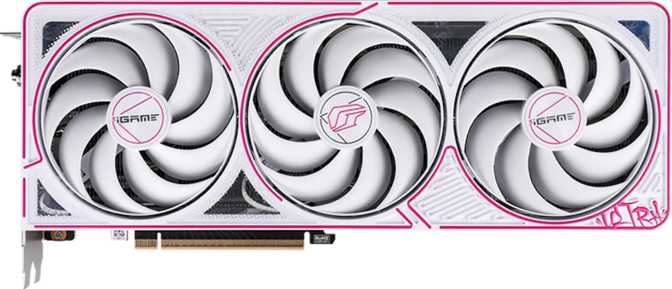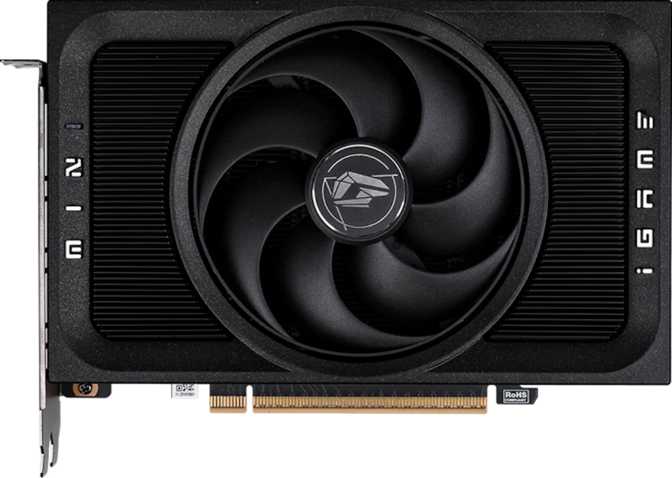
Most graphics cards demand space. Triple-fan coolers, thick profiles, and lengths exceeding 340mm have become the norm as GPU power escalates. For compact ITX builds, small form factor cases, and home theater PCs, the choice has historically been underpowered hardware or hardware that simply will not fit. The Colorful iGame GeForce RTX 5070 Mini OC challenges that reality directly — pairing the complete RTX 5070 silicon with a 180mm footprint that slots into enclosures where standard cards cannot go, without removing the GPU, the memory, or the compute capability that defines this performance tier.
Design and Build: Small Card, Serious Intentions
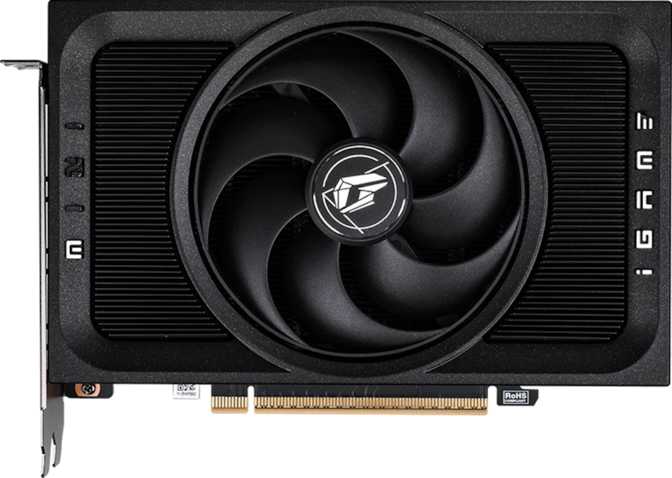
At 180mm long and 123mm tall, the iGame RTX 5070 Mini OC occupies a physical space closer to a thick paperback book than a typical enthusiast graphics card. Most full-sized RTX 5070 variants from other manufacturers stretch well past 300mm. Colorful has shaved off nearly half the length without touching the GPU itself — the chip, the memory, and the core configuration are identical to what ships on any standard RTX 5070 board.
The card carries a dual-slot profile, keeping neighboring PCIe expansion slots free where they exist. In ITX motherboards with a single expansion slot this is largely academic, but in micro-ATX builds it preserves system flexibility. Colorful has chosen to omit RGB lighting entirely — a deliberate call that fits the audience precisely. Compact and HTPC builders generally prioritize clean aesthetics over illumination, and the absence of lighting hardware may even contribute marginally to the constrained thermal budget. Cooling is handled entirely by air, meaning the assembly bears the full thermal load of a 250W GPU within a substantially reduced surface area compared to full-length designs.
- Card Length
- 180 mm
- Card Height
- 123 mm
- Slot Profile
- Dual-slot
- Cooling Type
- Air
- RGB Lighting
- None
The GPU Inside: Blackwell Architecture Explained
The RTX 5070 Mini OC is built on NVIDIA's Blackwell architecture, manufactured at 5 nanometers. A smaller process node means more transistors packed into less die area — translating to better performance-per-watt and more computational density within a given physical space. The 5070 houses over 31 billion transistors, a figure that contextualizes just how much processing capability is packed into this 180mm board.
The 6,144 shader processors work simultaneously to handle geometry, lighting, and shading across millions of pixels — a count that places the RTX 5070 firmly in the high-performance tier. The 80 render output units govern how quickly the final image reaches your display; combined with a pixel throughput rate exceeding 200 billion pixels per second, the card sustains high frame rates even in output-intensive scenarios. The factory overclock pushes the boost clock to 2,557 MHz, keeping this compact board competitive with larger, better-cooled variants of the same GPU that carry more thermal headroom to work with.
Memory: Where This Card Surprises
The memory configuration is one of the RTX 5070 Mini OC's strongest technical arguments. GDDR7 is the latest generation of graphics memory, and the bandwidth it delivers here is substantial — over 670 gigabytes of data per second flowing between memory and GPU. Many previous-generation flagship cards with wider memory buses could not approach this figure, because older GDDR6X technology operated at lower data rates per pin regardless of how wide the bus was.
Twelve gigabytes is the right VRAM capacity for this performance tier. While 8GB cards remain available at lower price points, the trajectory of modern games — particularly at 1440p and 4K where texture assets are considerably larger — makes 12GB a comfortable buffer that should not feel constrained for the foreseeable future. The ECC (Error Correcting Code) memory support deserves attention: this feature is typically reserved for professional workstation GPUs. For creative and compute workflows where data integrity is critical — video encoding, machine learning inference, scientific simulation — ECC adds a layer of reliability that few gaming-class cards at any consumer tier commonly provide.
Real-World Performance: What the Numbers Mean for Gaming
Raw specifications only carry meaning when translated into the scenarios that actually matter to you. Here is how the RTX 5070 Mini OC performs across the three primary use cases that define its target audience.
1440p Gaming
This is where the RTX 5070 Mini OC operates most naturally. At 2560×1440, the card delivers enough raw throughput to exceed 60 frames per second in virtually every current game at maximum settings. Competitive players targeting 144Hz or higher refresh rates will find this card keeps pace comfortably without needing to reduce visual quality to achieve it.
Native Resolution Sweet Spot4K with DLSS
At 3840×2160, DLSS becomes the card's primary tool rather than a bonus feature. NVIDIA's AI-driven upscaling reconstructs a high-quality 4K image from a lower internally rendered resolution, recovering substantial frame rate headroom with minimal perceptible quality loss. For 4K gaming on this card, DLSS is the intended workflow — not a compromise, but the designed operating mode from the outset.
DLSS-First 4K ApproachRay Tracing
Hardware-accelerated ray tracing is supported through dedicated RT cores in the Blackwell die. Ray tracing simulates the physical behavior of light — accurate reflections, shadows, and ambient occlusion — far more convincingly than traditional rendering. At 1440p with DLSS active, ray tracing runs without significant frame rate degradation. At 4K with full ray tracing natively enabled, expect to lean heavily on DLSS — brute-force 4K ray tracing belongs to the RTX 5080 tier and above.
Best Combined with DLSS at 4KConnectivity: Four Displays, No USB-C
The port layout is clean and functional. A single HDMI 2.1b output handles 4K at 144Hz or 8K output — relevant for high-refresh gaming monitors and modern televisions used as displays. Three DisplayPort outputs add multi-monitor support for productivity setups. The card drives up to four displays simultaneously, a genuine asset for users who also run this hardware as a workstation GPU alongside gaming.
| Port Type | Quantity | Standard | Key Capability |
|---|---|---|---|
| HDMI | 1 | HDMI 2.1b | 4K @ 144Hz, 8K output |
| DisplayPort | 3 | Current generation | High-refresh, multi-monitor |
| USB-C | 0 | Not available | Adapter required for USB-C monitors |
| Maximum Displays | 4 simultaneous outputs | ||
Power and Thermals: The Honest Trade-Off
The RTX 5070 Mini OC carries a thermal design power of 250 watts. For a high-performance GPU, this is a reasonable figure — the efficiency of 5nm manufacturing helps keep it lower than many competing products at similar capability levels. However, the Mini form factor introduces a thermal reality that cannot be ignored: less cooler surface area means the cooling solution must work harder to dissipate the same heat load.
Well-Ventilated Case
In a large open-air chassis or a compact case with properly designed intake and exhaust paths, the dual-fan cooler manages the thermal load without issue. This is the expected operating environment and the card handles it without unusual compromise to performance.
Restricted Airflow
In a dense ITX enclosure with limited ventilation, temperatures under sustained load will run higher than on a triple-fan card of the same GPU. When temperatures exceed the card's threshold, it automatically reduces clock speed to protect itself — which directly costs you gaming performance over extended sessions.
PCIe 5.0 and Resizable BAR
The card connects via PCIe 5.0, the current generation of the interface between GPU and motherboard. In practice, PCIe 5.0 provides more bandwidth than any current GPU can fully saturate — the benefit is platform compatibility and future-proofing rather than a measurable frame rate gain over PCIe 4.0 at this point in time.
Intel Resizable BAR support allows the CPU to access the full VRAM directly rather than in small 256MB chunks. On compatible platforms, this yields modest but real performance improvements in games — typically single-digit percentage gains that are worthwhile when available at no added cost.
Compute and Creative Workloads
Beyond gaming, the RTX 5070 Mini OC extends into creative and technical workflows. Over 31 TFLOPS of compute output positions it well for GPU-accelerated tasks: video transcoding, 3D rendering, machine learning inference, and scientific simulation. The GDDR7 memory bandwidth particularly benefits these workloads, where moving large datasets between memory and compute units is often the primary throughput constraint.
Double precision floating-point support — uncommon at the consumer GPU level — adds reliability for tasks requiring high numerical accuracy. DirectX 12 Ultimate, OpenGL 4.6, and OpenCL 3 compatibility ensure broad support across gaming APIs and general-purpose compute frameworks.
Who Should Buy This Card
- Builders with ITX or compact micro-ATX cases where standard-length GPUs physically will not fit
- Home theater PC builders who need discrete GPU performance in a living room-friendly chassis
- Gamers targeting 1440p at high refresh rates or 4K gaming with DLSS enabled
- Users who need a capable workstation GPU in a compact form factor for creative or compute tasks
- Anyone who values a clean, RGB-free aesthetic in their build
- Gamers who want to run 4K natively at high frame rates without AI upscaling — the RTX 5080 or above serves that need
- Budget-focused competitive esports players — a midrange card handles 1080p competitive gaming at considerably lower cost
- Users with large full-tower cases and no size constraints — a longer card will run quieter and often costs less
- Anyone who requires USB-C monitor connectivity and cannot accommodate an adapter in their setup
How It Compares to the Alternatives
| Card | Form Factor | VRAM | Mem. Bandwidth | Performance Tier |
|---|---|---|---|---|
| RTX 5070 Mini OC This Card | ~180 mm | 12 GB GDDR7 | ~672 GB/s | High |
| Standard RTX 5070 | 300 mm+ | 12 GB GDDR7 | ~672 GB/s | High (more cooling) |
| RTX 5060 Ti | Full-size | 8 – 16 GB | Lower | Mid-High |
| RTX 5080 | Full-size | 16 GB | Higher | Very High |
The most direct comparison is against any full-sized RTX 5070 from another manufacturer. The GPU die, memory specification, and compute capability are identical — the only practical difference emerges in thermal performance under sustained load and clock speed stability during extended sessions. In well-ventilated cases, that gap narrows considerably. In thermally restricted enclosures where no standard-length card would fit anyway, the comparison becomes irrelevant — this card exists precisely for that situation.
Strengths and Weaknesses
Where It Excels
The iGame RTX 5070 Mini OC's greatest strength is that it refuses to make you choose between performance and compactness. Full Blackwell silicon, GDDR7 memory, and a factory overclock in a 180mm card is a rare engineering achievement. DLSS support ensures real-world gaming performance extends well beyond what the card's raw rasterization numbers alone would imply. The decision to skip RGB and maintain a dual-slot profile shows Colorful understood precisely who would buy this card and what they care about.
The GDDR7 memory bandwidth — exceeding 670 GB/s on a 192-bit bus — stands out even against previous-generation cards with wider memory buses, because the higher per-pin data rate of GDDR7 more than compensates for the narrower bus width. ECC memory support adds a layer of professional versatility that few gaming-class cards at any consumer price tier typically offer.
Where It Falls Short
The thermal trade-off is real and cannot be overstated for certain use cases. Fitting a 250W GPU behind a compact dual-fan cooler leaves less thermal margin than a full-length design, and in a poorly ventilated ITX case it will cost you sustained clock speed performance under prolonged load. Case selection becomes a meaningful part of the purchasing decision — not an afterthought to revisit after unboxing.
The absent USB-C port is a minor but genuine inconvenience for users with USB-C monitors or certain VR headsets. The compact engineering premium means this card typically costs more than a standard-length RTX 5070. If your build has the space for a full-sized board, the value calculation shifts significantly in favor of the larger alternative.
Common Buyer Questions Answered
Buy This Card If You Are Building Small
The Colorful iGame GeForce RTX 5070 Mini OC solves a problem that has frustrated compact PC builders for years: how to get genuine high-performance graphics into a small case without gutting the specifications to achieve it. The answer is careful engineering rather than compromise — the GPU is the full RTX 5070, the memory is GDDR7 with bandwidth exceeding 670 GB/s, and the performance at 1440p and DLSS-assisted 4K matches what any RTX 5070 board delivers, packaged into just 180mm.
Build around this card with clear eyes about airflow and the right enclosure, and it delivers performance that has no business fitting into this form factor.