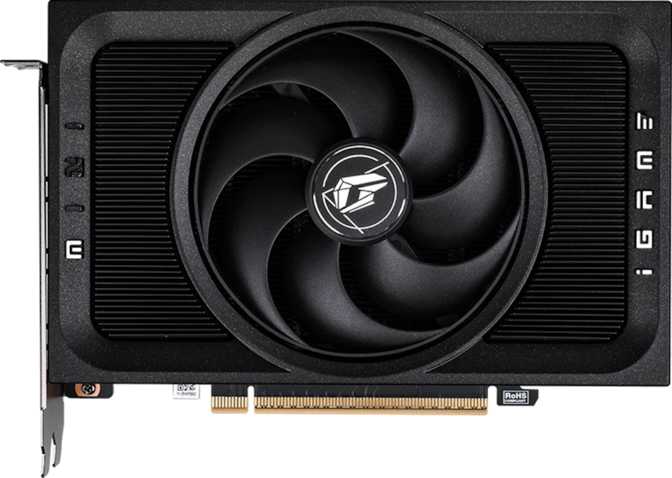
Colorful iGame RTX 5060 Ti Mini OC 16GB — Full Review for SFF Builders
Graphics CardsThere's a particular kind of buyer who needs a serious GPU but can't fit a serious GPU. Whether it's a small form factor case, a compact workstation, or a secondary rig that still needs to punch above its weight, the Colorful iGame GeForce RTX 5060 Ti Mini OC 16GB was designed for exactly that tension — and the result is more interesting than a spec sheet alone suggests.
Built on NVIDIA's Blackwell architecture and measuring just 180mm in length, this card fits enclosures that would turn away a standard triple-fan build. Yet it ships with 16GB of next-generation memory, full DirectX 12 Ultimate support, DLSS, and hardware ray tracing — a genuine current-generation feature set in a genuinely compact body.
Editor's Verdict
4 / 5
RecommendedIdeal for small form factor builds
16GB
GDDR7 Memory
448 GB/s bandwidth
180mm
Card Length
True SFF-compatible
24.3
TFLOPS
Blackwell compute power
180W
Power Draw
650W PSU minimum
Design and Build Quality
Small, purposeful, and no-nonsense
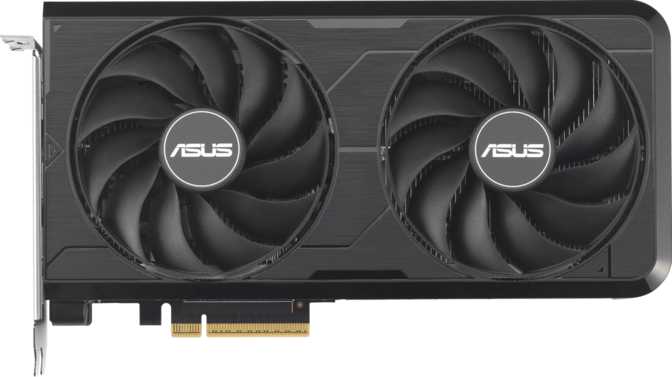
The first thing you notice about the iGame Mini OC is what it doesn't have. There are no RGB zones, no aggressively styled heatsink fins, and no LED strips demanding attention through a tempered glass panel. Colorful has taken a deliberate, clean approach — this is a tool built to work, not to perform aesthetics.
The dual-fan cooler is sized for the 180W thermal envelope this card operates within — and that is not a trivial load for a compact design. Without the sprawling heatsink surface area of full-length triple-fan models, the fans work harder during sustained loads. This is an expected and acceptable trade-off for the form factor, but one worth knowing in advance.
Build quality feels consistent with Colorful's iGame line. The backplate is solid, the card holds firmly at the PCIe slot without visible flex, and the overall package carries the density you'd expect from a compact design — more metal per centimeter than a full-length card of the same class.
Physical Specifications
- Card Length
- 180 mm
- Card Height
- 123 mm
- Cooling System
- Dual-Fan Air
- RGB Lighting
- None
- GPU Architecture
- NVIDIA Blackwell
- Manufacturing Node
- 5nm
- Transistors
- 21.9 Billion
Architecture and Core Performance
Blackwell-generation silicon in a compact chassis
The Blackwell architecture represents NVIDIA's current generation, and the RTX 5060 Ti Mini OC is a genuine member of that family — not a rebadged prior-generation chip. Built on a 5-nanometer process with nearly 22 billion transistors, it reflects a meaningful leap in how much processing capability can be delivered within a given power budget.
The GPU reaches a boost frequency of 2,632 MHz — Colorful's factory overclock above reference specification. Combined with 4,608 shader processors, this translates to roughly 24.3 trillion floating-point operations per second.
In practical terms: this is the compute headroom that handles demanding AAA titles at high-to-ultra settings without requiring constant quality concessions to maintain playable frame rates.
2,632 MHz
Boost Clock
4,608
Shader Units
The 144 texture mapping units deliver a fill rate approaching 379 billion texels per second — a measure of how quickly complex material surfaces, foliage, and environmental detail are processed. The 48 render output units then handle final pixel output at over 126 billion pixels per second.
This combination ensures the card doesn't become the bottleneck when rendering dense, detailed scenes at high resolutions.
379 GT/s
Texture Rate
126 GP/s
Pixel Rate
Memory: 16GB GDDR7 — The Headline That Needs Context
Generous capacity, next-gen speed, and a narrow bus — the complete picture
The Good News
Sixteen gigabytes of GDDR7 memory is a genuinely generous allocation for this tier of card. GDDR7 is the latest generation of graphics memory, and its operating speed produces a memory bandwidth of 448 GB/s — the rate at which data flows between the GPU cores and the frame buffer.
That figure exceeds what many enthusiast-class cards from prior generations achieved. Large textures, high-resolution assets, and memory-intensive workloads are handled without thrashing. The 16GB capacity also provides meaningful future-proofing as game assets continue to grow.
Context Buyers Need
This bandwidth is delivered over a 128-bit memory bus — the physical width of the highway data travels on. Higher-tier cards use 192-bit or 256-bit buses. GDDR7's raw speed offsets much of this gap versus older architectures, but the narrower bus is an architectural characteristic that performance-focused buyers should understand.
For the vast majority of gaming workloads — including 1440p gaming and high-resolution texture packs — the configuration is excellent. The concern surfaces primarily in the most bandwidth-saturating use cases.
448 GB/s
Bandwidth
16 GB
VRAM Capacity
128-bit
Memory Bus
GDDR7
Memory Type
Key Features Explained
What the specifications actually mean for your daily use
DLSS
DLSS uses AI to reconstruct a higher-quality image from a lower native resolution. The result is frame rates that behave like 1080p while the visual output approaches 1440p quality or beyond. At this performance tier, DLSS is central to the performance equation — not an optional extra.
Ray Tracing
Hardware-accelerated ray tracing simulates physically accurate light — real shadows, geometry-matched reflections, and authentic bounce lighting. On a card of this class, ray tracing in demanding titles works best alongside DLSS. That pairing is exactly how NVIDIA intends this tier to be used.
4-Display Output
One HDMI 2.1b port and three DisplayPort outputs support up to four simultaneous displays. HDMI 2.1b handles 4K at high refresh rates. The three DisplayPort connections serve multi-monitor creative and simulation setups. Note: there is no USB-C video output on this card.
DirectX 12 Ultimate
Full DX12 Ultimate compliance means support for the complete current Windows gaming feature set — variable rate shading, mesh shaders, sampler feedback, and DirectX Raytracing. Developers targeting next-generation titles build to this API, keeping this card relevant for future releases.
Resizable BAR
Intel Resizable BAR allows the CPU to access the full graphics memory pool at once rather than in small chunks. On supported platforms, this can improve frame rates in compatible games. The iGame Mini OC supports this on most modern Intel and AMD platforms.
PCIe 5.0
The latest PCIe interface standard. Current gaming workloads don't saturate PCIe 4.0 bandwidth, let alone 5.0 — this is about future-proofing. Running this card in a PCIe 4.0 slot causes no measurable gaming performance difference, and it's fully ready for the next motherboard generation.
Power Consumption and System Requirements
What your build actually needs to run this card properly
At 180 watts, this card sits in a reasonable position for its performance tier. It's not a low-power card — 180W is a real thermal load that your power supply and cooling setup need to accommodate. But it's significantly lower than flagship enthusiast GPUs that draw two to three times that figure.
For most mid-range desktop systems, a quality 650W power supply provides comfortable headroom when paired with a modern mid-range CPU. Users running very power-hungry processors should budget accordingly — a 750W unit is the safer recommendation for a balanced build.
Case airflow matters more with compact cards like this one. The dual-fan cooler handles 180W effectively, but a well-ventilated enclosure helps it do so quietly. In restricted airflow environments, fan speeds will climb noticeably during extended gaming sessions.
Build Requirements
PSU bars shown relative to a 1,000W reference
Who Is This Card For?
Honest guidance on the right buyer — and the wrong one
This Card IS For...
- Small Form Factor PC Builders
At 180mm, the Mini OC fits the vast majority of ITX and compact mATX cases that would reject a standard-length card. It delivers current-generation performance without forcing a chassis compromise.
- 1440p Gamers Seeking Value
Compute throughput, GDDR7 bandwidth, and DLSS combine to make this a strong 1440p card — especially in titles with DLSS support, where high and ultra-quality settings become achievable at smooth frame rates.
- Content Creators Who Also Game
16GB with ECC support, OpenCL 3.0, and DX12 Ultimate cover GPU-accelerated creative workflows — video editing, 3D rendering — alongside gaming use, from a single card.
This Card Is NOT For...
- Full-Tower Builders With No Size Constraint
Without a space restriction driving the decision, a full-length card at the same tier may offer more cooling headroom or a wider memory bus for similar money. The Mini form factor's engineering is wasted without the size need.
- USB-C Monitor or VR Users
No USB-C video output is present on this card. Monitors and VR headsets requiring USB-C DisplayPort Alt Mode will need an active adapter, adding cost and a potential point of failure.
- Serious Machine Learning Workloads
This card's architecture and bandwidth are tuned for graphics. While DPFP is supported, sustained professional compute workloads are better served by dedicated hardware.
Competitive Positioning
How the Mini OC stacks up against its most logical alternatives
The RTX 5060 Ti Mini OC occupies a niche where few direct alternatives exist. The table below maps key differentiators against the most logical options a buyer in this segment would consider.
| Characteristic | iGame RTX 5060 Ti Mini OC 16GB | Standard Full-Length RTX 5060 Ti | Compact Prior-Gen Alternatives |
|---|---|---|---|
| Form Factor | 180mm — SFF-compatible | 240–300mm typical | Varies; many exceed 200mm |
| Memory Capacity | 16GB GDDR7 | 16GB GDDR7 | Typically 8–12GB GDDR6 |
| Memory Bandwidth | 448 GB/s | 448 GB/s | 240–360 GB/s typical |
| Memory Bus | 128-bit | 128-bit | 128–192-bit |
| GPU Architecture | Blackwell (current gen) | Blackwell (current gen) | Older generation |
| TDP | 180W | 180W | 100–160W typical |
| RGB Lighting | None | Often present | Often present |
Honest Assessment
A balanced look at what this card genuinely delivers — and where it falls short
Where It Excels
The combination of 16GB GDDR7 memory and Blackwell architecture in a 180mm body is genuinely rare. Solving the performance-versus-size problem without downclocking is the card's strongest engineering achievement, and it opens up builds that previously demanded painful compromises.
The no-RGB aesthetic is either a strength or irrelevant depending on preference, but it contributes to a clean, mature appearance that suits professional and minimalist builds without requiring any configuration or management software.
Four display outputs — including three DisplayPort connections — is generous at this tier, supporting multi-monitor setups that some competing mini cards exclude. Four simultaneous screens from a 180mm card is a legitimately useful capability for multi-display creators and simulation enthusiasts.
Where It Falls Short
The 128-bit memory bus is the recurring caveat in any honest review of this card. GDDR7's speed closes much of the bandwidth gap, but not all of it. In the most demanding scenarios — very high resolution textures, 4K with ray tracing, or bandwidth-saturating compute tasks — a wider bus would provide a measurable advantage.
The compact cooler works — it handles 180W in 180mm — but it does so with fans that spin faster under sustained load than the massive heatsinks of full-size cards. In restricted airflow enclosures, noise becomes a real consideration during extended gaming sessions.
The absence of USB-C video output narrows compatibility with newer monitors and VR hardware. Competing models sometimes include this connection, and its omission is a genuine gap — not a minor technical footnote — for users whose display ecosystem depends on it.
Common Buyer Questions Answered
The questions real buyers search for before purchasing
A Clear Recommendation With One Condition
4 / 5 — Recommended for SFF Builds
The Colorful iGame GeForce RTX 5060 Ti Mini OC 16GB earns a clear recommendation with one important condition: it's the right card specifically when size matters.
If you're building in a small form factor case, upgrading a compact existing system, or need a capable GPU in a minimal footprint without compromising on memory generation, this card delivers exactly what it promises. The full Blackwell feature set, 16GB of fast GDDR7 memory, and the genuine 180mm footprint combine into a package that very few alternatives match without sacrificing either performance or size compatibility.
If you're building in a standard mid-tower with no size restrictions, the calculus changes. A full-length card at the same tier may offer better-sustained cooling or a wider memory bus for similar money. Without the constraint driving your decision, those differences matter more. For the SFF builder, the compact workstation user, the person who has been waiting for a current-generation card that actually fits — this is one of the most capable options in its footprint class.
Best Use Case
SFF and compact builds
Target Resolution
1080p to 1440p gaming
Required PSU
650W min / 750W ideal