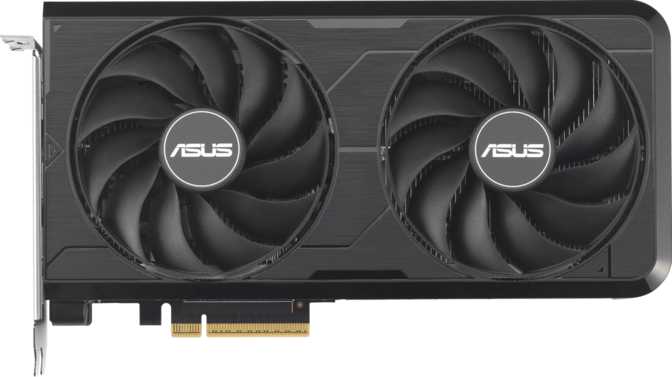
Asus Dual GeForce RTX 5060 Ti Evo OC Edition 16GB - Full Review
Graphics CardsCard Highlights at a Glance
The mid-range GPU market is where most PC gamers actually live. Not everyone needs — or can justify — a flagship card, but nobody wants to feel like they settled. The Asus Dual GeForce RTX 5060 Ti Evo OC Edition 16GB is ASUS's answer to that tension: a factory-overclocked, dual-fan card built on NVIDIA's latest Blackwell architecture, targeted squarely at mainstream 1080p and 1440p gamers who want modern features without a flagship price tag. It's a compact, no-nonsense card with one genuinely standout specification — and a few trade-offs that deserve honest scrutiny before you commit.
Design and Build Quality
A Card Built to Fit, Not to Impress
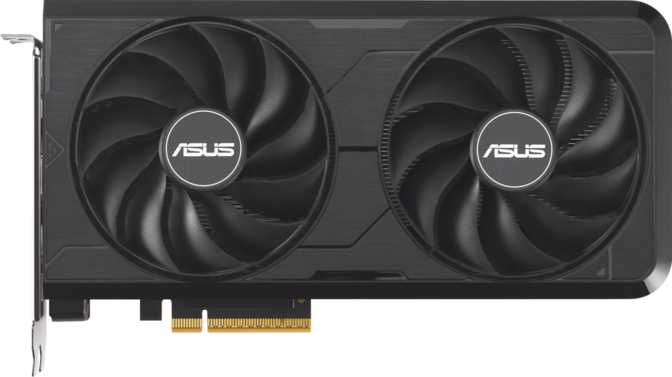
The Asus Dual 5060 Ti Evo OC is physically modest by modern GPU standards. At 225mm long and 120mm tall, it fits comfortably inside most mid-tower cases, including smaller form-factor builds that would reject longer cards without modification. If you've ever wrestled a 340mm flagship into a compact case, the relief this card offers is immediately tangible.
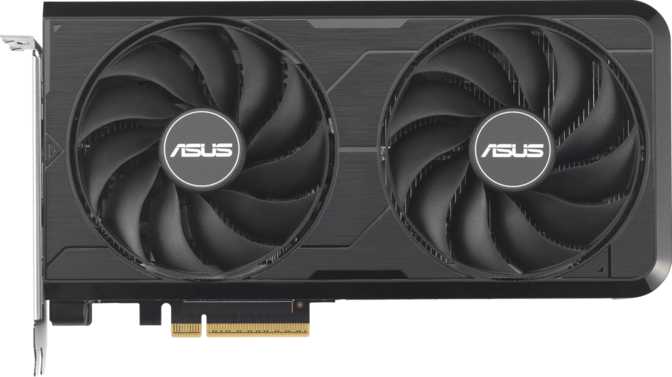
The "Dual" in the name refers to ASUS's two-fan cooler configuration — a practical, proven approach that prioritizes quiet operation and efficient heat dissipation over visual drama. There is no RGB lighting on this card. That's not an oversight; it's a deliberate design choice that keeps the card clean, professional-looking, and marginally less expensive to produce. If you're building a windowed showcase PC where RGB synchronization matters to you, this card won't participate. If you care more about temperatures and acoustics than lighting effects, the dual-fan shroud does exactly what it needs to.
Build quality follows ASUS's reliable standard for this product tier — solid plastics, a reinforced PCIe connector, and a backplate that adds rigidity without unnecessary weight. The Evo OC branding signals a factory overclock applied at production, meaning you're getting slightly higher performance than a reference-clocked 5060 Ti out of the box, without needing to touch any software.
Performance Analysis: What Blackwell Delivers
The GPU Engine Itself
The RTX 5060 Ti Evo OC Edition is powered by NVIDIA's Blackwell architecture — the same generational platform used across the RTX 50-series lineup, scaled to a mainstream configuration. The GPU is manufactured on a 5-nanometer process and packs just under 22 billion transistors into its die. To put that in perspective: packing that many switching elements into a mainstream-tier card would have been unthinkable in GPU generations past. The density enables NVIDIA to deliver meaningful generational efficiency gains without inflating power requirements.
The card ships with a boost clock of 2,602 MHz — the result of ASUS's OC Edition tuning. This sits meaningfully above what NVIDIA specifies as the reference target, and the base operating frequency of 2,407 MHz provides a comfortable floor even under sustained thermal load.
Compute and Rendering Throughput
The card's raw floating-point throughput sits just under 24 TFLOPS — relevant not just for gaming, but for content creators using GPU-accelerated rendering, video processing, or machine learning pipelines. At this performance level, 1080p gaming at high-to-maximum settings is where this card truly excels, and 1440p gaming at medium-to-high settings is well within reach depending on the title.
The pixel fill rate and texture throughput figures both land in ranges consistent with smooth, high-refresh-rate gameplay at mainstream resolutions. The 4,608 shading units and 144 texture mapping units give the card enough parallel processing muscle to handle geometry-heavy modern titles without bottlenecking on shading workloads.
Memory: The Card's Defining Specification
16 GB GDDR7 — 448 GB/s Bandwidth
This is the standout specification that genuinely sets this card apart from its predecessor at this price tier. GDDR7 memory at this effective speed was firmly flagship territory just one product cycle ago.
16GB of GDDR7 — and Why It Matters More Than the Number Suggests
Sixteen gigabytes of GDDR7 video memory is a generous allocation at this price tier. The "GB" number alone doesn't tell the whole story, though. GDDR7 is a newer memory standard that operates at effective speeds dramatically higher than previous generations. The result is a memory bandwidth figure of 448 gigabytes per second.
Here's why bandwidth matters more than most buyers realize: it determines how quickly the GPU can feed texture data, frame buffers, and rendering assets to its processing cores. A card starved for memory bandwidth will throttle under heavy scene complexity even if its compute units aren't fully saturated. At 448 GB/s, memory bandwidth is unlikely to become a performance ceiling at mainstream resolutions — even in visually dense, texture-heavy titles.
The Bus Width Trade-Off
The memory runs across a 128-bit bus interface — narrower than you'd find in mid-to-high-range cards from a generation ago. GDDR7's higher per-pin bandwidth compensates for that narrower bus; the effective throughput ends up competitive despite the more constrained physical interface. For mainstream 1080p and 1440p gaming, this trade-off is largely invisible in practice.
At 4K, particularly with maximum texture quality enabled in demanding titles, the bus width becomes a more meaningful constraint. The card also supports ECC memory functionality — primarily relevant for professional compute workloads where data integrity under sustained load is critical. For gaming, this is a background feature that adds a quiet layer of reliability at no cost to the buyer.
Feature Set: Beyond Raw Performance
DLSS and Ray Tracing
The RTX 5060 Ti Evo OC Edition supports NVIDIA's DLSS upscaling technology and hardware-accelerated ray tracing — both increasingly central to how modern games are designed. DLSS (Deep Learning Super Sampling) is NVIDIA's AI-driven upscaling system. In practical terms, it allows the GPU to render at a lower internal resolution and reconstruct a higher-resolution image using a trained neural model. In games that support it well, DLSS can deliver near-native image quality at substantially higher frame rates, effectively making this card punch above its raw performance numbers in real gaming sessions.
Ray tracing support is present, though it's worth calibrating expectations. Hardware ray tracing at this performance tier is best used selectively — enabling ray traced shadows or ambient occlusion in titles that implement it efficiently is reasonable, while full path tracing in the most demanding implementations will stress the card beyond its comfort zone. DLSS should be used alongside ray tracing to recover performance when both are active.
- DLSS AI Upscaling
- Hardware Ray Tracing
- DirectX 12 Ultimate
- OpenGL 4.6 / OpenCL 3.0
- Intel Resizable BAR
- ECC Memory Support
- PCIe 5.0 Interface
- Stereoscopic 3D Support
- Multi-Display (up to 4)
- RGB Lighting
- USB-C / Thunderbolt Output
- Mini DisplayPort
- DVI Output
- Intel XeSS (XMX)
- Water Cooling Support
- LHR Mining Limiter
Display Output Flexibility
The card drives up to four displays simultaneously through three DisplayPort outputs and one HDMI 2.1b port. HDMI 2.1b is the headline here for home theater users: it supports the bandwidth necessary for 4K at high refresh rates and is compatible with modern AV receivers and high-end televisions.
There is no USB-C or Thunderbolt output on this card — a limitation worth noting if you intend to connect a USB-C monitor or VR headset that relies on that port type. Buyers in that situation will need a DisplayPort adapter, which adds minor setup friction but is not a dealbreaker for most.
Power and Thermal Efficiency
A 180W Card in Context
The card's thermal design power rating of 180 watts places it firmly in the accessible tier for power consumption — well below the 300W-plus requirements of high-end cards, and modest enough that a quality 650W power supply gives comfortable headroom even with a mid-range CPU alongside it. Builds running an older generation card on a 550-600W PSU should verify their specific headroom, but most existing mid-range builds will have no difficulty accommodating this card.
The dual-fan cooler is designed around that 180W envelope, which means it doesn't need to work especially hard to keep temperatures in check. Under sustained gaming load, expect quiet, controlled operation — this is not a card that will have your case fans ramping aggressively in response to GPU thermals. PCIe 5.0 connectivity ensures the card has access to more than enough interface bandwidth for current and future workloads.
TDP Comparison (Relative)
Representative typical TDP ranges. Exact figures vary by card and partner.
Who This Card Is For
- You game primarily at 1080p and want maximum settings with high refresh rates
- You're building or upgrading a mid-range gaming PC without a flagship budget
- You have a compact or mid-tower case where large cards simply don't fit
- You want long-term VRAM headroom — 16GB future-proofs against growing game requirements
- You use or plan to use NVIDIA DLSS regularly as game support continues expanding
- You prefer a clean, quiet card without RGB for a professional or subdued build aesthetic
- 4K gaming is your primary use case — the card can attempt it, but you'll be working within its limits
- You need a USB-C video output for your monitor or VR headset
- RGB lighting is essential for matching other components in your build aesthetic
- You do professional GPU compute at extreme scale requiring maximum throughput
- You have an older 500W PSU and cannot upgrade it alongside this card
Competitive Positioning
At this specification level, the Asus Dual RTX 5060 Ti Evo OC Edition competes primarily against other RTX 5060 Ti AIB variants, the Founders Edition, and — depending on current market pricing — the upper edge of the previous-generation RTX 4060 Ti lineup.
| Feature | RTX 5060 Ti Evo OC This Card | RTX 4060 Ti 16GB | RTX 5060 Ti FE |
|---|---|---|---|
| Architecture | Blackwell Current-Gen | Ada Lovelace — Previous-Gen | Blackwell Current-Gen |
| Memory Type | GDDR7 | GDDR6 | GDDR7 |
| VRAM Amount | 16 GB | 16 GB | 16 GB |
| Mem. Bandwidth | ~448 GB/s | ~288 GB/s | ~448 GB/s |
| TDP | 180 W | ~165 W | ~180 W |
| Form Factor | Compact Dual-Fan | Varies by AIB | Reference Design |
| Factory Overclock | Yes | Varies by AIB | No |
| RGB Lighting | No | Varies by AIB | No |
Specifications for non-ASUS cards are representative typical values. Exact figures vary by AIB partner and SKU.
Strengths and Weaknesses
The strongest argument for this card is the combination of modern architecture, a generous VRAM allocation, and a form factor that doesn't demand a full-tower case or a high-wattage PSU upgrade. GDDR7's efficiency means buyers aren't paying a bandwidth penalty for choosing the mid-range.
DLSS support ensures the card can perform above its raw numbers in an expanding library of titles, and the Blackwell architecture keeps it current against feature requirements for the foreseeable future.
Four display outputs — including a proper HDMI 2.1b port — give it more display flexibility than many cards in this tier. The compact 225mm length is a genuine practical advantage for smaller builds that have historically been underserved by the GPU market.
The honest weaknesses are the 128-bit memory bus and the card's ceiling at 4K. GDDR7 compensates well for the former, but it's still a narrower interface than GPU enthusiasts prefer, and at 4K with maximum textures, the limitations become tangible.
There's no USB-C output, which matters specifically to buyers with USB-C monitors or certain VR headsets. And while 180 watts is reasonable, it's not negligible — buyers with older 500W power supplies should verify headroom before purchasing.
The absence of RGB lighting is a clear aesthetic limitation if you're building a windowed system with synchronized lighting across components. It's not a performance issue, but it is a real-world consideration for a meaningful segment of buyers.
Common Questions Buyers Ask
Our Recommendation
The Asus Dual GeForce RTX 5060 Ti Evo OC Edition 16GB is a focused, capable mid-range card that delivers on its core promise: current-generation architecture, meaningful VRAM headroom, and practical physical dimensions — without demanding a high-wattage PSU or a large case.
For 1080p gamers who want high-refresh-rate performance at maximum settings, this card is an excellent choice. For 1440p gamers willing to engage DLSS in demanding titles, it holds up well. For 4K gaming as a primary use case, it can participate — but you'll be working within its limits rather than gaming comfortably inside them.
The 16GB GDDR7 memory configuration is the specification that genuinely sets this card apart from what came before it at this price tier, and it's the reason to choose a current-generation card over a discounted previous-generation option. The compact design is a practical bonus for anyone who has ever tried to fit a modern GPU into a smaller build.
If you're a mainstream PC gamer who wants to play today's titles at high settings, access DLSS and ray tracing, and avoid the cost and complexity of a flagship GPU — the Asus Dual RTX 5060 Ti Evo OC Edition is a well-considered, well-built card that delivers exactly what it promises.