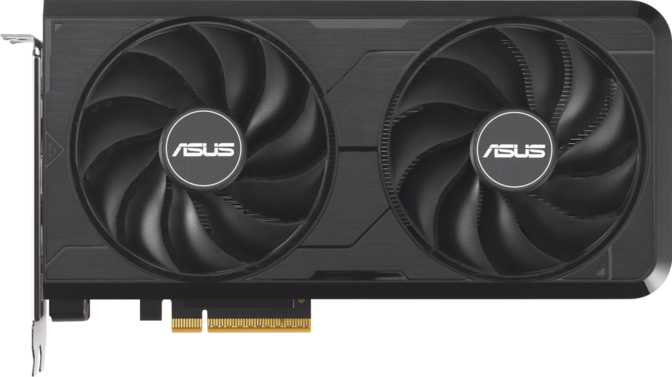
Asus Dual GeForce RTX 5060 Evo Review: A Mainstream Card Done Right
Graphics CardsThe Asus Dual GeForce RTX 5060 Evo sits in the mainstream GPU segment carrying NVIDIA's Blackwell architecture — pairing next-generation GDDR7 memory with a 5nm manufacturing process in a compact, build-friendly form factor. This is not a card for chasing 8K framerates. It is engineered for the large audience that wants modern gaming, full current-generation feature support, and sensible power consumption without a system overhaul. Whether those strengths translate to a compelling buy depends entirely on who is building and for what purpose.
Design, Build Quality, and Physical Experience
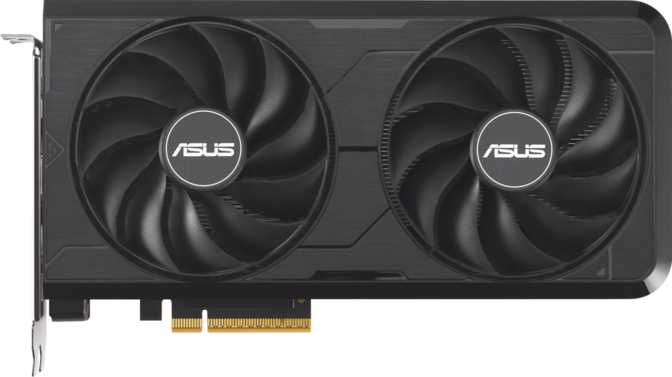
At 225mm long and 120mm tall, the Asus Dual RTX 5060 Evo is deliberately compact. Many mid-range and high-end cards now push past 300mm — some considerably beyond. This card fits in virtually every ATX mid-tower on the market and accommodates most Micro-ATX and select Mini-ITX enclosures that support standard dual-slot cards. The compatibility anxiety that follows bigger GPU purchases largely does not apply here.
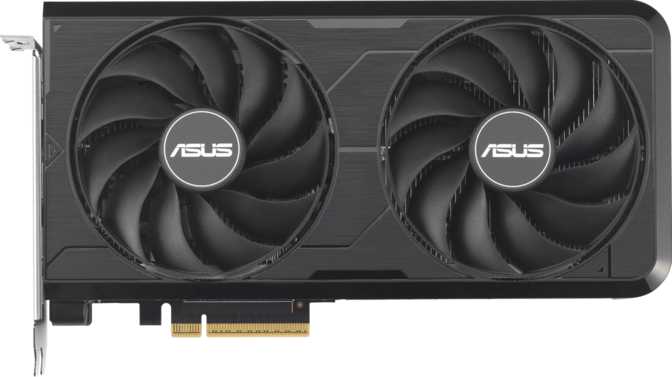
The dual-fan cooling array is practical and purpose-matched to the card's thermal output. There is no RGB lighting on this model — the aesthetic is clean and utilitarian. For builders working in blacked-out cases or professional workstations, that is precisely the point. The card does not demand attention; it just performs.
The port layout reflects real-world usage: one HDMI 2.1b output and three DisplayPort outputs, supporting up to four simultaneous displays. HDMI 2.1b handles 4K at high refresh rates and 8K output, future-proofing the connection for next-generation panels. One notable omission is USB-C — there are no USB-C outputs on this model.
The Blackwell Architecture: What the 5nm Process Actually Delivers
NVIDIA's Blackwell architecture, manufactured on a 5nm process node, represents a meaningful advance in transistor density and efficiency. Packing approximately 21.9 billion transistors into a 5nm die means more computational work per watt — which is precisely why the thermal design power lands at just 145W despite the card's performance capability.
That 145W figure deserves direct emphasis. It is low enough that a quality 550W or 650W power supply handles this card comfortably alongside a modern processor, with headroom to spare. There is no need to audit your power delivery before installing it. For builders working with older systems or compact enclosures with modest PSUs, this practical reality changes the upgrade calculus significantly.
The manufacturing efficiency also enables the boost clock to sustain 2,497 MHz under load — a frequency that would have pushed thermals aggressively on an older process. Here, the combination of architectural design and process maturity keeps those clocks stable and consistent rather than brief, thermally-limited peaks.
| Architecture | Blackwell |
| Process Node | 5 nm |
| Transistors | 21.9 Billion |
| Shader Units | 3,840 |
| TMUs / ROPs | 120 / 48 |
| Base / Boost Clock | 2,280 / 2,497 MHz |
| Compute Throughput | 19.18 TFLOPS |
| Thermal Design Power | 145W |
Core Performance Analysis
Performance ratings are editorial assessments derived from specification analysis and architectural inference, positioned relative to the mainstream GPU segment.
Full-settings 1080p is well within this card's capability. Shader count and compute throughput handle geometry-heavy scenes and texture-dense environments without compromise.
With Blackwell-generation DLSS, 1440p gaming is well within reach. Moderate titles run at native 1440p; demanding ones pair DLSS frame reconstruction with strong output quality.
Native 4K at maximum settings exceeds this card's intended scope. DLSS Quality mode at 4K improves the picture, but users prioritising native 4K should look at higher-tier options.
145W TDP is among the most system-friendly power envelopes at this performance tier. The 5nm Blackwell process delivers genuine performance-per-watt gains over prior generations.
Full DirectX 12 Ultimate, Blackwell DLSS, hardware ray tracing, PCIe 5.0, and GDDR7. Minor omissions: no USB-C output, no RGB lighting.
Memory Configuration: GDDR7 on a 128-bit Bus
The memory configuration of the RTX 5060 Evo is the most technically interesting — and most openly debated — aspect of its specification. It uses 8GB of GDDR7 memory on a 128-bit bus, and understanding this pairing requires examining both halves of that equation honestly.
The 128-bit bus is narrower than what cards in the tier above typically employ, where 192-bit or 256-bit interfaces are common. In memory-bandwidth-limited workloads — particularly at higher resolutions with large texture assets — a narrower bus is a genuine constraint that cannot be ignored.
What changes the calculation is GDDR7 itself. Running at an effective 28,000 MHz clock, the memory delivers approximately 448 GB/s of bandwidth — considerably more than GDDR6X at the same bus width. The GDDR7 upgrade compensates for much, though not all, of the gap the narrow bus would otherwise create, resulting in a memory subsystem that performs meaningfully above where its bus width alone would suggest.
The 8GB capacity handles the vast majority of current games at 1080p and 1440p without issue. A small and growing number of titles with extreme texture settings push against that ceiling in their most demanding configurations. This is less a present constraint than a forward-looking consideration for buyers planning a long ownership horizon.
Feature Set: What the Full Blackwell Package Includes
Every feature below is confirmed by specification, explained in terms of real-world significance rather than its raw spec sheet label.
DLSS — Blackwell Generation
AI-assisted rendering that reconstructs high-quality frames from lower internal resolution. The mechanism that makes 1440p frame rates accessible at this tier — not a luxury, but the intended strategy for demanding titles.
Hardware Ray Tracing
Dedicated RT cores handle real-time light simulation in supported titles. Moderate ray tracing implementations run without upscaling. Demanding path-traced lighting scenarios benefit from pairing with DLSS.
DirectX 12 Ultimate
Complete support for mesh shaders, DXR tier 1.1, variable rate shading, and sampler feedback — the full suite of current-generation APIs. OpenGL 4.6 and OpenCL 3 extend compatibility to non-gaming compute workloads.
4-Display Output
One HDMI 2.1b and three DisplayPort outputs drive up to four simultaneous monitors. HDMI 2.1b natively supports 4K at high refresh rates and 8K output — no adapter required for current-generation displays.
GDDR7 Memory
The most current GDDR standard at this tier, delivering approximately 448 GB/s effective bandwidth. Competing mainstream cards predominantly use GDDR6 or GDDR6X, which deliver substantially less bandwidth at the same bus width.
Intel Resizable BAR
Enables the CPU to access the full GPU frame buffer in a single transaction. Activated via BIOS on compatible platforms with no hardware changes — delivers measurable frame rate improvements in supported titles at zero cost.
PCIe 5.0 Interface
Backward-compatible with PCIe 4.0 and 3.0 slots — installs and runs in any modern system without issue. PCIe 5.0 support ensures maximum bandwidth on current and next-generation platforms, protecting the investment long-term.
ECC Memory Support
Error-correcting memory support ensures data integrity under sustained compute workloads — a feature typically found on professional-grade hardware. Relevant for anyone running GPU-accelerated compute tasks alongside everyday gaming.
Who Should Buy This — And Who Should Look Elsewhere
-
1080p gaming enthusiasts
Maximum settings, high frame rates, and full current-generation visual features without performance compromise. -
1440p gamers comfortable with DLSS
Strong 1440p frame rates prioritising fluidity over always-native rendering — the way most modern games are designed to be experienced. -
Small form factor builders
The 225mm length removes compatibility anxiety that accompanies larger GPUs in compact cases — most ITX-friendly builds can accommodate it. -
Power-conscious builders
145W fits comfortably within most existing 550W+ power supplies without any upgrade required. -
Multi-monitor workstation users
Four display outputs support trading setups, creative workstations, and productivity configurations without a secondary card. -
Upgraders from older hardware
Three or more generations back, every axis of improvement — compute, memory speed, features, efficiency — represents a substantial advance.
-
Native 4K gamers
If upscaling at 4K is a non-starter, the compute throughput and VRAM capacity will fall short of expectations. -
GPU-accelerated creative professionals
Video editors with large frame buffers, 3D renderers with heavy scene data, and AI inference workflows may hit the 8GB VRAM ceiling sooner than anticipated. -
Long-term future-proof seekers
If you want a card to handle the most demanding titles at high settings and resolutions five years from now without compromise, invest in a higher tier today. -
USB-C display or VR users
No USB-C output is present. Connecting a USB-C monitor or compatible VR headset directly from the GPU requires an adapter. -
RGB lighting enthusiasts
This model has no RGB illumination whatsoever. If lighting synchronisation is part of the build plan, other SKUs in the lineup should be evaluated instead.
How It Stacks Up Against the Competition
A categorical positioning comparison against typical competing mainstream cards from AMD and Intel at a comparable performance tier. Specific competitor models are not named — this reflects segment-wide patterns rather than individual SKU claims.
| Specification | Asus Dual RTX 5060 Evo | Typical Competing Mainstream |
|---|---|---|
| Memory Type | GDDR7 | GDDR6 / GDDR6X (varies) |
| Effective Bandwidth | ~448 GB/s | ~300–400 GB/s (typical) |
| Thermal Design Power | 145W | 150–200W (typical range) |
| AI Upscaling | DLSS (Blackwell) | FSR / XeSS (varies) |
| Physical Card Length | 225mm | 240–280mm (typical) |
| Display Outputs | 4 (1× HDMI 2.1b, 3× DP) | Typically 3–4 |
| Ray Tracing | Hardware RT Cores | Hardware (quality varies) |
| PCIe Generation | PCIe 5.0 | PCIe 4.0 (typical) |
Honest Assessment: Strengths and Limitations
What It Gets Right
GDDR7 at this price point is a genuine competitive advantage. The approximately 448 GB/s bandwidth outperforms GDDR6-based rivals at the same bus width and meaningfully softens the 128-bit ceiling in real workloads — more than the spec sheet number alone suggests.
A 550W PSU, a compact case, an existing mid-range system — this card fits them all without an audit. Low power draw also reduces sustained heat output and lowers operating costs over the card's lifetime.
In a segment where 320mm cards are not uncommon, 225mm is a meaningful practical advantage. Most cases accommodate it without question, including many compact and budget enclosures.
DLSS, ray tracing, DirectX 12 Ultimate, PCIe 5.0, and GDDR7 memory. This is not a stripped-down version of the architecture — every current-generation capability is present.
The cooler is sized for the actual thermal load — not for marketing imagery. The result is effective, quiet cooling without the bulk or case clearance demands of triple-fan configurations.
Where It Falls Short
The memory interface is narrower compared to what the equivalent performance tier carried in the prior generation. GDDR7 compensates substantially in today's game library — but this is a legitimate long-term consideration, not a dismissible footnote.
Current game libraries are handled without issue at 1080p and 1440p. A small but growing number of titles with extreme texture settings push against that ceiling. Not a problem today — but a factor for buyers planning a five-year ownership horizon.
A specific but real omission. Users who connect USB-C monitors or VR headsets directly via GPU require an adapter — a minor inconvenience for most, a meaningful concern for some.
Not a performance limitation, but a deliberate aesthetic choice. Builders who coordinate GPU lighting with their case RGB ecosystem will need to look at alternative SKUs in the lineup.
Native 4K at maximum settings is beyond this card's intended scope. DLSS Quality mode at 4K yields a good experience — but if native 4K is a hard requirement, a higher-tier card is the correct recommendation.
Common Buyer Questions: Answered
Confident Recommendation for Its Intended Audience
The Asus Dual GeForce RTX 5060 Evo delivers Blackwell's architectural advances — GDDR7 memory, Blackwell-generation DLSS, hardware ray tracing, and an efficient 5nm process — in a compact, power-friendly package that fits where higher-tier cards simply cannot. The honest caveats are the 128-bit memory bus and the 8GB VRAM ceiling — both manageable today, both worth weighing over a long ownership horizon.
Buy It If
- Your target is 1080p gaming or DLSS-assisted 1440p
- Case space or PSU capacity is a real constraint
- You are upgrading from hardware three or more generations old
- You want the complete Blackwell feature set within a 145W power envelope
Skip It If
- Native 4K at maximum settings is a non-negotiable requirement
- GPU-accelerated creative work with large VRAM requirements is your primary use
- You need a card that handles the most demanding future titles without compromise for five or more years