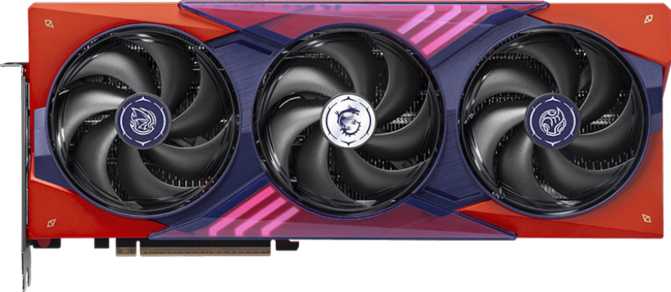
MSI GeForce RTX 5070 Ti MLG Edition OC: Full Review and Verdict
Graphics CardsArchitecture
Blackwell
VRAM
16GB GDDR7
Performance
46+ TFLOPS
Boost Clock
2572 MHz
TDP
300 Watts
Editor’s Score
8.6out of 10
Performance Ratings
The upper tier of the discrete GPU market is a crowded, expensive place — and most cards that occupy it ask you to take a lot on faith. The MSI GeForce RTX 5070 Ti MLG Edition OC makes a different kind of argument. Built on NVIDIA’s latest Blackwell architecture and paired with a factory overclock pushed well beyond reference speeds, this card positions itself as the enthusiast’s choice for those who want near-flagship performance without crossing into the price stratosphere of the absolute top-end. Whether that trade-off holds up depends on what you’re actually doing with it — and that’s exactly what this review breaks down.
Design and Build Quality
Physical Presence
The MLG Edition carries itself like a premium product. At 338mm in length and 140mm in height, this is a substantial three-slot card that demands proper case planning before purchase. Compact mid-towers may struggle, and anyone upgrading from a previous-generation card should measure available PCIe slot clearance carefully before committing.
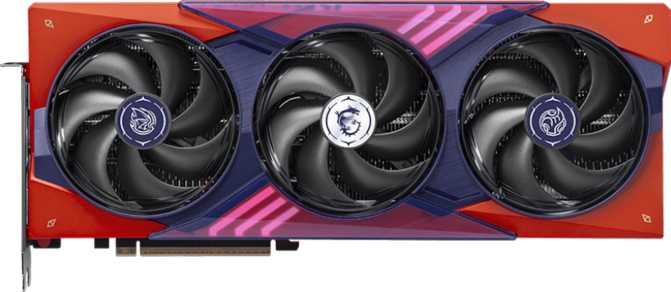
The card leans into the MLG (Major League Gaming) aesthetic — angular shroud lines, a purposeful industrial finish, and addressable RGB lighting integrated into the fan assembly and spine. The lighting syncs through MSI Center software for cohesive system-wide theming.
MSI chose air cooling for this design, which is the correct call at this performance level. A well-engineered triple-fan heatsink of this scale outlasts a low-quality all-in-one liquid cooler in long-term reliability, while keeping the Blackwell silicon quiet under sustained load — critical for a card drawing up to 300 watts at full tilt.
Connectivity Layout
The rear I/O bracket offers four display outputs across two connector types. There is no USB-C output on this card — worth confirming before purchase if you use a USB-C monitor or a VR headset that relies on that connection.
| Port | Qty | Specification |
|---|---|---|
| HDMI | 1 | HDMI 2.1b — 4K@144Hz, 8K@60Hz |
| DisplayPort | 3 | Full-size DisplayPort |
| USB-C | 0 | Not included |
| DVI | 0 | Not included |
All four outputs can run simultaneously, making this card a capable multi-monitor driver for trading setups and workstations as well as gaming rigs. The HDMI 2.1b specification handles 4K at 144Hz and 8K at 60Hz without compression or bandwidth compromises.
Core Performance: What the Blackwell Architecture Delivers
Processing Power
Fabricated on a 5-nanometer process with over 45 billion transistors, the Blackwell die packs far more computational complexity into a single chip than its predecessors. More transistors mean more execution units, deeper cache hierarchy, and greater capacity to handle modern rendering workloads without bottlenecking any single stage of the pipeline.
MSI’s factory boost clock of 2572 MHz sits above the reference specification for the RTX 5070 Ti — delivering extra headroom most noticeably in sustained workloads where a lower-clocked card would drift back toward its base frequency. With 8,960 shader processors driving over 46 TFLOPS of floating-point throughput, this card handles 4K gaming at high-to-maximum settings in current AAA titles and processes 1440p with room to spare.
Memory Subsystem
GDDR7 is the latest memory generation, and the bandwidth gain over GDDR6X is meaningful in practice. This card delivers nearly 900 GB/s across a 256-bit bus — a figure that means the GPU almost never waits for texture data, frame buffer reads, or asset streaming to catch up with its shader processors. The direct result is smoother frame pacing and reduced micro-stutter in open-world titles with large asset pools.
Sixteen gigabytes is the threshold where VRAM pressure stops being a concern at 4K. High-resolution texture packs, ray-traced frame buffers, and large production scene files all benefit from this allocation. A card with 8GB or 12GB at this performance tier would be the wrong choice for anyone planning multi-year ownership — this configuration is not.
Shader & Texture Throughput
The 280 texture mapping units (TMUs) deliver over 720 billion texture operations per second — determining how quickly the GPU applies and filters surface detail across complex scenes. The 96 render output units (ROPs) handle close to 247 billion pixel writes per second, governing how fast final pixel data reaches the frame buffer and ultimately your display.
Both figures point to a card that handles dense, detailed scenes at 4K without the fill-rate ceiling that affects lower-tier hardware at the same resolution. At 4K, pixel and texel counts scale aggressively; having the throughput headroom to absorb that scaling cleanly is what separates a card that feels fast from one that merely benchmarks fast.
Key Features Explained
DLSS AI Rendering
NVIDIA’s AI upscaling renders the game at a lower internal resolution and reconstructs a higher-resolution output using a trained neural network. At current DLSS versions the perceptual quality is genuinely difficult to distinguish from native rendering, while performance gains at 4K can be dramatic. This is not a marketing feature at this performance tier — it is the practical difference between running a path-traced title at a smooth frame rate and running it as a slideshow.
Hardware Ray Tracing
Dedicated ray tracing acceleration built into the Blackwell architecture simulates physically accurate light behavior in real time — reflections, shadows, ambient occlusion, and global illumination that respond dynamically to scene changes. Hardware acceleration makes it usable in supported titles without destroying frame rates. At 1440p with ray tracing enabled in well-optimized games, this card handles the workload comfortably without needing to lean heavily on DLSS to stay smooth.
DirectX 12 Ultimate
Full DirectX 12 Ultimate compliance means every current API feature is available: mesh shaders, sampler feedback, DirectX Raytracing tier 1.1, and variable rate shading. OpenGL 4.6 and OpenCL 3.0 cover legacy and compute workloads for developers and content creators. Double Precision Floating Point (DPFP) support is also present — relevant in scientific simulation, financial modeling, and machine learning contexts where single-bit precision errors carry real consequences.
Intel Resizable BAR
Resizable BAR allows the CPU to access the entire GPU frame buffer simultaneously rather than in legacy 256MB windows. On supported platforms — which covers most current Intel and AMD builds with a 500-series or newer motherboard — this can improve frame rates by 5–15% in CPU-bound scenarios depending on the title. It requires a one-time BIOS toggle to activate, but once enabled it is a free, permanent performance unlock that requires no ongoing management.
Multi-Display Support
Up to four monitors can be driven simultaneously across one HDMI 2.1b and three DisplayPort outputs, making this a capable multi-monitor driver for traders, video editors, and creative professionals running extended desktop setups — not just gamers. ECC memory support is also present, relevant for professional compute workloads that require long-run data integrity across extended calculations.
Power and Thermal Considerations
PSU Requirement: 850W Minimum — 1000W Strongly Recommended
A modern system built around this card — including a current-generation CPU, NVMe storage, and case fans — demands at least 850 watts of clean, stable power. 1000 watts is the more comfortable and future-proof choice. Running this card on an underpowered PSU produces system instability and crashes under load, not graceful performance degradation. Budget for a PSU upgrade if your current unit is below 750 watts.
Cooling Performance
The air-cooling configuration is entirely appropriate for this power envelope on a card of this size. Three fans across 338mm of heatsink surface area keep junction temperatures within safe operating ranges during extended sessions. Under heavy load in a well-ventilated case, the fans are audible but not intrusive — the acoustic profile is what you would expect from a well-designed 300W card operating within its thermal headroom.
In a poorly ventilated case or with a restrictive airflow configuration, temperatures will climb and the GPU will throttle below its boost clock to protect the silicon. Proper case airflow is not optional at this power class — it is a prerequisite for getting the performance you are paying for, consistently.
Power Draw in Context
Three hundred watts is a meaningful commitment, but it is consistent with what performance cards at this tier draw. The PCIe 5.0 power delivery that Blackwell was designed around handles the load efficiently at the connector level. The practical implications depend almost entirely on your existing system build.
- Adequate PSU (850W+) with good case airflow: sustained peak performance throughout sessions
- PCIe 5.0 native, backward compatible with PCIe 4.0 and 3.0 — no mandatory platform upgrade
- Undersized PSU: instability and performance throttling under sustained gaming or rendering load
Real-World Usage: Who This Card Is For
The 1440p Enthusiast
At 2560×1440 on a 165Hz or 240Hz monitor, this card is overkill in the best possible sense. Competitive titles saturate high-refresh displays with frame rate headroom to spare. Demanding open-world AAA titles hit their visual ceilings without compromise. This is the resolution class where the RTX 5070 Ti MLG OC feels most naturally paired with a premium display — everything is fast, nothing is the bottleneck.
The 4K Gamer
At 3840×2160, this card handles current-generation titles at high to maximum settings convincingly, particularly with DLSS engaged. Native 4K at maximum settings in the most demanding path-traced titles will require some setting trade-offs, but DLSS Quality mode restores visual fidelity while recovering substantial frame rates. If 4K gaming at high, consistent frame rates is the goal, this card gets there.
The Creative Professional
Video editors working in DaVinci Resolve, 3D artists rendering in Blender, and motion graphics professionals will find the 16GB VRAM, high compute throughput, and DPFP support genuinely useful. This card handles large scene files, high-resolution timelines, and GPU-accelerated rendering without the memory pressure that cripples 8GB cards in production workflows.
Who This Card Is NOT For
- 1080p competitive gamers: A mid-range card at a fraction of the price hits frame rate ceilings in current esports titles at 1080p. Spending this much for 1080p gaming is a category mismatch.
- Compact and mini-ITX builds: The 338mm length will not fit most small form factor cases. Measure available clearance carefully before purchasing.
- Builds with a PSU below 750W: Budget for a power supply upgrade alongside this GPU. Running it on an inadequate unit is not a viable workaround.
- USB-C display and headset users: This card has no USB-C output. An active adapter is required for monitors or VR headsets that use DisplayPort over USB-C.
Competitive Positioning
The RTX 5070 Ti MLG Edition OC competes in a specific band: above the standard RTX 5070, below the RTX 5080, and in direct competition with factory-overclocked versions of those cards from other board partners. Here is how the key considerations stack up.
| Consideration | MSI RTX 5070 Ti MLG OC | RTX 5070 (Reference) | RTX 5080 (Reference) |
|---|---|---|---|
| Target Resolution | 1440p / 4K | 1440p primary | 4K primary |
| VRAM | 16GB GDDR7 | 12GB GDDR7 | 16GB GDDR7 |
| Memory Bandwidth | ~896 GB/s | Lower | Higher |
| Power Draw | 300W | ~250W | ~360W |
| Factory Overclock | Yes | No | No |
| Relative Price Tier | Upper-mid | Mid | High |
The standard RTX 5070 offers meaningful savings and handles 1440p gaming excellently — but its smaller frame buffer and lower memory bandwidth create a ceiling this card does not have. For buyers who know they are moving to 4K or plan to keep the card across multiple game release cycles, the step up to the 5070 Ti is defensible.
The RTX 5080 offers higher raw throughput and better native 4K headroom, but at a significant price premium and with higher power draw. For users not rendering at 8K or running simultaneous multi-display 4K setups, the real-world performance advantages of the 5080 over the 5070 Ti are genuine but narrowing in everyday gaming use.
Honest Assessment: Strengths and Limitations
Strengths
- Blackwell architecture represents a genuine generational step forward, not an incremental refresh of existing silicon
- GDDR7 memory subsystem is fast enough that it rarely becomes a limiting factor at any target resolution
- 16GB VRAM allocation protects the investment as game texture requirements continue to climb
- Factory overclock is conservatively tuned and stable — no manual BIOS adjustment required to outperform reference
- MLG Edition build quality and RGB integration are cohesive and genuinely premium in feel and finish
- Full DirectX 12 Ultimate compliance covers every current API feature including mesh shaders and variable rate shading
Limitations
- 300W TDP demands an 850W+ PSU and adequate case airflow — not a straightforward drop-in upgrade for most existing builds
- 338mm card length excludes compact and mini-ITX cases entirely — measure before purchasing
- No USB-C output — an active adapter is required for headsets and monitors relying on DisplayPort over USB-C
- The premium over the standard RTX 5070 is difficult to justify for users gaming exclusively at 1080p
- Fan noise is audible under sustained full load — silence-critical environments may find the acoustics marginal
Common Buyer Questions Answered
Final Verdict
The MSI GeForce RTX 5070 Ti MLG Edition OC is the right card for a specific buyer, and it’s the wrong card for everyone else — which is exactly what a well-targeted product should be.
If you are building or upgrading a system for serious 1440p gaming, 4K gaming with DLSS, or dual-purpose gaming and creative work — and you have the case clearance, the power supply, and the budget for this tier — this card is a strong, well-executed choice. The factory overclock adds real-world headroom. The GDDR7 memory subsystem is a generational upgrade. The 16GB VRAM allocation is the correct specification for the performance class. And the MLG Edition’s build quality and aesthetic are genuinely premium.
If you are buying for 1080p gaming, have a compact case, an underpowered PSU, or need USB-C display output — this card is not the right answer, and a more targeted alternative will serve you better. For the buyer it is built for, the MSI RTX 5070 Ti MLG Edition OC delivers without compromise.
Overall Score
8.6 / 10