MSI GeForce RTX 5070 Ti MLG Edition: An Honest Full Review
Graphics CardsKey Specifications at a Glance
Six numbers that define what this card delivers — translated from spec sheet into real-world significance
Design and Build Quality
Physical Presence
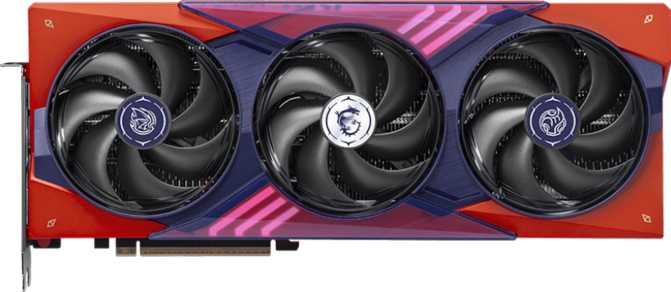
At 338mm long and 140mm tall, the MSI RTX 5070 Ti MLG Edition is a substantial card. Most full-tower and mid-tower ATX cases accommodate it without issue, but compact or mid-size cases with tight GPU clearances need to be measured carefully before ordering — this step is not optional.
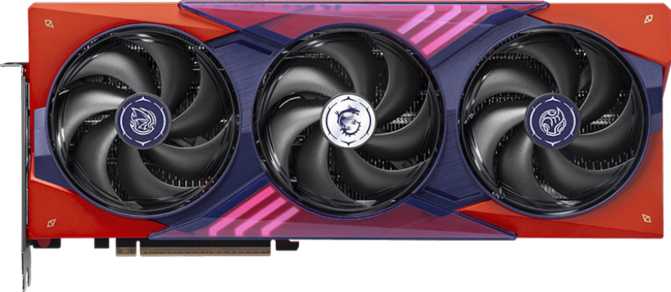
The MLG Edition aesthetic leans into the gaming identity without crossing into the gaudy. RGB lighting is integrated into the shroud design and controllable through MSI's software ecosystem. It adds ambient illumination that complements most lit builds. For builders who prefer a cleaner look, the lighting can be dialed back or disabled entirely.
Cooling Approach
MSI uses an air cooling solution here — no hybrid water-cooling loop, no AIO bracket. For a 300W card, that is a reasonable decision when the heatsink and fan array are properly engineered. What air cooling means practically: the card exhausts heat into your case interior, so adequate case airflow is a prerequisite, not a nice-to-have.
Physical Specifications
- Length
- 338 mm
- Height
- 140 mm
- Cooling Type
- Air-Cooled
- RGB Lighting
- Yes — Software Controlled
- PCIe Interface
- PCIe 5.0 (backward-compatible)
- Recommended PSU
- 850W or higher
Core Performance: What Blackwell Actually Delivers
Architecture, transistors, clock speeds, and compute — explained in terms that matter for gaming and creative work
The Architecture Advantage
Blackwell is NVIDIA's most significant architectural shift in several generations. Built on a 5-nanometer manufacturing process and packing over 45 billion transistors into the die, it achieves higher computational density without a proportional rise in power consumption. This is the foundation for genuine generational improvement — not just a clock speed bump. The RTX 5070 Ti MLG Edition houses 8,960 shader processors and 280 texture mapping units, providing a well-balanced pipeline across geometry, shading, and texture workloads.
Clock Speeds and Sustained Output
The GPU maintains a boost clock above 2.4 GHz under load. In practice, modern GPUs spend the vast majority of gaming time at or near their boost clock — so that figure, not the base clock, governs real-world sustained performance.
The 96 render output units handling final pixel writes ensure the pipeline is balanced rather than top-heavy in any single stage. No single part of the architecture creates a bottleneck that wastes capacity elsewhere.
Pipeline Metrics in Context
Progress bars represent approximate market-tier positioning relative to current consumer GPU range, not benchmarked scores.
Memory: Why 16GB of GDDR7 Is the Right Call
VRAM capacity and bandwidth are the hidden bottlenecks most buyers overlook — this card addresses both without compromise
The VRAM Situation
Sixteen gigabytes of video memory is no longer excessive for a card at this performance level — it is appropriate. Modern AAA titles at high resolutions with texture packs and ray tracing enabled regularly push past 10GB of VRAM. Having 16GB means this card will not bottleneck itself due to memory pressure in demanding scenarios, even at 4K with quality settings maximized.
GDDR7 and What Nearly 900 GB/s of Bandwidth Means
GDDR7 is the newest generation of graphics memory. Operating across a 256-bit bus, the resulting memory bandwidth approaches 900 GB/s — a figure representing how quickly the GPU can move data between its compute units and the memory pool. For bandwidth-sensitive workloads — high-resolution texturing, ray tracing, and denoising algorithms — this headroom means the GPU's compute resources are consistently fed with data rather than waiting on slow memory reads.
Previous-generation high-end cards used GDDR6X at considerably lower bandwidth. GDDR7 closes a bottleneck that was measurable in prior architectures, not a theoretical concern.
ECC Memory: The Professional Bonus
ECC (Error-Correcting Code) memory support detects and corrects single-bit memory errors — relevant for 3D rendering, machine learning inference, or any long compute job where a single corrupted bit can ruin hours of output. For pure gaming, this feature is invisible. For anyone running this card in a dual-purpose gaming and workstation role, it is a quiet but meaningful capability rare in consumer GPU tiers.
Memory Summary
-
16GB GDDR7Full frame buffer for 4K ultra quality without VRAM pressure
-
896 GB/s BandwidthEliminates memory starvation at any resolution
-
256-bit Bus WidthWide data path for sustained throughput under heavy load
-
ECC SupportError correction for professional and mixed workloads
Feature Set: The Technology Stack Explained
Every major capability decoded from marketing language into real-world meaning
DLSS: The Performance Multiplier
DLSS uses dedicated tensor cores — separate from the main shader array — to reconstruct high-quality images from lower-resolution render targets and generate additional frames. In supported titles, you render at a lower internal resolution, recover full visual quality through AI reconstruction, and reach frame rates impossible by brute-force rasterization alone. At 4K, DLSS is less a nice-to-have and more a fundamental part of how this card is used effectively.
Hardware Ray Tracing
Ray tracing here is hardware-accelerated, not software-emulated. Dedicated RT cores handle the recursive light intersection calculations that make ray tracing viable in real time. Global illumination, accurate reflections, and shadow casting become achievable without destroying frame rates. Paired with DLSS, ray tracing remains manageable even in the most demanding titles at this tier.
DirectX 12 Ultimate
Full DX12 Ultimate compliance means this card qualifies for every current and near-future rendering feature Microsoft has defined — mesh shaders, DirectX Raytracing, variable rate shading, and sampler feedback. These are the capabilities developers target when building the most visually sophisticated experiences. A card without full DX12 Ultimate support is already behind the target for next-generation titles.
Intel Resizable BAR
Resizable BAR allows the CPU to access the entire GPU frame buffer simultaneously rather than through a smaller aperture. In games that take advantage of this, frame rates and frame pacing improve modestly. It requires a compatible motherboard and CPU with the feature enabled in BIOS, but on eligible systems it is a free performance gain with no trade-offs.
Display Output Configuration
One HDMI 2.1b port supports 4K at 120Hz, 8K output, and HDMI-VRR. Three DisplayPort outputs cover the majority of high-refresh-rate gaming monitor connections — enough to support a full four-screen workstation setup simultaneously.
PCIe 5.0 Interface
PCIe 5.0 provides interface bandwidth that far exceeds what any current GPU can saturate. The card is also backward-compatible with PCIe 4.0 and PCIe 3.0 motherboards with negligible real-world performance difference for gaming. No motherboard upgrade is required, and the interface will not be a bottleneck on any modern system.
Power and System Requirements
What your system needs to support this card properly — plan before you build
PSU Planning Is Non-Negotiable
At 300 watts of thermal design power, a system built around this card should use a power supply of at least 750 watts. An 850-watt unit is a more comfortable target when accounting for a modern high-core-count CPU and other components running simultaneously under full load.
An undersized PSU does not guarantee immediate failure — but it increases the risk of system instability under combined peak loads. This is not a corner worth cutting.
Thermal Output and Case Airflow
Under sustained gaming loads, this card dissipates 300 watts as heat into your chassis. Adequate case ventilation is a prerequisite: at minimum two intake fans and one exhaust fan. A well-ventilated case keeps fan noise low and temperatures stable. A poorly ventilated case pushes the fans harder and raises temperatures that reduce long-term component longevity.
PCIe Slot Compatibility
The card uses PCIe 5.0 but is fully backward-compatible with PCIe 4.0 and PCIe 3.0 motherboards. The interface is not a performance bottleneck at any current slot generation for gaming or creative workloads. No motherboard upgrade is required to use this card at full performance.
System Requirements Checklist
-
PSU: 750W minimum850W strongly recommended for headroom
-
Case: 340mm+ GPU clearanceMeasure before ordering — do not assume
-
Case: Adequate airflow2+ intake fans, 1+ exhaust fan minimum
-
Slot: PCIe 4.0 or 5.0PCIe 3.0 functions but is suboptimal
-
Monitor: No USB-C outputRequires DisplayPort or HDMI connection
Who This Card Is For — and Who Should Look Elsewhere
The RTX 5070 Ti MLG Edition has a clear target audience. Here is how to know whether you are in it.
Ideal Buyers
The memory bandwidth, VRAM capacity, and DLSS capabilities are tuned for 4K. At this resolution, the Blackwell architecture's AI upscaling becomes most valuable. If 4K at high refresh rates is your target, this card is built for it.
At 1440p this card has meaningful performance overhead, translating directly into higher frame rates and lower frame time variance. Players targeting 165Hz, 240Hz, or higher in demanding titles will sustain those rates consistently even with quality settings maximized.
16GB VRAM, ECC memory support, tensor core hardware, and near-44 TFLOPS compute make this genuinely capable for 3D rendering, GPU-accelerated video production, and AI inference tasks — alongside gaming.
Consider Alternatives If...
At 1080p this card's capabilities are underutilized to a degree that does not make financial sense. An RTX 5070 or comparable card handles 1080p gaming with no meaningful quality difference at significantly lower cost.
If supporting this card requires additional PSU or case investment, a lower-TDP alternative at similar performance may deliver better overall value for your specific build situation.
GPU investment of this magnitude returns diminishing per-dollar performance in CPU-limited titles like CS2 or Valorant once a certain frame rate ceiling is hit. The RTX 5070 covers that use case thoroughly at lower cost.
Competitive Positioning
How the MSI RTX 5070 Ti MLG Edition sits against its most relevant alternatives at this performance and price tier
| Card | Architecture | VRAM | Compute Tier | Key Trade-off |
|---|---|---|---|---|
| MSI RTX 5070 Ti MLG Ed. This Review | Blackwell (NVIDIA) | 16GB GDDR7 | ~44 TFLOPS | DLSS, full DX12 Ultimate, peak bandwidth |
| RTX 5070 | Blackwell (NVIDIA) | 12GB GDDR7 | ~30 TFLOPS | Lower cost, reduced VRAM headroom |
| RTX 4080 Super | Ada Lovelace (NVIDIA) | 16GB GDDR6X | ~52 TFLOPS | Prior generation, lower memory bandwidth |
| AMD RX 9070 XT | RDNA 4 (AMD) | 16GB GDDR6 | Competitive tier | No DLSS, FSR instead, no ECC support |
vs AMD RX 9070 XT: The RTX 5070 Ti's clearest advantages are DLSS — the most capable AI upscaling currently available — and ECC memory. In titles supporting DLSS 4's multi-frame generation, NVIDIA's implementation delivers frame rates AMD cannot currently match.
vs RTX 4080 Super: Higher memory bandwidth through GDDR7, next-generation Blackwell architecture, and the latest DLSS iteration outweigh the 4080 Super's higher raw TFLOPS count in most modern gaming scenarios.
Honest Assessment: Strengths and Weaknesses
No GPU is perfect. Here is what the MSI RTX 5070 Ti MLG Edition genuinely gets right — and where it falls short.
Genuine Strengths
-
GDDR7 Bandwidth
896 GB/s eliminates memory starvation that limited previous-generation cards in bandwidth-intensive workloads like ray tracing and 4K texturing.
-
16GB VRAM — Forward-Looking
As game asset quality increases over this card's useful lifespan, 16GB provides a margin that 8GB and 12GB configurations are already struggling to match in some titles.
-
Blackwell AI Integration via DLSS
DLSS transforms raw compute into delivered performance. The gap between TFLOPS-on-paper and actual playable frame rates is where Blackwell wins decisively over raw specification comparisons.
-
Full DirectX 12 Ultimate
Every modern and near-future rendering feature is supported. This card does not chase compatibility — it defines it.
-
ECC Memory Support
Rare in consumer cards at this tier and genuinely useful for anyone running mixed gaming and professional workloads.
-
Four Simultaneous Display Outputs
Multi-monitor workstation and gaming setups are fully covered without any additional hardware.
Real Weaknesses
-
300W Demands Proper System Planning
This is not a drop-in upgrade for every build. An undersized PSU or poorly ventilated case is not compatible with this card's power and thermal requirements.
-
No USB-C Display Output
A genuine limitation for buyers with USB-C or Thunderbolt displays. An adapter is required, or a different card should be considered.
-
338mm Length Requires Case Verification
Not universally compatible with compact builds. GPU clearance must be measured, not assumed — this is an easy mistake with an expensive consequence.
-
Overkill for 1080p Gaming
At 1080p the financial case for this card is difficult to defend. The performance ceiling is well above what the resolution requires in any current title.
-
Air Cooling Only
No hybrid or AIO cooling option is available on this SKU. Thermal management depends entirely on case airflow quality. Fan noise under sustained load in a restricted case is noticeable.
Questions Real Buyers Ask Before Purchasing
Direct answers to the most common searches about this card
MSI GeForce RTX 5070 Ti MLG Edition
The MSI RTX 5070 Ti MLG Edition is a well-executed card at a performance tier that makes genuine sense for a specific buyer. The GDDR7 memory configuration is appropriate and forward-looking. The Blackwell architecture's AI pipeline transforms raw compute into delivered performance in a way raw TFLOPS comparisons alone fail to capture.
Buy It If:
- 4K or maxed-out 1440p gaming is your primary target
- You need DLSS for maximum usable frame rate output
- You use the card for creative work alongside gaming
- Your system has an 850W PSU and proper case airflow
Skip It If:
- You game exclusively at 1080p
- Your PSU is under 750W or your case space is limited
- You require a USB-C display output
- Your library consists entirely of esports titles
The Bottom Line
For its intended audience — the 4K enthusiast, the high-refresh 1440p gamer, the builder who also does creative work — the MSI RTX 5070 Ti MLG Edition earns a clear recommendation. Its weaknesses are real but predictable and manageable with proper system planning. For everyone else, a step down the product stack serves better value without meaningful sacrifice.