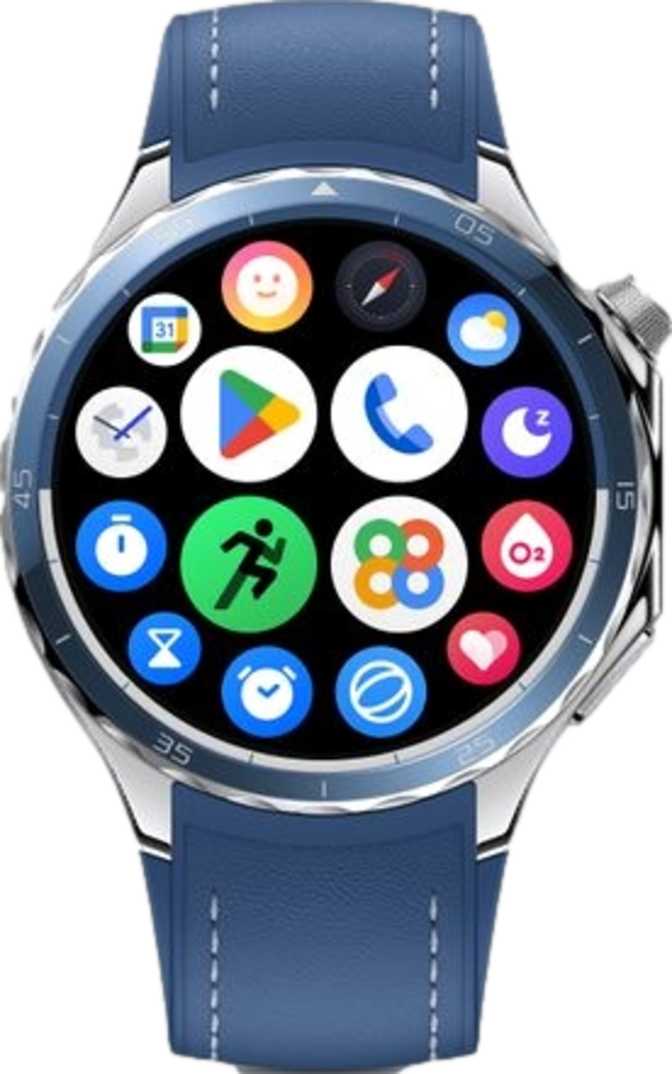
Oppo Watch X2 Full Review: Premium Health Tracking With Trade-Offs
SmartwatchesThe Oppo Watch X2 arrives in a market where most smartwatches have become polished, capable, and largely indistinguishable from each other. OPPO's offering cuts through that sameness with a specific combination of choices: premium display protection, clinically relevant health sensors, and an amount of on-board storage that makes competing products look conservative by comparison. It also makes some deliberate omissions that reflect a considered product philosophy — understanding both sides of that equation is what this review is for.
The Oppo Watch X2 arrives in a market where most smartwatches have become polished, capable, and largely indistinguishable from each other. OPPO's offering cuts through that sameness with a specific combination of choices: premium display protection, clinically relevant health sensors, and an amount of on-board storage that makes competing products look conservative by comparison. It also makes some deliberate omissions that reflect a considered product philosophy — understanding both sides of that equation is what this review is for.
Specifications at a Glance
Quick Verdict
Editorial Scores
Design and Build: More Premium Than It Looks in Photos
Physical Experience & Materials
A Case That Means Business
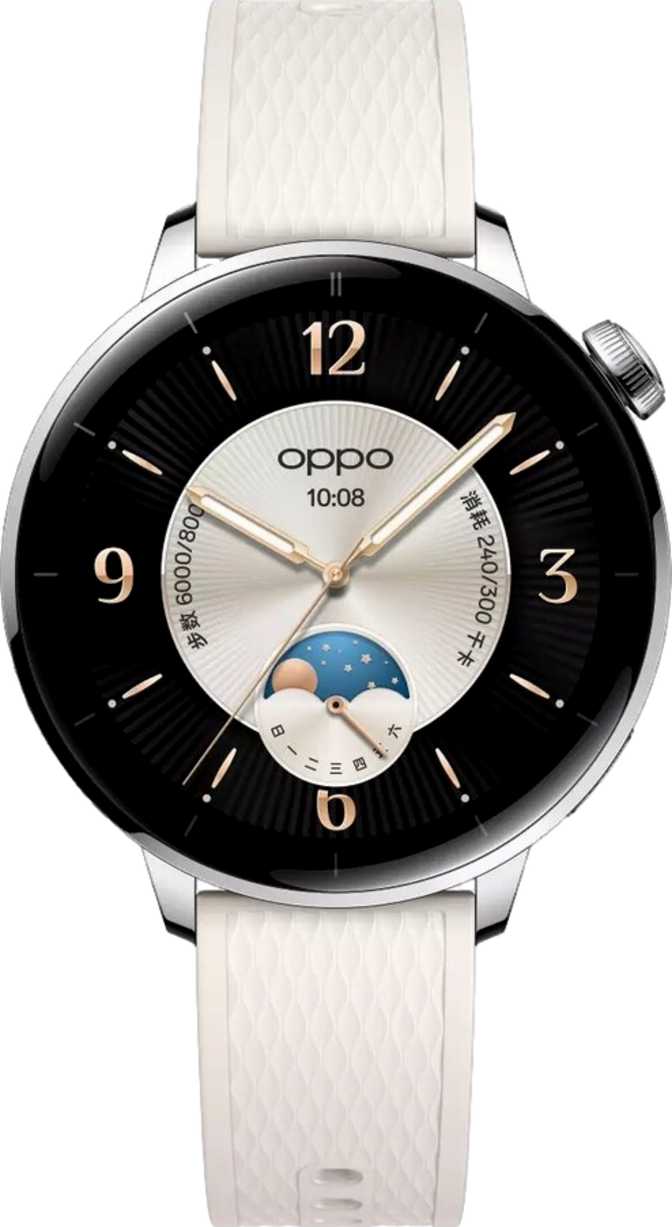
At just under 47mm across and weighing barely 50 grams, the Watch X2 occupies full-size smartwatch territory — this is not a choice for those who prefer discreet, barely-there wearables. On the wrist, it presents itself with purpose: the case depth of nearly 12mm gives it visual presence, though the rounded form sits more comfortably than the dimensions alone might suggest.
What elevates the physical design above average is the glass covering the display. The Watch X2 uses sapphire crystal rather than the chemically strengthened glass found on most smartwatches. Sapphire sits just below diamond on the hardness scale — it takes a deliberate attempt with very hard materials to scratch it. After months of daily wear, doorframes, keys, and countertop bumps won't leave their marks. Anyone who has watched a smartwatch screen develop a constellation of micro-scratches within a few weeks will immediately understand why this matters.
Watch bands are fully replaceable using a standard attachment mechanism, making it easy to swap between a sport silicone strap and something more formal. A wide aftermarket selection is typically available for standard lug sizes, giving the Watch X2 long-term versatility beyond what the box provides.
The Display: What AMOLED Delivers at This Size
The 1.5-inch circular panel uses AMOLED technology — the same family of displays found in flagship smartphones. The practical outcome is absolute blacks, vivid colors, and strong outdoor visibility. Watch faces with dark backgrounds look particularly sharp because pixels showing black simply turn off.
The pixel count on that circular face delivers a density level where individual pixels aren't visible at normal wrist-viewing distance. Text on complications is sharp, icons are clean, and watch face artwork renders without obvious artifacts.
Always-On Display mode is available, letting you read the time and key data without a wrist raise or screen tap. The trade-off is battery consumption — running this mode continuously will reduce daily endurance below the headline figure, something worth calibrating during the first few days of ownership.
Water Resistance: What the Ratings Mean
The Watch X2 holds both an IP67 certification and a 5 ATM pressure rating, with a stated safe depth of 50 meters. For practical purposes, this watch is genuinely swim-safe — pool laps, open water surface swims, surfing, and showering all sit well within its design parameters.
The operating temperature tolerance is unusually wide — this watch is tested to function across conditions spanning deep-winter cold on ski slopes to temperatures exceeding anything experienced outdoors. Extreme-environment athletes have nothing to worry about on this front.
Health Monitoring: The Features That Justify the Attention
Cardiac, Wellness & Sleep Tracking
Heart Health: ECG and Continuous Monitoring
ECG (electrocardiogram) is the most significant health feature on this watch. When you place your finger on the watch's sensor and hold still for a short period, the watch captures the electrical signals your heart generates with each beat — producing a single-lead reading similar to the trace a doctor sees during a basic cardiac check-up.
This is not a replacement for a clinical ECG, which uses multiple leads placed at precise points across the body. But for detecting whether your heart's rhythm pattern falls within normal bounds or shows something worth discussing with a physician, it's a meaningful tool that many smartwatches — even expensive ones — don't offer.
Continuous heart rate monitoring runs in the background, flagging you when your rate climbs or drops outside configured thresholds. VO2 max estimation — the benchmark metric used by endurance coaches to quantify cardiovascular fitness — is also tracked and can be monitored as a trend over time.
Cardiac Features Included
- Single-lead ECG
- Resting heart rate
- High / low HR alerts
- VO2 Max estimation
Notable Cardiac Feature Gaps
HRV (heart rate variability) tracking is absent — meaning no automated daily readiness or recovery scores are generated. There are also no irregular rhythm warnings running passively in the background beyond the active ECG function.
Blood Oxygen (SpO2)
Measures the percentage of oxygen your red blood cells are carrying — useful during altitude activities, for respiratory health monitoring, and as a general wellness indicator during sleep.
Wrist Temperature
Continuous temperature tracking is especially informative when logged during sleep. Subtle overnight elevations can indicate illness before other symptoms appear — patterns across multiple nights carry more meaning than single readings.
Sleep Analysis
Structured nightly reports with sleep stage breakdown and temperature monitoring throughout the night. Detailed data that goes beyond a simple hour count. Note: no smart alarm that wakes you at the lightest sleep stage.
Fitness and Activity Tracking: Strengths and a Notable Gap
What It Tracks and What It Doesn't
What It Tracks
- Steps, Distance and PaceContinuous daily tracking with automatic session recognition and full history in the companion app.
- Elevation and Route TrackingElevation changes logged during hikes and runs, with GPS route recording for post-session review.
- Calorie Burn EstimationActive workout calories and overall daily burn calculated from heart rate and movement data.
- Automatic Activity DetectionThe watch recognizes when you've started a workout and begins logging without requiring you to manually start a session.
- Food, Water and Weight LoggingFull wellness picture beyond exercise — nutrition, hydration, and weight tracking all available in the companion app.
- Inactivity AlertsPrompts you to move during prolonged sedentary periods — particularly useful for desk workers.
Significant Gaps
No Multi-Sport Mode
There is no structured profile system for selecting sport types before a session — no dedicated cycling mode, swim mode, rowing profile, or trail running profile with sport-specific data fields. For athletes who need per-sport analytics, this is a meaningful limitation compared to purpose-built fitness watches.
- No Cadence SensorCyclists who track pedal revolutions per minute will need a separate device or a different watch entirely.
- No HRV TrackingHeart rate variability for daily recovery scores is absent — a metric many athletes rely on to manage training load.
- No Pre-Loaded Route NavigationRoutes you've run are recorded for review, but you cannot import a planned course to navigate a new trail for the first time.
Smart Features: A Fully Connected Wrist
Payments, Calls, Storage & GPS
NFC Payments
Contactless payments at any compatible terminal. Leave your wallet behind for gym sessions, coffee runs, and commutes once the watch is configured with your payment details.
Wrist Calling
Answer, reject, and manage calls directly from the watch via its integrated speaker and microphone — no need to reach for your phone.
Full Notifications
All app notifications from your connected phone appear on the watch face with vibrating alerts — no phone unlocking required to stay informed.
Voice Commands
Hands-free watch interaction without touching the screen — useful during exercise or when your hands are otherwise occupied.
GPS + Galileo Satellite
Dual satellite constellation support gives access to a broader positioning network, improving accuracy in city streets with tall buildings and dense woodland. Fast GPS acquisition at session start.
Wi-Fi + Bluetooth 5.2
The watch can sync and update independently on a known Wi-Fi network without your phone nearby. Bluetooth 5.2 maintains an efficient, stable phone connection throughout the day.
32GB of On-Board Storage: The Spec That Deserves More Attention
The Watch X2 carries 32 gigabytes of internal storage and 2GB of RAM — specifications that resemble a small connected device more than a fitness tracker. The direct practical benefit is offline music playback: load your library onto the watch and head to the gym, a run, or a flight without needing your phone for entertainment. Music playback is explicitly supported, and the storage is there to match.
This capacity also gives the device headroom for software updates, watch faces, and accumulated health data that competitors running on 4–8GB of storage simply don't have.
Internal Storage
RAM
Battery Life: Five Days With a Fast Top-Up
Endurance, Charging and Power Modes
Under typical daily use — notifications, continuous heart rate monitoring, occasional GPS workouts, and always-on display turned off — the Watch X2 manages roughly five days between charges. That's competitive for a feature-rich AMOLED smartwatch, comfortably outlasting daily-charge devices while not approaching the multi-week endurance of stripped-down GPS sport watches.
Frequent GPS tracking will pull that figure down meaningfully — heavy workout use might reduce real-world endurance to three to four days. Users who train daily with GPS should plan charges every third or fourth day to avoid surprises.
When the watch does need charging, the speed of the process is a genuine practical advantage. A full charge from near-empty to complete takes approximately an hour and twenty minutes — fast enough to top up during a morning routine or an episode of television. You are never stuck waiting for hours.
A power-saving mode extends battery life to over two weeks by suspending most smart features and defaulting to core functions. This is useful for travel or multi-day trips away from reliable charging — you retain timekeeping and basic health monitoring without burning through the reserve quickly.
No Wireless Charging
A dedicated physical cable is required every time — no Qi charging pad or multi-device mat compatibility. For users invested in wireless charging ecosystems, this friction becomes noticeable over time.
Typical daily use, AOD off
vs. 7-day smartwatch benchmark
Full charge (wired only)
Power-save mode
The Companion App: Free, Clean and Bounded
Software Features, Costs & Limitations
What the App Includes
The companion app is free to download and carries no subscription fees — all health data, activity reports, and features are accessible without a paid tier. The app is also ad-free. This stands out against a competitive landscape where several platforms have begun gating detailed health insights behind monthly payments.
App Limitations
The app's limitations are specific and worth knowing before purchase, particularly for users who expect data portability, desktop access, or guided coaching.
- Account RequiredThe app does not function anonymously — an account must be created to access any features.
- No Desktop AppNo companion software for Mac or Windows. All health data and reports live within the smartphone app only.
- No Pre-Loaded Route NavigationRoutes you've tracked can be reviewed, but importing a planned course to navigate for the first time is not supported.
- No Guided CoachingThe app provides data, reports, and goals — but no structured workout plans or adaptive training guidance.
- No Email Data ExportHealth data cannot be exported via email for external analysis or for sharing with a healthcare provider.
Who the Oppo Watch X2 Is For — And Who Should Look Elsewhere
Buyer Fit Analysis
This Watch Fits Well If You...
- Want scratch-resistant sapphire glass without paying luxury watch prices
- Prioritize ECG, blood oxygen, temperature monitoring, and VO2 max as core daily features
- Want to store music directly on the watch and leave your phone behind during workouts
- Value NFC payments and call handling directly on your wrist
- Are comfortable charging every four to five days
- Want all health features without a recurring subscription fee
Consider Alternatives If You...
- Train across multiple sports and need dedicated profiles with per-sport analytics
- Rely on HRV-based daily readiness or recovery scores in your training routine
- Want wireless charging convenience at home or while traveling
- Need pre-loaded route navigation for trail running or cycling
- Want cellular connectivity so the watch can operate independently of your phone
- Prioritize battery endurance well beyond one week between charges
How the Oppo Watch X2 Compares in Its Category
Competitive Positioning
The Watch X2 occupies an interesting position that doesn't map cleanly onto a single competitor. On health hardware depth — particularly ECG and sapphire crystal protection — it competes with flagship-tier smartwatches. On fitness depth, purpose-built sport watches offer what this watch deliberately does not. The table below places confirmed Watch X2 specifications alongside general category benchmarks.
| Feature Area | Oppo Watch X2 | Typical Android Smartwatch | Dedicated Sport Watch |
|---|---|---|---|
| Display Glass | Sapphire Crystal | Gorilla Glass variants | Varies by model |
| ECG | Yes | Select flagships only | Rare |
| HRV / Readiness Score | No | On select flagships | Common |
| Multi-Sport Profiles | No | Usually included | Extensive (40+) |
| On-Device Storage | 32GB | 8–16GB typical | 4–8GB typical |
| Battery (Regular Use) | ~5 days | 1–3 days | 7–21+ days |
| Wireless Charging | No | Common | Common |
| Cellular Option | No | Available on some | Available on some |
| NFC Payments | Yes | Usually included | Varies |
| Subscription for Health | None | Varies by platform | Common on some |
| Platform Compatibility | Android + iOS | Usually both | Usually both |
Oppo Watch X2 specifications are confirmed from manufacturer data. Competitor entries reflect general category benchmarks, not specific named models.
Questions Buyers Ask Before Purchasing
Frequently Asked Questions
Our Final Take
Verdict: A Thoughtful Premium Smartwatch With Specific Blind Spots
The Oppo Watch X2 makes a compelling case for buyers who want premium health monitoring — genuine ECG, comprehensive sensor coverage, and sapphire crystal protection — without being locked into a single ecosystem. The 32GB storage positions it unusually well for workout-focused use without a phone in tow. The multi-day battery and fast-charging together make charging logistics genuinely low-stress in practice.
The gaps are real and deliberate. The absence of multi-sport modes limits its appeal to dedicated athletes who need per-sport analytics. No HRV tracking narrows its recovery monitoring credentials. The lack of wireless charging is a convenience step backward for an otherwise premium device. No cellular means it remains dependent on your phone for most of its intelligence.
Best For
Health-forward smartwatch buyers who want ECG, sapphire glass, and 32GB of offline music storage — without recurring subscription fees and without being locked to one phone ecosystem.
Not Ideal For
Endurance or multi-sport athletes, users who depend on HRV recovery scores, or anyone who wants full cellular independence from their phone.
Recommended
For health-forward buyers who value premium materials and subscription-free monitoring.