Oppo Watch X3 Full Review: Premium Hardware Meets Real-World Testing
SmartwatchesAt a Glance
Six numbers that define the Oppo Watch X3 before you read another word.
5 Days
Battery Life
50m / IP69
Water Resistance
1.5″ AMOLED
Always-On Display
32 GB
Internal Storage
Built-in GPS
+ Galileo Support
43 g
Watch Weight
Overall Score
Category Ratings
Design and Build Quality
Physical experience, materials, and what it's like to wear every day.
The Case and Dimensions
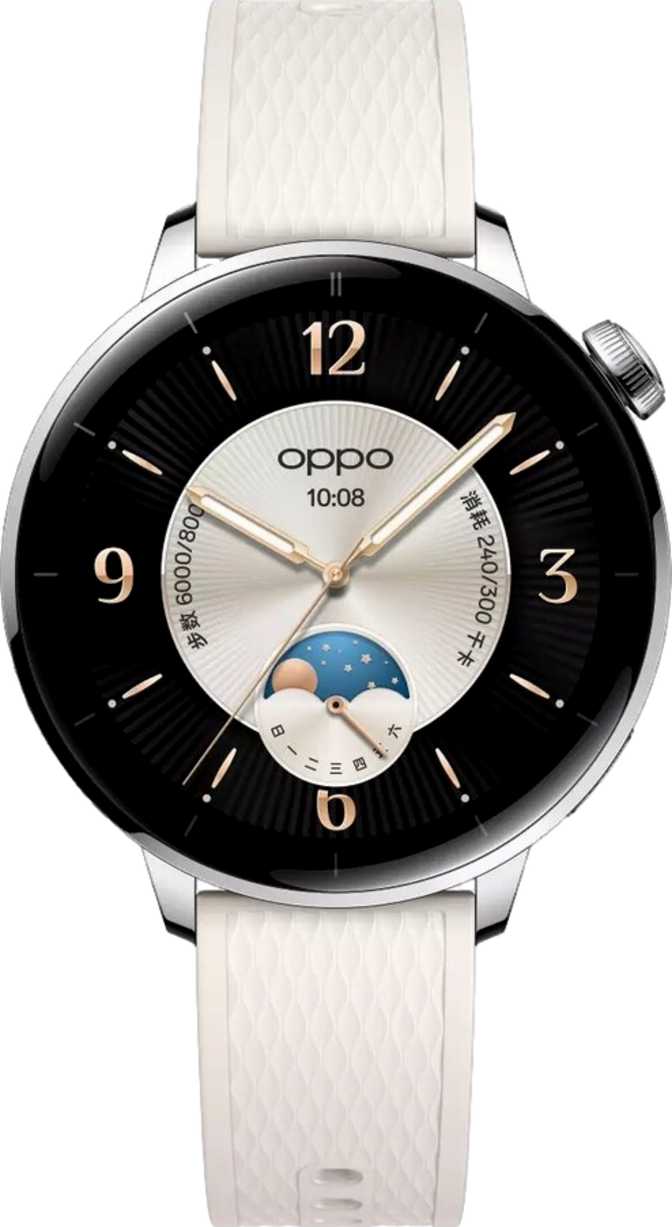
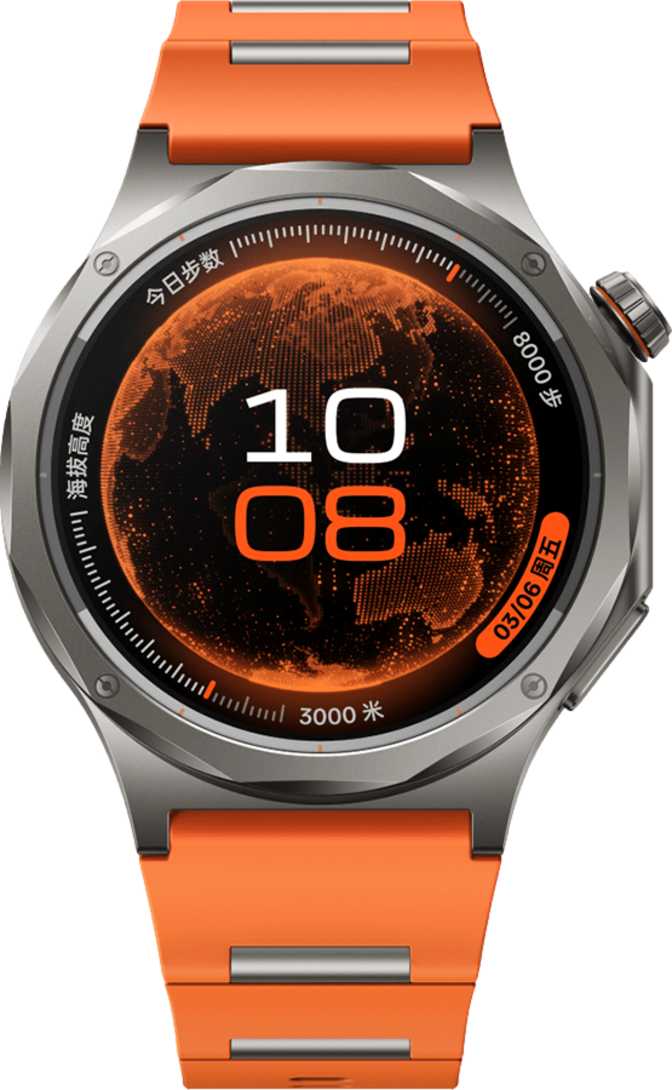
The Watch X3 wears its 47.4 mm square footprint without apology. That's a large watch — closer to the size of a standard men's dress watch face than something discreet. At 43 grams and 11 mm thick, it strikes a reasonable balance: present on the wrist without being oppressive. Most people with average-to-large wrists will find it comfortable for all-day wear. Those with slender wrists should try one in person before buying — the case fills a lot of real estate.
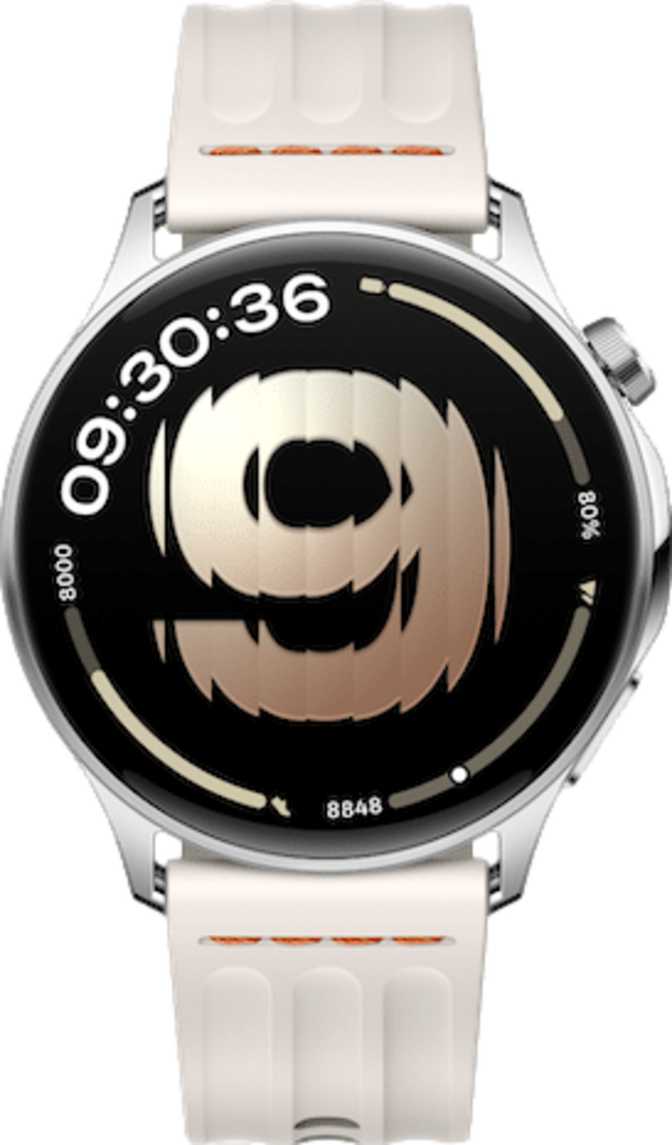
The 1.5-inch AMOLED display renders at 466 x 466 pixels across that surface, producing a pixel density where individual pixels are invisible under any normal viewing condition. Text is crisp, watch faces look sharp, and health data is easy to read at a glance. AMOLED technology means the display produces true blacks by switching off individual pixels entirely — which is what makes the Always-On Display mode viable without catastrophic battery drain.
Temperature Resilience
The operating temperature range runs from −40°C to 70°C. Practically, this means the watch performs reliably in severe winter conditions where most electronics become unreliable, and in extreme heat environments. Most buyers will never push this boundary, but it signals engineering intent beyond basic consumer durability standards.
The band is fully replaceable — when the original strap eventually wears or when you simply want a different look, you are not locked into buying a new watch. Oppo-compatible or correctly sized third-party bands will fit.
The Watch X3 uses actual sapphire crystal glass — not a marketing term, not a Gorilla Glass variant. Sapphire sits near the top of the hardness scale, ranking just below diamond. It resists scratches from virtually anything encountered in daily life: keys, coins, textured surfaces, concrete edges.
The trade-off with sapphire is greater brittleness under a direct sharp impact compared to flexible glass alternatives. But for everyday scratch resistance, it is simply the superior material.
Watches costing two to three times more often use sapphire glass as a selling point. Finding it here is a genuine advantage.
| Case Size | 47.4 × 47.4 mm |
| Thickness | 11 mm |
| Weight | 43 g |
| Display Size | 1.5 inches AMOLED |
| Resolution | 466 × 466 px (310 ppi) |
| Glass Protection | Sapphire Crystal |
| Operating Range | −40°C to 70°C |
Water Resistance: Serious Protection
5 ATM
Pressure Rating
IP69
Ingress Protection
50 Metres
Depth Rating
The IP69 rating specifically means the watch withstands high-pressure, high-temperature water jets — not just casual splashes. Pool swimming is fine. Showering is fine. Heavy rain is fine.
The Watch X3 is not rated or marketed for scuba diving. Its protection far exceeds everyday demands, but high-velocity water sports push beyond intended use.
Display Performance: Always-On Without the Compromise
The Always-On Display on the Watch X3 redefines how you interact with a watch throughout the day.
Traditional smartwatch displays require a wrist-raise gesture or a button press to wake. This works well enough, but it fails during workouts, cooking, driving, or any moment when raising your wrist deliberately isn't practical. With the AOD active, a glance is all it takes.
AMOLED makes this feasible without catastrophic battery consequences. The display draws almost no power when showing static or dimmed AOD content — only the lit pixels consume energy. This is the fundamental reason AMOLED and AOD are a natural pairing, and why LCD-based competitors struggle to offer always-on modes without severe battery penalties.
At 310 pixels per inch, the pixel density reaches a level where sharpness is visible in rendered text, UI elements, and watch face details but individual pixels are not. Comparing this screen to budget smartwatch displays with half the pixel density is like comparing a modern smartphone screen to an early tablet — the difference is immediately obvious to the naked eye.
- Panel TechnologyAMOLED
- Screen Size1.5 inches
- Resolution466 × 466 px
- Pixel Density310 ppi
- Always-On DisplaySupported
- Touch InputYes
- Glass ProtectionSapphire
Health and Fitness Monitoring
A comprehensive sensor suite with a few deliberate gaps — here is exactly what you get and what you don't.
What the Sensor Suite Covers
The Watch X3 carries an ECG sensor, blood oxygen monitoring (SpO2), continuous heart rate tracking, body temperature monitoring, a barometer for elevation, a gyroscope, an accelerometer, and a compass. For the vast majority of health-conscious users, this covers everything that matters.
Electrocardiogram functionality allows the watch to produce a single-lead electrical reading of your heart's rhythm — the same basic measurement a physician uses to identify certain arrhythmias. This is not a substitute for clinical ECG equipment, and the watch cannot diagnose medical conditions.
As a personal monitoring tool that can surface patterns worth discussing with a doctor, ECG represents a meaningful health feature that was, until recently, found only in medical-grade wearables or significantly more expensive consumer devices. Finding it here carries real clinical relevance.
Blood oxygen monitoring tracks the saturation of oxygen in your bloodstream. Combined with continuous heart rate tracking and body temperature sensing, the Watch X3 builds a reasonably complete picture of your physiological baseline. Resting heart rate monitoring, fast/slow heart rate alerts, and VO2 Max estimation round out a health suite that serious fitness users will find genuinely useful.
The barometer adds a dimension many fitness trackers omit — tracking elevation gain and atmospheric pressure changes during outdoor activities. For hikers, runners on hilly terrain, or cyclists, this produces more accurate altitude data than relying on GPS calculations alone.
- ECG
- Blood Oxygen (SpO2)
- Continuous Heart Rate
- Body Temperature
- Barometer / Elevation
- Gyroscope
- Accelerometer
- Compass
- VO2 Max Estimation
- Resting Heart Rate
- HRV Tracking
- Recovery / Readiness Score
- Fall Detection
- Irregular Heart Rate Alerts
- Cadence Sensor
- Multi-Sport Profiles
Activity Tracking
The Watch X3 detects and logs workouts automatically, tracks steps, pace, distance, elevation, and routes during outdoor sessions. Exercise tagging and an exercise diary are included. The absence of formal multi-sport mode means it may not offer the broad library of pre-configured sport profiles that dedicated sports watches provide, but it handles general fitness tracking reliably.
Sleep Tracking
Sleep monitoring includes full structured reports — not just a duration log but analysis of sleep quality across stages. Combined with inactivity alerts during the day, the Watch X3 supports the full 24-hour health picture rather than focusing solely on active exercise windows. Food, water intake, and weight tracking through the companion app complete the lifestyle monitoring toolkit.
On-Device Performance: A Watch That Actually Runs
Where the Oppo Watch X3 separates itself most clearly from mid-range competition.
The Watch X3 carries 2 GB of RAM and 32 GB of internal storage. To put that in perspective: many mid-range smartwatches ship with a fraction of this — often under 1 GB of RAM and 4–8 GB of storage. The Watch X3's internal capacity is closer to what you'd find in an entry-level smartphone, applied to a watch-sized device.
In practice, this means the watch can store a substantial music library on-device for offline playback without a connected phone, handle complex watch faces and app logic without sluggishness, and store considerable fitness data locally. Music playback is a confirmed supported feature — so for gym sessions or runs where carrying a phone is inconvenient, the Watch X3 handles audio independently via Bluetooth headphones.
Voice commands are supported, enabling hands-free control without touching the watch. Combined with the ability to answer calls directly from the wrist — routed through the connected phone via Bluetooth — the Watch X3 functions as a meaningful phone companion for situations where pulling out your phone is impractical.
NFC is present for contactless payment, making the Watch X3 usable for tap-to-pay transactions at transit terminals, retail checkouts, and anywhere contactless cards are accepted — without reaching for a wallet or phone.
| Device Type | Typical Storage |
|---|---|
| Oppo Watch X3 | 32 GB |
| Mid-Range Smartwatch | 4 – 8 GB |
| Premium Fitness Watch | 8 – 16 GB |
| Budget Smartwatch | Under 4 GB |
- RAM2 GB
- Internal Storage32 GB
- Music PlaybackYes
- Voice CommandsYes
- Call AnsweringYes
- NFC PaymentsYes
- External MemoryNo Slot
Connectivity: Well-Equipped With One Significant Gap
What's Connected
Bluetooth 5.2 provides stable connections and good energy efficiency for maintaining a persistent link to a paired phone. Wi-Fi via the 802.11n standard handles data sync and music library transfers — not the fastest protocol available, but entirely sufficient for a watch-sized device transferring fitness data rather than streaming 4K video.
The Watch X3 is compatible with both Android and iOS — not a given in the smartwatch market. Samsung Galaxy Watch has historically restricted certain features to Samsung Android phones; Oppo imposes no such ecosystem walls here.
- Bluetooth 5.2
- Wi-Fi 4 (802.11n)
- NFC (contactless payments)
- Android compatible
- iOS compatible
What's Missing
No Cellular Connectivity
There is no eSIM, no independent mobile network access. The watch must remain within Bluetooth range of a connected phone to receive calls, messages, and real-time notifications. For buyers who want a watch that functions independently during runs or situations where they leave their phone behind, this is a real limitation.
No ANT+ Support
ANT+ is not supported. Cyclists and triathletes who use ANT+ heart rate straps, power meters, or speed sensors will find this watch incompatible with their existing accessory setup. If your training relies on ANT+ equipment, this is a firm dealbreaker.
Battery Life and Charging
Strong endurance, fast refuelling — with one clear convenience gap.
Real-World Endurance
The Watch X3 carries a 646 mAh cell — large for a smartwatch. In typical use with the display active, GPS used periodically, health sensors running continuously, and notifications flowing through, the rated endurance reaches approximately five days per charge. For most users, this translates to a once-a-week charging rhythm with some buffer — a substantial improvement over the one-to-two-day cycles of many flagship smartwatches.
With Always-On Display active, expect that figure to compress. AOD increases display power draw continuously, so heavy AOD users may find themselves closer to three to four days before needing to plug in. Still a meaningful runtime compared to category norms, but worth factoring in if AOD is a priority.
In power-saving mode — where the watch reduces active sensors and display brightness — endurance extends to approximately 16 days. This mode trades real-time health tracking for longevity, making it useful during travel when charging access is limited or when you simply need the watch to survive a long trip.
| Mode | Estimated Life |
|---|---|
| Typical Use | ~5 days |
| AOD Active | ~3–4 days |
| Power Saving | ~16 days |
| Capacity | 646 mAh |
| Full Charge Time | ~1.3 hours |
No Wireless Charging
The Watch X3 uses a proprietary wired charging connector. Wireless (Qi) charging is absent. At this price and specification level, wireless charging is increasingly expected — if you have standardized your setup on wireless pads, this is a genuine friction point. The charging cable must travel with you.
Charging Speed in Context
The 646 mAh battery charges fully in approximately 1.3 hours — genuinely fast for a battery of this capacity. Most users will charge overnight and never think about it, but even a 30-minute top-up from a near-depleted state would recover multiple days of typical use. The charging speed partially offsets the inconvenience of the wired-only connector.
Software and App Experience
The companion app is free and ad-free — basic expectations that some manufacturers still fail to meet. It supports goal setting, exercise diary logs, calorie burn tracking, water intake logging, weight tracking, temperature tracking, and calendar synchronization with your existing calendar app. Achievements, widgets, and personalization options are included. Music playback from the watch is managed through the app ecosystem.
An account is required to use the app. You cannot run it without creating a profile — a consideration for privacy-conscious users who prefer not to register for services.
The app is mobile-only — no Windows or macOS desktop client. Syncing data to a desktop for deeper analysis requires working through the app's own reporting tools or any third-party integrations available. Export to email is not supported, limiting how easily raw data can be extracted for external review.
- Free & Ad-Free App
- Goal Setting
- Exercise Diary
- Sleep Reports
- Water & Food Tracking
- Calendar Sync
- Music Playback
- Temperature Tracking
- Account Required
- Windows / Mac App
- Email Data Export
- Route Planning
Who the Oppo Watch X3 Is For — and Who It Isn't
The Watch X3 has a clear identity. Knowing whether you fit it will save you money and frustration.
- You want a premium-feeling everyday smartwatch with a sharp AMOLED display, sapphire glass protection, and durable build
- Health monitoring matters — ECG, blood oxygen, temperature, VO2 Max, and detailed sleep analysis cover serious personal health use cases
- You need a watch that survives swimming, showering, and outdoor activity without hesitation
- Offline music storage for phone-free workouts is important to you
- You want to manage calls, notifications, and NFC payments from the wrist
- You use Android or iOS and are not locked into a specific brand ecosystem
- Battery anxiety is real for you — five days between charges is a meaningful relief from daily charging discipline
- You train with ANT+ accessories — power meters, chest straps, speed sensors are incompatible
- You want independent cellular connectivity to leave your phone behind on runs or rides
- HRV-based recovery coaching is central to your structured training methodology
- Fall detection is a required safety feature — for yourself or a family member who needs emergency monitoring
- You want full GPS route navigation to a pre-planned destination displayed on your wrist
- Wireless charging is a non-negotiable part of your daily routine — a wired charger is a dealbreaker
How It Compares to Logical Alternatives
The Watch X3 positioned against typical mid-range sport and health-focused competitors at a similar price point.
| Feature | Oppo Watch X3 | Mid-Range Sport | Health-Focused |
|---|---|---|---|
| Display Type | AMOLED, 1.5″ AOD | AMOLED or LCD, varies | AMOLED |
| Glass Protection | Sapphire Crystal | Gorilla Glass typically | Varies |
| Battery (Typical) | ~5 days | 1–3 days | 4–7 days |
| Internal Storage | 32 GB | 4–8 GB | 8–16 GB |
| ECG | Yes | Sometimes | Sometimes |
| Cellular Option | No | Often available | Sometimes |
| HRV / Recovery Score | No | Often included | Often included |
| Water Resistance | 50m / IP69 / 5 ATM | 3–5 ATM typical | 5 ATM typical |
| Wireless Charging | No | Often available | Often available |
| Multi-Sport Profiles | Limited | Extensive | Moderate |
| ANT+ Support | No | Often supported | Sometimes |
Competitor columns reflect typical category characteristics, not a single named model. Specific alternatives vary by market and availability.
Honest Assessment: Strengths and Weaknesses
What the Watch X3 genuinely earns — and where it stops short.
The Watch X3's hardware story is almost uniformly impressive. Sapphire crystal glass is genuinely rare at this price level — most competitors reserve it for significantly more expensive models. The display is large, sharp, and vibrant, and the AMOLED panel earns its always-on mode without the battery penalty that would compromise LCD-based alternatives.
The battery is oversized by smartwatch standards. Five days of typical use means thinking about charging roughly once a week — a welcome departure from the daily charging discipline that flagship smartwatches often demand. The 1.3-hour full recharge time then minimises even that inconvenience.
Thirty-two gigabytes of internal storage is borderline extravagant — in the best possible sense. Combined with 2 GB of RAM, the Watch X3 runs smoothly, stores a substantial offline music library, and avoids the performance compromises that appear when storage is tight. The ECG feature adds real clinical relevance to the health suite that most watches at this tier simply don't offer.
The absence of wireless charging is not a dealbreaker — you adapt — but it is an inconvenience that peers increasingly provide. The proprietary wired connector means carrying a specific cable, and forgetting it removes all charging options.
The health software stops short of the analytical depth that dedicated sports brands deliver. No HRV tracking, no recovery readiness score, and limited multi-sport structuring means that serious athletes with training-plan discipline will find the data shallow compared to Garmin or Polar alternatives. The gap isn't in sensor hardware — it's in what the software does with that data.
No cellular independence means this is a companion device, not a standalone one. And the absence of fall detection specifically limits its suitability as a safety wearable for elderly users or those with medical conditions where that feature carries real importance.
Common Questions Answered
The questions real buyers search for before purchasing the Oppo Watch X3.
Final Verdict
The bottom line — clearly stated, no hedging.
A premium hardware proposition with software maturity still catching up.
Best for: health-conscious everyday users who prioritise build quality, display, and endurance over training analytics and cellular independence.
The Watch X3 makes a strong first impression and largely delivers on it. Sapphire glass, an AMOLED always-on display, a generous battery, ECG, and an almost extravagant amount of onboard storage combine into a device that feels premium in hand and performs reliably in daily use. If you want a watch that covers health fundamentals well, survives everything daily life throws at it, stores your music for phone-free workouts, and handles calls and payments from the wrist — the Watch X3 delivers all of that in a durable, well-built package.
Where it falls short is in training analytics precision and in the conveniences that buyers at this level are beginning to expect as standard: wireless charging, cellular independence, and HRV-based recovery guidance. These aren't hypothetical complaints — they matter to specific people with specific use cases, and competing devices address them directly.
The Watch X3's identity is clearest when you think of it as a premium lifestyle smartwatch with meaningful health awareness — not as a serious endurance sports computer. That framing explains both what it excels at and where it runs out of depth. If you've been frustrated by fragile watch glass, short battery cycles, or cramped smartwatch storage, this watch addresses all three directly and credibly.
Buy the Watch X3 if:
You want premium hardware, an exceptional display, serious water resistance, ECG health monitoring, and a long battery in a well-built daily smartwatch.
Skip it if:
You need cellular independence, HRV recovery coaching, ANT+ sensor compatibility, wireless charging, or advanced multi-sport training profiles.