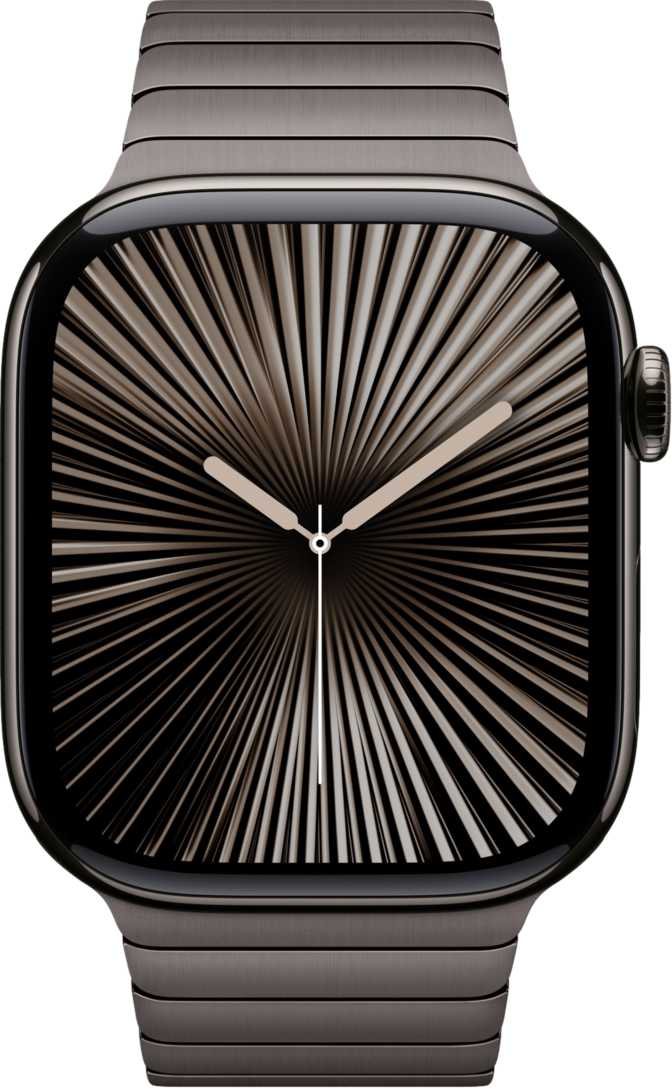
Apple Watch Series 10 Review: The Most Capable Watch Apple Has Made
SmartwatchesThe Apple Watch Series 10 in Practice
There are smartwatches built to win specification comparisons on paper, and there are smartwatches built to be worn every day. The Apple Watch Series 10 belongs firmly in the second category — and that difference explains nearly everything about what it does brilliantly and where it draws the line.
This is a device that aspires to be three things simultaneously: a medical-grade health monitor, a standalone communications device, and something you would choose to wear to dinner. That is a genuinely difficult combination to pull off without compromise. The Series 10 comes closer than any previous Apple Watch model, and closer than most competitors across any ecosystem.
A device this capable is also capable of being completely wrong for you — particularly if you are on the wrong platform, need multi-day endurance, or train at a level where general-purpose fitness tracking stops being sufficient. This review works through all of it, honestly.
Key Specifications at a Glance
Design and Build: Slim, Serious, and Surprisingly Light
The first thing people notice when they handle a Series 10 for the first time is how thin it is. At under 10 millimeters thick, it slides under a dress shirt cuff without bunching, stacks almost invisibly under a jacket sleeve, and carries a presence on the wrist that reads more like quality jewelry than wrist-mounted technology. This is not a statement device that announces itself — it is a refined one.
The weight reinforces this impression. The 46mm case sits light enough on the wrist that many users forget they are wearing it after the first few days of adjustment. For reference, a conventional stainless steel watch with a comparable dial size often weighs two to three times as much. Long-distance runners, cyclists, and anyone who has struggled with wrist fatigue from heavier watches will notice the difference immediately.
The case is covered by sapphire crystal glass — the same material found in high-end Swiss watchmaking, chosen because it sits near the top of the material hardness scale. All standard Apple Watch bands are interchangeable with the Series 10 and the swap mechanism is tool-free, taking about ten seconds. The band system spans years of Apple and third-party production without any adapter needed.
Slips under a shirt cuff without bunching and wears like jewelry, not equipment. One of the most genuinely slim everyday smartwatches available.
The 46mm case weighs a fraction of a comparable stainless steel watch, eliminating wrist fatigue even through long all-day wear.
Near the top of the material hardness scale. Resists everyday scratches from keys, concrete, and metal surfaces that damage standard mineral glass.
The Display: Always On and Worth It
The Series 10 carries a 1.96-inch OLED display — and OLED matters here for the same reason it matters on a premium television: each individual pixel produces its own light, so black areas are genuinely black, colors are vivid and accurate, and contrast remains legible even in direct sunlight. The pixel density is comparable to what you would find on a flagship smartphone, which means text at small sizes is crisp and icons render without visible pixelation.
The Always-On display keeps a dimmed version of the watch face visible at all times, without any gesture required. For first-time smartwatch buyers coming from traditional watches, this is the feature that immediately makes the watch feel natural rather than awkward. Glancing at your wrist mid-conversation, while carrying bags, or while driving requires no deliberate motion — exactly how watches have always been used.
Water Resistance: Serious Depth, Real Limits
The water resistance rating covers serious immersion — deeper than most recreational swimmers will venture, deep enough for open-water swims in the ocean, and sufficient for competitive pool training. Showering, heavy rain, and sweat are all non-events.
Health Monitoring: A Clinic's Worth of Tools in a 42-Gram Case
This is where the Apple Watch Series 10 builds its most compelling case. The sensor suite would have required multiple separate medical devices a decade ago. Here is what is on board — and what it actually means for your health day to day.
Continuous Cardiac Monitoring
Watches your heart rate all day and night, alerting you automatically when patterns deviate from your personal norms — even during rest or sleep.
Medical-Grade ECG
A 30-second active test generates a real single-lead electrocardiogram. Cleared by regulators for AFib detection and shareable directly with physicians.
Blood Oxygen Sensing
Measures oxygen saturation in your bloodstream. Trend data over time can flag meaningful changes in respiratory health worth investigating with a doctor.
Wrist Temperature Sensor
Tracks nightly temperature variations throughout the week, feeding health insights and cycle-tracking features with personal physiological baseline data.
Fall Detection
Detects the deceleration pattern of a hard fall. If no movement follows, it automatically contacts emergency services and your designated emergency contacts.
Crash Detection
Identifies the distinctive motion signature of a vehicle collision and triggers emergency alerts if you are unable to respond. Meaningful on solo drives and remote roads.
Continuous Cardiac Monitoring and ECG
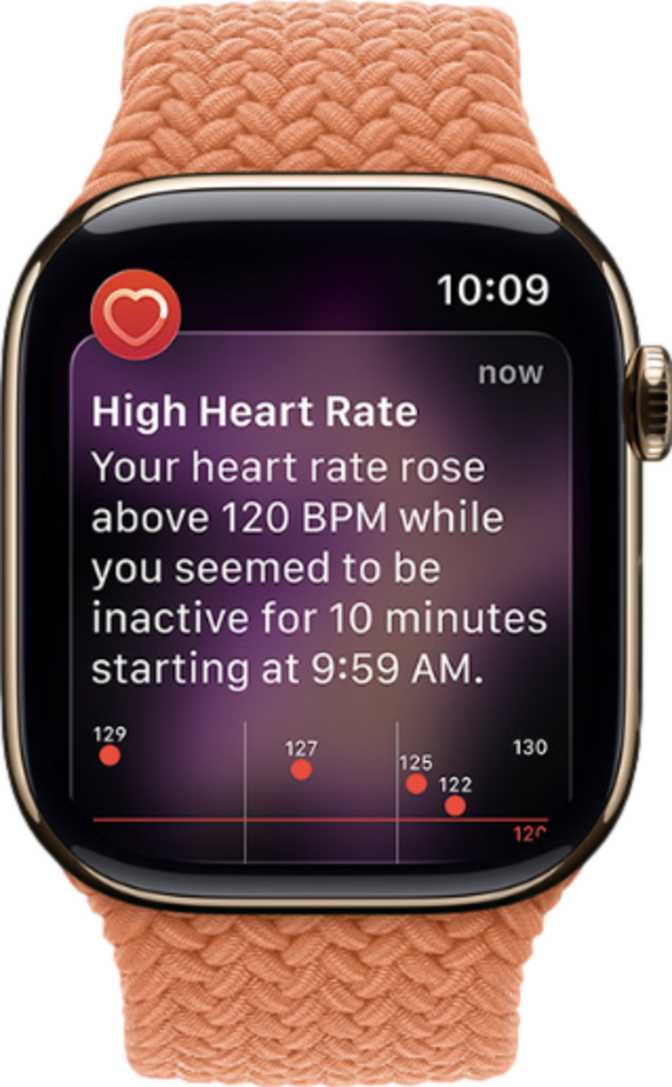
The watch monitors your heart rate constantly throughout the day and night using optical sensors on the back of the case. This is not simply counting beats per minute — it is watching for patterns that deviate from your established norms, automatically alerting you when your heart rate climbs too high during rest or drops unusually low. These alerts have prompted real medical interventions for real users; they are not novelties.
The electrocardiogram feature operates differently and is worth explaining carefully. When you hold your finger to the watch's crown for 30 seconds, the watch generates a single-lead ECG — a medical-grade electrical tracing of your heart's rhythm. This is the same fundamental technology used in hospitals, compressed onto a consumer wrist device. It has received regulatory clearance in numerous markets specifically for detecting atrial fibrillation, a common but potentially serious irregular heart rhythm. The reading can be stored and shared directly with a cardiologist. It does not replace a full 12-lead hospital ECG and cannot diagnose all cardiac conditions, but as an early-warning and monitoring tool, it carries genuine clinical weight.
Heart rate variability tracking measures the subtle, millisecond-level variation between heartbeats that serves as a proxy for nervous system state, recovery quality, and cardiovascular health trends. Resting heart rate data builds a long-term baseline against which any anomalies become visible over weeks and months. Irregular rhythm detection runs passively in the background, notifying you if the watch identifies an episode that may represent atrial fibrillation.
Blood Oxygen and Wrist Temperature
The blood oxygen sensor measures the oxygen saturation level of your bloodstream — a metric clinicians use to assess respiratory function. Consumer-grade wrist readings carry more variability than hospital fingertip sensors, and individual readings should be treated as indicators rather than clinical measurements. What becomes meaningful over time is the trend: a consistent decline in overnight blood oxygen readings can be an early signal of sleep apnea or other respiratory issues worth investigating with a physician.
A wrist temperature sensor tracks nightly variations throughout the week, feeding both general health insights and the cycle-tracking features detailed later in this review.
Fall Detection and Crash Protection
The accelerometer and gyroscope work together to recognize the deceleration and impact pattern of a hard fall. If the watch detects what looks like a significant fall and senses no movement in the period following it, it initiates an emergency call and notifies designated emergency contacts — automatically. For older users living alone, or anyone whose daily activities carry fall risk, this feature belongs in a different category than most smartwatch features. It is a safety system.
Crash detection extends the same principle to vehicle accidents. The watch's motion sensors identify the distinctive impact pattern of a car crash and trigger emergency contact and services if you are unable to respond. This is meaningful on long solo drives, mountain roads, and any situation where a collision might leave you unable to call for help.
Fitness Tracking: Excellent Breadth, Honest Depth Limits
For the vast majority of people who use fitness tracking — people who run, swim, cycle casually, go to the gym, and want to understand their general activity — the Series 10's tracking capability is comprehensive and genuinely well-implemented.
What It Tracks Well
- Steps, distance, pace, calorie burn, and elevation gain
- Automatic activity detection and multi-sport mode
- Swim stroke counting and lap distance
- Route mapping via built-in GPS with Galileo support
- Sleep stage tracking with nightly reports
- VO2 Max estimation and heart rate variability trends
- Auto-pause, exercise tagging, and exercise diary
Where It Falls Short
- No cadence sensor for cyclists
- No ANT+ connectivity for cycling computers and dedicated sports sensors
- No perspiration monitoring
- No formal readiness or recovery score for structured training
- No smart alarm for optimal sleep-cycle wake timing
- Not designed for golf or scuba diving
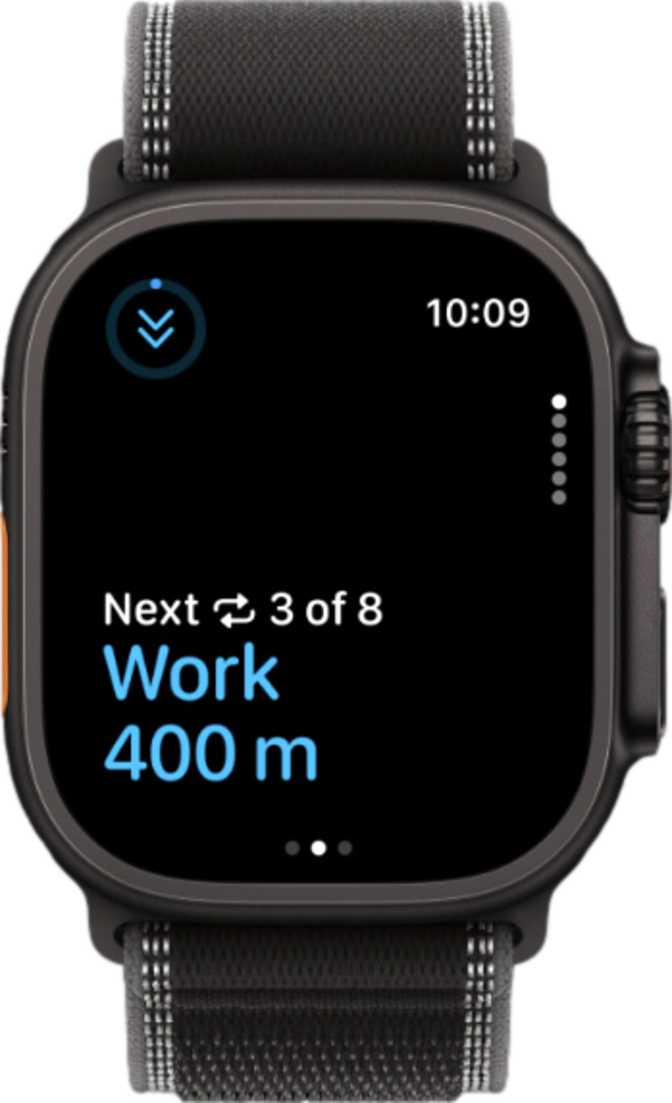
Automatic activity detection means the watch recognizes when you start a run, a swim, or a gym session and begins logging without you touching it — useful when you forget to start a workout or simply want to focus. Swim tracking stands out as particularly well-executed: stroke counting and distance calculation in the pool work accurately, and the 50-meter water resistance handles competitive lane swimming and flip turns without any concern.
The 64 gigabytes of internal storage unlocks a workout feature that is easy to overlook: you can load your music library directly onto the watch and pair wireless headphones directly to it, leaving your phone entirely at home during runs, gym sessions, and rides. For people who carry a phone primarily for music during exercise, this alone changes the physical experience of working out.
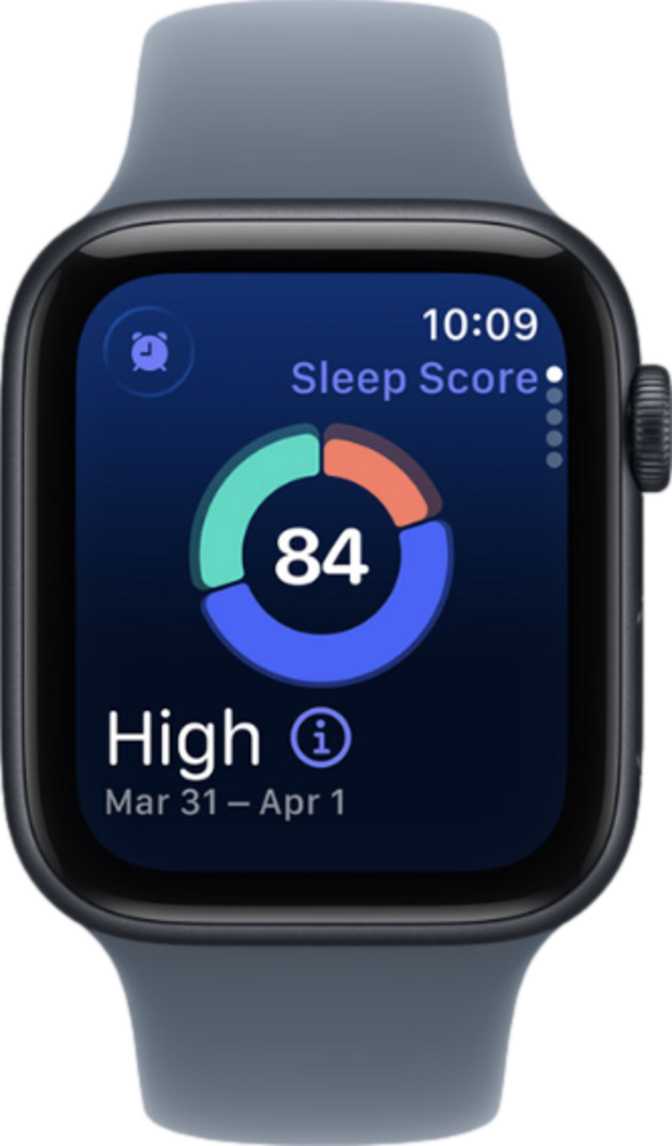
On-board GPS maps your outdoor routes without requiring your phone to be on your person. Satellite support extends to Galileo, Europe's positioning network, which improves location accuracy in urban corridors, forested trails, and coastal areas where single-network signal can be intermittent. Sleep tracking generates nightly reports covering sleep stages and duration — but the alarm you set is the alarm that goes off. There is no smart alarm system that wakes you at an optimal cycle point.
Independence on Your Wrist: Cellular, Bluetooth, and NFC
The built-in eSIM transforms the Series 10 from a phone accessory into a standalone device. With a cellular plan added through your carrier, you can leave your iPhone at home and still take calls, exchange messages, stream music, and receive emergency alerts entirely on your own.
Bluetooth 5.3 handles the connection to your iPhone during standard use. This is a meaningfully more efficient version of Bluetooth than older standards, which translates to a more stable connection at range — the watch maintaining its link when your iPhone is in a bag across the room, rather than dropping and reconnecting repeatedly.
NFC enables Apple Pay directly from the watch. No phone, no wallet, no digging in a bag — a tap at any contactless payment terminal completes the transaction. For grocery runs, coffee stops, and transit gates during workouts, this is one of those features that starts optional and becomes reflexive within two weeks.
The single microphone handles voice commands, calls taken directly on the watch, and Siri. Call quality is functional — people on the other end can understand you in typical environments — but the watch's microphone and speaker system will not match the clarity of a speakerphone on your iPhone. Loud environments such as a gym or a busy street reduce call quality noticeably.
Battery Life: The One Honest Compromise
There is no diplomatic framing for this, so here it is plainly: the Apple Watch Series 10 needs to be charged every single night. In active daily use — with the Always-On display enabled, GPS used for workouts, and cellular active — expect to end the evening with the battery requiring attention. That translates to roughly 18 hours of real-world runtime under typical conditions.
Battery Performance Overview
Scale represents a 48-hour reference window for visual context.
Low Power Mode extends runtime to approximately 36 hours by disabling the Always-On display, reducing how frequently sensors check in, and limiting certain features. It is a valuable safety net when you are away from a charger — but it is a fallback mode, not a baseline state.
The battery capacity reflects a deliberate engineering trade-off: a meaningfully larger battery would have required a meaningfully thicker case. The slimness that makes this watch appropriate across formal and athletic contexts alike is partially bought by accepting the daily charging cadence. Millions of users adapt without a second thought; others find it persistently irritating. You almost certainly already know which type you are.
Women's Health Features: Comprehensive and Built Into the Core
The Apple Watch Series 10 includes one of the more developed implementations of reproductive health tracking available in any consumer wearable. These features are part of the watch's core software from day one and carry no additional subscription cost.
Period Prediction
Predicts period start dates using physiological baseline data that grows more accurate over weeks of continuous wear.
Temperature Tracking
Nightly wrist temperature data charts hormonal rhythm variations across the full cycle, revealing patterns invisible to conventional tracking.
Ovulation Prediction
Identifies fertile windows through multi-signal analysis. Accuracy improves continuously as a personal physiological profile is established.
Period Notifications
Advance wrist notifications before predicted period arrival based on the current cycle model, giving meaningful preparation time.
All cycle and health data lives inside Apple's Health app, remains under the user's full control, and integrates with compatible third-party health applications. The temperature-based insights become more accurate and personally relevant the longer the watch is worn consistently.
Software, Storage, and the Apple Ecosystem
The companion app is free, carries no advertising, and organizes health and fitness data into one of the more coherent dashboards available on any smartphone platform. Beyond what the sensors measure, here is what the software side of the Series 10 delivers.
Voice commands via Siri are functional hands-free — useful during workouts and while cooking, less effective in noisy environments given the single-microphone hardware. The watch can be personalized extensively across watch faces, complications, and app layouts in ways that purpose-built fitness trackers rarely allow.
The standard warranty covers one year from purchase. There is no expandable storage slot — the 64 gigabytes built into the watch is what you have — but for a wearable device, that figure is genuinely substantial. Health and temperature data grow more accurate and personally relevant the longer the watch is worn, meaning the software experience improves meaningfully with continued use.
How the Series 10 Compares to Its Main Rivals
Understanding where the Apple Watch Series 10 leads and where it yields ground requires an honest side-by-side look at the alternatives most buyers are genuinely weighing: the Garmin Forerunner 265 for fitness-focused buyers and the Samsung Galaxy Watch 7 for those considering cross-ecosystem options.
| Feature | Apple Watch Series 10 | Garmin Forerunner 265 | Samsung Galaxy Watch 7 |
|---|---|---|---|
| Phone Compatibility | iPhone only | iPhone + Android | Android-first (limited iOS) |
| ECG | |||
| Crash Detection | |||
| Battery Life | ~18 hours | Up to 13 days | ~30–40 hours |
| Display Glass | Sapphire Crystal | Gorilla Glass DX | Gorilla Glass Armor |
| Onboard Music | 64GB | ~1,000 songs | Limited capacity |
| Cellular | |||
| ANT+ Support | |||
| NFC Payments | |||
| Training Readiness Score |
Competitor data based on published manufacturer specifications. Battery figures represent typical use claims and may vary by configuration and firmware.
Is the Apple Watch Series 10 Right for You?
The honest answer depends on two things: what phone you carry, and how you feel about charging every night.
This Watch Is For You If...
- You use iPhone as your primary phone. There is simply no reason to consider this watch if you do not.
- Cardiac health monitoring — ECG, irregular rhythm detection, continuous measurement — matters to you or someone you are buying this for.
- Safety features such as fall detection, crash detection, and emergency SOS carry personal weight — for yourself or a family member living alone.
- You want one device appropriate across work, formal occasions, and athletic activity without ever needing to swap.
- Leaving your phone at home during runs and workouts appeals to you — cellular independence and 64GB of music make this genuinely practical.
- You want reproductive health tracking integrated with your other health data in a single free, no-subscription system.
Consider an Alternative If...
- You use an Android phone. The incompatibility is absolute — there is no workaround, no partial solution, no third-party fix that bridges this gap.
- You are a serious endurance athlete. Triathlon training, ultramarathon prep, or competitive cycling demands multi-day battery, ANT+ connectivity, and training load analysis the Series 10 cannot provide.
- Budget is a primary constraint. The Apple Watch SE delivers core health and safety fundamentals at a meaningfully lower price. If ECG and temperature sensing are not priorities, the SE is worth serious consideration.
- Daily charging genuinely bothers you. The 18-hour battery is a structural fact, not a setting you can adjust. If it bothers you during the consideration phase, it will bother you every single evening.
The Questions Real Buyers Ask
Honest answers to the most common concerns before committing to purchase.
Exceptional — With One Ongoing Trade-Off
The most refined Apple Watch yet. For iPhone users willing to charge nightly, the health monitoring, safety suite, and build quality are simply without peer in this ecosystem.
Category Ratings
The Apple Watch Series 10 is the most refined version of Apple's wearable vision to date. If you are an iPhone user who wants a health monitor, safety device, and smartwatch in a single object — slim enough for formal contexts, durable enough for competitive swimming, and medically substantive enough to matter — it delivers on that specific promise better than any competitor has managed for the iPhone ecosystem.
The health and safety platform is the headline. ECG, continuous cardiac monitoring, blood oxygen sensing, wrist temperature tracking, fall and crash detection, and cycle tracking form a suite that has no close equivalent at this size and wearability. The sapphire crystal glass, sub-10mm profile, and lightweight construction give it a physical quality that justifies its positioning. Cellular independence is mature, reliable, and genuinely useful in daily life.
The ongoing concession is battery life. Eighteen hours is not a software-fixable limitation — it is a structural reality determined by the engineering trade-offs that produced the watch's thinness and weight. Whether that trade-off works for you is a personal calculation, not a quality judgment. Millions of users adapt to the charging routine effortlessly; others find it persistently irritating. You almost certainly already know which type you are.
For Android users, there is nothing to consider: this watch is not for you. For iPhone users who can accept the daily charging requirement, the Apple Watch Series 10 is the most capable, most health-substantive, and most genuinely wearable watch Apple has made — the best available answer for anyone who needs a device serious about health that keeps up with their entire life.
The Apple Watch Series 10 delivers the best combination of health monitoring, safety features, and everyday wearability in the Apple ecosystem. One daily charge is the only meaningful trade-off for an otherwise exceptional device.