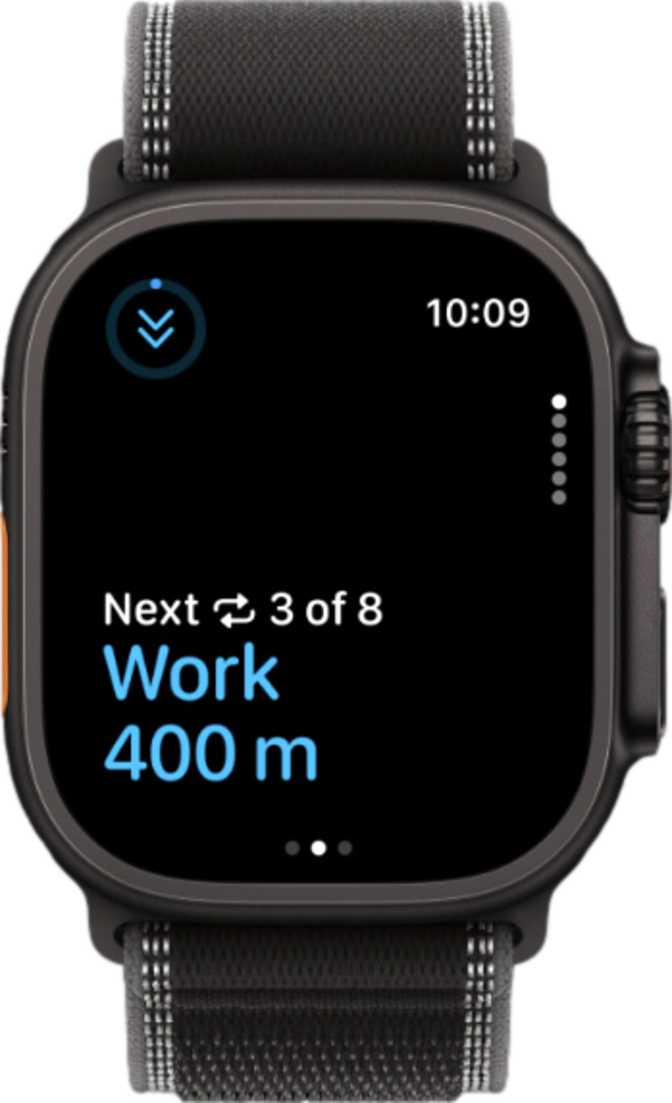
Apple Watch Ultra 3 Full Review: Built for Serious Athletes
SmartwatchesAt a Glance
Apple Watch Ultra 3 — Quick Verdict
The Apple Watch Ultra 3 is the most capable smartwatch Apple has ever made. It exists for a specific kind of buyer: the iOS-committed athlete or outdoor adventurer who genuinely needs rugged hardware, dive-rated water resistance, clinical-grade health monitoring, and cellular independence in a single device.
If that profile fits you, there is no better option on the Apple platform. If it doesn't, the standard Apple Watch Series delivers most of what you need at a considerably lower cost.
Key Highlights
- Sapphire crystal display — genuinely scratch-proof
- 100m dive-rated water resistance with dedicated dive mode
- ECG, HRV, VO2 Max, and blood oxygen monitoring
- 64GB storage for offline maps, music, and media
- Cellular eSIM — full phone independence on the wrist
- iOS only — no Android compatibility whatsoever
Overall Rating
Overall
Durability
Health Sensors
Battery Life
Performance
Value
Who the Apple Watch Ultra 3 Is Built For
Not every smartwatch tries to be everything. The Apple Watch Ultra 3 makes no attempt to appeal to everyone — and that clarity of purpose is precisely what makes it compelling. This is a watch engineered for people who push hard: trail runners logging vertical miles before sunrise, open-water swimmers, freedivers, mountaineers operating in temperatures that would cripple ordinary electronics, and endurance athletes who need a wrist-worn computer that can keep up without dying mid-race.
It is also an aspirational choice for serious fitness enthusiasts who want the absolute ceiling of what the Watch platform offers. Understanding both audiences — the professional adventurer and the dedicated fitness-focused everyday user — is essential to evaluating whether the Ultra 3 is the right watch for you, or simply the most expensive one.
Design and Build: Engineered to Survive
Size, Weight, and Physical Presence
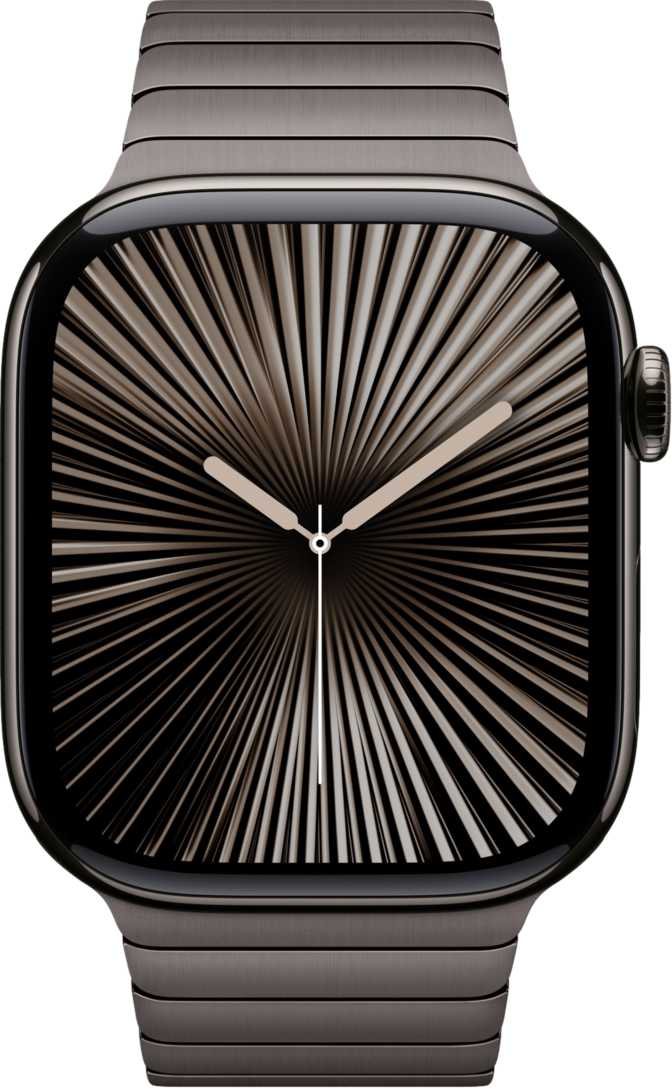
The Ultra 3 wears large. At 49mm tall and 44mm wide with a 12mm profile, this is not a discreet watch — and it was never meant to be. On smaller wrists, it will dominate. On larger wrists, it occupies the space confidently without tipping into absurd territory. If you've never worn a 49mm watch before, try one before committing; the dimensions are closer to a tool watch than a lifestyle accessory.
At just under 62 grams, the Ultra 3 is meaningfully lighter than its size implies. For comparison, many traditional dive watches of similar dimensions sit in the 80–120 gram range. During long trail runs or extended swim sessions, that weight differential is something you actually feel — or more precisely, stop noticing.
Materials and Durability
The display is protected by sapphire crystal — not tempered glass, not a branded "tough glass" variant, but actual sapphire. This is the same material used in high-end mechanical watches for scratch resistance. In practice, it means the screen survives contact with rocks, gravel, ski poles, and general backcountry abuse that would scuff a standard smartwatch display within weeks.
The case is rated to operate in temperatures from -20°C to 55°C. Most consumer electronics quietly fail well before those thresholds — the Ultra 3 is explicitly certified to keep functioning. The watch band is replaceable, meaning worn bands from heavy use can be swapped without replacing the whole device.
Water Resistance: Genuinely Dive-Capable
The Ultra 3 carries a 10 ATM rating and is rated to 100 meters depth, explicitly designed for diving. This isn't the splash-proof or swim-capable resistance found on standard smartwatches. A 100-meter depth rating with dedicated diving functionality means this watch can accompany you on recreational scuba dives, not just lap swims.
The IPX6 rating adds protection against high-pressure water jets — relevant in whitewater kayaking or any environment where the failure mode isn't submersion but directional water impact.
100m
Depth Rating
10 ATM
Pressure Rating
IPX6
IP Rating
55°C
Max Temp
Display: Large, Sharp, and Always Visible
The 1.98-inch OLED panel is the largest display Apple has put on a watch. OLED technology means true blacks, vivid color contrast, and the ability to illuminate individual pixels selectively — which is what enables the Always-On Display to remain readable without draining the battery the way a continuously backlit LCD would.
At 326 pixels per inch, text and graphics are sharp enough that individual pixels are invisible at normal viewing distance. The 422 x 514 pixel resolution results in a canvas genuinely useful for glancing at route maps, reading workout data across multiple fields simultaneously, or checking notifications without squinting.
The Always-On Display is not a toggle or a compromise — it behaves as a functional feature for athletes who need glance-accessible data mid-activity without raising their wrist and waiting for a screen wake.
| Screen Size | 1.98 inches |
| Technology | OLED / AMOLED |
| Resolution | 422 x 514 px |
| Pixel Density | 326 ppi |
| Always-On | Yes |
| Sapphire Glass | Yes |
| Touch Screen | Yes |
Performance Under the Hood
Processing Power and Storage
The Ultra 3 ships with 2GB of RAM and 64GB of internal storage. To put the storage figure in context: 64GB is enough to hold a substantial offline music library, downloaded podcast episodes, and offline maps simultaneously — all accessible without a phone connection. For athletes heading into cellular dead zones, this isn't a trivial detail. You can leave your phone behind entirely and still have navigation, music, and full workout tracking.
The RAM ensures watchOS runs fluidly with complications loading without hesitation — even when simultaneously running GPS, heart rate monitoring, barometric readings, and an active workout session. The Ultra 3 handles concurrent sensor workloads without the lag or dropped readings that have plagued less capable watch hardware.
Connectivity Stack
The watch supports Bluetooth 5.3, Wi-Fi, NFC, and cellular via a built-in eSIM. The cellular capability is perhaps the most consequential for the Ultra 3's target user — it means the watch functions as a standalone communication device. You can make and receive calls, stream music, receive emergency notifications, and share your location even when your phone is locked in a car at the trailhead.
Galileo satellite support means multi-constellation GPS for faster signal acquisition and better accuracy in challenging environments — canyons, dense forest cover, urban corridors with high building interference. NFC enables contactless payments, meaning you can run, ride, or shop without a wallet or phone.
2 GB
RAM
64 GB
Internal Storage
BT 5.3
Bluetooth
eSIM
Cellular
Sensor Suite: Medical-Grade Monitoring in a Sports Watch
The Ultra 3 carries a sensor array that would have been described as clinical-grade just a few years ago.
Cardiovascular and Health Sensors
ECG (Electrocardiogram)
Generates a rhythm strip by measuring electrical signals from the heart. The same basic test a doctor orders to screen for atrial fibrillation. The result is a reference-quality reading you can share with a physician, not just a wellness score.
Irregular Heart Rate Warnings
Passive, background monitoring that flags potential atrial fibrillation episodes throughout the day, even when you're not actively taking a reading. Works silently in the background.
Blood Oxygen Monitoring
The optical sensor measures peripheral oxygen saturation — useful context during high-altitude activity, recovery tracking, and general health awareness over time.
Wrist Temperature Sensor
Continuous temperature monitoring supports more accurate sleep analysis, ovulation and cycle tracking, and general wellness baselines throughout day and night.
HRV Tracking
Heart rate variability is a recognized recovery metric used by serious athletes to gauge training readiness. Tracked passively during sleep and surfaced as longitudinal trends.
VO2 Max Estimation
Estimates your maximal aerobic capacity — a widely used fitness marker in endurance sports — and tracks it over time so you can observe fitness changes across a training cycle.
Motion and Environmental Sensors
Barometer
Pressure-based altitude
Compass
Offline navigation
Gyroscope
Motion detection
Accelerometer
Activity and fall detection
Activity Tracking: Built Around Multi-Sport Athletes
- Multi-sport chaining
Swim-to-bike-to-run transitions without manual stopping — essential for triathlon athletes - Swim stroke counting
Automatically identifies stroke type and counts laps without manual intervention - Pace, distance, route, elevation
All run simultaneously during outdoor activities with barometric altitude accuracy - Automatic activity detection
Detects when you forget to start a workout manually and prompts you to record it - Diving mode
Tracks depth, dive time, and water temperature during recreational scuba dives - Auto-pause
Pauses when you stop, resumes when you start — keeps pace data accurate automatically
- Cycling cadence
No built-in cadence sensor — cyclists focused on cadence metrics will need an external sensor - Food / calorie intake
Tracks calories burned, not calories consumed — no native food logging - Golf features
No course maps, shot tracking, or golf-specific metrics of any kind
Sleep Tracking
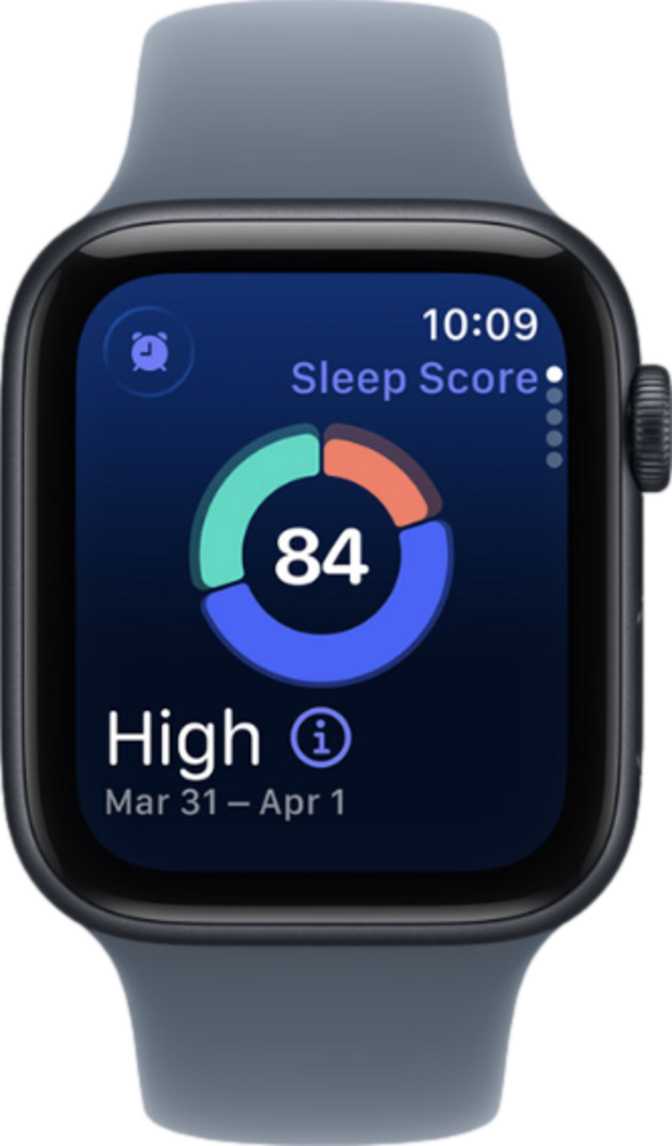
Sleep tracking is present and generates reports with temperature trend overlays and recovery context. A practical note: charging logistics matter if you want uninterrupted nightly sleep data, since the battery requires an every-other-day charge cycle.
Battery Life: The Honest Conversation
~42 hrs
Standard Use
Always-On Display active, GPS workouts, cellular enabled, full notifications running
72 hrs
Low-Power Mode
Smart features suspended — basic timekeeping, step counting, and emergency functions remain active
1.5 hrs
Full Recharge
Wireless charging to full capacity — practical to top up during a meal, meeting, or shower
No Solar Charging
Competing watches at this price tier have begun adding solar panels to extend runtime — particularly in low-power mode. The Ultra 3's absence of solar is noticeable for buyers specifically evaluating it for extended backcountry use where charging opportunities may be days apart.
Real-World Scenarios: Who Should Buy This Watch
Multi-sport chaining, VO2 max tracking, HRV recovery guidance, and hardware rugged enough to survive high training volume.
Genuine depth rating and stroke-counting accuracy in a fully connected device. No other smartwatch at this tier matches the dive capability.
Operate in challenging terrain — offline maps, multi-constellation GPS, and temperature-rated hardware that stays functional when conditions worsen.
Continuous ECG-capable monitoring with physician-shareable data. Meaningful for those with a personal or family history of cardiac concerns.
Cellular independence, contactless payments, and full phone functionality from the wrist — no wallet or phone required.
Full stop. There is no partial compatibility or limited function mode. The Ultra 3 requires an iPhone to set up and operate. This is a hard wall, not a limitation.
The 49mm case is objectively large. It will not disappear under a dress shirt cuff or sit discreetly on a narrow wrist. Try one before committing.
The standard Apple Watch Series delivers roughly 80% of the fitness and health functionality that most users actually use, day-to-day, at a substantially lower price.
No golf course maps, no shot tracking, and no native cadence sensor. These are intentional exclusions — not oversights — but real gaps for these use cases.
How It Compares to the Alternatives
The Garmin comparison is the most relevant for adventure-focused buyers. Here's how the key differentiators stack up.
| Feature | Apple Watch Ultra 3 | Apple Watch Series | Garmin Fenix (comparable tier) |
|---|---|---|---|
| Water Resistance | 100m, dive-ready | 50m, swim-ready | 100m, dive-ready |
| Display Type | OLED, Always-On | OLED, Always-On | MIP transflective |
| Sapphire Glass | Standard | Sapphire edition only | |
| Standard Battery Life | ~42 hours | ~18 hours | ~18 days |
| Cellular | eSIM | eSIM | Selected models only |
| ECG | |||
| Internal Storage | 64 GB | 32 GB | 32 GB |
| VO2 Max | |||
| Android Compatible | |||
| Solar Charging | Solar editions available |
Garmin's MIP display trades visual richness for extraordinary battery endurance. The Ultra 3 answers with a superior display experience and the full Apple health ecosystem, particularly ECG. The right answer depends entirely on whether display quality or raw battery longevity matters more to you in the field.
Strengths and Weaknesses: An Honest Assessment
The Ultra 3's strengths are well-earned. The sapphire display and rugged construction mean this watch survives conditions that would damage most competitors — not as a marketing claim but as a material specification that translates directly to longevity in the field.
The health monitoring stack — particularly the ECG and HRV capabilities — represents meaningful clinical utility. These aren't wellness theater features dressed up with clinical language; they are functionally useful tools that produce data physicians and trainers can actually work with.
The 64GB storage gives cellular-free athletes a meaningful content library on their wrist. The 100-meter depth rating with dedicated dive functionality is rare in a smartwatch category dominated by swim-capable but dive-rated devices. And the Always-On OLED display is simply the best screen on any smartwatch in the adventure category.
The multi-constellation GPS with fast lock, combined with offline maps and 72-hour low-power mode, creates a coherent navigation package that legitimately serves backcountry athletes.
The battery runtime in standard mode requires an every-other-day charging rhythm. That's excellent for a watch this capable, but it's a genuine planning consideration for extended expeditions. The 72-hour low-power ceiling means multi-day backcountry users need to think about charging logistics as part of their trip planning.
The absence of solar charging is a gap that direct competitors have already addressed in their flagship tiers. For buyers specifically evaluating the Ultra 3 against adventure-focused alternatives for week-long expeditions, this is a real functional disadvantage.
The iOS exclusivity removes this watch from consideration for a significant portion of the market. There is no workaround and no partial solution — Android users simply cannot use this device meaningfully.
Finally, the standard Apple Watch Series lineup delivers roughly 80% of the fitness and health functionality that most users actually use, day-to-day, at a substantially lower cost. The Ultra 3's premium is real, and it only justifies itself for buyers who will access the features that differentiate it.
Common Buyer Questions, Answered
Final Verdict
Exceptional
For the right buyer
Clear, Direct Recommendation
The Apple Watch Ultra 3 earns its position at the top of the Apple Watch lineup because the specification justifies it — not just through marketing posture but through functional capabilities that genuinely differentiate it from less expensive alternatives.
If you are an iOS user who trains seriously outdoors, swims in open water, dives recreationally, or operates in environments where electronics typically fail, the Ultra 3 is the correct choice at this tier. The ruggedness, depth rating, sensor quality, storage capacity, and cellular independence form a coherent package that no other Apple Watch delivers.
If you are an iOS user who primarily runs roads, hits the gym, tracks sleep, and wants strong health monitoring without extreme environmental requirements, the standard Apple Watch Series lineup deserves honest consideration first. The Ultra 3's premium delivers real value — but only for users who will actually access what makes it different.
One honest caveat: users considering week-long expeditions should plan charging logistics carefully, and solar-charging competitors are worth evaluating seriously before committing.