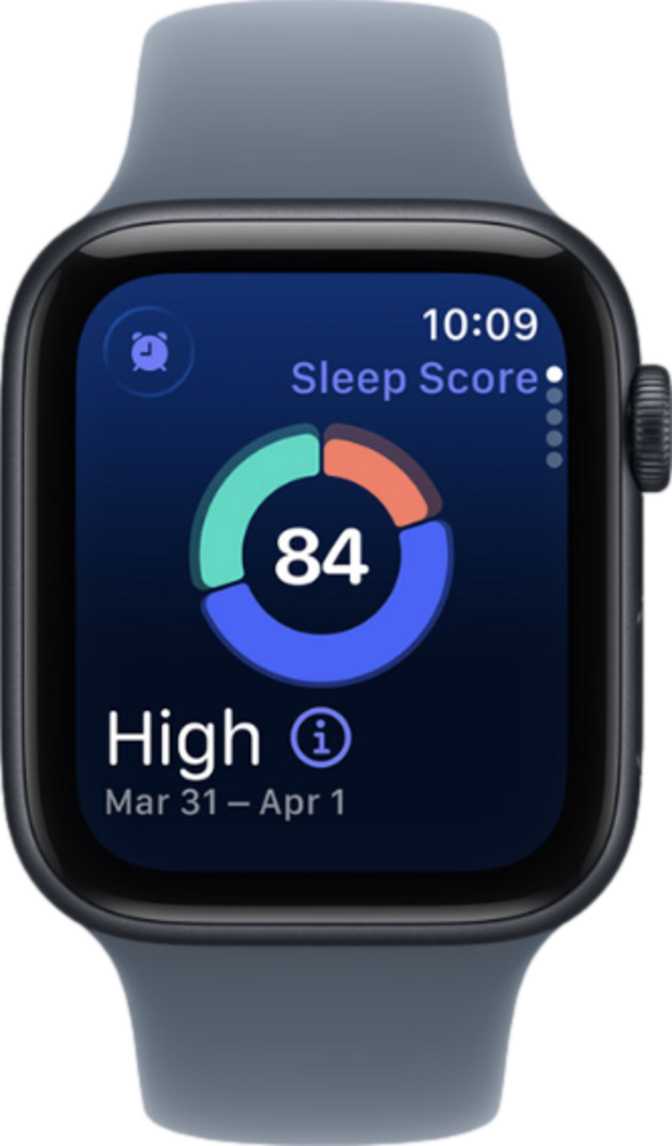
Apple Watch SE 3 Review: Smart Features, Real Trade-Offs
SmartwatchesApple Watch SE 3 at a Glance
The defining facts before you read a single line of the review.
A Watch Designed Around What Most People Actually Need
The Apple Watch SE 3 exists because most people's real-world needs and a manufacturer's most ambitious feature set rarely overlap perfectly. Apple's Series lineup loads every sensor it can justify; the Ultra pushes into professional athletic and expedition territory. The SE 3 takes a different approach: identify what the majority of wearers actually use, execute it well, and price accordingly.
What you get is a watch with a crisp always-on OLED display, full cellular independence, a comprehensive health monitoring suite, crash and fall detection, onboard music storage generous enough to replace a dedicated player, and the entire watchOS ecosystem — Apple Pay, Siri, and thousands of third-party apps. What you do not get is a blood oxygen sensor, VO2 max tracking, or anything approaching multi-day battery endurance.
Whether that trade-off works for you depends entirely on who you are as a wearable user. For the majority of iPhone owners — the everyday fitness enthusiast, the safety-conscious buyer, the sleep tracker, the person who wants their wrist to handle payments and calls — this is the Apple Watch that covers the fundamentals without asking you to pay for sensors you will never consult.
Design, Build, and Physical Experience
Materials and Durability
The SE 3 uses Ion-X glass — a chemically strengthened glass — rather than the sapphire crystal found on higher-end models. This distinction matters practically: Ion-X is better at absorbing impact without shattering, while sapphire resists surface scratches more effectively. You are statistically more likely to knock your watch against a door frame than to drag it across rough stone; the Ion-X choice prioritizes everyday accident resistance, which is the right call at this price tier.
Over time on an active wrist, fine surface scratches will accumulate. This is an aesthetic concern rather than a functional one — the glass handles impacts well — but buyers who prefer a pristine surface long-term should factor in a screen protector as a day-one purchase. The case and band attachment system are identical to the premium Apple Watch lineup, meaning every band designed for this case size — official or third-party — fits without modification. That band ecosystem is one of the most practically valuable aspects of the Apple Watch platform, and the SE 3 inherits it fully.
Size, Weight, and Daily Comfort
At 33 grams, the SE 3 is genuinely light — less than most pairs of sunglasses and considerably less than any mechanical watch. On your wrist, this translates into something you stop noticing within the first hour. The profile is slim enough to pass under a shirtsleeve without creating a ridge or bunching fabric, and it wears more like a traditional watch than most smartwatches manage. For a device intended to be worn around the clock — including overnight for sleep tracking — this lightness is more than a spec; it is what makes consistent wear realistic.
Water Resistance: What the Ratings Mean in Practice
The SE 3 is built for immersion. Its water resistance covers depths well beyond recreational swimming needs — lap swimming, open-water swimming, snorkeling, and water sports are all non-events. Showering with it on and wearing it in rain are equally unconcerning. What the rating does not cover is scuba diving or sustained high-velocity water impact. The watch also operates comfortably above the elevation of virtually every major hiking and skiing destination, keeping GPS, the barometric altimeter, and all activity tracking fully functional at height.
Display Quality: Why the Always-On OLED Changes How You Use a Watch
The SE 3's display is the clearest example of a specification that exceeds its market positioning. An OLED panel at this pixel density delivers true blacks — the display literally turns off pixels in dark areas rather than dimming a backlight — vivid color, and sharpness at the threshold where individual pixels become indistinguishable to normal vision at typical viewing distances. Watch faces render with photographic-quality gradients; notification text is sharp enough to read full sentences without squinting; app interfaces translate cleanly from phone to wrist.
When your wrist is at rest, the screen stays visible in a dimmed state — showing the time, your next event, or your activity ring progress without requiring a wrist raise or screen tap. The difference is most apparent in passive moments: meetings, meals, gym machines, conversations with both hands occupied. You glance instead of gesturing; the watch behaves more like a watch. Power-conscious users can disable the always-on feature in settings to recover battery, but for most daily use cases, keeping it active is where the display experience is best.
Health Monitoring: A Comprehensive Suite with One Clear Gap
Heart Rate and Cardiac Monitoring
The continuous optical heart rate sensor operates around the clock. It measures resting heart rate throughout the day, tracks exercise intensity in real time, and — most significantly — monitors for irregular heart rhythms. When the watch identifies an anomalous pattern that may indicate atrial fibrillation or another cardiac irregularity, it alerts you and logs the episode. This is not a passive data curiosity; irregular heart rhythm detection has a documented real-world history of prompting medical consultations that led to diagnoses and treatment in wearers who had no prior symptoms.
The watch also sends alerts when heart rate climbs unusually high during rest or drops unusually low — configurable thresholds you can adjust in the Health app. For anyone with a history of cardiac concern, or for family members purchasing this watch as a monitoring tool, these features operate automatically in the background without any action from the wearer.
Body Temperature and Women's Health Features
Worn overnight, the integrated wrist temperature sensor tracks subtle shifts in your baseline skin temperature across consecutive sleep cycles. It does not produce a clinical thermometer reading — it is not designed for illness monitoring. Its primary function is refining cycle tracking: the software uses overnight temperature variation to predict menstrual start dates, estimate ovulation windows, and improve those predictions with greater accuracy over time. This entire suite — ovulation prediction, cycle forecasting, and period notifications — is built into the native app at no subscription cost. Several competing platforms put equivalent features behind a paywall; the SE 3 includes them outright.
Activity, GPS, and Sports Tracking
- Multi-satellite GPS with Galileo — Draws from multiple global satellite networks for improved accuracy in urban canyons and complex terrain
- Barometric Altimeter — Tracks real-time elevation gain per workout, more responsive than GPS-derived altitude alone; essential for hikers and trail runners
- Swim Stroke Detection — Counts stroke type and count per pool length, turning swimming sessions into structured, actionable data
- Auto Workout Detection — Recognizes sustained activity and begins logging automatically — no manual start required
- Multi-Sport Mode — Handles mid-session activity transitions without stopping and restarting the workout
- Auto Pause — Detects when you stop moving mid-workout and resumes automatically, keeping elapsed time accurate
- Route Tracking — Full GPS route recorded per outdoor workout for post-activity review in the Fitness app
- Compass & Gyroscope — Direction and motion quality data for navigation-aware sports and movement analysis
What the SE 3 Does Not Include
Safety Features That Could Make a Real Difference
These are features you hope to never use. Their value is entirely in their presence.
Fall Detection
The accelerometer and gyroscope work together to recognize the physical signature of a hard fall — a specific combination of sudden motion, impact force, and post-fall stillness. If you remain motionless and unresponsive after a detected fall, the watch automatically calls emergency services and sends your location to emergency contacts. Dismiss the alert in seconds if the fall was incidental. Particularly valuable for older users, solo hikers, and anyone who exercises alone in areas with limited foot traffic.
Crash Detection
The sensor suite identifies the force and deceleration patterns consistent with a severe vehicle collision. If you are unresponsive after a detected crash, the watch initiates an emergency call — independently of your phone, even if it is in the back seat or otherwise inaccessible. This is not a gimmick; it is exactly the kind of passive protection that operates without any action from you, precisely when you need it most. The cellular radio ensures the watch can call for help on its own.
The complete safety picture: Irregular heart rhythm detection, high and low heart rate alerts, fall detection, crash detection, and independent cellular combine to make the SE 3 function as a passive emergency communication device worn as a watch. For safety-driven purchases — particularly for older adults or solo exercisers — this combination of detection, alerting, and independent communication capability is the strongest argument the SE 3 makes.
Connectivity, Communication, and Independence
With an activated eSIM, the watch handles calls, messages, music streaming, and navigation independently — no phone required. Most valuable during phone-free workouts, pool sessions, or any situation where leaving your phone behind is intentional. Cellular activation is optional; the hardware is present out of the box and the plan is your choice through your carrier.
Current-generation Bluetooth delivers stable, efficient connections for wireless earphones — quick pairing and reliable during workouts. Wi-Fi handles data syncing and app updates adequately; watch-level tasks require no high-throughput wireless. The watch pairs over Bluetooth with external heart rate monitors and smart scales for those who want expanded health data without switching platforms.
NFC enables Apple Pay at any compatible contactless terminal — no wallet or phone needed. Siri responds to voice commands via the built-in microphone: messages, reminders, calls, and workout starts all work reliably. The watch also remotely triggers your iPhone's camera shutter — useful for photos where you need to appear in frame without a timer or a stranger holding your phone.
Platform exclusivity: The Apple Watch SE 3 is exclusively compatible with iPhone. It does not pair with Android devices, Windows computers, or any non-Apple operating system. No configuration or workaround changes this. If you do not own an iPhone, this watch is not for you.
Battery Life: The Honest Assessment
This section matters more than any other for daily wearability. Read it before you buy.
Covers a full waking day. Nightly charging works if sleep tracking is not a priority. Conflicts with overnight wear unless a daytime charging window is planned.
Enables overnight wear when the battery is low. Suspends the always-on display, background sensor readings, and some connectivity. A useful fallback, not a daily operating mode.
Bars scaled to 32-hour maximum. Garmin and Fitbit competitors offer 7–14 day endurance with different feature trade-offs.
For users who do not wear their watch to bed, daily charging presents no friction — charge it overnight, wake up to a full battery, repeat. The challenge arises with sleep tracking: the overnight temperature monitoring and sleep stage detection require wearing it to bed. The most common user solution is a 30–45 minute daytime charging window during a morning shower, lunch break, or post-workout stretch. Users who commit to the habit report it becomes automatic within a week.
Consistent overnight tracking requires a consistent daytime charging habit. Without planning, battery life will conflict with the very wellness features that justify wearing the watch to bed. Charging is magnetic and wireless, going from empty to full in under an hour — but the cable is proprietary to the Apple Watch ecosystem, so carry it when you travel.
Software Depth, Storage, and the watchOS Advantage
The SE 3 runs the full watchOS experience with no software limitations compared to the Series lineup — only hardware sensor differences. Every app in the Apple Watch App Store is available here. The App Store, Siri, third-party integrations, and the Health app's complete data architecture are all fully present and unrestricted.
The Health app and Fitness app are free and ad-free. No subscription unlocks the core functionality — activity reports, exercise diary, goal setting, and achievement milestones are all included. Inactivity alerts prompt movement after extended sedentary periods. The watch is compatible with external heart rate monitors and smart scales, extending the health data ecosystem for those who already own dedicated fitness hardware.
Who the Apple Watch SE 3 Is Built For
- You are an everyday iPhone userNotifications, workouts, payments, calls, and sleep tracking — all covered without paying for sensors you won't use.
- Safety is the primary purchase driverFall detection, crash detection, heart rhythm alerts, and independent cellular calling — a passive safety net that requires nothing from the wearer.
- You use cycle and fertility trackingTemperature-enhanced predictions and the full menstrual health suite built in natively at no added cost.
- You swim or train across multiple sports50 m water resistance, stroke counting, GPS route tracking, and multi-sport mode from recreational through intermediate level.
- You are buying your first Apple WatchThe full watchOS ecosystem — App Store, Apple Pay, Siri, cellular — without the highest price tier.
- You are a serious endurance athleteNo VO2 max, no advanced running metrics, no race performance prediction. Apple Watch Series 10 is the path forward.
- You need blood oxygen monitoringNo SpO2 sensor exists on the SE 3. For altitude athletes or clinical oxygen-level tracking, the Series 10 is required.
- You own ANT+ cycling equipmentPower meters, older cadence meters, and ANT+ heart rate straps will not pair. Bluetooth accessories only.
- You use an Android phoneNo pairing with Android exists. No workaround changes this. The Apple Watch SE 3 requires an iPhone. Full stop.
- You refuse daily chargingMulti-day battery endurance is non-negotiable for you — Garmin and Fitbit offer substantially longer autonomy, with different trade-offs.
How the SE 3 Compares to Its Closest Alternatives
The three devices most buyers are choosing between at this decision point.
| Feature | Apple Watch SE 3 | Apple Watch Series 10 | Fitbit Charge 6 |
|---|---|---|---|
| Always-On Display | |||
| Blood Oxygen (SpO2) | |||
| VO2 Max Tracking | Estimated | ||
| Built-in Cellular | |||
| Battery Life | ~18 hrs | ~18 hrs | ~7 days |
| Onboard Storage | 64 GB | 64 GB | Minimal |
| Android Compatible | |||
| Fall Detection | |||
| Crash Detection | |||
| Wrist Temperature | |||
| Contactless Payments | Apple Pay (NFC) | Apple Pay (NFC) | Google Pay only |
| App Ecosystem | Full watchOS | Full watchOS | Fitbit OS only |
The Series 10 adds SpO2 and VO2 max at a higher price point but delivers the same daily watchOS experience. The Fitbit Charge 6 is the primary alternative for Android users or those prioritizing multi-day battery endurance above all else.
Honest Strengths and Where the SE 3 Falls Short
The SE 3's strongest qualities accumulate rather than announce themselves. The always-on OLED display is a premium inclusion that many competitors either omit or charge more for. Cellular independence is genuine phone-free independence — the watch handles emergencies and workouts without a phone in range. The onboard storage is exceptional for this category; competitors with significantly higher price tags sometimes offer less.
The combination of fall detection, crash detection, and cellular emergency capability makes this simultaneously one of the most capable passive safety devices available in everyday wearable form. The women's health integration — using real overnight temperature data rather than calendar math — is a substantive feature that receives less attention than it deserves, and is built in without any recurring cost.
The 18-hour battery life is the most impactful limitation in practice. It is not a dealbreaker for everyone — many users adapt their charging habits without friction — but it creates a genuine conflict between all-day wear and sleep tracking that longer-endurance competitors resolve by default. Consistent overnight tracking requires a consistent daytime charging habit. That is a behavioral adjustment, not a minor inconvenience.
The absence of blood oxygen monitoring is less impactful for most users than it appears on paper, but for anyone with a clinical reason to track SpO2, the limitation is real. The Ion-X glass will accumulate fine surface scratches on an active wrist over months of daily wear — an aesthetic concern rather than a functional one, but worth naming clearly for buyers who expect a pristine display long-term.
Answers to the Questions Real Buyers Ask
The most common questions searched before purchasing the Apple Watch SE 3.
Final Verdict
The Apple Watch SE 3 earns its position by doing something harder than loading on every available sensor: it makes deliberate choices and executes them well.
For the target buyer — an iPhone user who wants daily fitness tracking, health monitoring, safety features, contactless payments, independent cellular, and the depth of the watchOS ecosystem — this watch delivers a complete, reliable experience. The always-on OLED display, genuinely light build, generous onboard storage, and the combination of passive fall and crash detection with cellular emergency capability represent a value proposition that the spec sheet alone does not fully capture.
The daily charging requirement is real, and it demands a behavioral adjustment. The missing blood oxygen sensor and VO2 max will matter to a specific subset of buyers who know exactly who they are. For everyone else — the large majority of iPhone users who want a watch that does its job comprehensively without overpaying for capabilities they will never use — those absences are academic.
If you need the sensors the SE 3 omits, buy the Series 10. If you use Android, this watch is not for you. If week-long battery endurance is a non-negotiable, look at Garmin or Fitbit. For everyone else who lives in the Apple ecosystem and wants a capable, well-executed smartwatch without overpaying for features they will never use: the SE 3 makes its case plainly and honestly.