OneOdio Studio Max 2 Full Review: 120-Hour Battery Meets Hi-Res Audio
HeadphonesOneOdio Studio Max 2 at a Glance
The headline figures that separate this headphone from its budget competition
120 hrs
Wireless Battery Life
LDAC
Hi-Res Wireless Codec
45 mm
Driver Unit Size
2 Years
Manufacturer Warranty
Review Ratings
Overall 4.5 / 5What the OneOdio Studio Max 2 Is Really Offering
Budget wireless headphones have a reputation problem.
Most of them promise studio-quality sound, deliver muddy bass with scooped mids, and run out of charge before the weekend. The OneOdio Studio Max 2 arrives in a crowded price bracket with a specification sheet that looks almost suspicious — 120 hours of wireless playback, LDAC high-resolution audio support, and a frequency ceiling that extends well past the limits of human hearing — on a pair of headphones that costs a fraction of what Sony or Sennheiser charge for similar numbers.
Whether those claims hold up in practice depends heavily on what the specifications actually mean, and that is exactly what this review unpacks. No spec-sheet parroting. No hedging. Just a clear picture of what you are buying, who it is right for, and where it falls short.
Build Quality and Physical Design
A Foldable Form Factor Done Practically
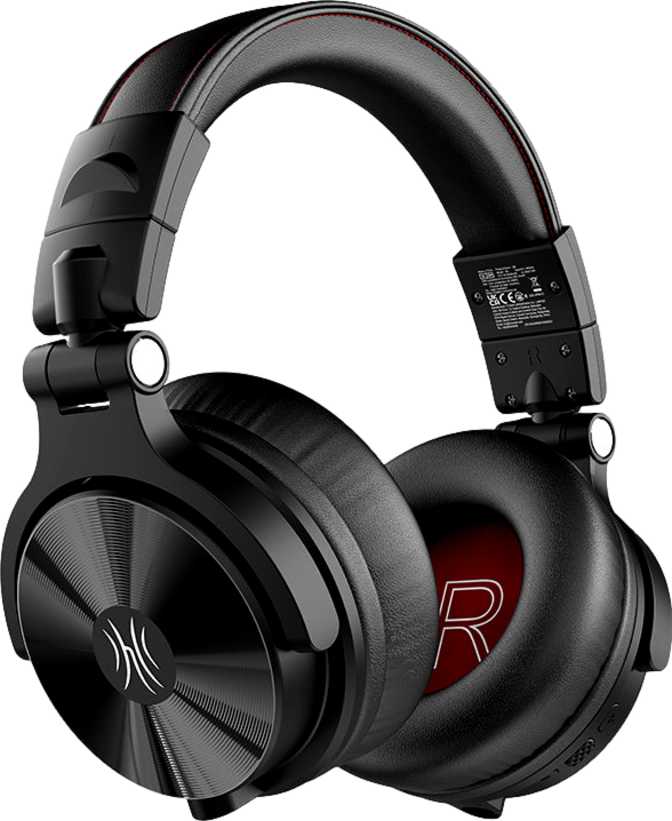
The Studio Max 2 uses a closed-back, over-ear design — meaning the earcups fully enclose your ears rather than resting on them. This matters for two reasons: comfort during longer sessions, and the passive noise isolation that a sealed cup provides. For anyone upgrading from on-ear headphones, the difference in extended wearing comfort is immediately noticeable.
The headphones fold flat, which makes them genuinely portable rather than just technically portable. A travel bag is included in the box — a detail that budget headphones frequently omit and owners immediately miss when commuting or packing a carry-on.
The cable is detachable and tangle-free, meaning you can switch between wired and wireless modes without carrying a mess in your bag. Detachable cables also matter for longevity: a fraying cable is one of the most common reasons people discard otherwise functional headphones, and here it can simply be replaced rather than making the whole headphone unusable.
Design Features at a Glance
- Over-ear, closed-back fitFull earcup enclosure for comfort and passive sound isolation
- Folds flat with travel bag includedReady for commutes, carry-ons, and weekend trips out of the box
- Detachable, tangle-free cableReplaceable cable extends the headphone's useful lifespan significantly
- No water or sweat resistanceNot designed for gym use or outdoor workouts — moisture is a real risk
- No ambient sound modeClosed-back design means full environmental blocking when worn
Keep in mind: The Studio Max 2 is built for everyday use — commuting, desk work, home listening, and travel. It is not designed for the gym or any setting where moisture exposure is a recurring risk.
Sound Quality: What the Specs Actually Mean
The Drivers and Frequency Range
The Studio Max 2 covers the full audible spectrum — from the lowest bass frequencies humans can hear to the highest register of human hearing — and then extends several times beyond it. That upper extension is only relevant when listening to hi-res audio files through a source capable of delivering them. For streaming or making calls, it changes nothing. For dedicated hi-res listening sessions, it signals that the driver hardware is not the limiting factor.
The 45mm drivers are on the larger end for consumer over-ear headphones. Larger drivers have more physical surface area to move air, which typically translates to better low-frequency extension and a more spacious sound at moderate to high volumes. This is a meaningful architectural advantage over competitors using smaller 32mm or 40mm drivers at the same price.
LDAC: The Codec That Changes the Calculation
LDAC is Sony's high-resolution Bluetooth audio codec, capable of transmitting audio at bitrates significantly higher than standard Bluetooth. Standard Bluetooth audio (SBC) transmits at around 328kbps. LDAC at its highest quality setting reaches approximately 990kbps — nearly three times the data. The practical result: fine details in recordings come through with greater clarity. The decay of a piano note. The texture of an acoustic guitar string. The ambience captured in a live recording.
The caveat is important: LDAC only activates if your source device supports it. Android phones running recent OS versions typically do. iPhones do not support LDAC natively — iOS users fall back to AAC, which is still a quality codec that handles Apple Music and streaming content well. If you are exclusively in the Apple ecosystem, LDAC is a feature you will never use.
Codec Comparison
| Codec | Max Bitrate | Supported on Studio Max 2 | Best Use Case |
|---|---|---|---|
| LDAC | ~990 kbps | Yes (Android) | Hi-res music files, audiophile streaming |
| AAC | ~256 kbps | Yes (iOS & Android) | Apple Music, Spotify, all streaming services |
| SBC | ~328 kbps | Universal fallback | Basic Bluetooth when better codecs unavailable |
| aptX / aptX HD | — | Not supported | — |
Passive Noise Isolation
The Studio Max 2 does not have active noise cancellation. What it does have is the passive isolation that a well-fitting closed-back over-ear design provides — a padded cup enclosing the ear physically blocks incoming sound without requiring any electronics. For most everyday environments — open-plan offices, cafes, public transport — this passive isolation reduces ambient noise enough that music stays engaging. For flights, construction sites, or any scenario demanding complete noise blocking, the absence of ANC is a genuine limitation that should factor into your decision.
Battery Life: The Most Impressive Number on the Spec Sheet
120
Hours
Wireless Playback
2.5 hrs
Full Recharge
USB-C
Charging Port
What 120 Hours Actually Means for Your Week
Most wireless headphones in this category offer somewhere between 30 and 60 hours — which is already enough for a week of heavy listening. At 120 hours, the average user listening four to five hours per day can go roughly three to four weeks between charges.
Practically speaking, these are headphones you charge once and mostly forget about. Weekend travelers will not need to pack a cable. People who habitually forget to charge their devices will rarely find themselves caught out mid-session.
Charging Details
- Universal USB-C chargingThe same cable as your phone or laptop — no proprietary connector to track down
- On-device battery indicatorCheck remaining charge directly on the headphone without a companion app
- No wireless chargingA minor omission at this battery capacity — with weeks between charges, you will rarely notice
Connectivity: Wireless and Wired Together
Bluetooth Performance
The Bluetooth range covers a standard room comfortably — you can walk to the kitchen, step into a bathroom, or move around a moderate-sized home without signal dropouts under typical conditions. It is not an extended-range design for large open-plan offices or multi-room homes.
The audio latency of 9ms over Bluetooth is genuinely low. Latency only becomes perceptible during video content at roughly 25–50ms. At 9ms, lip-sync issues are essentially invisible — a meaningful figure for anyone who watches video wirelessly, and notably good for this price point.
Fast pairing and NFC pairing are both absent. You connect through your device's Bluetooth settings in the standard way, which takes around fifteen seconds on first setup and is automatic afterward. For users who switch between a phone, a laptop, and a tablet many times a day, the lack of quick-switching functionality becomes a recurring friction point.
Wired Mode
The detachable cable lets you bypass Bluetooth entirely and connect directly. This proves useful when the battery runs low, when connecting to devices without Bluetooth such as older audio hardware or in-flight entertainment, and when you want zero-latency audio for music production or video editing.
Connectivity Summary
- Bluetooth wireless mode
- Detachable wired cable
- LDAC hi-res (Android)
- AAC codec (iOS + streaming)
- 9 ms audio latency
- No aptX or aptX HD
- No NFC pairing
- No fast pairing
Microphone and Headset Use
The Studio Max 2 functions as a headset for calls and voice chat, with a built-in microphone and on-earcup controls for call management. The microphone does not feature noise cancellation, meaning background noise in your environment will be audible to the person on the other end of the call.
In quiet spaces — a home office, a private room, a library — call quality will be adequate for everyday conversations. In noisier environments such as open offices, cafes, or busy streets, callers may find the background audio distracting. There is also no mute function accessible from the headphone itself, which requires reaching for your device every time you need to mute.
If call quality is a priority — particularly for client conversations, remote interviews, or frequent video meetings — a dedicated headset with active microphone noise cancellation would serve you better. For casual personal calls and voice chats in reasonably quiet environments, the built-in microphone here is functional enough.
Microphone Verdict
- Built-in mic included
- On-earcup call controls
- No noise-canceling mic
- No mute button
Who Should Buy the OneOdio Studio Max 2
And just as important — who should look elsewhere
Well-Matched For
- Android users who want hi-res wireless audio without paying premium brand prices — LDAC delivers the ceiling at a fraction of the cost
- Travelers and commuters who prioritize long battery life above everything else — multiple weeks of charge intervals are exceptional
- Work-from-home listeners who want comfortable over-ear isolation for hours-long sessions at the desk
- Students who need focus-mode listening and occasional calls without a high price tag
- Anyone who needs a reliable wired backup alongside wireless — the detachable cable keeps this headphone genuinely versatile
Poor Match For
- Gym users or anyone who exercises — no sweat or water resistance means moisture damage is a genuine and uninsured risk
- Commuters who need to stay aware of traffic and announcements — no ambient mode means full isolation when worn
- iPhone users expecting hi-res wireless audio — LDAC will not activate on iOS, capping wireless quality at AAC
- Users who switch between multiple Bluetooth devices many times a day — no fast pairing makes this cumbersome
- Anyone in consistently loud environments such as flights or construction sites — passive isolation has limits that ANC-equipped headphones overcome
How It Compares to the Competition
OneOdio Studio Max 2 versus typical alternatives at the same price point
| Feature | OneOdio Studio Max 2 | Typical Budget Competitor |
|---|---|---|
| Battery Life | ~120 hours | 30 – 60 hours |
| Hi-Res Codec | LDAC | SBC / AAC only |
| Frequency Range | 20 Hz – 40,000 Hz | 20 Hz – 20,000 Hz |
| Active Noise Cancellation | No | Often No |
| USB-C Charging | Yes | Sometimes |
| Foldable Design | Yes | Varies |
| Travel Bag Included | Yes | Often No |
| Detachable Cable | Yes | Often No |
| Ambient Sound Mode | No | Rarely included |
| Bluetooth Audio Latency | 9 ms | Typically 20 – 50 ms |
Competitor data represents general category averages — individual products vary. Verify specs directly against any specific alternative you are evaluating.
Honest Strengths and Weaknesses
A balanced view of what this headphone does well and where it asks for genuine compromise
Strengths
The Studio Max 2 makes its most compelling case on endurance and audio fidelity — two qualities that typically cost significantly more to get together. The battery life is its most defensible differentiator: 120 hours fundamentally changes how you interact with these headphones day to day. You stop thinking about charging. That removes a layer of friction that is easy to underestimate until it is gone.
The LDAC support is real and functional for Android users. Whether the improvement over AAC is audible to you depends on how closely you listen and how resolving your audio files are — but the hardware ceiling is there when you want it, and that matters.
The 45mm drivers give the sound a physical scale that smaller drivers in the same price range often cannot match. The closed-back design and passive isolation do real work in moderately noisy spaces. The complete package — foldable, detachable cable, USB-C, travel bag in the box — represents exceptional value at this price point.
Weaknesses
The Studio Max 2 asks you to accept a complete absence of active electronic features. No ANC, no ambient passthrough, no noise-canceling microphone, no sensor-based auto-pause when you remove the headphones. For buyers who have come to expect these from wireless headphones, their absence will feel like a step backward rather than a neutral omission.
iOS users will never activate LDAC, and the absence of aptX means AAC becomes the wireless ceiling — a quality codec, but not the hi-res story the specification sheet implies. The microphone is functional but unspectacular, and the lack of a mute button is a practical irritation for anyone on frequent video calls.
The Bluetooth range is standard rather than generous, and the lack of fast pairing or quick device-switching creates friction for users who move between a phone, a laptop, and a tablet throughout a working day. These are real limitations for the right buyer profile.
Common Questions Before Buying
Answers to what real buyers search for before making this purchase
A Clear Recommendation
The OneOdio Studio Max 2 wins where it commits. It commits to battery life so aggressively that it leaves every competitor in its price bracket behind. It commits to hi-res wireless audio with LDAC support that most buyers at this price simply do not get. It commits to genuine practical build quality — folding design, detachable cable, USB-C charging, a travel bag in the box.
What it does not commit to is the feature arms race of active electronics. No ANC, no ambient mode, no sensor-driven automation. If those were on your checklist, add more budget and look at higher-tier options. But if your checklist says "I want to hear music well, not charge these for weeks, and not pay flagship prices" — this headphone was built for exactly that.
Buy It If
You want weeks-long battery, LDAC hi-res audio, and a complete travel-ready package without paying flagship prices
Skip It If
You need ANC, ambient sound mode, a capable noise-canceling microphone, or you are in the iOS ecosystem expecting hi-res wireless