Apple AirPods Max 2 Review: Premium Sound, Real Trade-Offs

Apple AirPods Max 2 Review: Premium Sound, Real Trade-Offs

Headphones
IP54 Protection20-Hour ANC Battery9-Mic ArraySpatial AudioUSB-CFoldableBluetooth 5.3Active ANC

The original AirPods Max set a high bar — and a high price — when it launched, earning both praise and criticism in equal measure. The AirPods Max 2 arrives as a measured but meaningful evolution: Apple has kept what worked, addressed what frustrated people, and added just enough to justify the upgrade conversation. The result is a pair of over-ear headphones that remain among the most cohesive audio experiences available, provided you live inside the Apple ecosystem and understand what you're actually paying for.

This is not a headphone for everyone. Knowing exactly who it suits — and who should look elsewhere — is the most valuable thing this review can deliver.

Design and Build Quality

Physical construction, materials, protection, and portability — assessed honestly.

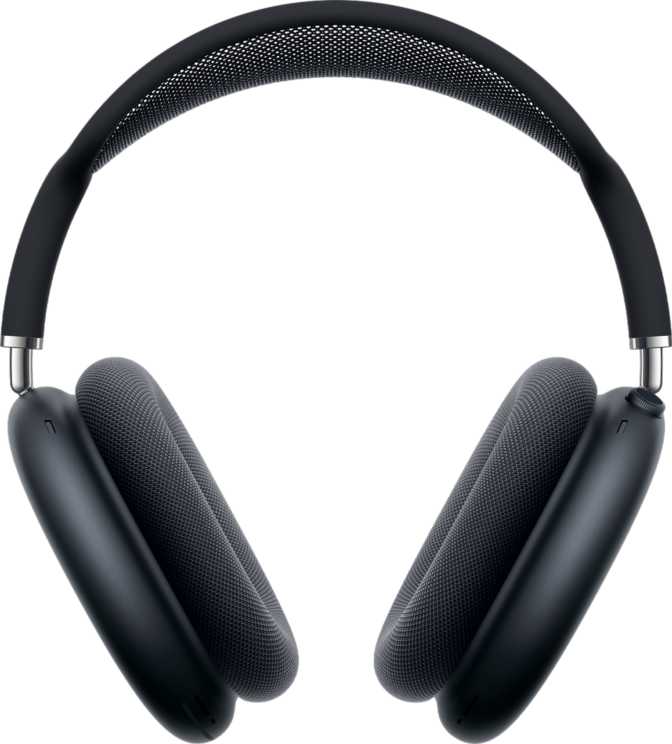
The AirPods Max 2 carries forward the distinctive over-ear form that made its predecessor stand out. At just over 386 grams, it sits toward the heavier end of the premium headphone category — comparable to other metal-framed models but noticeably heavier than rivals built from plastic. That weight is a direct consequence of real materials: you can feel the difference in hand, and you will eventually feel it on your head during very long sessions. Most users adapt quickly during regular use. The trade-off is explicit, and whether it's worth it depends on what you value.

IP54 Protection

Splashes from any direction, sweat, dust, and humidity are all handled. IP54 means these headphones survive every realistic daily exposure scenario — outdoor commutes, gym sessions, unexpected rain. They are not designed for submersion, but for everything short of that, the protection is genuine and tested to a recognized standard.

Fold-Flat Design

The original AirPods Max did not fold — a constant source of frustration for anyone who traveled with them. This changes everything. The AirPods Max 2 collapses flat, fits properly in the included travel bag, and finally behaves like a headphone designed to go places with you rather than sit permanently on a desk stand.

Cable and Accessories

The detachable, tangle-resistant cable matters more than it sounds — it can be replaced if damaged and doubles as a wired connection for flight entertainment systems or wired monitoring setups. A travel bag ships in the box, which is a practical inclusion that premium headphones at this price point often treat as an optional extra.

Sound Quality

Active noise cancellation, transparency mode, and spatial audio — each examined in real-world terms.

The AirPods Max 2 covers the full range of human hearing — from the lowest bass frequencies a person can perceive to the upper limit of audible treble. What matters more than those raw boundaries is how Apple tunes within them. The sound profile is balanced with an emphasis on clarity and detail retrieval rather than artificially boosted low end. This is a headphone tuned for music as it was recorded — not music as most consumer products prefer to enhance it. Audiophiles will appreciate the honesty of that approach. Listeners accustomed to heavily bass-boosted consumer headphones may need an adjustment period before they hear what they're actually hearing.

Active Noise Cancellation

Nine microphones across both earcups power one of the most computationally intensive ANC implementations in the consumer category. Six face outward to sample the environment; three monitor what leaks past the earcup seal. Low-frequency sounds — aircraft engines, train rumble, HVAC hum — are handled with impressive thoroughness. Higher-frequency and irregular sounds like voices are reduced rather than eliminated, which is true of every ANC headphone on the market. The closed-back physical design adds passive isolation on top, so even with ANC switched off, the earcups block a meaningful amount of ambient noise independently.

Transparency Mode

The ambient sound mode on the AirPods Max 2 is among the most natural implementations currently available in any headphone. It doesn't simply pipe in outside audio — it processes it so that conversations don't sound underwater or artificially amplified. Wearing the headphones in this mode feels close to not wearing them at all. This matters practically for pedestrian safety, open-office awareness, and any situation where you need to remain connected to your surroundings without physically removing the headphones.

Spatial Audio

Spatial audio transforms compatible content into a three-dimensional soundstage, placing instruments and dialogue in specific locations around the listener rather than collapsing everything into a flat stereo image. The effect is most dramatic with film and streaming video on Apple platforms. For standard stereo music, the experience is subtler and depends heavily on whether the source material was actually mixed with spatial audio in mind — not all of it is.

Connectivity

Bluetooth version, codec support, range, and multi-device pairing — what matters and what doesn't.

Codec Support
CodecStatusImpact
AACSupportedOptimized for Apple devices
aptX / HDNoneAndroid quality limited
LDACNoneNo hi-res Bluetooth
LE AudioNoneNext-gen codec absent

What Connectivity Means in Practice

Bluetooth 5.3 provides current-generation connection stability and energy efficiency. The practical wireless range covers a room comfortably — enough to move freely, not enough to wander between rooms in a larger home.

For Apple device users, AAC support is entirely sufficient. iPhones, iPads, and Macs transmit AAC at full quality, and Apple's own device-handoff protocols do what Bluetooth alone cannot replicate — automatic, frictionless switching as you move between devices throughout the day.

For Android users, the absence of higher-resolution codecs is a real limitation. Audio quality over Bluetooth will be technically inferior on non-Apple hardware — these headphones cannot express their full capability outside the ecosystem they're designed for.

Multipoint connectivity pairs the headphones to two devices simultaneously without manual re-pairing. The included wired cable provides a reliable fallback for flight entertainment systems or any scenario where Bluetooth is not viable.

Microphone Performance

Call Clarity in Demanding Environments

Nine microphones across both earcups give the AirPods Max 2 one of the denser microphone arrays in the consumer headphone category. The dedicated noise-canceling processing actively separates your voice from background noise during calls — not just during music playback. This distinction matters: many headphones cancel ambient noise for the listener but still transmit a muddied signal to the person on the other end.

Your voice comes through clearly even in environments that would compromise lesser setups — coffee shops, busy streets, open-plan offices. For anyone who takes frequent professional calls or video conferences throughout their workday, this microphone array is a genuine performance advantage, not a marketing specification.

Smart Features and Daily Usability

The features that change how you actually live with these headphones every day.

Wear Detection

In/on-ear detection automatically pauses playback when the headphones are removed and resumes when put back on. It sounds like a minor convenience until you've lived with it for a week — at which point losing it would feel like a genuine regression. It also prevents passive battery drain when the headphones are set down without being powered off manually.

Multipoint Device Switching

Staying paired to two devices simultaneously means the headphones respond intelligently as audio signals change. You're mid-call on your MacBook and your phone rings — the audio transitions. Within the Apple ecosystem, Apple's own device-handoff protocols make this feel frictionless rather than just functional. It works with non-Apple devices too, though the experience is less automatic.

Built-In Translation

Live translation delivers real-time translated audio during conversations — useful for travel or cross-language communication without holding up a phone mid-discussion. The feature runs on Apple's software stack rather than unique hardware, but it's a practically useful addition that extends the headphones meaningfully beyond pure audio use.

Camera Remote

The remote shutter function lets the AirPods Max 2 trigger an iPhone camera wirelessly. It's a niche feature for most users — but for photographers who use their phone for self-portraits, group shots, or video recording without a visible trigger in hand, it's a genuinely useful inclusion rather than a checklist item with no real application.

Battery Life and Charging

Endurance, charging method, and the one notable omission at this price point.

The battery delivers approximately 20 hours of continuous listening with active noise cancellation running — enough for multiple transatlantic flights, a full work week of moderate daily use, or several days of commuting without reaching for a cable. With ANC disabled, endurance extends further. Twenty hours is a meaningful battery at this category level, though not exceptional by current standards.

Heavy users who wear them all day every day may charge daily. Most users will charge every two to three days. The headphones communicate remaining battery status through connected Apple devices automatically, so you're never caught off guard.

USB-C charging replaces the original Lightning port — the same cable used for most modern laptops, tablets, and phones now works here. For anyone who has standardized their cable situation on USB-C, this correction alone reduces daily friction.

A battery level indicator surfaces remaining charge proactively. You will not be guessing mid-session — and connected Apple devices display the status automatically in their interfaces.

No wireless charging is the most conspicuous omission at this price tier. Competing premium headphones are beginning to close this gap. Wired-only charging at flagship pricing requires intentionality that wireless would remove — it's worth noting plainly rather than minimizing.

Battery Specifications
ANC Battery Life
20 Hours
Charging Port
USB-C
Wireless Charging
No
Battery Indicator
Yes
Removable Battery
No

Who This Is For — And Who Should Pass

The most honest part of any premium product review: who actually benefits, and who would be better served elsewhere.

The Ideal AirPods Max 2 User
  • Uses iPhone, iPad, Mac, or Apple TV as their primary devices and moves between them throughout the day
  • Values ANC quality and a natural transparency mode for office environments and travel
  • Wants a premium listening experience that requires zero configuration — just put them on and everything works
  • Takes frequent professional calls and needs reliable, clear microphone performance in variable environments
  • Travels regularly and benefits from the fold-flat design and included travel bag
  • Is comfortable with premium pricing for material quality, craftsmanship, and deep ecosystem integration
Consider Alternatives If You...
  • Use Android as your primary device — codec restrictions and missing ecosystem features apply directly
  • Expect wireless charging at flagship pricing — it is absent here
  • Prioritize lightweight comfort for extended daily wear — the weight will become noticeable on long sessions
  • Need LDAC, aptX HD, or LE Audio for high-resolution Bluetooth audio streaming — none are supported
  • Are budget-conscious — strong alternatives exist at lower price points if ecosystem integration is not your priority

How It Compares to the Alternatives

Compared against the two most logical rivals at similar price points in the premium over-ear category.

Feature Apple AirPods Max 2 Sony WH-1000XM5 Bose QuietComfort 45
ANC Quality Excellent Excellent Excellent
Ecosystem Integration Apple-Native Platform-Neutral Platform-Neutral
Codec Support AAC only LDAC, AAC, SBC AAC, SBC
Wireless Charging
Weight ~386 g ~250 g ~238 g
Transparency Mode Industry-Leading Very Good Good
Spatial Audio No (native)
Multipoint Pairing 2 Devices 2 Devices 2 Devices
Foldable

The Sony WH-1000XM5 is significantly lighter, supports higher-resolution Bluetooth audio codecs, and works equally well across all platforms — making it the better pick for non-Apple users. The AirPods Max 2 leads on transparency mode naturalness and spatial audio integration, and its build material quality conveys more premium construction. The Bose QC45 is lighter and more affordable with strong ANC, but trails on microphone quality, feature depth, and overall sound refinement.

Honest Strengths and Real Limitations

No product at any price is without trade-offs. Here is where the AirPods Max 2 stands.

Where It Excels

The ANC-plus-transparency dual mode is the most natural-sounding implementation currently available in the over-ear category. Switching between fully cancelling noise and hearing the world as if nothing is on your head is smooth and believable in a way competitors haven't quite matched.

The ecosystem handoff between Apple devices is frictionless in a way standard Bluetooth alone cannot replicate. For anyone who moves between an iPhone and a MacBook throughout the day, this automatic intelligence justifies a significant portion of the premium on its own.

The nine-microphone array delivers the clearest call quality in its class. Your voice is separated cleanly from background noise in environments that would compromise the microphones on most competing headphones.

The fold-flat design and USB-C charging resolve the two most legitimate criticisms of the original model. These aren't small refinements — they change the day-to-day experience of living with these headphones in a meaningful way.

Where It Falls Short

The weight is the most consistently cited limitation among extended wearers — and it's valid. At just over 386 grams, these are among the heavier headphones in the premium category. The metal construction justifies the weight materially, but not physically, after four or more hours of continuous wear.

The absence of wireless charging at flagship pricing is a noticeable gap. Competitors are closing this ground. Wired-only charging at this price feels less like a design decision and more like an oversight that will eventually be corrected.

Codec support is limited to AAC. For anyone outside Apple's ecosystem, this means Bluetooth audio quality is technically constrained — the headphones cannot fully express their potential on Android or other platforms.

The price demands honest acknowledgment: you are paying for audio quality, build quality, and ecosystem integration as a bundle. If you only need two of those three, alternatives deliver better value for your specific situation.

Questions Real Buyers Search for Before Purchasing

Direct answers to the questions that come up most often before spending this much on a pair of headphones.

They will pair and function, but you lose instant pairing, automatic device switching, battery visibility in the notification bar, and spatial audio features. You're also limited to standard Bluetooth audio quality rather than Apple's optimized AAC pipeline. They work on Android — they just aren't built for it, and the experience gap is real.

It depends entirely on use case. For desk listening or commuting in 60–90 minute sessions, most users adapt quickly and stop noticing the weight. For four-to-six-hour continuous wear — long-haul flights, full-day editing sessions — the weight becomes noticeable. Anyone with existing neck or shoulder sensitivity should test these in person before committing to purchase.

Both are best-in-class. Sony handles certain mid-frequency sounds slightly better; Apple's transparency mode is more natural-sounding. If raw ANC depth is your only priority, either headphone will satisfy. If you switch regularly between ANC and transparency mode, the AirPods Max 2 delivers the more believable result in transparency. The decision usually comes down to ecosystem fit, weight preference, and codec requirements rather than ANC performance alone.

With ANC running, the battery covers around 20 hours of continuous listening. For most users with moderate daily use — two to three hours a day — that translates to charging every two to three days. Heavy users who wear them all day every day may charge daily. The 20-hour figure is enough to cover multiple transatlantic flights back-to-back without a top-up.

The Lightning-to-USB-C change is significant for anyone who has standardized on USB-C across their devices. Combined with the fold-flat design — which the original completely lacked — the upgrade case is genuine for frequent travelers or anyone who found the original's bulk impractical. If neither issue actively bothered you with the original model, the upgrade argument is weaker.

Final Verdict

The Apple AirPods Max 2 earns its reputation as the best-integrated over-ear headphone for Apple users and one of the strongest performers in the broader premium category. The noise cancellation is excellent, the transparency mode is unmatched, the microphone array stands out for call clarity, and the build quality justifies a significant portion of the price on craftsmanship alone.

The fold-flat design and USB-C charging resolve the two most legitimate criticisms of the original model, making this a meaningfully better headphone to live with day to day. The limitations — the weight, the absent wireless charging, the codec restrictions for non-Apple users — are real but do not undermine what these headphones do exceptionally well.

Buy if you're in the Apple ecosystem

Value craftsmanship and call quality, and want headphones that work without any configuration — simply put them on and everything connects.

Pass if you're Android-first

Or if lightweight comfort, wireless charging, or high-resolution audio codec support are non-negotiable requirements for you.

The AirPods Max 2 is not for everyone. For the people it is built for, nothing else does the job as well.

Elif Kaya Bursa, Turkey

PC Gaming Headset & Surround Sound Reviewer

Audio engineer and competitive gaming analyst who reviews PC and console headsets for positional audio accuracy, microphone clarity, and comfort during multi-hour sessions. Conducts blind listening tests with panel groups to eliminate brand bias from her verdicts.

Gaming Headsets Surround Sound Microphone Quality Headset Comfort Positional Audio
  • BA in Sound Engineering
  • AES Student Member
View Full Profile