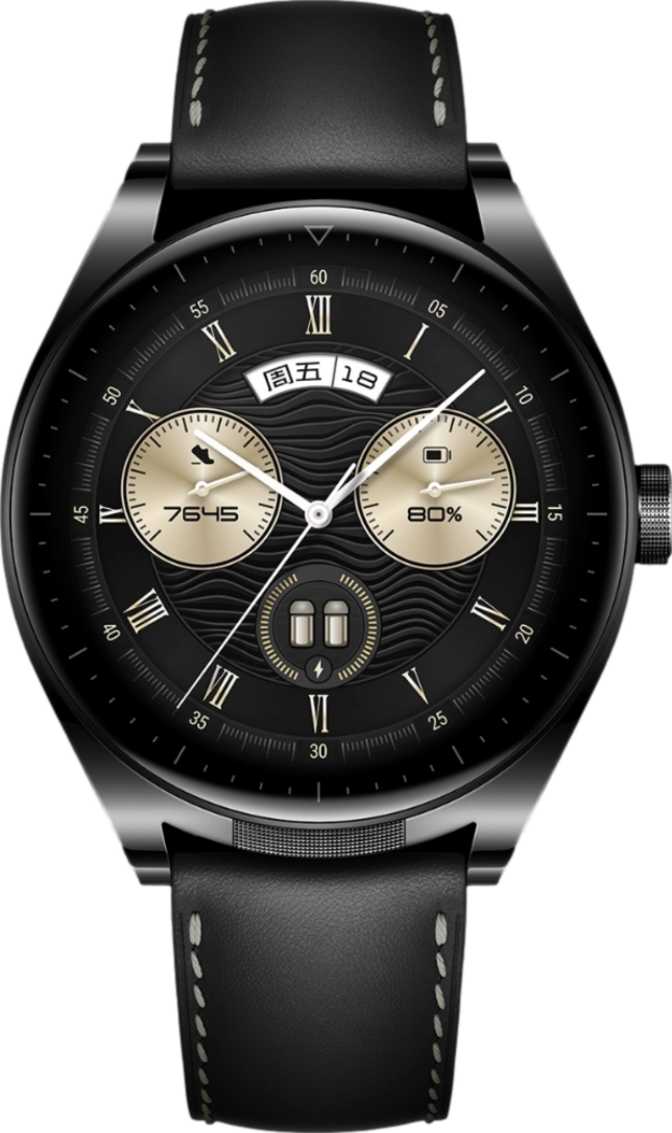
Huawei Watch Buds 2 Review: A Bold 2-in-1 Wearable Put to the Test
SmartwatchesThe Huawei Watch Buds 2 earns its place by solving a real problem — carrying earbuds and a smartwatch as a single wrist-worn device. Below is how it performs across the metrics that matter most before spending money on a 2-in-1 wearable.
Key Specifications at a Glance
Design and Build: Living with a 2-in-1 Wearable
The Physical Reality of the Form Factor
The first thing you notice about the Watch Buds 2 is its depth. At nearly 15mm thick, it sits noticeably higher off the wrist than a conventional smartwatch. That thickness is the direct cost of housing earbuds inside the case — there is no engineering workaround that makes two devices occupy the same space. With a 47mm square footprint, it lands at the larger end of the everyday smartwatch spectrum.
The watch body weighs just under 55 grams. Most smartwatches in this size class weigh between 30 and 45 grams, making the 10–25 gram premium perceptible during the first few days. Most users adapt after the adjustment period, though those with slender wrists or a strong preference for minimal wrist presence will feel it more consistently.
The 22mm band is fully replaceable, keeping the Watch Buds 2 compatible with a wide third-party band ecosystem. You are not locked into Huawei's own selection for the lifetime of the device.
Display Quality
The 1.5-inch OLED panel delivers genuine sharpness — 466 × 466 pixels at 310 pixels per inch means text and watch-face detail appear crisp without bringing your wrist close to your eyes. OLED technology produces true blacks and vivid contrast, making the display legible across a broad range of lighting conditions. Always-on display support means the time is visible at a glance without requiring a wrist raise, which proves genuinely useful during meetings or while cooking.
The display lacks branded scratch-resistant glass — no sapphire crystal, no Corning Gorilla Glass. Surface scratches are a realistic risk over time, particularly for active wearers. A screen protector applied from day one is the most practical mitigation available.
| Case Size | 47 × 47mm |
| Thickness | 14.7mm |
| Weight | 54.5g |
| Display | 1.5" OLED |
| Resolution | 466 × 466px |
| Pixel Density | 310 ppi |
| Always-On | Supported |
| Band Width | 22mm |
| Band Swap | Replaceable |
| Water Rating | IP54 — splash only |
The Earbuds Experience: Why This Product Exists
The earbuds are the defining reason someone chooses the Watch Buds 2 over a conventional smartwatch. Understanding how they work is central to deciding whether this product genuinely fits your life.
The earbuds sit within the watch case and charge while you wear the watch, drawing from the watch's own battery. When you need them, you open the case — which is your watch — and take them out. The practical benefit is consolidation: one device to charge, one item to locate, one thing to carry out the door.
Music playback is fully supported, making the earbuds functional for workout audio, podcast listening, and hands-free calls — not simply a concept demonstration. Call control is handled directly from the watch face, so incoming calls are managed without reaching for your phone. The integration between the earbuds and the watch is native, delivering a connection experience that is tighter than pairing two separately purchased Huawei devices.
The honest cost is battery sharing. The watch powers both itself and the earbuds, which compresses effective battery life whenever earbud use is heavy. This is a genuine trade-off — not a fatal flaw — but it requires realistic daily expectations, especially for extended listening sessions.
The Consolidation Advantage
- Earbuds stored in the watch — always on your wrist, impossible to forget
- Earbuds charge passively while the watch is worn throughout the day
- One charging routine replaces managing two separate battery cycles
- Call control from the watch face — no need to reach for your phone
- Native pairing delivers tighter integration than two separately purchased devices
Performance and Core Sensors
GPS and Navigation Performance
The Watch Buds 2 includes built-in GPS alongside the Galileo satellite network — Europe's global navigation system known for superior accuracy in dense urban environments where standard GPS signals bounce between buildings. Route tracking, pace measurement, and mapped workout sessions all run without needing a phone nearby.
There is no barometric altimeter. Elevation tracking relies on GPS altitude data rather than air pressure readings, making vertical measurement less precise than what barometric alternatives provide. Casual runners will not notice the difference; serious hikers tracking elevation gain in complex terrain will.
Health Monitoring Sensors
Health and Fitness Tracking: What the Watch Actually Monitors
Everyday Health Monitoring
The Watch Buds 2 tracks steps, distance, calories burned, and active minutes throughout the day. Inactivity alerts prompt movement after extended sedentary periods. The companion app extends health management into nutrition — logging meals and hydration alongside physical activity creates a more complete picture than step counting alone.
Sleep tracking is thorough, monitoring sleep stages and generating detailed reports through the app. The combination of continuous heart rate data and movement tracking during sleep makes these reports genuinely informative rather than approximate, with trends surfaced over time rather than just nightly snapshots.
Women's Health Features
The companion app includes menstrual cycle tracking, fertile window notifications, ovulation prediction, and cycle start date prediction. These features meaningfully expand the Watch Buds 2's relevance for a significant portion of potential buyers and are now standard expectations at this price tier.
What It Tracks vs. What It Skips
Tracked and Supported
Not Available
Battery Life and Charging: The Two-Device Equation
Understanding the Three-Day Claim
Three days of battery life is the stated figure under typical use conditions — and this is where the Watch Buds 2's dual nature demands the most honest scrutiny. A watch that also charges earbuds is powering two devices from one battery. That capacity, while reasonable for a standalone smartwatch, is divided between watch functions and replenishing the earbuds between sessions.
Heavy earbud use will reduce watch battery life below the three-day headline. Users spending two or more hours daily listening should plan for charging every one to two days rather than every three. Always-on display, GPS during workouts, and continuous heart rate monitoring each draw additional power on top of this. With all features running simultaneously, two days before charging is the more realistic expectation.
Charging Speed and Method
Wireless charging brings the watch from empty to full in approximately 85 minutes — fast enough to recover a complete charge over a morning routine or a lunch break. No cable is required; the wireless charging surface handles everything. The constraint worth knowing: the watch requires Huawei's own charging pad rather than the standard Qi wireless charging used by most smartphones and accessories. Keep track of that pad.
- Wireless charging supported
- No proprietary cable needed
- Huawei pad only — not Qi
Connectivity and Ecosystem: What Works and What Doesn't
Wireless Connections
Bluetooth 5.2 is the current-generation wireless standard, offering stable and efficient connections with improved range and reduced power consumption compared to older versions. NFC enables contactless payment in markets where Huawei Pay is active, adding practical daily utility beyond health features.
There is no built-in Wi-Fi and no cellular radio. The watch depends entirely on a nearby Android phone for notifications, app syncing, and data-dependent features. It cannot independently stream music, access navigation, or send messages when your phone is out of range.
App Ecosystem Depth
The Huawei Health companion app is free, ad-free, and delivers a genuinely broad feature set: live workout tracking with real-time location sharing, map support, route planning, coaching guidance, and voice feedback during exercise are all included. BMI tracking, weight logging, water intake monitoring, and smart scale compatibility add to an unusually comprehensive platform for a bundled app.
Compatibility with external heart rate monitors extends accuracy options for users who prefer chest strap precision during high-intensity sessions.
Who Should Buy the Huawei Watch Buds 2
This Watch Is Right for You If...
- You are an Android user who regularly forgets or misplaces a separate earbuds case
- You want to consolidate into one wearable without juggling two separate charging routines
- You value everyday health tracking, GPS workouts, and sleep monitoring over elite sports features
- You want a mature, free, ad-free app ecosystem with no subscription fees attached
- Carrying fewer items and simplifying your daily routine genuinely matters to you
This Watch Is Not Right for You If...
- You use an iPhone — there is no compatibility and no workaround of any kind
- You need ECG for cardiac health monitoring or heart rhythm irregularity detection
- You swim regularly or need detailed swimming workout metrics tracked accurately
- You strongly prefer a slim, lightweight watch profile with minimal wrist presence
- You need multi-sport mode, triathlon tracking, or precise barometric altitude data
How It Compares to the Alternatives
The most honest comparison for the Watch Buds 2 is against the combined cost and hassle of buying a capable mid-range smartwatch plus a separate pair of earbuds. Viewed that way, the value case becomes clearer — you are paying for integration and daily simplification, not for feature superiority over dedicated single-purpose devices.
| Feature | Huawei Watch Buds 2 | Conventional Smartwatch | TWS Earbuds + Watch |
|---|---|---|---|
| Devices to manage | 1 | 2 | 2 |
| Carry requirement | Wrist only | Watch + separate case | Watch + separate case |
| Battery management | Watch powers both | Independent | Independent |
| Watch thickness | Noticeably thicker | Thinner | Thinner |
| iOS compatible | Often yes | Often yes | |
| ECG monitoring | Sometimes | Rarely | |
| Swimming suitability | Sometimes | Sometimes | |
| Price rationale | Combined device value | Watch cost only | Combined purchase cost |
Honest Assessment: Strengths and Weaknesses
What It Gets Right
The Watch Buds 2's greatest strength is conceptual clarity. It knows exactly what problem it is solving — the two-device carry problem — and executes on that solution without gutting the watch functionality to the point of uselessness. The display is genuinely sharp, delivering vivid contrast and crisp detail on an OLED panel that handles a wide range of lighting conditions without strain.
Health tracking coverage is broad and honest — the metrics most people actually use daily are all present, backed by a companion app that is free, ad-free, and meaningfully feature-rich. GPS tracking augmented by the Galileo network delivers solid route accuracy for everyday workout use. Wireless charging that completes in under 90 minutes fits naturally into the convenience story this device is built around.
The 22mm replaceable band keeps the physical experience future-proofed, and NFC payment support adds practical daily utility well beyond health tracking alone.
Where It Falls Short
The thickness and weight are real trade-offs, not marketing concessions. The nearly 15mm depth and 55-gram body are noticeable, particularly for first-time wearers and those with smaller wrists. The adjustment period is genuine, and for some users it never fully resolves — especially when wearing the watch to bed for sleep tracking.
The three-day battery headline demands honest interpretation. It assumes moderate earbud use — not hours of daily listening. Users who listen heavily will find themselves charging more often than the spec implies. The absence of ECG, a barometric altimeter, and multi-sport mode keeps this below the functionality ceiling of dedicated sports watches at a similar price point.
The lack of scratch-resistant glass is a quiet gap that becomes loudly apparent after the first contact with a sharp surface. A screen protector helps, but it requires proactive action rather than passive confidence in the build quality.
Common Questions Before Buying
Final Verdict
The Huawei Watch Buds 2 is a product that earns its existence. The 2-in-1 concept is not a marketing gimmick layered over an otherwise unremarkable device — it is a genuine daily convenience that accumulates real value over time for the right person. The display is sharp. The health tracking is honest and broad. The GPS performs solidly for everyday workout use. The companion app is mature, free, and ad-free.
The trade-offs are real but bounded. Thickness and weight require an adjustment period. Battery life demands realistic expectations when earbuds are in heavy daily use. The missing sensor suite — no ECG, no barometer, no temperature sensor — places this below the ceiling of dedicated sports watches in the same price tier.
If you are an Android user who wants fewer devices to manage, everyday health tracking without elite-tier complexity, and earbuds that are always with you without a separate case to track — the Watch Buds 2 delivers exactly on that promise. If you use an iPhone, swim regularly, or need ECG monitoring, this watch was not designed for you, and no amount of appreciation for the concept changes that reality.