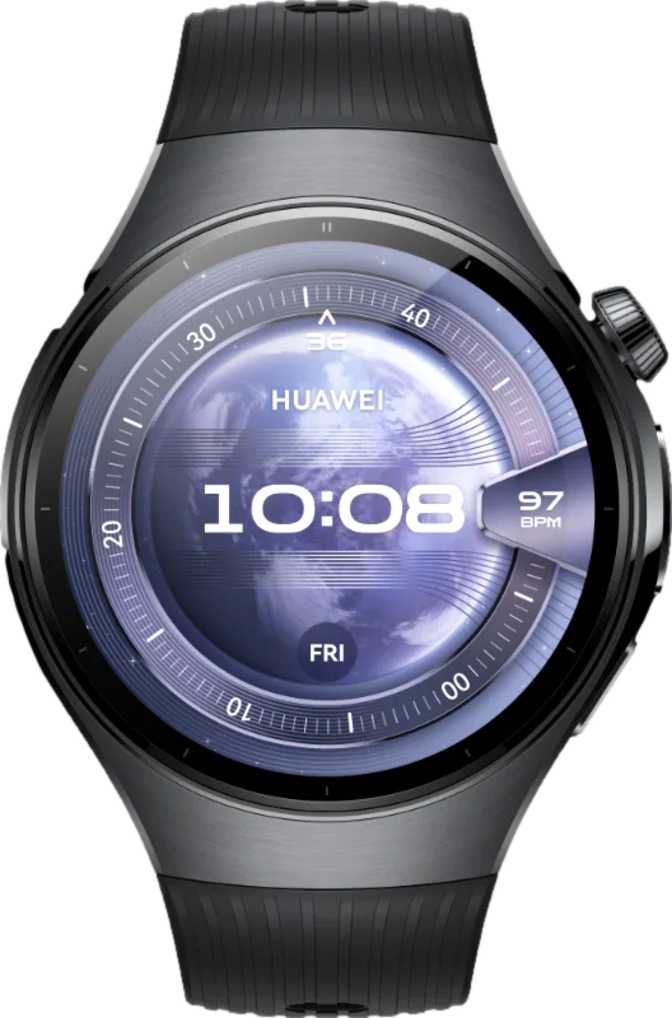
Huawei Watch 5 Review: An Honest, In-Depth Look at the All-Rounder
SmartwatchesFirst Impressions: A Smartwatch Built to Do More Than Tell Time
Smartwatches have split into two camps lately. On one side, you have lightweight fitness trackers that count your steps and not much else. On the other, bulky sports watches that track everything but look like you're training for an Ironman during a coffee run. The Huawei Watch 5 is aimed squarely at the gap between those two worlds — a watch that wants to handle your morning run, your work calls, your sleep data, and your evening swim, all without you ever having to think about which device does what.
What stands out immediately on paper is the sheer breadth of what's packed into a single circular case: a full health-sensor suite, cellular connectivity independent of your phone, swim and dive tracking, and a battery that's engineered to outlast a long weekend. The real question for any buyer isn't whether this watch does a lot — it clearly does — but whether it does enough of the right things well enough to justify wearing it every day instead of your phone, your fitness band, or nothing at all. Let's get into exactly what you're getting.
1.5" AMOLED
Always-On Display
40m Rated
5 ATM & IP68
~4.5 Days
Typical Mixed Use
Cellular eSIM
iOS & Android
Design and Build Quality
How It Looks and Feels on the Wrist
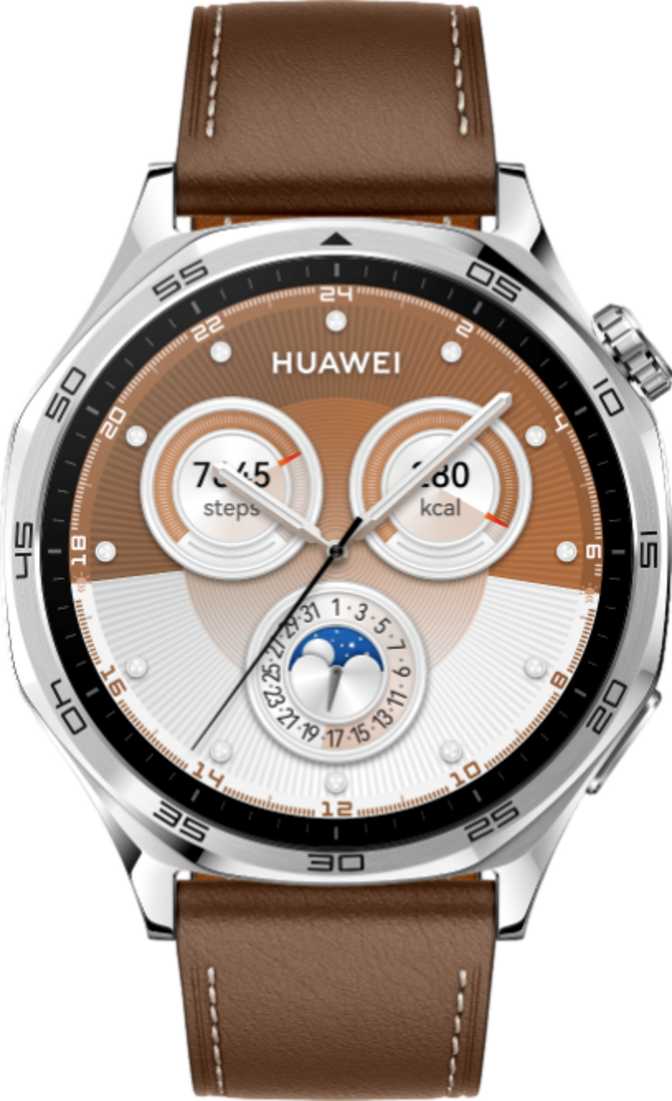
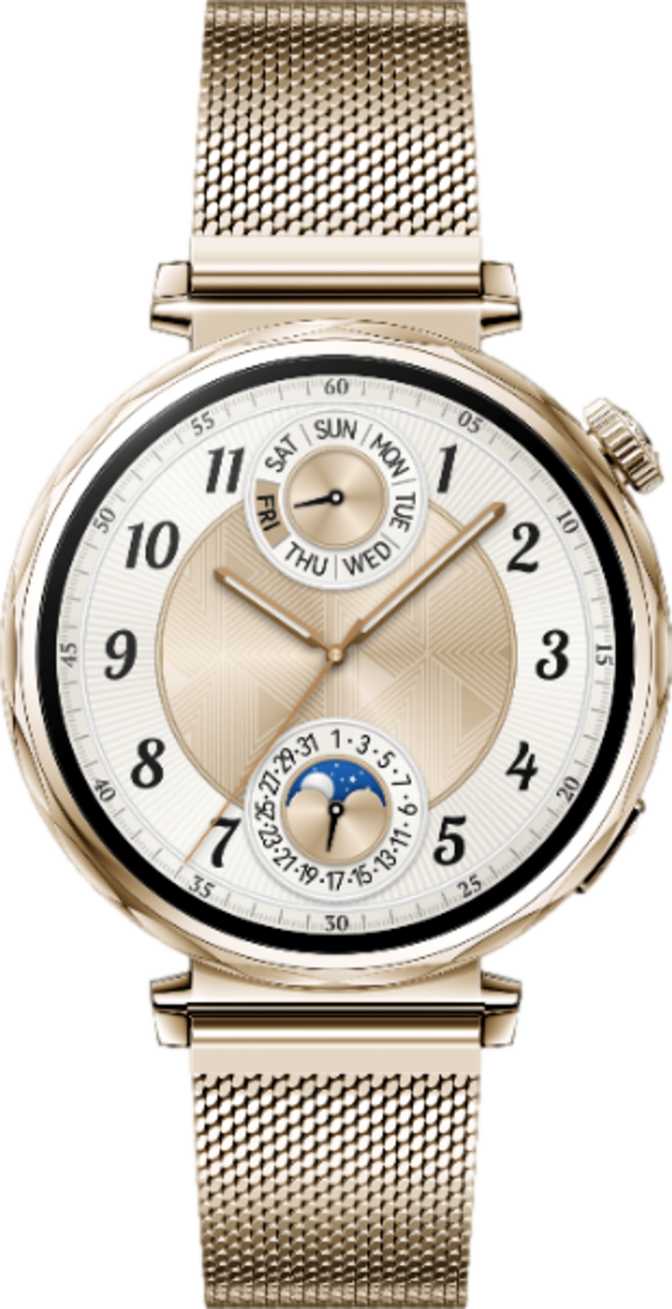
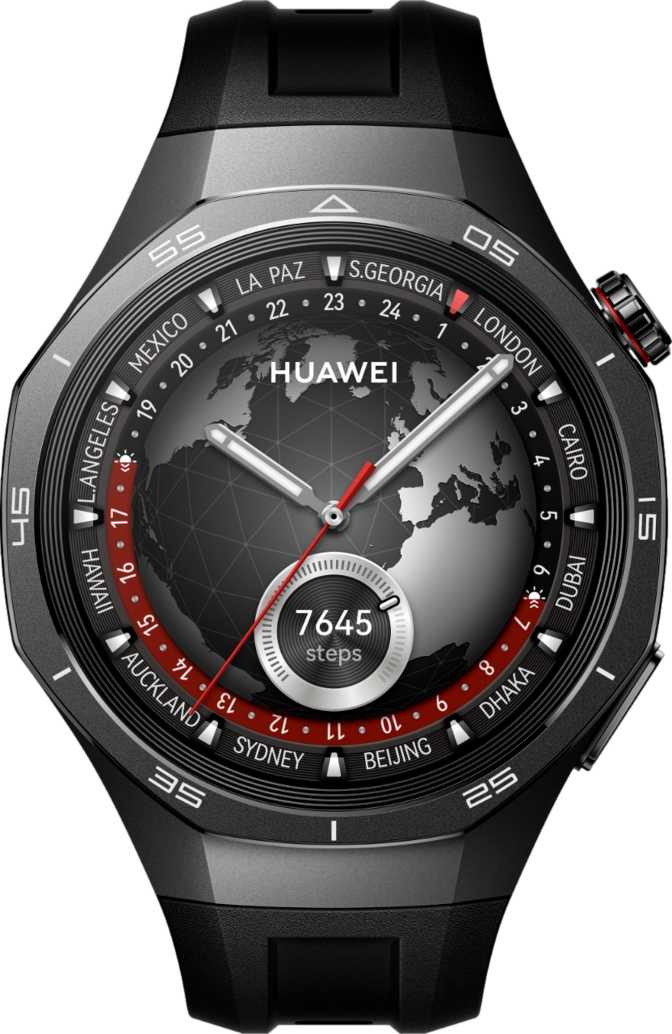
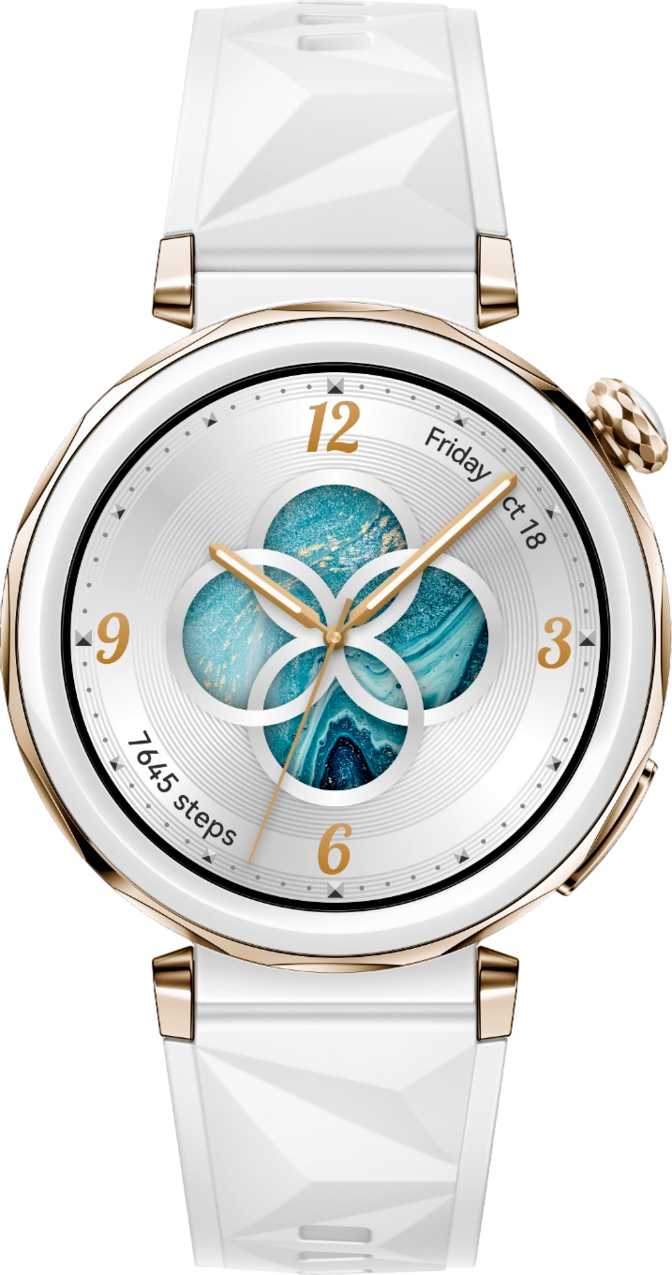
The Huawei Watch 5 sits in that sweet spot of "noticeably premium without being showy." At just over an inch and a half across the face, the screen is large enough to read notifications and workout stats at a glance without the watch looking oversized on smaller wrists. The case stays slim enough — barely thicker than a stack of a few coins — that it slides under a shirt cuff without a fight, which matters more than people expect until they've worn a watch that doesn't.
Weight is where this watch earns real points. At a touch over 60 grams, it's light enough to forget you're wearing it through a full day of typing, gym sessions, and sleep tracking overnight — a category where heavier sports watches genuinely start to chafe wrists by hour twelve.
Display Quality and the Always-On Advantage
The screen itself uses AMOLED technology, the same family of display found in flagship phones, which means deep blacks, vivid color, and excellent contrast even in direct sunlight — a real-world test that trips up cheaper LCD-based watches constantly. Pixel density here is high enough that text, icons, and even detailed map overlays render crisply rather than looking blocky, which matters a lot if you plan to actually read messages on your wrist rather than just glance at notification dots.
The Always-On Display mode means the watch face stays visible without you flicking your wrist every time — a small thing that becomes addictive once you have it and frustrating to lose once you don't. The trade-off, as with any always-on screen, is a battery cost, which we'll address shortly.
Durability: What "Sapphire Glass" Actually Buys You
This is where the Huawei Watch 5 makes an interesting choice. Instead of a typical branded toughened glass found on most mainstream smartwatches, it uses sapphire crystal for the display cover. Sapphire is a different material entirely — it's one of the hardest substances used in consumer electronics, meaning everyday scratch sources like keys, zippers, and rough countertops are far less likely to leave a mark than they would on standard glass.
The trade-off worth knowing about: sapphire is harder but also more brittle than tempered glass, so while it shrugs off scratches superbly, a sharp direct impact (a hard drop onto concrete edge-first, for example) carries slightly more risk of cracking than a flexible Gorilla-Glass-style surface would. For most owners — people who scratch watches against doorframes and desks far more often than they smash them — this is a clear net win.
Water Resistance and Weatherproofing
The watch carries a serious water-resistance rating, certified to handle submersion to 40 meters and backed by both a formal 5 ATM pressure rating and an IP68 dust-and-water ingress rating. In practical terms: showers, dishwashing, swimming pools, rain, and even recreational ocean swims are all comfortably within its comfort zone. Combined with the dedicated diving mode discussed below, this isn't a watch that needs to come off for anything short of genuine deep-sea work.
Temperature tolerance is similarly wide-ranging, rated to function from well below freezing up to a sustained 55°C — relevant if you hike, ski, or simply leave your watch in a hot car more often than you'd like to admit. The strap attaches via a standard 22mm replaceable band system, which is good news for anyone who wants to swap in a different style, material, or color down the line rather than being locked into one proprietary strap design.
Health and Fitness Sensors: What's Actually Inside
A smartwatch is only as useful as its sensors, and this is an area where the Huawei Watch 5 is genuinely well equipped rather than just well marketed. Here's the complete sensor package and what each one contributes to daily use:
| Sensor | What It Tracks | Why It Matters Day to Day |
|---|---|---|
| Heart rate monitor | Continuous pulse tracking | Foundation for calorie burn, recovery, and workout intensity zones |
| Pulse oximeter (SpO2) | Blood oxygen saturation | Flags potential breathing issues during sleep or altitude exposure |
| Body temperature sensor | Skin temperature trends | Feeds into cycle tracking and early illness detection |
| GPS with Galileo support | Location and route | Maps outdoor runs, rides, and hikes without needing your phone along |
| Barometer | Air pressure / elevation | Tracks climbs and descents on hikes more accurately than GPS alone |
| Compass | Heading direction | Useful for orienteering and route navigation |
| Gyroscope & accelerometer | Motion and orientation | Enables automatic activity detection and gesture controls |
Tracking Your Body: Heart Health, Recovery, and Wellness
This is the section that separates a "smartwatch" from a genuine health-tracking device, and the Huawei Watch 5 leans heavily into the latter category.
Heart and Recovery Insights
Beyond basic heart rate, the watch calculates heart rate variability (HRV) — essentially how much your heartbeat intervals fluctuate, which is a recognized proxy for how recovered or stressed your nervous system is. This feeds into a daily readiness score designed to tell you, in plain terms, whether your body is primed for a hard workout or asking for a rest day. It also estimates VO2 max, a standard measure of aerobic fitness that endurance athletes track over months to gauge whether their cardio fitness is genuinely improving.
The watch also includes ECG (electrocardiogram) functionality, letting you take an on-demand single-lead heart rhythm reading directly from your wrist, alongside automatic irregular heart rate notifications and fast/slow heart rate alerts that flag readings outside your normal range. This is meaningfully more clinical than the heart rate tracking found on basic fitness bands, though it should be treated as a wellness tool for spotting patterns worth discussing with a doctor — not a diagnostic medical device.
Sleep and Everyday Wellness
Sleep tracking comes with full reports breaking down sleep stages and quality trends over time, which is far more useful than a simple "hours slept" counter. The temperature sensor and cycle-tracking software work together to support fertility window predictions, ovulation forecasting, and period start-date predictions — a genuinely comprehensive women's health feature set that not every competing smartwatch bothers to include at all.
Sports and Activity Tracking
The activity-tracking side of the Huawei Watch 5 covers an unusually wide net of disciplines rather than just the standard run/walk/bike trio.
- Automatic activity detection, so workouts get logged even if you forget to start a session manually
- Route tracking with elevation data, useful for hikers and trail runners who care about climb difficulty, not just distance
- Swim stroke counting, letting swimmers see stroke efficiency rather than just lap counts
- A dedicated golf mode for tracking rounds
- A dedicated diving mode that pairs naturally with the watch's 40-meter water resistance rating
- Exercise tagging and a full exercise diary for reviewing workout history over time
- Pace and distance tracking with auto-pause, so the clock stops counting when you stop at a red light or a water fountain
This breadth means the Huawei Watch 5 can realistically replace separate single-purpose devices for swimmers, golfers, hikers, and casual divers — a meaningful value proposition if you've ever owned three different watches for three different hobbies.
Smart Features, Calls, and Connectivity
Making Calls Without Your Phone
The standout connectivity feature here is built-in cellular support through an eSIM, meaning the watch can make and receive calls, and presumably handle data, completely independent of a paired phone. Combined with a single onboard microphone and call-control features, you can genuinely leave your phone at home for a run and still take a call mid-route — a feature still missing from a lot of smartwatches in this category. Just keep in mind there's no 3.5mm headphone jack, so calls and any audio playback will route through the watch's own speaker or a paired headset rather than wired headphones.
Network and Pairing
The watch supports modern short-range wireless pairing for phone connections and modern Wi-Fi standards spanning older and newer protocols, which helps keep connections stable across different home and office routers. It works with both iOS and Android, so switching phone ecosystems down the line won't strand you with an unusable watch. GPS accuracy gets a boost from Galileo satellite support and a fast-lock feature designed to acquire your position quickly rather than making you wait at the trailhead while the watch finds itself.
Everyday Smart Features
NFC Payments
Fall Detection
Voice Commands
Remote Shutter
Notifications & Alerts
Silent Alarm
Find My Phone
Stopwatch
Battery Life and Charging
This is one of the watch's stronger arguments. With its always-on display, full GPS suite, cellular radio, and continuous health sensors all running, the Huawei Watch 5 is rated for roughly four and a half days of typical mixed use before needing a charge. That's a genuinely strong result for a watch carrying this much active hardware — many AMOLED smartwatches with comparable feature lists, especially ones running cellular connectivity and always-on screens, need a charge every one to two days. This is an inference based on how power-hungry that combination of features typically is, but it lines up with what owners of similarly specced devices generally report.
Typical Mixed Use
Power-Saving Mode
For longer stretches away from a charger — camping trips, long travel days — the dedicated power-saving mode dramatically extends runtime, stretching well past a week and a half by trimming back the features that draw the most power. When you do need to top up, charging is fast: a full charge takes roughly an hour and a half, and it's done wirelessly, so there's no fiddling with a delicate charging port or proprietary cable orientation. The trade-off of a sealed, non-removable battery is standard for this device category — you won't be swapping batteries yourself, but you also won't deal with a battery door or seal that can fail over time.
The Huawei Health App Experience
Software is where a lot of smartwatches quietly disappoint, often hiding their best features behind a paywall or burying basic stats under ads. The companion app here avoids both pitfalls — it's free to use and ad-free, which matters more than it sounds like it should once you've used a fitness app that nags you to upgrade every time you open it.
Who Should Buy the Huawei Watch 5 — and Who Shouldn't
Great Fit
This watch makes the most sense for people who want one device to genuinely replace several — someone juggling phone calls, workouts, sleep tracking, swimming, and the occasional golf round who doesn't want a drawer full of single-purpose gadgets. It also suits anyone prioritizing cross-platform flexibility, since iOS and Android compatibility means you're not locked in if you ever switch phones. It's a particularly strong fit for swimmers and casual divers thanks to the genuine 40-meter depth rating, and for anyone who wants the safety net of cellular calling on long solo runs or hikes.
Weaker Fit
Serious competitive cyclists who depend on an ANT+ sensor ecosystem (power meters, certain bike computers) will hit a real compatibility wall. Ultra-dedicated marathon or ultra-running specialists who want granular cadence data down to the stride may also find the absence of a dedicated cadence sensor a meaningful gap compared to running-specific watches built around that exact metric.
How the Huawei Watch 5 Stacks Up Against the Competition
Rather than comparing against any single named competitor, it's more useful to see where this watch lands relative to the three common categories buyers typically choose between:
| Category | Typical Strengths | Typical Limitations | How the Huawei Watch 5 Compares |
|---|---|---|---|
| Entry-level fitness bands | Affordable, lightweight, simple | Limited sensors, no cellular, basic displays | Far more capable health and connectivity feature set, at a correspondingly higher price point |
| Specialist sports/running watches | Deep training metrics, rugged build | Often no cellular calling, weaker smartwatch features, less polished apps | Comparable sports tracking depth in most disciplines, plus calling and smart features specialist watches usually skip |
| Premium everyday smartwatches | Strong app ecosystems, sleek design, smart features | Battery life often shorter, water resistance sometimes more limited | Matches or exceeds typical battery endurance and water resistance, with a notably deep health-sensor suite |
The clearest competitive edge is the combination of cellular independence, genuine dive-rated water resistance, and multi-day battery life in one device — a combination that's still relatively rare even among premium smartwatches.
Strengths and Weaknesses: The Honest Take
Where It Excels
The Huawei Watch 5's biggest strength is breadth without obvious compromise. It's rare to find a watch that handles cellular calling, ECG readings, dive tracking, golf scoring, and multi-day battery life without one of those features feeling like an afterthought, and this watch manages that balancing act convincingly. The sapphire glass is a genuine upgrade over the standard toughened glass found on most competitors at this tier, and the free, ad-free app removes a frustration that plagues plenty of rival ecosystems.
Where It Falls Short
The lack of ANT+ support will frustrate a specific slice of serious cyclists who've already invested in that sensor ecosystem, and the missing cadence sensor means dedicated runners chasing precise stride mechanics will find more specialized tools elsewhere. The absence of a 3.5mm jack is a non-issue for most people in a wireless-audio world, but it does mean wired headphone loyalists need a workaround. None of these are dealbreakers for the average buyer, but they're worth knowing before you commit.
Frequently Asked Questions
Final Verdict
The Huawei Watch 5 earns its place as a genuine all-rounder rather than a watch that's great at one thing and mediocre at everything else. The combination of cellular independence, dive-rated water resistance, a comprehensive health-sensor suite, and multi-day battery life is hard to find bundled together this convincingly, and the free, ad-free app experience removes a friction point that trips up plenty of competing ecosystems.
If you want one watch to replace your fitness band, your dive computer, your golf tracker, and occasionally your phone, this is a confident buy. The only people who should pause are committed cyclists tied to an ANT+ sensor setup and competitive runners who need dedicated cadence precision — everyone else will find this one of the more complete smartwatches available at this level.
Recommended Buy