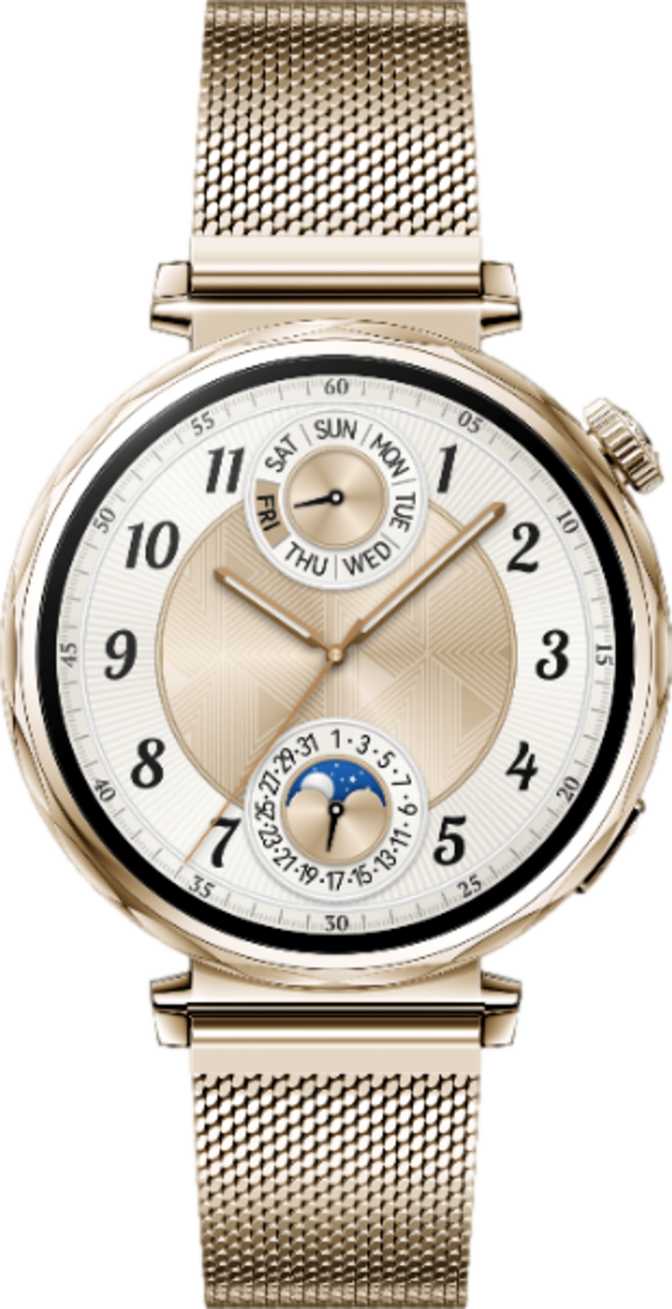
At a Glance
The smartwatch market has a crowding problem. At nearly every price point, you will find devices that either look great but track poorly, or track everything but feel like wearing a hockey puck. The Huawei Watch GT 5 41mm is built around a different premise: that a watch designed for people who care about their wrists — the size of the case, the weight on their arm, the look in a meeting — does not have to compromise on health intelligence to get there.
At 41mm, this is Huawei's smaller-format GT 5. That distinction matters more than it might seem. It targets users with smaller wrists, people who find most smartwatches too conspicuous, and anyone who has ever taken a fitness watch off mid-afternoon because it felt like wearing luggage. Whether Huawei successfully packed enough capability into that compact frame is exactly what this review addresses.
Design and Build: Compact Without Feeling Cheap
Physical experience, display quality, glass durability, and water resistance
Physical Presence on the Wrist
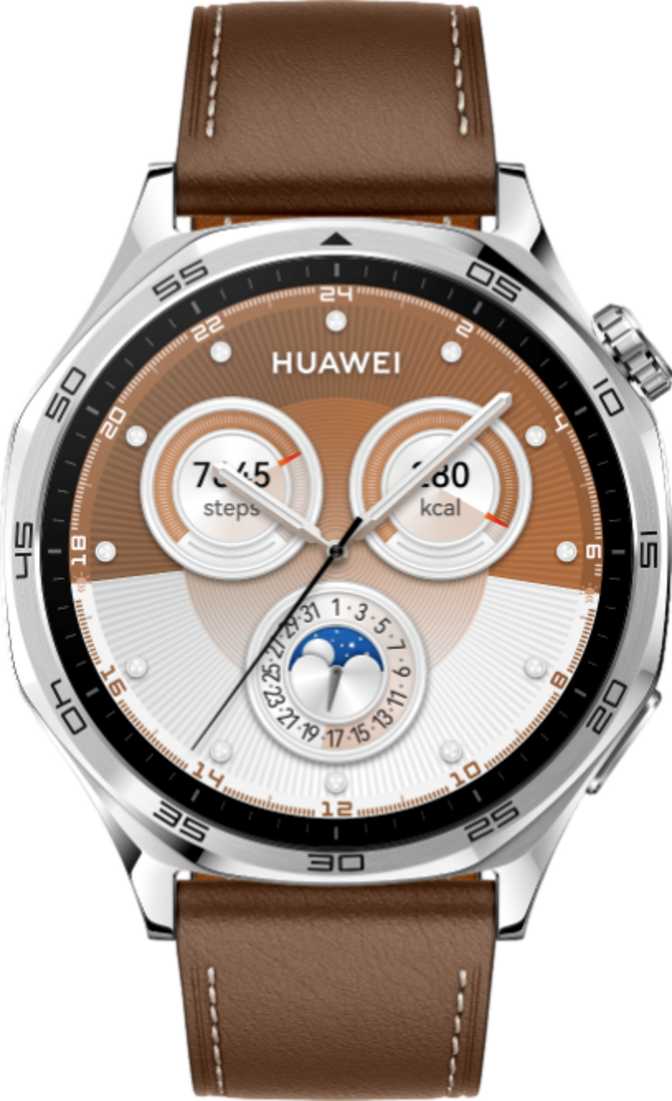
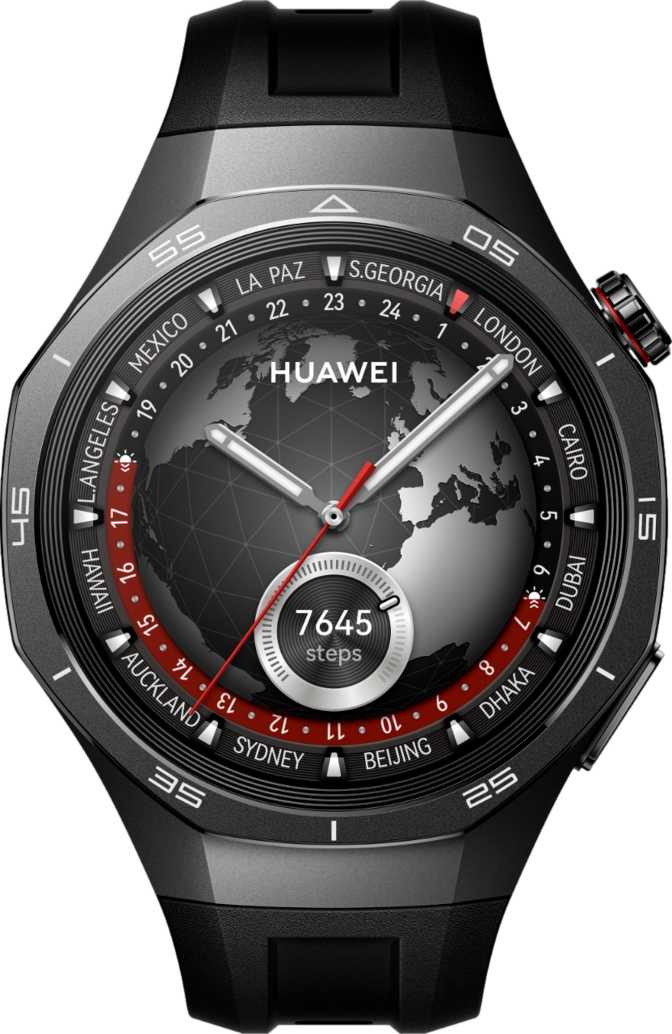
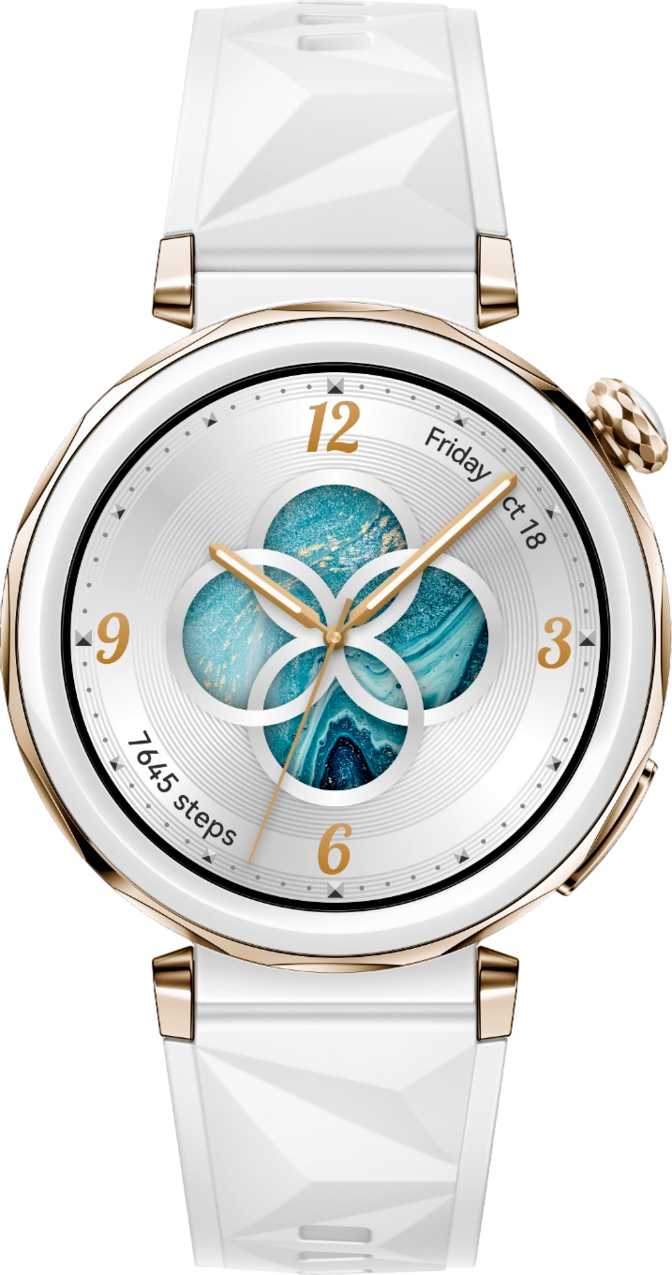
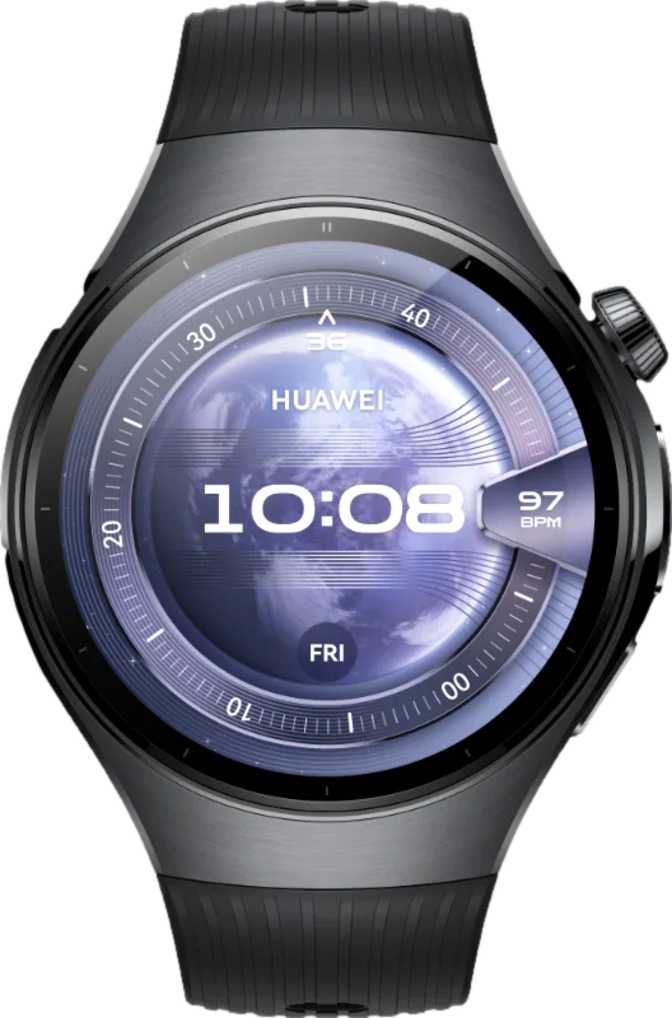
The GT 5 41mm sits closer to traditional watch proportions than most of its smartwatch competitors. The 41.3mm case diameter keeps it appropriate for smaller wrists without looking miniaturized, and at just 9.5mm thick, it slips under a shirt cuff with none of the snagging that plagues chunkier fitness trackers. The weight — roughly equivalent to a mid-size analog watch — means you genuinely stop noticing it is there after the first hour.
This is not a coincidence of engineering. Huawei positioned the GT 5 41mm as a watch you wear all day, every day, including during sleep tracking, without the conscious effort that thicker devices require.
The Display
The 1.32-inch AMOLED screen is the visual centerpiece, and it earns that status. AMOLED (Active Matrix Organic Light Emitting Diode) technology means each pixel generates its own light — blacks are genuinely black, colors are vivid without being oversaturated, and the display remains legible in direct sunlight in a way that LCD-based competitors often struggle with.
The 466 by 466 pixel resolution across that 1.32-inch surface produces a pixel density of 326 pixels per inch — the same threshold Apple used for its original Retina iPhone displays, chosen precisely because the human eye stops distinguishing individual pixels at normal viewing distance. On a wrist display viewed from arm's length, text is sharp and watch faces render cleanly without any visible jaggedness.
The Always-On Display (AOD) mode keeps the time and basic metrics visible without requiring a wrist flick — useful in meetings or during workouts where a natural glance is faster than an intentional gesture. AOD trades some battery capacity for this convenience, which is addressed further in the battery section.
Glass, Durability, and Band Options
On the positive side, the 20mm band is replaceable, which means you are not locked into Huawei's own accessories. Standard 20mm third-party straps work perfectly, opening up a wide market of leather, metal, and silicone options at every price point — a small but significant detail for long-term ownership value.
Water Resistance
The watch carries a 5 ATM rating, tested to 50 meters of water pressure. In practical terms, this covers lap swimming, open-water swimming, showering, rain, and sweat without any concern. It is not rated for scuba diving or high-pressure water activities, but for every water-contact scenario an everyday user encounters, you are fully covered. Put it on and forget about it.
Performance: The Sensor Suite Explained
What every sensor does and what it means for your daily life
Heart Rate & Cardiovascular
The continuous optical heart rate monitor tracks your pulse throughout the day, building a picture of your resting heart rate over days and weeks — a genuinely useful metric for gauging cardiovascular fitness trends and recovery quality between workouts.
Beyond measuring your rate, the watch alerts you when it climbs unusually high or drops unusually low, and flags irregular heart rhythm patterns. It does not include an ECG sensor for clinical-grade rhythm analysis. For users specifically advised by a cardiologist to monitor for AFib via ECG, this watch is not the right tool — but for everyone else, the irregular rhythm warning covers the essential safety use case.
Blood Oxygen & Temperature
The SpO2 sensor (blood oxygen saturation) measures the percentage of oxygen your red blood cells are carrying. Athletes use this to monitor recovery and altitude acclimatization; general users often find it valuable during illness or for deeper sleep quality insights.
The body temperature sensor adds a physiological data layer to general wellness tracking. Its readings also feed directly into the female health features in the companion app, providing sensor-backed grounding that goes beyond calendar-based estimates alone.
GPS and Navigation
Built-in GPS tracks your outdoor routes without needing your phone in your pocket — a genuine convenience for runners and cyclists. The watch also supports the Galileo satellite navigation system alongside standard GPS, improving location accuracy in urban environments where buildings interrupt signals from a single constellation.
The barometer tracks atmospheric pressure for elevation data during hikes and daily stair counts. The compass adds directional reference that GPS alone does not always efficiently provide, rounding out a capable outdoor navigation toolkit for trail walks and off-road sessions.
Motion and Movement Tracking
The accelerometer and gyroscope together map your body's movement in three-dimensional space. This underpins step counting, pace measurement, distance tracking, elevation monitoring, and automatic activity detection — when the watch senses consistent movement, it begins logging that session without any manual input.
One gap worth noting: there is no dedicated cadence sensor. Cadence — stride or pedal rate in cycles per minute — is a metric competitive runners and cyclists track for efficiency. If you train with cadence targets, you will need an external sensor for that specific data point.
Key Features in Real-World Terms
Beyond the spec sheet — what these features actually deliver in daily use
Calls and Notifications on Your Wrist
The built-in microphone lets you answer calls directly from the watch via Bluetooth. When hands are occupied or mid-workout, this is genuinely useful. The single microphone setup produces functional rather than audiophile call quality — adequate for quick conversations, not a replacement for a dedicated speakerphone.
Notification mirroring works across both Android and iOS. The experience is most cohesive with Android, but core notification and health tracking functions work correctly with iPhone too. iOS users should expect reduced depth, particularly around health data sharing with Apple's native apps.
Female Health Tracking
The Huawei Health app offers a notably thorough set of cycle-related features: period notifications, fertile window display, ovulation prediction, and cycle start date prediction. These go meaningfully beyond calendar estimates because the body temperature sensor adds real physiological grounding to the analysis.
This is one of the stronger implementations of female health tracking available in this watch category — not just checkbox features, but a genuinely interconnected system between sensor hardware and app analysis.
NFC and Connectivity
NFC support opens the door to contactless payments through Huawei Pay where infrastructure is available. Payment functionality varies by region and financial institution, so verifying compatibility with your specific bank before purchase is worthwhile — regional availability varies more than the hardware spec implies.
Bluetooth 5.2 handles the phone connection, while Wi-Fi 4 (802.11n) is primarily used for syncing data and receiving firmware updates. Streaming audio directly from the watch is not the intended use case for either connection type.
Voice Commands and Camera Remote
Voice command support lets you interact with the watch without touching it — useful mid-run when starting or stopping a session, or when your hands are wet from swimming. You do not have to interrupt your activity to manage basic watch functions.
The camera remote triggers your phone's shutter from a distance. This is a quietly practical feature for solo travelers or anyone shooting self-portraits who wants the flexibility of a remote shutter built directly into the watch rather than carried as a separate accessory.
Battery Life: What Four Days Actually Means
Charging habits, realistic expectations, and how it compares to the competition
- Wireless magnetic charging
- No charging port to corrode
- Always-On Display capable
- AOD shortens battery life
- Continuous GPS reduces endurance
- No solar charging option
- Battery is sealed, non-removable
The GT 5 41mm is rated for approximately four days of battery life under typical use conditions. This positions it interestingly — long enough that charging every night feels unnecessary, but short enough that a single weekly charge will not quite cover you. In practice, most users settle into a natural rhythm of charging every three to four days, placing it on the magnetic cradle during a work session or evening wind-down.
With Always-On Display activated, expect the lower end of that range. With AOD off and GPS use limited to occasional outdoor workouts rather than continuous tracking, the upper end becomes reliably achievable.
Charging is wireless through a magnetic cradle — quick to snap on, with no exposed port to corrode over time. There is no solar charging option, and the battery is sealed into the case. Both are standard constraints for a watch of this form factor.
Software and App Ecosystem
What you can track, how it is presented, and what it actually costs you
Huawei Health: A Genuine Strength
The companion app is free and ad-free — a distinction that sounds minor until you have experienced competitors that gate basic features behind monthly subscriptions or interrupt your sleep report with banner advertisements. Everything the watch tracks is fully accessible without a paywall of any kind.
The app includes coaching features, exercise diaries, goal setting, and achievements — the motivational scaffolding that turns raw data into behavioral change. Route tracking and map integration mean outdoor sessions are visually replayed as mapped paths, not just summarized as a distance number. Live tracking lets a family member or training partner follow your real-time location during a workout.
What the App Tracks
- Calorie intake logging
- Water consumption
- Weight and BMI
- Detailed sleep reports
- Body temperature trends
- Smart scale compatibility
- Female cycle & fertility
- Voice workout feedback
- Music playback control
- Route and map history
- Live tracking sharing
- Widgets and custom faces
Platform Compatibility
| Platform | Status | Notes |
|---|---|---|
| Android | Full | Best overall experience |
| iOS | Partial | Reduced integration |
| Windows | None | Phone sync only |
| macOS | None | Phone sync only |
Smartwatches sync with phones, not computers — this is standard across the entire wearables category.
Who Is the Huawei Watch GT 5 41mm For?
Match the watch to your actual needs before you buy
Best Suited For
- Smaller wrists, any gender — The 41mm case and 35g weight are genuinely comfortable where most 44–45mm smartwatches simply overwhelm.
- Style-conscious everyday users — The 9.5mm slim profile does not announce itself as a tech device in professional or social settings.
- Health-aware individuals — Heart rate, SpO2, temperature, sleep, and cycle tracking cover all the proactive wellness needs of a non-clinical user.
- Runners and casual cyclists — Built-in GPS, pace measurement, elevation tracking, and automatic workout detection serve these users thoroughly.
- Android users in Huawei's ecosystem — The most cohesive experience lives here, where integration runs deepest.
- Women tracking reproductive health — One of the more thoughtful, sensor-backed cycle tracking implementations in this price tier.
Not the Right Fit For
- Clinical cardiac monitoring needs — No ECG means it cannot produce the rhythm data a doctor can definitively act on for conditions like AFib.
- Competitive multi-sport athletes — No multi-sport mode and no cadence sensor limit depth for triathletes and data-driven cyclists.
- Divers and extreme water sports — The 5 ATM rating covers swimming but is not cleared for scuba or high-pressure water impact activities.
- Deep iPhone ecosystem users — Apple Watch integrates far more thoroughly with iPhone than any third-party watch can match.
- Users needing weeks of battery — Long expeditions or a firm weekly-charge preference are better served by dedicated GPS outdoor watches with simpler displays.
Competitive Positioning
How the GT 5 41mm stacks up against two logical alternatives at similar form factors
To understand where the Huawei Watch GT 5 41mm sits in the market, it helps to place it alongside two devices buyers commonly weigh it against: Apple's entry-level Watch SE at a comparable size, and Garmin's sports-focused Forerunner 265S, which targets similar wrist sizes from a different direction entirely.
| Feature | Huawei Watch GT 5 41mm | Apple Watch SE 40mm | Garmin Forerunner 265S |
|---|---|---|---|
| Display | AMOLED, 326ppi | LTPO OLED | AMOLED |
| Battery Duration | ~4 Days | ~18 Hours | ~13 Days (GPS off) |
| Always-On Display | Yes | Yes (Series 9+) | Yes |
| ECG | No | No (SE model) | No |
| Cellular Option | No | Yes (added cost) | No |
| iOS Deep Integration | Partial | Full | Partial |
| Female Health Features | Yes | Yes | Yes |
| Cadence Sensor | No | No | Yes |
| Approximate Weight | 35g (with band) | ~26g (case only) | ~39g |
| Warranty | 1 Year | 1 Year | 1 Year |
The Apple Watch SE undercuts the GT 5 41mm on case weight and offers fuller iPhone integration, but its battery life requires daily charging — a meaningful lifestyle trade-off, particularly for sleep tracking. Garmin's sports-focused alternative delivers longer battery and deeper athletic metrics, but at a higher price point and in a design that is openly sporty rather than everyday-versatile. The GT 5 41mm occupies the middle: a wearable everyday device with thorough health tracking and multi-day battery, without the athletic specialization of Garmin or the platform lock-in of Apple.
Honest Assessment
The real strengths, the genuine limitations, and why both matter
What This Watch Gets Right
The GT 5 41mm gets several things right that are easy to underappreciate until you have lived with a worse alternative. The display is excellent — sharp, vivid, and legible in conditions where many AMOLED wearables wash out at the wrong angle. The weight and thickness create the kind of comfort where you genuinely forget you are wearing a sensor-packed computer on your wrist, which is the precondition for sleep tracking and continuous heart rate monitoring to actually deliver useful long-term data.
The Huawei Health app is a legitimate highlight: comprehensive, free, ad-free, and organized without being overwhelming. Competitors in this space routinely use the app as a second revenue stream. Huawei has not, and that restraint is noticed and appreciated.
Where It Falls Short
The absence of ECG and fall detection are real gaps if those features are on your checklist. Neither omission is unusual for a watch in this price tier and form factor, but both are available on some competitors, and buyers who specifically need them should factor that in before committing. The lack of multi-sport mode is a more surprising omission given the sensor suite — structured logging for athletes switching between disciplines would have cost little to add.
The glass protection situation is worth acknowledging without overstating. No Gorilla Glass or sapphire crystal means the display is more susceptible to surface scratching than premium alternatives. A screen protector film addresses this for minimal cost, but it should not be a surprise after purchase.
iOS users should calibrate their expectations carefully. The watch is compatible with iPhone, but compatibility is not the same as integration. The experience is functional, not native.
A slim, well-built everyday smartwatch with a genuinely impressive display, thorough health intelligence, multi-day battery, and a free, capable companion app. The gaps are specific and knowable — if they do not apply to your use case, this is a confident buy.
Frequently Asked Questions
Real questions buyers ask before purchasing — answered directly