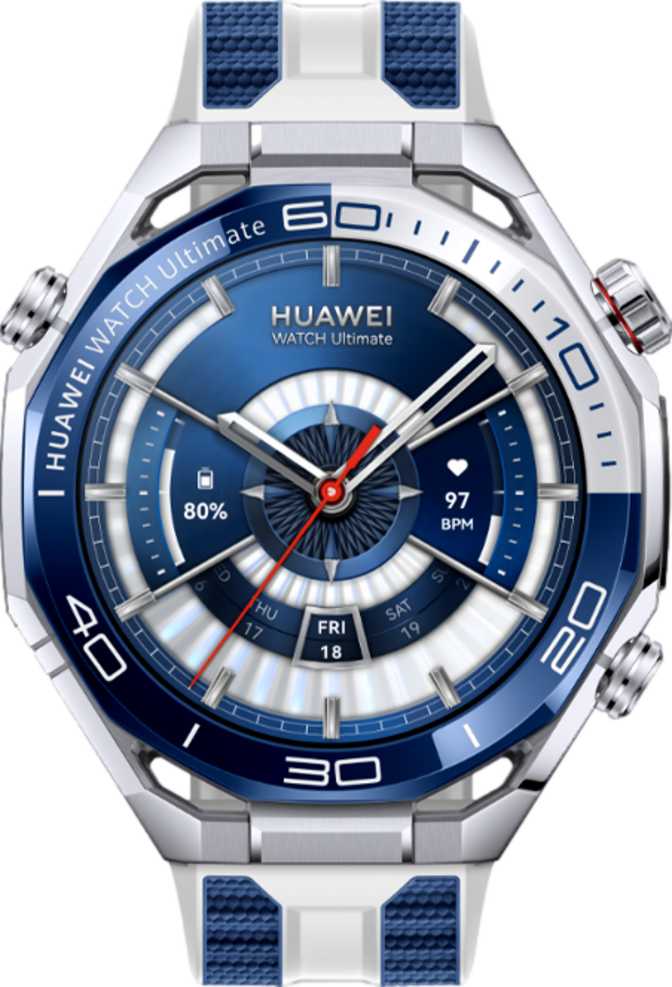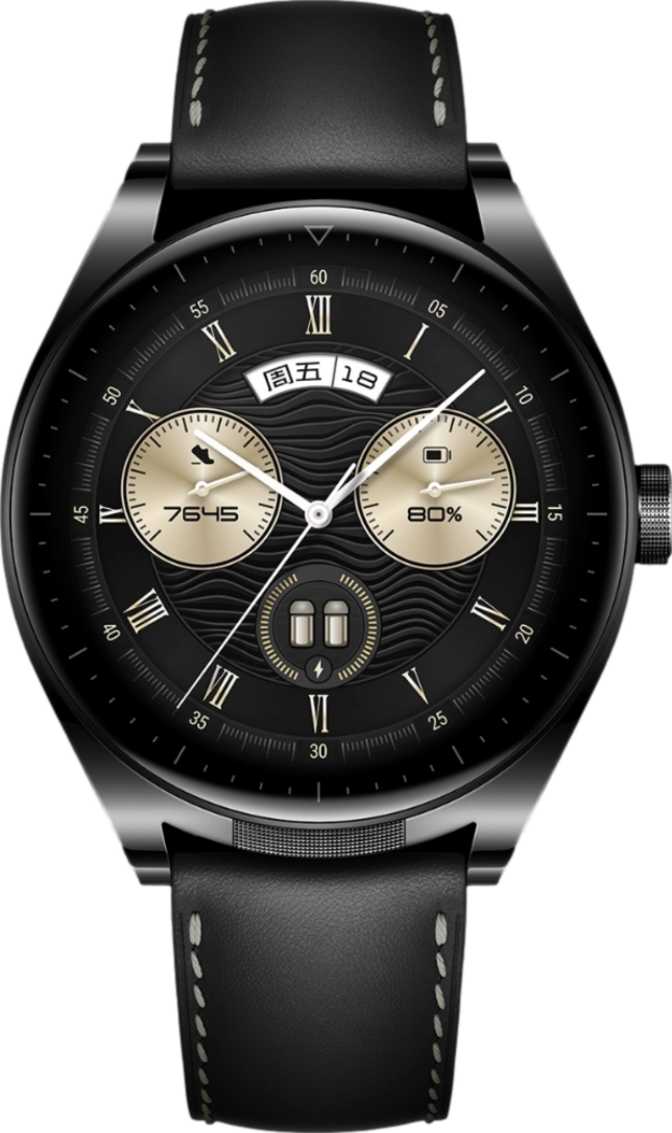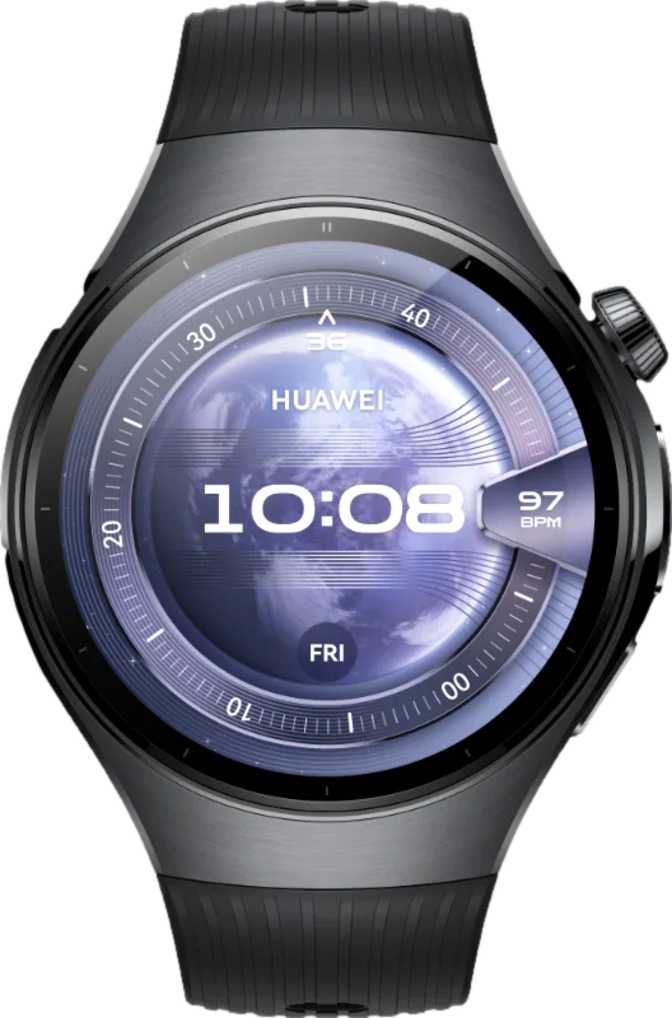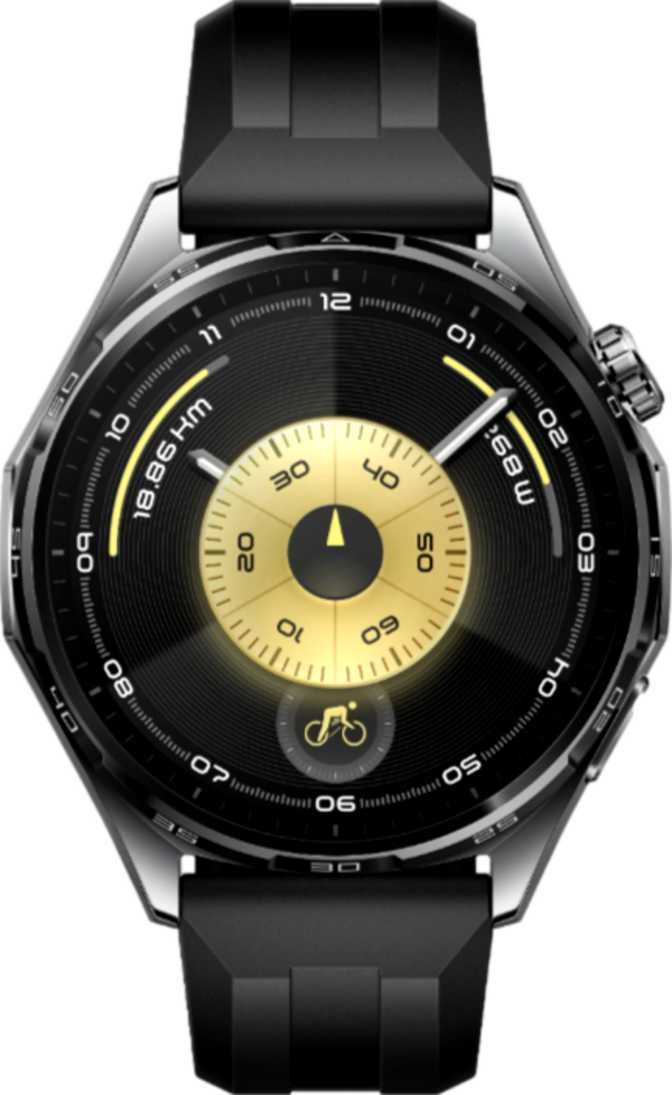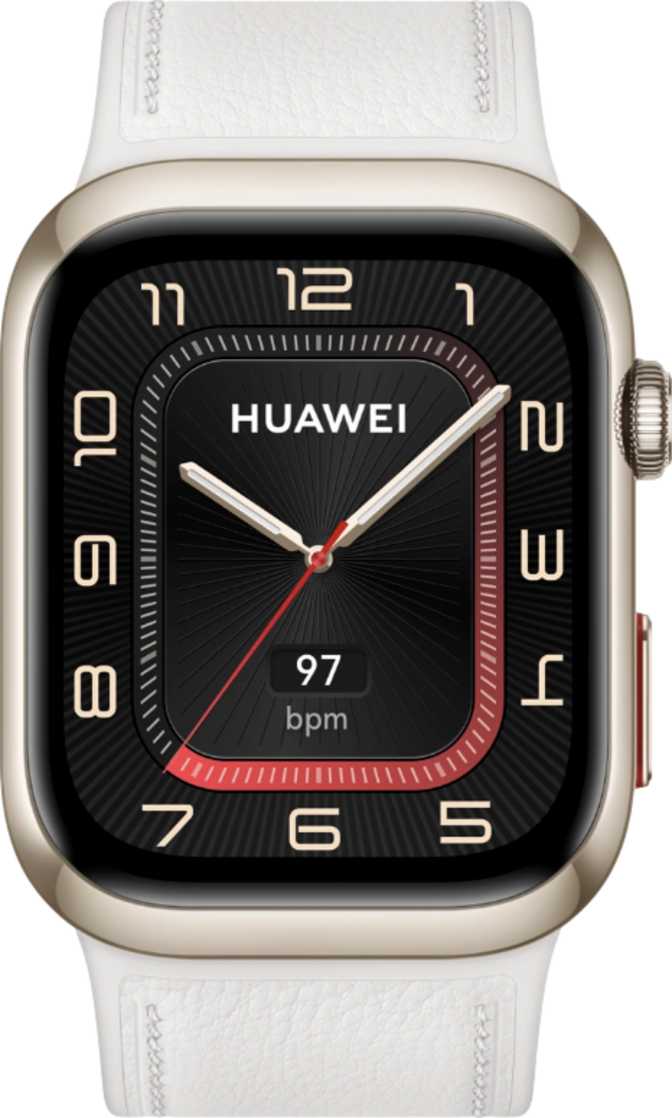
Most smartwatches market themselves as health devices. The Huawei Watch D2 actually behaves like one. Where the majority of wearables treat heart rate data as a background metric, the Watch D2 treats cardiovascular monitoring as its primary function — with every other capability built around that foundation. Understanding that distinction changes how you evaluate everything else about it: the feature gaps that frustrate the wrong buyer are deliberate choices that serve the right one.
Huawei Watch D2 — Quick Reference
| Display | 1.82" OLED with Always-On mode — vivid and continuously readable |
|---|---|
| Case & Weight | Substantial wrist presence; light enough to forget during daily wear |
| Water Resistance | IP68 — rated for sustained immersion; suits swimming and daily exposure |
| Battery Endurance | Up to 6 days — a full work week without reaching for the charger |
| Charging | Wireless — approximately 2 hours from empty to full |
| Core Health Sensors | ECG, SpO2, HRV, body temperature, barometer, VO2 Max |
| Connectivity | Bluetooth 5.2 + NFC |
| Phone Compatibility | iOS and Android — full feature access on both platforms |
| Standalone LTE | Not available — phone connection required |
| Temperature Floor | Not rated below 5°C (41°F) |
| Warranty | 1 year standard |
Build and Design: Purposeful Over Fashionable
The Watch D2 makes no effort to look minimal. It is a substantial presence on the wrist — tall enough to catch the eye and deep enough to house an impressive stack of sensors beneath the case. Despite this, it stays light in a way that surprises first-time wearers; the weight is well distributed and most people stop noticing it within a day or two of continuous wear.
Replaceable Band
The 26.5 mm band is fully swappable, letting you change materials between workouts and everyday wear. This width sits outside the 20–22 mm universal aftermarket ecosystem, which limits third-party strap options compared to more standardly sized competitors.
IP68 Water Resistance
Daily sweat, handwashing, pool swims, and caught-in-the-rain scenarios are all handled without a second thought. IP68 is functional protection in an everyday sense — not a marketing qualifier with hidden conditions attached.
Cold-Weather Limit
The Watch D2 is not rated for use below 5°C (41°F). For winter runners, skiers, or anyone who works outdoors in genuine cold, this is a concrete hardware limitation — not fine print to overlook.
Display Glass: Standard — Not Reinforced
The Watch D2 uses standard glass rather than sapphire crystal or a hardened branded coating. Day-to-day bumps against desks and doorframes are unlikely to leave marks, but impact against rough or abrasive surfaces is a real risk. A basic screen protector costs very little and changes the equation dramatically — worth fitting from day one.
The Display: Vivid, Sharp, and Always Present
The 1.82-inch OLED panel delivers the contrast and color saturation that health data presentation benefits from directly. OLED's ability to produce absolute blacks makes data-dense watch faces genuinely easier to parse at a glance — you are not straining to separate text from a washed-out grey background. That alone is a meaningful advantage over LCD-based health wearables.
Pixel Clarity
Pixel density sits high enough that text appears crisp at conversational viewing distances and icons render with real detail rather than visible stepping. This matters more than many buyers anticipate: a health monitor you have to squint at is one you stop consulting.
Always-On Display
AOD keeps the watch face visible without requiring a wrist-raise gesture — useful when checking heart rate mid-conversation or glancing at the time without deliberate motion. It draws additional power, so treat it as a situational toggle rather than a permanent default if battery longevity is a priority.
Health Monitoring: The Watch D2’s Defining Capability
This is where the Huawei Watch D2 separates itself from the field. The sensor suite goes significantly deeper than what consumer wearables typically offer, and several sensors work in concert to build a longitudinal picture of cardiovascular and physiological health that few devices at this price can approach.
ECG: Wrist-Based Cardiac Screening
The electrocardiogram feature captures the electrical patterns of each heartbeat, producing a waveform that can reveal rhythm irregularities — most critically atrial fibrillation, a condition that substantially elevates stroke risk and often produces no obvious symptoms until serious complications arise.
Having on-demand ECG at your wrist means cardiac episodes that would otherwise go undocumented can be recorded and shared with a physician. The Watch D2’s ECG is a screening tool, not a clinical diagnostic device — but it captures medically relevant data that a doctor can act on, and that is a meaningful capability for health-conscious adults.
Blood Oxygen, Temperature & Pressure
The SpO2 sensor tracks blood oxygen saturation — relevant for respiratory health, altitude acclimatization, and overnight monitoring for patterns consistent with sleep-disordered breathing. The body temperature sensor tracks thermal shifts continuously, surfacing early signs of illness or hormonal change before they become subjectively noticeable.
A barometric pressure sensor adds environmental context to the physiological picture. The watch is aware of both what your body is doing and what the atmosphere around you is doing — a layer of contextual data that separates a health monitor from a fitness tracker dressed up in health language.
Heart Rate Intelligence
-
HRV Tracking
Heart rate variability measures millisecond variation between beats — a well-researched indicator of nervous system recovery, stress load, and overall physiological resilience. Athletes use it to time hard sessions; everyone else can use it to understand what their body is actually feeling versus what they think it is. -
VO2 Max Estimation
Derived from the relationship between heart rate and movement during activity. As a longitudinal trend — improving, plateauing, or declining — it is a legitimate cardiovascular fitness indicator that becomes more meaningful as the watch accumulates weeks of data. -
Fast & Slow HR Alerts
Passive cardiovascular safety monitoring: the watch flags heart rate climbing unusually high at rest or behaving unexpectedly during activity — proactive awareness rather than a reactive response.
Daily Readiness Scoring
By synthesizing overnight sleep quality data, HRV trends, and heart rate recovery patterns, the Watch D2 produces a readiness score each morning — an aggregated answer to the question every active person faces: how hard should I work today?
This type of intelligent output was once available only through expensive specialist sports science platforms. On the Watch D2 it arrives as a standard daily feature, building a picture of your physiological state that becomes more accurate and actionable as the watch collects more data over time.
Activity Tracking: Functional, With Acknowledged Gaps
Step counting, distance measurement, pace tracking, and GPS route recording all work reliably. Built-in satellite positioning captures outdoor routes without requiring your phone. Auto activity detection recognizes workout sessions without manual start, exercise tagging lets you categorize them, and food, calorie, and water intake tracking feed a complete daily health picture. What is tracked works well. What is absent matters for specific buyers.
What It Tracks
- Steps and daily movement
- Distance and pace
- GPS route mapping — built-in, no phone required
- Automatic activity detection
- Exercise tagging and diary
- Calories burned
- Food and calorie intake logging
- Water intake tracking
- Auto-pause during workouts
- Sleep tracking with detailed reports
Notable Gaps
-
No Multi-Sport Mode
Athletes rotating between swimming, cycling, running, and strength training will find no dedicated sport profiles with discipline-specific metrics. This is the most significant gap for fitness-focused buyers. -
No Elevation Tracking
Cumulative ascent and descent are not reported despite a barometric sensor being present. Hikers and trail runners lose a data point that most outdoor wearables now consider standard. -
No Cadence Measurement
Running stride cadence and cycling pedal cadence are not tracked. Users who depend on these metrics for performance tuning will need supplementary devices.
These are deliberate design choices, not manufacturing compromises. The Watch D2 is a health monitor first. Buyers who understand that positioning will not experience these gaps as disappointments — they simply indicate this watch is not built for their use case.
Battery Life: A Week of Continuous Monitoring
Six days on a charge shifts how you interact with a health wearable. You do not need to decide between charging overnight and capturing your sleep data. You do not need to plan daily charging windows around your schedule. The Watch D2 handles a full work week — with continuous health monitoring and overnight sleep tracking running throughout — before the charger enters the equation.
Wireless Charging
No pin alignment or magnetic fumbling. Place the watch on its charging pad and walk away. A full charge takes approximately two hours — fast enough that charging while you shower and get ready can add meaningful runtime as a quick top-up on busy mornings.
Real-World Expectations
Always-On Display and extended GPS sessions will trim the six-day headline toward four to five days under heavy use. For most daily patterns — occasional outdoor tracking, continuous health monitoring, AOD used situationally — the upper range is achievable and consistent.
Smart Features and Daily Utility
Call Management
Answer and manage incoming calls from your wrist using the built-in microphone. Functional audio quality in quiet environments. Voice commands add hands-free control of basic watch functions during workouts.
NFC Payments
Contactless payment via Huawei Pay where regionally supported. Leave the wallet behind for everyday purchases — the kind of small, frictionless freedom a health wearable should enable.
Notifications
Full wrist notification delivery for messages, calendar, and apps. Silent and vibrating alarms provide discreet reminders. A phone-finding feature triggers your paired device to announce itself audibly.
Camera Remote
Trigger your phone’s camera shutter from the watch — a practical feature for solo shots or group photos where distance from the device is needed.
Phone Dependency: The Key Connectivity Trade-Off
Bluetooth 5.2 connects the watch to your phone with stable, energy-efficient performance. There is no standalone cellular module — the Watch D2 requires an active phone connection for calls, data syncing, and live notifications. What it does offer is cross-platform flexibility that many health-focused competitors don’t: full feature access on both iOS and Android, regardless of which ecosystem you are committed to.
The Companion App: Health Data Made Actionable
Huawei Health is available on both iOS and Android at no cost and without advertising. The interface is clean and purposeful — raw sensor data is translated into readable insight without friction. The feature breadth is wider than most buyers expect from a first-party health app.
- Detailed activity reports and exercise diary
- Sleep analysis with nightly reports and goal setting
- Route visualization and live location sharing
- Food, calorie, and water intake tracking
- Body composition: BMI and weight trend tracking
- Temperature tracking integrated with body data
- Coaching guidance and voice workout feedback
- Music playback control from the wrist
- Smart scale pairing and external HR monitor support
- Customizable widgets and watch face personalization
- Achievement milestones and inactivity alerts
- Passcode security and battery level indicator
Women’s Health: A Complete Suite
Cycle tracking, fertile window estimation, ovulation prediction, and period notifications are handled as a complete integrated system — informed by the watch’s continuous body temperature data. This is substantive menstrual health monitoring, not a token category added for product completeness.
No subscription. No ads. The complete Huawei Health feature set is available at no ongoing cost, and the app runs without advertising interrupting the interface. This is a full-featured wellness platform, not a basic companion app paywalling the useful parts.
Who Should Buy This — and Who Should Look Elsewhere
The Watch D2’s design philosophy makes the buyer-fit question unusually direct. Rather than attempting to serve every smartwatch buyer, it commits to a specific user — and that commitment pays off for the right person while creating real friction for the wrong one.
Strong Fit
- Adults prioritizing cardiovascular health monitoring as the main reason for wearing a smartwatch
- Anyone under medical supervision for heart rhythm, respiratory, or general cardiovascular health
- Users who want clinical health data depth without clinical inconvenience or appointment dependency
- iOS and Android users alike — both platforms receive full feature access
- Anyone for whom the daily charging routine of a wearable is friction they want removed
Look Elsewhere If…
- Multi-sport profiles and discipline-specific performance metrics are what you actually need
- Your regular activities take place in temperatures below 5°C (41°F)
- Cellular independence from your phone during workouts is non-negotiable
- A broad third-party app ecosystem is central to how you use a smartwatch
- Sapphire or hardened glass display protection is a standard expectation at this price
How the Watch D2 Stacks Up Against Alternatives
The Watch D2 occupies a specific niche: clinical-minded health monitoring in a consumer wearable body, priced between general-purpose smartwatches and dedicated medical devices. Understanding what alternatives offer in each direction clarifies the decision.
| Feature Area | Huawei Watch D2 | General Smartwatches | Garmin Health Range | Specialist Medical |
|---|---|---|---|---|
| ECG Monitoring | Varies by model | Limited selection | ||
| HRV & Recovery | Moderate | Moderate | ||
| Multi-Sport Modes | Limited | Limited | ||
| Battery Life | ~6 days | 1–3 days | 7–14 days | Varies |
| iOS & Android | Often platform-specific | Often limited | ||
| Standalone LTE | Available on some | Available on some | ||
| Subscription-Free App | Varies | Varies | Often gated |
The combination that is genuinely hard to find elsewhere at this price tier: ECG + HRV + SpO2 + body temperature + barometric context + six-day battery + cross-platform support, all in one device. No single alternative checks every one of those simultaneously.
An Honest Assessment: What Works and What Doesn’t
What Works
The health monitoring suite is the Watch D2’s clearest strength and it is not close. ECG, HRV, blood oxygen, body temperature, and barometric context working together provides a cardiovascular and physiological picture that most wearables at this price simply do not offer. For health-focused buyers, this depth is rare and it shows in daily use.
The six-day battery is a practical strength that compounds subtly over time. Continuous health monitoring only delivers value when the watch is actually being worn — and the endurance figure removes the charging calculation from daily decisions entirely.
Cross-platform compatibility — full feature support on both iOS and Android — is an underrated advantage. Wireless charging keeps the experience frictionless. The companion app delivers substantive value at no ongoing cost.
What Doesn’t
The absence of multi-sport mode is a significant gap that the right buyer will never notice and the wrong buyer will feel immediately. This is not a design failure — it is a commitment to a specific audience. But it is material enough to state plainly.
Standard display glass instead of hardened protection is a vulnerability. A screen protector mitigates the risk at minimal cost, but its absence is a trade-off that premium devices at this price do not always ask buyers to accept.
The 5°C temperature floor is a hard constraint for cold-climate users. No cellular means permanent phone dependency. A one-year warranty is standard for the category but not generous for a daily-wear health device. None of these are fatal for the right buyer — but each is worth naming directly.
Common Questions Before You Buy
A Health Monitor Worth the Trade-Offs
The Huawei Watch D2 is a specialist device that knows what it is, delivers on what it promises, and does not apologize for what it is not.
Buy It If…
- Cardiovascular health monitoring is your primary purpose
- ECG and HRV data matter to you or your physician
- Six-day battery and wireless charging convenience matter
- You use iOS or Android — both work fully
- A free, ad-free companion app matters to you
Skip It If…
- Multi-sport tracking and performance metrics are the priority
- You regularly train in sub-5°C / sub-41°F conditions
- Cellular independence from your phone is non-negotiable
- A broad third-party app ecosystem is essential
- Hardened or sapphire glass is a standard expectation
For health-conscious adults — particularly those managing cardiovascular risk factors, tracking recovery from illness or exertion, or simply wanting a more informed daily picture of their physiological state — the Watch D2 delivers where many competitors only claim to. It occupies its lane with clear intent and earns a confident recommendation within it.