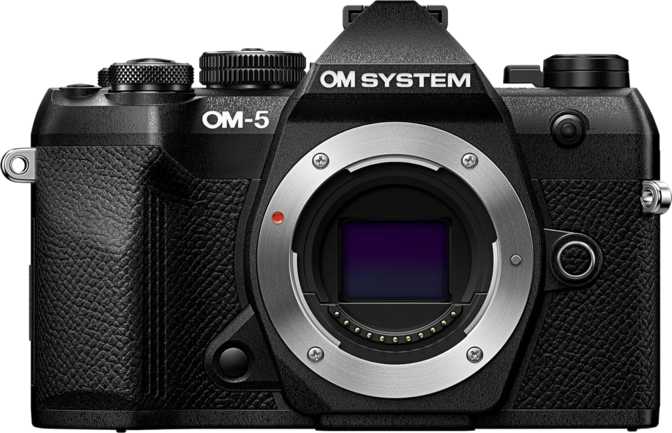
OM System OM-5 Mark II: An Honest Review for Outdoor Photographers
CamerasAt a Glance
Core performance indicators for the OM System OM-5 Mark II
20.4 MP
BSI Live MOS Sensor
7.5 Stops
In-Body Stabilization
IP53
Weather Sealed
-10°C
Cold-Weather Rated
418 g
Body-Only Weight
4K / 30fps
Video with 24p Cinema Mode
10 fps
Mechanical Burst Rate
~310 Shots
CIPA Battery Rating
Where the OM-5 Mark II Fits in Today's Camera Market
The mirrorless camera space is crowded with choices that promise everything to everyone. The OM System OM-5 Mark II takes a different approach — it makes a specific, deliberate promise: give serious photographers a genuinely compact, weather-hardened body that punches above its physical size in image quality and stability. This is not a camera trying to compete with full-frame giants on resolution or low-light supremacy. It is a camera built for people who go places — trails, coastlines, markets, storm fronts — and need a system that keeps up without weighing them down.
Whether you are a hiker who also happens to be a photography obsessive, a travel photographer who is tired of checking bags, or a working photographer who needs a reliable weather-sealed backup body, the OM-5 Mark II deserves serious consideration. The question is whether the trade-offs that come with the Micro Four Thirds format are ones you can live with — and that answer depends entirely on how you shoot.
Design and Build Quality: Small Body, Serious Construction
Physical Footprint
The OM-5 Mark II is built around a compact chassis measuring roughly 125mm wide, 85mm tall, and 52mm deep. At 418 grams body-only, it sits comfortably in a range where you can carry it all day on a shoulder strap without fatigue, yet it still feels like a real camera in your hand — not a toy. The grip has genuine depth to it, which matters when shooting one-handed or balancing a longer lens.
This is meaningfully smaller and lighter than most APS-C mirrorless cameras, and dramatically more portable than any full-frame option. When you factor in that Micro Four Thirds lenses are also physically smaller than their larger-format equivalents, the total system weight advantage compounds quickly.
Weather Sealing: What IP53 Actually Means
Water Resistance — Rating "5"
Protection against water projected from any direction, including sustained rain and splashing. Designed for genuine outdoor use in real weather conditions — not just laboratory testing.
Dust Resistance — Rating "3"
Moderate protection against dust particles. Suitable for sandy trails, dusty markets, and windy outdoor environments, though not sealed to a fully industrial standard.
Operates Down to -10°C (14°F)
Genuine cold-weather capability for alpine winters, ski slopes, and early-morning wildlife sessions where temperatures drop well below freezing. Most competing cameras at this price tier do not specify a cold-weather operating limit at all — this one does, and that matters.
This level of environmental protection at this price point and physical size is genuinely uncommon. Many cameras offer "weather resistance" as a vague marketing claim; the specific IP rating here gives that claim a testable, verifiable meaning.
Viewfinder and Screen
The electronic viewfinder delivers a crisp, detailed preview with 100% frame coverage — meaning what you see in the finder is exactly what the sensor captures, with no surprises at the edges. The viewfinder resolution is high enough that composing and checking critical focus through the eyepiece feels natural rather than like squinting through frosted glass.
The rear screen is a fully articulating flip-out design — not the more common tilting variety. This matters more than many buyers initially realize. A flip-out screen allows genuinely low-angle shooting with the camera flat on the ground, overhead shooting above crowds, and comfortable waist-level composition. For video creators, it enables self-monitoring without an external monitor. The screen supports full touch operation, including touch-to-focus and touch shutter.
There is no built-in pop-up flash, and the hot shoe is a standard accessory mount rather than an advanced proprietary connector. If you regularly rely on in-camera fill flash, you will need to factor in the cost and bulk of an external flash unit.
Sensor and Image Quality: What 20 Megapixels on MFT Delivers
Understanding the Sensor Format
The Micro Four Thirds sensor is physically smaller than APS-C and considerably smaller than full-frame. This is the central trade-off of the OM-5 Mark II system, and it is worth addressing directly rather than glossing over it.
The sensor captures around 20 megapixels of resolution — enough for large prints up to A2 size and beyond, for heavy cropping in post-production, and more than sufficient for web, social, or editorial use. For most real-world photography, 20 megapixels is not a constraint. The sensor uses a back-side illuminated architecture, which positions the light-gathering circuitry to maximize how efficiently each pixel captures photons. This design improves performance in challenging light compared to older front-illuminated designs, partially offsetting the physical size disadvantage relative to larger formats.
Low-Light Performance and ISO Range
The native maximum ISO provides solid, well-managed image quality through moderate sensitivity levels. The TruePic IX processor handles noise reduction competently, and RAW files at base and moderate ISOs have good latitude in post-processing. At expanded sensitivity settings, noise becomes a visible factor — those upper limits are available for emergencies, not routine shooting.
Honest Format Limitation
Photographers who regularly shoot in very dark environments — nightclub interiors, dimly lit events, unlit indoor venues — will find the system working harder than a full-frame equivalent. The extraordinary in-body stabilization partially compensates by enabling longer handheld exposures on stationary subjects, but it cannot help with fast-moving subjects in the dark.
Pixel Shift: Extracting Maximum Detail
For subjects that hold perfectly still — architecture, landscapes, still life, product photography — the pixel shift feature allows the camera to capture and composite multiple exposures into a single image with substantially higher effective resolution than the native sensor provides. This is not a gimmick. It is a legitimate technique for extracting the maximum possible detail from the sensor, and the TruePic IX processor handles the computation in-body. If you shoot in controlled environments and want the highest possible image quality the system can produce, this feature delivers real, measurable results.
In-Body Stabilization: The OM-5 Mark II's Most Distinctive Capability
If there is one specification that defines the OM-5 Mark II's identity, it is the 7.5-stop in-body image stabilization, verified against the CIPA standard — the photography industry's standardized measurement for stabilization performance. This is a class-leading figure at the OM-5 Mark II's price point, and it fundamentally changes the practical envelope of what the camera can achieve in real-world shooting conditions.
To give this number meaning: a photographer who could previously handhold shots at 1/60th of a second could theoretically maintain sharpness at exposures more than 180 times longer — approaching two full seconds in ideal conditions. In practice, real-world performance in the five to six stop range is consistently achievable. That translates directly to sharp handheld shots in dim cafés, museum interiors, and forests at dusk — situations where most cameras demand a tripod.
The system supports combined stabilization, pairing the in-body mechanism with optically stabilized lenses from the OM System and Panasonic ecosystem for even greater effectiveness when using compatible glass. During video recording, the same mechanism keeps handheld footage dramatically smoother. This is the feature that makes the format's lower-light ceiling far more forgiving than the raw sensitivity numbers suggest.
Autofocus and Continuous Shooting
Focus System
The autofocus system operates across 121 dedicated focus points, covering a meaningful portion of the frame. Subject tracking is supported, meaning the camera will lock onto and follow a moving subject as you reframe or as the subject moves through the scene. Touch autofocus lets you tap any area of the flip-out screen to direct focus instantly — a workflow many photographers find faster and more intuitive than joystick navigation, especially for off-center subjects.
The focus system performs reliably in good light and holds up reasonably well in moderate low light. For fast, erratic subjects in very low-light conditions — indoor sports, concerts, fast-moving wildlife after dark — performance will reflect the light limitations of the smaller sensor format.
Burst Speed and Action Photography
Ten frames per second with the mechanical shutter is a competitive burst rate for this price tier. Combined with subject tracking, this gives the camera genuine capability for wildlife, sports, and any situation requiring rapid consecutive capture. The electronic shutter extends the speed ceiling significantly further, enabling the freezing of extremely fast motion or shooting in very bright conditions without neutral density filtration.
Electronic Shutter Note
At very high electronic shutter speeds in scenes with artificial lighting, some risk of banding artifacts exists. This is a characteristic of most electronic shutter implementations — not unique to this camera — but worth knowing if you shoot frequently under fluorescent or LED sources.
Video Capabilities: Capable but Not the Main Event
The OM-5 Mark II shoots 4K video at up to 30 frames per second, with 24 frames per second — a cinema frame rate — also available for a more filmic look. Continuous autofocus operates during video recording, keeping moving subjects in focus without manual intervention.
Built-In Stereo Microphone
Two-channel audio capture for vlogging, documentary work, and casual video without any accessories.
External Microphone Input
Dedicated input for connecting a higher-quality external microphone when audio quality is a priority.
24p Cinema Mode
Standard cinematic frame rate for a natural, film-like motion cadence in video projects.
Built-In Timelapse
Intervalometer handled in-camera without any external remote or accessory required.
No Headphone Jack
Real-time audio monitoring while recording is not possible — a meaningful gap for semi-professional and professional video work.
No Live Streaming Support
First-party live streaming is absent. Content creators who stream directly from the camera will need to seek alternative solutions.
Not a Video-Primary Camera
The camera does not compete on dynamic range, codec flexibility, or professional audio integration with video-optimized bodies.
The overall video package is competent and covers most everyday needs. Filmmakers for whom video is a primary output should weigh those gaps carefully before purchasing.
Battery Life: Plan for the Day
The camera's battery is rated for approximately 310 shots per full charge under standardized testing conditions. In practical terms, this is a moderate-duration battery — not exceptional, and not embarrassing for its class, but not the kind of endurance that lets you forget about charging.
Heavy EVF use, continuous autofocus, extended burst sequences, and 4K video recording all draw on the battery more aggressively than the standard test reflects. A full day of active shooting — hiking with frequent stops, wildlife sessions, wedding coverage — will likely demand either a spare battery in your pocket or access to mid-day charging.
The battery is removable, so carrying a second unit is the practical solution most experienced users adopt. USB-C charging means the camera can be topped up from a power bank, laptop, or any modern universal charger when a wall outlet is unavailable — a genuine advantage for multi-day outdoor expeditions.
~310
Shots per Charge (CIPA)
Removable battery
USB-C in-camera charging
Battery level indicator
Connectivity and Features
Wireless and Remote Control
Wi-Fi connectivity enables image transfer to a smartphone and remote camera control through a companion app. The wireless standard is an older generation — adequate for transferring images and triggering the shutter remotely, but not optimized for fast bulk transfers of large RAW files. For photographers who live inside a fast-transfer workflow, this is worth knowing before purchase.
Bluetooth maintains a persistent low-energy connection for location tagging via a paired phone's GPS and quick wireless wake-up. The absence of onboard GPS is a minor inconvenience for travel and wildlife photographers who embed location data in their files — the phone-based solution works, but adds a dependency on keeping your phone nearby and connected.
Ports and Memory
HDMI output allows connection to external monitors or capture cards. USB-C handles both charging and data transfer. RAW file capture is fully supported, giving photographers complete control over post-processing without in-camera compression artifacts locking them in.
There is a single memory card slot — no redundant backup slot — which matters for professionals shooting critical, irreplaceable moments. NFC is absent, so initial wireless device pairing requires the standard Wi-Fi connection process rather than a simple tap-to-connect.
Who the OM-5 Mark II Is For — and Who Should Look Elsewhere
Matching this camera's strengths and limitations to real-world photographer types
Strong Fit For
Outdoor and Adventure Photographers
Weather protection, cold-weather capability, and compact size in a combination rarely matched at this price level.
Travel Photographers
The size and weight advantages of the full Micro Four Thirds system — body plus lenses — compound meaningfully over weeks of travel.
Landscape and Architecture Photographers
Pixel shift rewards controlled, stationary shooting. IBIS enables handheld long exposures where a tripod is impractical.
Photographers Upgrading from Entry-Level Systems
A significant step up in quality, control, and build integrity without committing to a large-format investment.
Wildlife and Nature Photographers
Compact system, weather sealing, and burst performance align well for daylight and golden-hour nature work.
Poorer Fit For
Dark-Venue Event Photographers
Nightclub interiors, dimly lit reception halls, and theatrical productions — where a larger sensor's noise handling makes a material difference to keeper rate.
Professional Video Producers
Headphone monitoring, advanced codecs, and high frame rate slow-motion are absent. Video here is a secondary capability, not a primary one.
Indoor Sports and Low-Light Action Photographers
Fast, erratic subjects in dark environments expose the sensor format's limitations as a consistent constraint, not an occasional obstacle.
Studio and Portrait Photographers
Those working exclusively in controlled environments wanting maximum resolution and dynamic range would be better served by a larger-sensor camera at a similar investment.
Competitive Positioning
How the OM-5 Mark II stacks up against logical alternatives in the same price bracket
| Feature Area | OM System OM-5 Mark II | Typical APS-C Competitor | Typical Full-Frame Entry |
|---|---|---|---|
| Body + Lens System Weight | Lightest | Moderate | Heaviest |
| Weather Sealing | IP53 Rated | Varies; often absent at this tier | Often absent at entry level |
| In-Body Stabilization | 7.5 stops (CIPA) | Typically 5–6 stops | Typically 5–7 stops |
| Low-Light ISO Range | Moderate | Good (12800+ native) | Excellent (25600+ native) |
| Cold-Weather Operation | To -10°C | Rarely specified | Rarely specified |
| Compact Portability | Best in Class | Good | Limited |
| Pixel Shift Resolution Boost | Yes | Rare at this tier | Rare at this tier |
| Battery Endurance | Moderate (~310 shots) | Moderate to Good | Moderate to Good |
Within Micro Four Thirds itself, the OM-5 Mark II slots above entry-level bodies as a hardened, feature-complete enthusiast option — the natural destination for photographers who have outgrown beginner gear and want a system they can use seriously in demanding conditions.
Honest Assessment: Strengths and Limitations
Where It Excels
The OM-5 Mark II does several things at a level genuinely uncommon at its price tier and physical size. The environmental sealing is specific and verifiable, not a vague marketing claim. The stabilization is class-leading — in real shooting conditions, it extends the range of handheld shots in ways that directly improve the quality of your images. The compact, weather-ready form factor is a system-level advantage that compounds every time you choose to bring the camera somewhere you might otherwise have left it behind.
The TruePic IX processor delivers strong color science and noise handling that makes the most of the available sensor data. RAW files have good latitude in post-processing. The flip-out screen is genuinely useful rather than a checkbox feature. Build quality for the price inspires confidence.
Where It Asks for Compromise
Battery endurance demands forward planning or a spare unit. The single card slot is a professional-grade limitation for anyone shooting critical content where redundancy matters. The absence of a headphone jack restricts video monitoring in ways that will frustrate dedicated video shooters. And while the lower-light performance is better than the sensor size might suggest — precisely because of the IBIS — it will not match what a larger-format sensor delivers in genuinely dark environments.
The high-ISO ceiling is the honest ceiling of the format. Photographers who regularly shoot fast subjects in dark spaces should acknowledge this limitation before purchasing. It is not a defect of the OM-5 Mark II specifically — it is a characteristic of the Micro Four Thirds format that no amount of processor improvement fully eliminates.
Common Buyer Questions Answered
Questions real photographers search for before buying the OM System OM-5 Mark II
Recommended for Outdoor, Adventure, and Travel Photography
A precision tool for a specific kind of photographer — one who prioritizes going places over staying in place.
Environmental Protection
IP53 rated with -10°C cold-weather operation — rare, verifiable specificity at this price tier
Class-Leading Stabilization
7.5-stop IBIS changes what is achievable handheld, making low-light and long-exposure shooting far more accessible
System-Level Portability
The smallest, lightest route to a fully capable mirrorless system with a comprehensive lens ecosystem
The OM-5 Mark II earns its recommendation strongly for photographers who spend time in weather, travel with weight and space constraints, or want a compact body that does not require treating like fragile equipment. It earns that recommendation with reservations for low-light specialists, professional video producers, and anyone who needs the redundancy of dual memory card slots.
If you shoot outdoors, if you travel, if you hike — and if you want a camera that keeps up with those activities without compromise on image quality or build integrity — the OM System OM-5 Mark II is one of the most coherent and well-executed answers the current market offers.