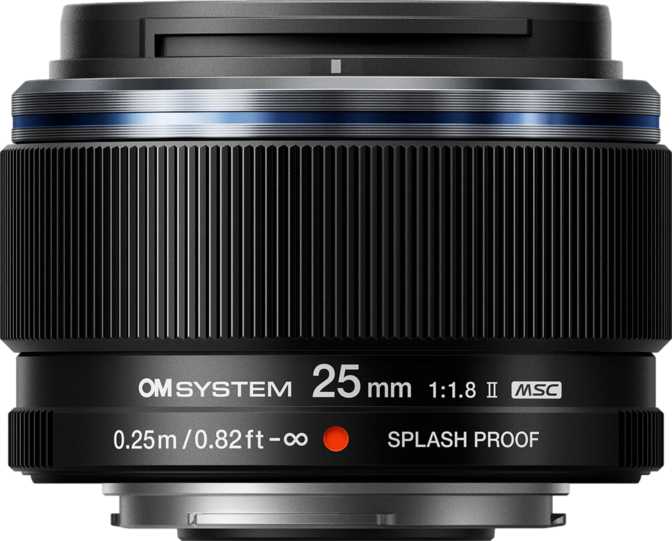
OM System M.Zuiko 25mm f/1.8 II: Full Review for MFT Shooters
Camera LensesThere is a reason photographers have been drawn to the 50mm equivalent focal length for generations. It sees the world the way your eye does — no dramatic compression, no wide-angle distortion, just honest, natural framing that pulls the viewer directly into a scene. For Micro Four Thirds shooters, that equivalent lives at 25mm, and the OM System M.Zuiko Digital 25mm f/1.8 II is the most refined version of this classic perspective the system has offered to date. This is not a lens trying to do everything — it is a lens trying to do one thing exceptionally well: give you a versatile, fast, optically capable prime that feels at home in nearly every shooting situation.
Lens at a Glance
Key specifications put into real-world context
Design and Build: Small Enough to Forget, Solid Enough to Trust
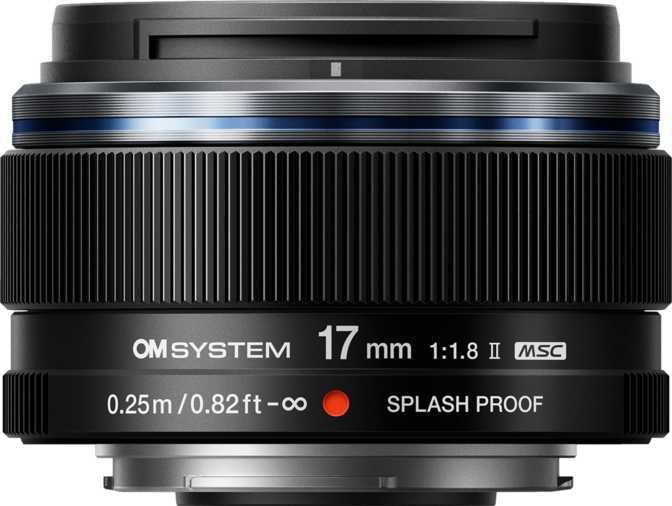
The 25mm f/1.8 II is a compact lens in every meaningful sense. At 156 grams, it adds almost no burden to your camera body. Paired with one of OM System's or Olympus's smaller bodies — a Pen E-P7, an OM-5, or an E-M10 Mark IV — the combination slips into a jacket pocket or small shoulder bag without complaint. Even mounted on the larger OM-1 or E-M1 Mark III bodies, the lens does not look undersized or feel unbalanced.
The 46mm filter thread is a practical advantage that often goes unappreciated until you are buying filters. Smaller filter diameters cost significantly less, and 46mm is a common size across the M.Zuiko prime lineup — meaning one set of filters can serve multiple lenses. Controls are minimal and purposeful: a smooth manual focus ring and nothing else to distract you. The lens is built to disappear while you shoot.
The 25mm f/1.8 II has no weather or splash protection of any kind. If you frequently shoot in rain, near waterfalls, in dusty conditions, or anywhere moisture is a concern, this lens requires careful handling. Photographers working outdoors in unpredictable conditions should weigh this seriously — or consider OM System's sealed alternatives before committing.
Optical Performance: What f/1.8 Actually Does for You
The Real-World Meaning of a Wide Aperture
The f/1.8 maximum aperture earns its place in the lens name for two distinct reasons. First, it lets in substantially more light than a typical kit zoom. Shooting in a dim restaurant, an indoor event, or at dusk without flash becomes far more viable. Where a standard kit lens might force you into sensor sensitivity settings that introduce visible noise, this lens lets you keep your images cleaner by working with more available light.
Second, f/1.8 produces background separation — what most photographers call bokeh. Micro Four Thirds shooters need an honest conversation here. Because the MFT sensor is smaller than a full-frame sensor, depth of field at any given aperture is deeper than on a larger format. A full-frame 50mm f/1.8 at the same framing will produce more aggressive background blur. The separation from this lens is real and genuinely pleasing — particularly when your subject is close to the minimum focus distance or when meaningful distance separates subject from background.
The aperture is shaped by seven rounded blades rather than the angular design found on budget lenses. This produces smooth, circular out-of-focus highlights — bokeh that reads as intentional rather than mechanical. It is a design detail manufacturers sometimes omit at lower price points, and its presence here contributes meaningfully to image quality.
Angle of View: The Natural Perspective
The 47-degree angle of view this lens produces is what photographers historically called "normal." It closely approximates the natural human field of focused attention. Scenes photographed at this focal length look neither stretched nor compressed — they look real, in the way your memory of a place looks real. This naturalness is both the lens's greatest strength and, for some photographers, its creative limitation. There is no built-in drama, no geometry tricks, no compression effects. What you can do is render a subject, a face, a meal, or a street scene exactly as it is.
Close Focus and What It Unlocks
The lens focuses as close as 25 centimeters from the front element — roughly the distance from your fingertips to the middle of your palm at arm's length. This allows for compelling environmental portraits, detailed food photography, and tight product shots without dedicated macro equipment. The magnification is modest rather than macro-level: you will not fill the frame with a coin or an insect. But you can get close enough to isolate a face, a hand, a dish, or a small object with atmospheric background separation. For most real-world subjects, that is exactly the right amount of closeness.
Autofocus: Fast, Silent, and Always in Your Control
The 25mm f/1.8 II relies on the focus motor built into the camera body rather than a dedicated motor inside the lens. For any Micro Four Thirds body — all of which include a body-side drive system — this works exactly as intended. Focus acquisition is fast, quiet, and reliable for most subjects. On current OM System bodies with advanced subject-tracking, the lens keeps up without issue.
You can grab the focus ring at any moment — without touching a switch or entering a menu — and take immediate manual control. For portrait work where precise eye-focus placement matters, or street photography where you want to lock focus at a predetermined distance, this is a genuine workflow advantage that experienced shooters will use constantly.
One consideration for video creators: because the focus motor lives in the body rather than the lens, smooth rack-focus transitions during recording may feel different compared to lenses with internal motors. For photographers, this distinction is irrelevant. For videographers who rely on cinematic focus pulls as a primary creative tool, it is worth understanding before purchase. The lens can focus from 25 centimeters all the way to infinity without restriction — a practical advantage for landscape work and any scenario requiring sharp distant subjects.
Who This Lens Is Built For
Real shooting scenarios where the M.Zuiko 25mm f/1.8 II excels — and where it does not.
Street & Everyday Photography
The natural 50mm equivalent framing makes this the most intuitive focal length for documentary work. Compact and light enough to carry daily, it captures life without announcing itself.
Portrait Photography
Environmental portraits benefit from this focal length's ability to include context without distortion. Comfortable shooting distance and natural facial proportions make it a reliable portrait choice.
Food & Product Photography
Close focus combined with f/1.8 background separation makes this lens genuinely useful for food and product work. Near elements render sharp while backgrounds fall away in smooth, pleasing blur.
Indoor & Low-Light Events
Family gatherings, indoor concerts, museum visits — the wide aperture handles conditions where kit zooms struggle, without forcing you to use flash that ruins the atmosphere.
Who Should Consider Alternatives
- Wildlife, sports, and telephoto shooters. This is a short fixed focal length — reach simply is not available here.
- Dedicated macro photographers. The modest close-focus magnification will quickly feel limiting for serious close-up work.
- Outdoor and adventure photographers in harsh conditions. The absence of weather sealing is not a footnote — it is a genuine constraint on when and where this lens can safely be used.
How It Stacks Up Against the Alternatives
The 25mm f/1.8 II sits within a well-populated field of normal-focal-length MFT primes. Here is how the most logical alternatives compare.
| Lens | Equiv. FOV | Max Aperture | Weight | Weather Sealed | Key Distinction |
|---|---|---|---|---|---|
| This LensM.Zuiko 25mm f/1.8 II | 50mm | f/1.8 | 156g | Best size-to-performance ratio in the lineup | |
| Panasonic Lumix 25mm f/1.7 | 50mm | f/1.7 | 130g | Lighter and marginally faster; optical rendering differs by brand | |
| M.Zuiko 25mm f/1.2 Pro | 50mm | f/1.2 | 305g | Maximum optical performance; sealed; twice the weight and cost | |
| Panasonic Leica 25mm f/1.4 II | 50mm | f/1.4 | 200g | Weather-sealed option between the two OM System tiers |
The Panasonic Lumix 25mm f/1.7 is the most direct rival — lighter and marginally faster, though optical character differs between brands. The M.Zuiko f/1.2 Pro delivers measurably superior performance at twice the weight and a significant premium. For most photographers, the f/1.8 II delivers the results that matter at a fraction of the cost and size.
Strengths and Honest Limitations
Where It Excels
- Outstanding size-to-performance ratioExcellent center sharpness at f/1.8 in a lens that weighs almost nothing — that combination is not common at this price point.
- Seven-blade rounded apertureProduces smooth, circular bokeh highlights rather than the angular, mechanical-looking discs common in budget lens designs.
- Instant manual focus overrideSwitch from auto to manual at any moment without touching a switch or entering a menu — a genuine workflow advantage for precise focus placement.
- 25cm close focus capabilityMore versatility than its fixed focal length might suggest — food, product, and environmental portrait work all benefit from this working distance.
- Affordable 46mm filter compatibilityA small, inexpensive filter size shared across the M.Zuiko prime range — one set of filters covers multiple lenses.
Honest Limitations
- No weather sealingThe most significant real-world constraint — especially notable given that MFT gear is often chosen for outdoor and travel use, exactly where sealing matters most.
- No internal focus motorInconsequential for still photography on compatible bodies, but video shooters who rely on smooth cinematic focus pulls may notice the difference.
- Shallower bokeh than full-frame equivalentsThe MFT format's physics mean background blur at f/1.8 is less aggressive than a 50mm f/1.8 on a larger sensor. A format reality, not a lens deficiency.
- Chromatic aberration at close focusSome color fringing at high-contrast edges near the minimum focus distance — standard for this class and correctable via software or in-camera correction profiles.
- No built-in optical stabilizationA non-issue for OM System and Olympus bodies with powerful IBIS, but Panasonic users without sensor stabilization should factor this in for low-light handheld work.
Frequently Asked Questions
The questions real buyers search for before purchasing the M.Zuiko Digital 25mm f/1.8 II.
Final Verdict
The OM System M.Zuiko Digital 25mm f/1.8 II earns its place in a camera bag through consistent, uncomplicated excellence. It does not try to impress with extreme specifications or armored construction. Instead, it delivers a natural, highly usable focal length, a wide enough aperture to handle challenging light, pleasing optical character, and a size and weight that make it genuinely easy to carry every day.
For Micro Four Thirds photographers who want a single lens that handles portraits, street photography, travel, food, and everyday life — this is it. Beginners will find it a revelatory step up from zoom thinking. Experienced shooters will appreciate its reliability and low-drama handling. The only photographers who should pause are those regularly shooting in conditions that demand a sealed lens, or those ready to commit to the f/1.2 Pro tier. For everyone else, this is the 25mm to own.
- Shoot MFT and want a versatile daily prime
- Are moving from a kit zoom for the first time
- Want compact size without sacrificing optical quality
- Regularly shoot in rain, dust, or harsh outdoor conditions
- Want the absolute maximum optical performance MFT offers