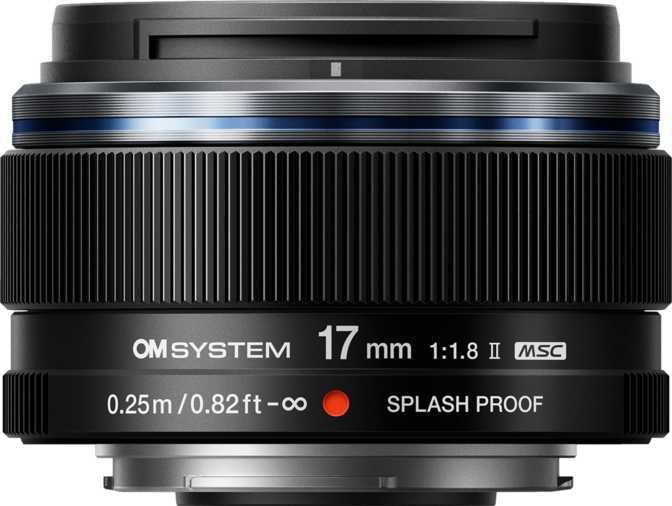
OM System M.Zuiko 17mm f/1.8 II: A Full Real-World Prime Lens Review
Camera LensesThe 17mm f/1.8 II at a Glance
A 34mm-equivalent prime built to live on a Micro Four Thirds body — compact, fast, and honest in what it delivers.
- Natural 34mm-equivalent framing for street, travel, and everyday use
- f/1.8 delivers genuine low-light capability and attractive bokeh
- 7 rounded blades produce smooth, circular out-of-focus highlights
- Full-time manual focus for hybrid AF and MF shooting
- No weather sealing — the single most significant trade-off
Design and Build Quality
Small enough to forget you are carrying it — and solid enough that you will not mind when you do not.
Physical Character
At 112 grams, this lens redefines what a camera bag can feel like. Paired with any compact Micro Four Thirds body, the total package drops into a jacket pocket or small shoulder bag without planning. Photographers moving from larger systems frequently describe this as the most noticeable quality-of-life improvement they experience.
The 46mm filter thread is a sensible, practical choice — affordable, widely available, and compatible with most filter brands. Polarizers, neutral density, and UV options at this size cost a fraction of what larger diameters demand, keeping the total system cost sensible.
The barrel carries the weighted, purposeful feel long-time OM System users recognize. There is no flex, no rattle. Controls have resistance and intention behind them — it handles with confidence in hand.
The Weather Sealing Question
For photographers shooting in rain, mist, dust, or other challenging outdoor conditions, this matters and should not be minimized. If adverse weather is a regular feature of your shooting life, factor in the cost of a weather-sealed alternative before committing.
For street photography in good weather, travel, cafés, markets, indoor scenes, and golden-hour walks, this limitation stays largely invisible. Know your typical shooting conditions before making your decision.
Optics and Aperture: What f/1.8 Actually Buys You
Three aspects of this lens’s optical character that determine whether it fits your shooting style.
Low-Light Performance
An f/1.8 aperture admits roughly eight times more light than a typical kit zoom at its widest point. In practical terms: faster shutter speeds in dim restaurants, galleries, and evening markets where flash is unwelcome or prohibited. The camera’s autofocus system also benefits from the extra light, improving acquisition speed in challenging conditions where slower glass struggles.
Depth of Field and Bokeh
On a Micro Four Thirds sensor, depth of field at any given aperture is inherently deeper than on a larger format at equivalent framing. This is physics, not a flaw. At f/1.8 and close range, subject separation is noticeable and attractive — though the compressed, painterly blur of a fast 85mm on full frame is not what this lens produces.
Seven rounded aperture blades deliver smooth, circular out-of-focus highlights. Coffee cups, nearby faces, and small objects render with clean, pleasant background separation when shot wide open.
Aperture Range and Framing
The aperture spans from f/1.8 wide open to f/22 at its narrowest — the full creative spectrum from maximum subject isolation to maximum depth of field for architectural and landscape work.
The 65-degree field of view delivers a comfortable wide-normal perspective: broad enough to include environmental context, tight enough that geometric distortion remains minimal. This is a focal length built for proximity and storytelling, not dramatic visual effect.
Focus System
Body-driven autofocus, a useful manual override, and a minimum distance that handles editorial close-up work.
How Autofocus Works
The lens carries no internal focus motor — autofocus is driven entirely by the camera body. On current OM System bodies this works efficiently and is quick enough for street and travel use in good light. In very low light or with low-contrast subjects, AF performance scales directly with the body you are using. Pairing this lens with a current-generation camera gets the most from it.
Full-Time Manual Override
Full-time manual focus is supported, allowing you to reach out and refine focus mid-shot without switching any mode. For photographers using a hybrid approach — autofocus to acquire, manual touch-up for critical precision — this removes friction at a key moment. It is the kind of detail that reveals the lens was designed by people who actually photograph with it.
Minimum Focus Distance
The lens focuses as close as 25 centimeters — roughly a sheet of paper held at arm’s length. This is sufficient for food photography, small-object detail, and lifestyle editorial work without reaching for a dedicated macro lens. Magnification remains modest at this distance, so insects, scientific specimens, and fine-detail macro subjects fall outside what this lens was designed to handle.
Who This Lens Is For
The right tool for a specific kind of photographer — and clearly the wrong one for others.
The Everyday Photographer
Built for photographers who want one lens on their camera most of the time. The focal length handles street scenes, travel documentation, casual environmental portraits, food photography, and interior architecture at moderate distance. Its low weight encourages spontaneous, instinctive shooting rather than deliberate, tripod-required work.
Street and Documentary
The 34mm equivalent, f/1.8 aperture, and compact size form a combination street photographers have valued for generations. The lens does not alter the dynamic between photographer and subject the way a long telephoto does. You can move through a crowd or a market without the camera becoming a barrier between you and the moment.
Travel Photographers
Small pack, single versatile lens, f/1.8 for evening shots without flash, close focus for food and local detail. The travel argument is direct and compelling. The only meaningful caveat is weather sealing for those shooting in climates where conditions change quickly. In fair conditions, this is an excellent travel companion.
Who Should Look Elsewhere
Outdoor and adventure photographers shooting regularly in rain, mist, or dust need a weather-sealed prime. This lens breaks the sealing chain even on a fully sealed camera body.
Wildlife, sports, and telephoto shooters need reach this 17mm prime cannot provide. The lens is built for proximity and context — not for subjects at a distance.
Macro photographers will quickly reach the ceiling of this lens’s magnification. Insects, fine-detail product work, and scientific subjects require a dedicated macro prime.
Competitive Positioning
Where the 17mm f/1.8 II sits within the Micro Four Thirds ecosystem and how it holds up against the alternatives.
| Feature | OM System 17mm f/1.8 II | Typical f/1.8 Competitor | Budget f/1.8 Alternative |
|---|---|---|---|
| Maximum Aperture | f/1.8 | f/1.8 | f/1.8 |
| Weather Sealing | No | Varies | No |
| Rounded Aperture Blades | Yes — 7 blades | Varies | Often No |
| Full-Time Manual Focus | Yes | Varies | Rarely |
| Weight | 112g | 130–160g | 90–120g |
| Filter Thread | 46mm | 46–52mm | 37–46mm |
Competitive data represents general market category characteristics and is intended as indicative context only.
Strengths and Weaknesses
An honest account — because credibility depends on naming both sides with equal clarity.
Where It Excels
The 34mm equivalent field of view is one of the most useful available in any system. Close to the natural angle of human vision, it produces images that feel immediate and present rather than compressed or distorted. This is a focal length that suits how people naturally see and move through a scene.
The f/1.8 aperture delivers genuine low-light capability that would force compromise with slower glass. It is not a marketing number — the difference between f/1.8 and a typical f/3.5 kit lens is visible in every dim-light frame you take.
The physical package — light, compact, unobtrusive — makes the lens easy to carry for extended periods. It encourages shooting because it removes every practical excuse not to.
Seven rounded aperture blades affect how images feel at a subconscious level. The smooth, circular out-of-focus highlights this lens produces in available-light shots are genuinely attractive — a design detail that rewards shooting wide open in evening light.
Where It Falls Short
The absence of weather sealing is a real constraint, not a minor footnote. If you photograph outdoors regularly in climates where conditions change — rain, mist, coastal spray, dust — this lens breaks the environmental protection of a sealed body. For the photographers it affects, the limitation matters significantly.
The absence of an internal focus motor is functionally invisible on a current-generation body, but it creates a dependency on the camera for AF performance. Older bodies may not extract the best from this lens — pair it with current hardware for the intended experience.
The close-focus magnification is modest. You can get physically close to a subject, but the lens reaches its limits quickly in applications where fine detail at high magnification matters. Do not expect macro performance from a lens that was not designed for it.
Common Pre-Purchase Questions
Answers to what real buyers search for before spending their money.
Final Verdict
The lens that earns a permanent place on your camera.
The OM System M.Zuiko Digital 17mm f/1.8 II earns a clear recommendation for photographers who want a compact, capable, always-ready prime. Street photography, travel, everyday documentation, available-light interiors, and environmental portraits — this lens handles all of them without complaint.
The focal length is right. The aperture is right. The size is right. For photographers building a Micro Four Thirds system around versatility and portability, this lens belongs on the shortlist. It disappears into your workflow and consistently delivers — the highest practical praise a prime lens can earn.
The weather-sealing omission is the one meaningful caveat. If you shoot outdoors regularly in unpredictable conditions, the gap between this lens and a weather-sealed alternative is real and worth the price difference. For everyone else — a substantial group of Micro Four Thirds shooters — this is the prime that stays on the camera.