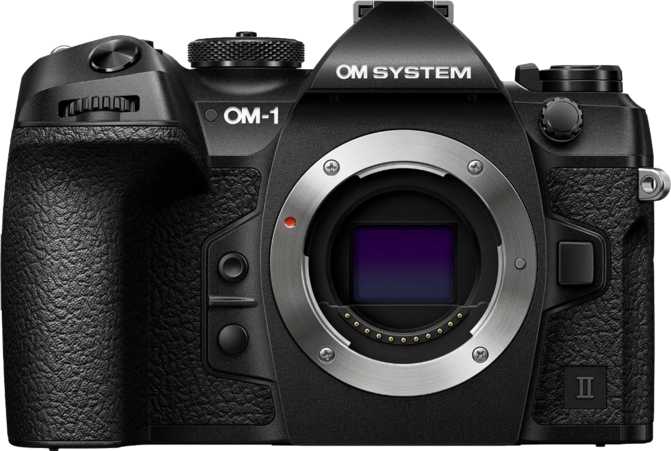
OM System OM-1 Mark II Review: Built for the World as It Actually Is
CamerasPhotographers who work outdoors — in rain, dust, biting cold, or the humid heat of a coastal marsh — know that gear reliability is not secondary to image quality. It is inseparable from it. The OM System OM-1 Mark II was built around that reality. It is a mirrorless system camera that trades the sensor size of its full-frame competitors for extraordinary environmental resilience, an image stabilization system that outperforms almost everything else available, and a stacked sensor architecture that enables speed and precision most larger-sensor cameras cannot match. Understanding this camera means understanding what it was designed to do and for whom — the answer is specific, coherent, and worth your attention.
Design and Build: Ready for Conditions That Stop Lesser Cameras
The OM-1 Mark II’s physical form tells you what it was designed for before you fire a single frame. Measuring roughly 139mm wide, 92mm tall, and 73mm deep, it sits in a professional body that is compact enough for an all-day carry without sacrificing the grip and control depth that serious shooting demands. At 599 grams, it strikes a balance: substantial enough to feel like professional equipment, light enough that a nature photographer will not resent it after four hours on a trail.
The weather sealing is not a casual marketing claim here. This body is rated to operate in temperatures as low as −10°C and as high as 40°C, meaning it functions in conditions ranging from a winter mountain shoot to a summer festival — circumstances where budget alternatives would struggle to survive. For wildlife photographers who cannot predict when rain appears, or travelers who shoot in coastal humidity, this kind of environmental certification is a genuine operational advantage, not a spec-sheet checkbox.
The articulating touchscreen flips out fully, which matters the moment you are shooting low to the ground, from a tripod at an awkward angle, or above a crowd. The 3-inch display resolves at over 1.6 million dots — enough clarity to accurately evaluate focus and exposure in the field. Touch autofocus and touch-based menu navigation are fully supported, making the interface feel current and intuitive.
The electronic viewfinder offers 100% frame coverage, which means what you see in the finder is exactly what gets captured. No surprises, no guessing about edges. A hot shoe provides the option to mount external flash units, though the camera carries no built-in flash — a deliberate choice that prioritizes weather integrity and body compactness.
Physical Specifications
-
Dimensions138.8 × 91.6 × 72.7 mm
-
Body Weight599 g
-
Operating Temperature−10°C to 40°C
-
ViewfinderElectronic, 100% frame coverage
-
Screen3″ articulating touch, 1.62M dots
-
Hot ShoeYes — no built-in flash
The Micro Four Thirds Sensor: Understanding the Trade-Off and the Advantage
Micro Four Thirds sensors are physically smaller than APS-C or full-frame sensors. In controlled, well-lit conditions, larger sensors produce better dynamic range and less noise at extreme sensitivities. That is the trade-off, and it is real.
A photographer who regularly shoots deep shadows requiring significant recovery, or who demands the cleanest possible files at maximum sensitivity, will encounter a ceiling that physics, not engineering, defines.
What you get in return compounds quickly. Lenses are smaller, lighter, and often more affordable relative to full-frame equivalents. The 2x crop factor means a 200mm lens delivers the reach of a 400mm equivalent — a significant advantage for wildlife and telephoto photographers who need distance without weight.
And critically, the smaller sensor allows for more effective in-body image stabilization, which in the OM-1 Mark II reaches a class-leading level that changes what is possible with a handheld camera.
The sensor itself is a 20.4-megapixel back-illuminated stacked CMOS design. The back-illumination arrangement improves light collection efficiency — particularly meaningful in lower light — while the stacked architecture enables the high-speed readout that allows fast electronic shutters, high burst rates, and reliable rolling-shutter suppression. At 20.4 megapixels, output files are large enough for substantial cropping, significant print sizes, and magazine-quality reproduction. Photographers printing wall-sized canvases or shooting for billboard placement will want more resolution, but for editorial, wildlife, travel, and landscape work, 20.4 megapixels is a practical and sufficient working resolution.
The native sensitivity range covers shooting in most available-light scenarios, with an extended mode that pushes further for emergency situations. Treat the extended range as a tool of necessity, not a primary shooting mode — at extreme sensitivities, smaller sensors show their limits, and the OM-1 Mark II is no exception.
The TruePic X processor handles image rendering, noise reduction, and the computational demands of continuous shooting. As the engine behind the camera’s behavior, it underpins the autofocus system, stabilization calculation, and burst performance simultaneously.
Autofocus: 1,053 Points and the Intelligence to Use Them
A phase-detection autofocus system with over a thousand detection points covering the sensor provides focus acquisition that is fast, accurate, and coverage-dense across the entire frame. Unlike contrast-detection systems that “hunt” before locking — that momentary back-and-forth you might notice on older cameras — phase-detection locks onto a subject with immediate directional information. It knows which way to move before it moves.
AF tracking carries a moving subject through the frame once acquired. The system does not require you to keep the subject under a specific focus point — it follows. For bird photographers, sports shooters, or anyone chasing erratic motion, this changes the experience of shooting from stressful anticipation to reactive confidence.
Phase-detection autofocus operates in both photo and video modes, so continuous video recording benefits from the same fast, decisive locking behavior as stills. This matters enormously for videographers who track moving subjects — a camera that loses focus during a run or a bird takeoff is no camera at all for that work.
Touch autofocus allows you to tap the subject on the screen to initiate focus, which is natural and useful when composing with the articulating display. Manual focus is also fully available for situations requiring precise, deliberate control.
Contrast detection evaluates sharpness after moving and corrects. Phase detection calculates direction and distance before moving. The result is faster, more decisive locking with no hunting behavior — critical for unpredictable, fast-moving subjects.
AF Capabilities
- 1,053 phase-detection points
- Subject tracking across the frame
- Phase detection active in video
- Touch autofocus on display
- Full manual focus control
Image Stabilization: The Number That Changes Everything
Eight and a half stops of in-body image stabilization, rated by the CIPA standard, is not a subtle specification. To understand what it means in practice: the CIPA standard represents a rigorous, industry-controlled measurement of real-world stabilization benefit. Every full stop of stabilization doubles the exposure time you can use without introducing motion blur from camera shake.
In practical terms: landscape photographers can make handheld exposures in low-light conditions that previously required a tripod. Telephoto shooters benefit dramatically from stabilization that scales with longer focal lengths. Travelers shooting at dusk can capture clean images without stopping to set up support.
The system supports combined stabilization, meaning when an optically stabilized lens is mounted, the camera coordinates body and lens stabilization together for a result greater than either can achieve independently. Prioritizing optically stabilized lenses in your kit amplifies an already exceptional baseline.
Speed, Burst, and Electronic Shutter Capability
The mechanical shutter delivers 10 frames per second continuous shooting — a professional-tier burst rate that allows photographers to capture decisive moments within a sequence. At this speed, a bird landing, an athlete’s peak expression, or a dancer’s exact position can be isolated from a burst rather than missed by a slower camera.
The electronic shutter extends this capability in two directions simultaneously. It reaches 1/32,000 of a second, enabling flash-free shooting with wide apertures in bright outdoor conditions without overexposing the frame. It also operates completely silently, removing the shutter click that would be inappropriate in theaters, ceremonies, courtrooms, or any environment where discretion is required.
The primary historical weakness of electronic shutters — rolling shutter distortion, where fast-moving subjects appear skewed or warped — is addressed directly by the stacked CMOS architecture. The faster readout of a stacked sensor captures the full frame more quickly, significantly reducing this distortion and making the electronic shutter a genuinely usable tool rather than a last-resort option.
A pixel shift capture mode produces images of substantially higher effective resolution and color accuracy than any single frame provides, by making precise micro-movements of the sensor between exposures and combining the results. This requires a motionless subject and a stable tripod, but for product photography, fine art reproduction, or detailed architectural capture, the output substantially exceeds what the sensor’s standard resolution implies.
Speed Specifications
-
Mechanical Burst10 fps continuous
-
Electronic Shutter Max1/32,000 sec — silent operation
-
Mechanical Shutter Max1/8,000 sec
-
Pixel Shift ModeHigh-resolution multi-frame composite
The stacked CMOS architecture reads sensor data far faster than a conventional sensor, making the electronic shutter a viable choice for moving subjects — not just a workaround for silent shooting situations.
Video: 4K Quality with Professional Audio Foundations
The OM-1 Mark II records 4K video at up to 60 frames per second at a bitrate of 202 megabits per second. The 60fps 4K capability enables slow-motion playback at half-speed while retaining full 4K resolution, giving videographers editorial flexibility beyond what standard 24fps or 30fps capture provides.
At 202 Mbps, the data density of the video file is high enough to withstand significant color grading in post-production without the compression artifacts that lower-bitrate cameras introduce. Editors working in professional workflows will find the footage holds up under correction and grading demands.
24p cinema mode is available for those working in the visual rhythm that audiences associate with narrative film — a deliberate choice for video work aimed at storytelling rather than documentation.
Phase-detection autofocus continues operating in video mode, and the continuous AF system tracks through motion without hunting or losing lock unexpectedly. Slow-motion video recording is supported for high-speed capture scenarios.
- Built-in stereo microphone (2 mics)
- 3.5mm external microphone input
- 3.5mm headphone monitoring output
- Phase detection AF during recording
- Slow-motion video recording
- No first-party live streaming
Battery Life: Honest Expectations, Practical Realities
Under standardized testing conditions, the camera’s battery is rated to approximately 520 shots per charge. That number deserves some context: standardized battery tests follow specific protocols that tend to underrepresent actual drain from extended viewfinder use, frequent image playback, active stabilization processing, and continuous video recording. Real-world usage will vary based on shooting behavior.
For a standard day of casual shooting — a few hundred frames, moderate review, mixed viewfinder and screen use — a single charge is typically adequate. For demanding field sessions — sports, wildlife, or long travel days with sustained shooting — carrying a spare battery is practical preparation, not paranoia. The battery is removable and rechargeable, and a continuous battery level indicator ensures you will never be surprised by sudden power loss without warning.
The battery capacity sits in the moderate tier for professional mirrorless cameras. Context helps: the compact body limits available battery volume, the stabilization system is computationally demanding, and the stacked sensor’s high-speed operation draws more power than a conventional sensor at equivalent speeds. Given those demands, the rated shot count represents a reasonable performance result rather than an engineering shortcut.
Battery at a Glance
- Removable & rechargeable battery
- Battery level indicator display
- Spare battery recommended for full-day field use
Storage, Connectivity, and What’s Missing
Dual card slots are a professional-grade provision that matters for real work. Photographers shooting events, weddings, or assignments where losing a card means losing irreplaceable images rely on dual-slot cameras to run simultaneous backup capture. A card failure during a dual-slot recording session loses nothing. The OM-1 Mark II provides this protection. USB-C connectivity handles both data transfer and in-field charging through a standardized connector, while HDMI output enables the camera to feed an external monitor or capture device as a clean signal source. RAW capture is fully supported, including lossless compressed RAW that reduces file sizes during a burst without sacrificing editing latitude.
- Dual memory card slots
- USB Type-C (transfer & charging)
- HDMI output (clean feed)
- Wi-Fi 4 (802.11n) — transfer & remote
- Bluetooth 4.2 — persistent low-power link
- Remote smartphone control
- RAW + lossless compressed RAW
-
No built-in GPS. Geotagging requires smartphone pairing as a workaround or manual location entry.
-
No NFC. Tap-to-pair convenience with NFC devices is absent.
-
No first-party live streaming. Content creators who broadcast directly from the camera will find this capability missing.
-
Wi-Fi 4 only. Functional but slower than the 802.11ac standard found in newer competitors — bulk transfers take longer.
Who This Camera Is For — and Who Should Look Elsewhere
Strong Matches for the OM-1 Mark II
- Wildlife and bird photographers who need phase-detection tracking, high burst rates, and weather sealing combined in a system that does not weigh them down over long carries
- Outdoor and adventure photographers operating in environments — cold, wet, dusty, humid — where weather resistance is operational rather than precautionary
- Travel photographers who require a serious, capable camera that will not require babysitting in difficult conditions
- Low-light photographers who benefit most from best-in-class stabilization: architectural interiors, street photography after dark, available-light event coverage
- Videographers who need 4K/60p with professional audio inputs, phase-detection continuous AF, and capable codec performance without a dedicated cinema rig
- Photographers already invested in the Micro Four Thirds lens ecosystem who want the best-performing body available
Weaker Fits and Honest Mismatches
- Studio portrait and commercial photographers for whom maximum dynamic range and clean performance at extreme sensitivities are primary criteria, and where a full-frame sensor’s advantages are fully realized in controlled conditions
- Photographers who rely on automatic GPS geotagging and find the smartphone workaround workflow genuinely disruptive to their process
- Video creators who need first-party live streaming support directly from the camera
- Users requiring the absolute highest pixel count for extreme print applications or aggressive telephoto cropping beyond what the focal-length advantage provides
- Shooters expecting uninterrupted full-day video recording without battery management and a spare cell on hand
Competitive Positioning: Where It Stands in the Market
The OM-1 Mark II occupies a specific and defensible position: it outperforms most competitors on environmental resilience, stabilization, and burst performance while accepting a sensor size trade-off that larger-format cameras do not carry. Photographers choosing between this and a full-frame alternative are not choosing between better and worse — they are choosing between two different priority sets.
| Feature | OM System OM-1 Mark II | Typical APS-C Mirrorless | Typical Full-Frame Entry |
|---|---|---|---|
| Sensor Format | Micro Four Thirds | APS-C | Full-Frame |
| Weather Sealing | Yes — −10°C to 40°C | Varies — often limited | Often present at this price |
| IBIS Effectiveness | Class-leading 8.5 stops | Typically 5–6.5 stops | Typically 5–7 stops |
| Mechanical Burst | 10 fps | 6–10 fps | 5–10 fps |
| Telephoto Reach | 2x crop advantage | 1.5x crop factor | None |
| System Weight | Compact relative to output | Moderate | Heavier, especially lenses |
| Low-Light Ceiling | Moderate (sensor trade-off) | Better | Best |
| Built-in GPS | No | Varies | Varies |
Honest Strengths and Genuine Weaknesses
What It Does Exceptionally Well
The stabilization system is the headline strength, but it is the convergence of capabilities that makes the OM-1 Mark II genuinely compelling. Phase-detection tracking autofocus, weather sealing rated to real outdoor operating conditions, and a stacked sensor that enables fast electronic shutter without significant rolling distortion — each of these individually would justify attention. Together they form a camera that handles demanding real-world scenarios with a confidence that few alternatives at equivalent system weight can match.
The articulating touchscreen earns consistent use rather than existing as a marketing bullet. Photographers shooting from unusual angles, videographers monitoring their own framing, and anyone reviewing images in direct sunlight will reach for that screen routinely. The dual card slot configuration, professional audio inputs for video, and the lossless compressed RAW option round out a genuinely thoughtful professional feature set.
Where It Falls Short
The Micro Four Thirds sensor imposes a ceiling on dynamic range recovery and extreme high-sensitivity performance that larger formats do not share. This ceiling is set by physics, not engineering quality. A photographer who regularly shoots deep shadows requiring significant recovery, or who demands the cleanest possible files at maximum sensitivity, will encounter this ceiling. It does not disqualify the camera for the right users, but it should be understood and factored into the decision.
Battery endurance is adequate for moderate shooting but requires management during demanding field sessions. Photographers transitioning from cameras with larger batteries will notice the difference in sustained shooting capacity, and carrying a spare is genuine advice rather than a precautionary note.
The absence of GPS, NFC, and first-party live streaming support creates gaps that matter to specific users and are irrelevant to others. The Wi-Fi standard, while functional, is slower than what comparable cameras now offer. These are not critical failures; they are honest limitations worth weighing against the camera’s substantial strengths.
Questions Real Buyers Ask Before Purchasing
The Verdict
The OM System OM-1 Mark II is a camera for photographers who work rather than pose for it — built for the outdoors, engineered for motion, and designed with a clear set of priorities that happen to align with some of the most demanding photography disciplines.
If your work or passion takes you outside, into challenging light, toward fast-moving subjects, or into conditions where lesser cameras fail, this body delivers with a level of confidence that few alternatives can match at equivalent system weight. The stabilization system alone is worth serious attention; at 8.5 CIPA-rated stops, it represents a genuine operational advantage that changes what is possible without a tripod.
The Micro Four Thirds sensor is the honest compromise at the center of the system. Accept it with full understanding of what it means — a ceiling on extreme low-light performance and dynamic range recovery relative to larger formats — and the rest of the camera’s capabilities are impressive, consistent, and well-realized for the intended use cases.
For wildlife photographers, outdoor adventurers, travel photographers, and videographers who need weather sealing alongside professional video capabilities, the OM-1 Mark II earns a confident recommendation. For studio photographers, extreme low-light specialists, or anyone who geotags every image and finds GPS indispensable, look carefully before committing. This is a specialized camera with a clear identity. When its strengths match your needs, they match completely.