Nvidia RTX Pro 5000 Blackwell 72GB: Full Professional GPU Review
Graphics CardsRTX Pro 5000 Blackwell 72GB — At a Glance
What the RTX Pro 5000 Blackwell 72GB Actually Is
Most graphics cards try to be everything to everyone. The Nvidia RTX Pro 5000 Blackwell 72GB does not. It is a professional workstation GPU built for a specific class of work that most graphics cards simply cannot handle — not due to processing speed alone, but due to fundamental architectural decisions that separate workstation-class hardware from consumer alternatives.
If you are evaluating this card, you are almost certainly working in AI inference, large-scale 3D rendering, scientific simulation, visual effects, or machine learning model development. This review speaks directly to that context, explaining what the hardware actually delivers and whether it justifies serious consideration.
Professional GPU, Not a Gaming Card
The RTX Pro 5000 Blackwell 72GB is engineered for workstation compute environments. Its core advantages — 72GB VRAM, ECC memory, and FP64 support — have no equivalent in consumer gaming graphics cards at any price point.
Design and Build: Function Over Form
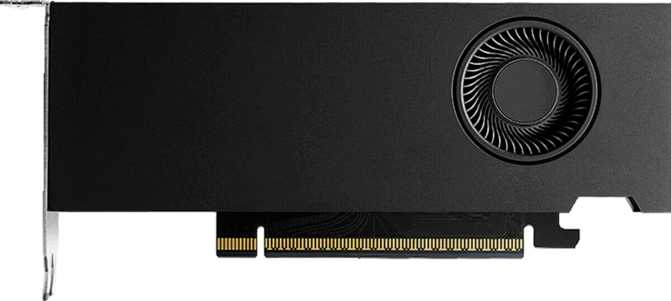
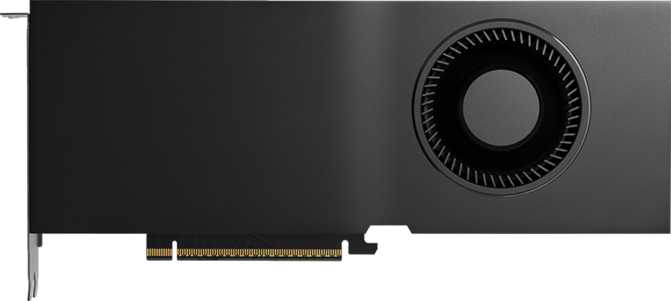
The RTX Pro 5000 Blackwell is a professional card and looks exactly like one. There is no RGB lighting, no aggressive aesthetic sculpting, and no consumer-oriented styling. The card measures approximately 267mm in length and 112mm in height — a compact enough footprint for a card at this tier, which makes workstation integration more predictable across a range of chassis configurations.
Cooling is handled through a built-in thermal solution without support for optional liquid cooling integration at the card level. This is a deliberate design choice for a workstation environment, where long-duration, sustained-load operation is the norm rather than the exception. The cooling apparatus is engineered for the card's 300-watt thermal design rating, and buyers should plan their workstation airflow accordingly.
Form Factor
266.7mm × 111.8mm. Workstation-friendly dimensions that fit standard professional chassis without unusual clearance issues.
Cooling Solution
Air-cooled reference design rated for sustained 300W operation. No onboard liquid cooling support — adequate chassis airflow is essential for long compute runs.
Aesthetic Design
No RGB lighting. Clean, minimal workstation aesthetic. The absence of decorative components signals a compute-first design philosophy.
Core Computing Performance: What the Architecture Delivers
The Blackwell Foundation
Built on Nvidia's Blackwell architecture and fabricated at 5 nanometers, the RTX Pro 5000 packs approximately 92.2 billion transistors into its die. This transistor count is characteristic of Nvidia's most compute-dense designs, meaning the underlying silicon is optimized not just for graphics output, but for the kind of parallel computation that AI and scientific workloads demand.
The card houses 14,080 shader processors — the individual compute units responsible for executing parallel workloads. These operate at a base frequency of 1,740 MHz, with a sustained boost capability approaching 2,380 MHz under load. The practical result is a floating-point compute throughput of approximately 67 TFLOPS in single-precision, the primary measurement used for most AI inference and rendering workloads.
Shader & Compute Units
- Shader Processors
- 14,080
- Base Clock
- 1,740 MHz
- Boost Clock
- ~2,377 MHz
- FP32 Throughput
- 66.94 TFLOPS
- Double Precision (FP64)
- Yes
Rendering Units
- Texture Units (TMUs)
- 440
- Render Outputs (ROPs)
- 176
- Pixel Rate
- 418.4 GPixel/s
- Texture Rate
- 1,045.9 GTexel/s
- Hardware Ray Tracing
- Yes
Double-Precision: The Professional Dividing Line
Double-precision floating-point computation — FP64 — uses 64-bit numerical representations rather than the 32-bit values common in gaming and consumer graphics. Scientific simulations, engineering modeling, seismic processing, financial risk modeling, and certain AI training regimes require double-precision for numerical accuracy that single-precision simply cannot provide.
Consumer gaming GPUs, even flagship ones, typically offer token or severely throttled double-precision support. The RTX Pro 5000 treats it as a first-class capability. For researchers or engineers whose workflows depend on FP64, this is not a nice-to-have — it is a fundamental requirement.
Rendering Throughput
The card's 440 texture mapping units and 176 render output units define its rasterization throughput at approximately 418 gigapixels per second and nearly 1,046 gigatexels per second. In practical terms, this means the card handles very large, highly textured scenes without the fill-rate bottleneck that causes visual artifacts or rendering delays in production pipelines. Hardware-accelerated ray tracing translates directly into faster final-frame output compared to software-based approaches.
Memory: The 72GB Advantage
Raw Capacity and What It Changes
Seventy-two gigabytes of video memory is the defining specification of this card. Every asset the GPU processes — textures, geometry, model weights in AI inference, simulation state data — must fit within the card's onboard memory during active processing. When a workload exceeds available memory, the GPU must page data from system memory, a process that is orders of magnitude slower and effectively destroys performance.
For many professional workloads, insufficient VRAM is not a performance inconvenience — it makes the task impossible on the GPU entirely. Seventy-two gigabytes changes that equation in concrete ways:
- Large language model inference runs on a single card for many contemporary model sizes, without multi-GPU memory pooling.
- Full 3D production scenes with high-resolution textures, dense geometry, and complex lighting remain resident in memory simultaneously.
- AI training jobs with large batch sizes or high-resolution inputs do not require memory-reduction compromises that affect accuracy.
- Complex simulation state can be maintained in GPU memory across long computation runs without intermediate checkpointing overhead.
For comparison, even high-end consumer gaming cards top out at 24 gigabytes, and most professional alternatives in adjacent price tiers offer between 24 and 48 gigabytes.
Memory Speed, Bandwidth, and ECC
A 512-bit memory bus paired with GDDR7 technology delivers this bandwidth. Memory-bound workloads face no bandwidth ceiling at this tier.
GDDR7 is the latest generation of graphics memory, delivering higher speed per pin than GDDR6X. Effective speed reaches 28,000 MHz equivalent.
Detects and corrects single-bit memory errors in real time, preventing silent data corruption during long compute runs. Absent in all consumer GPUs.
Display Connectivity and Multi-Monitor Support
The RTX Pro 5000 Blackwell outputs exclusively through four DisplayPort connections. There is no HDMI output and no USB-C display port on this card. This is standard practice for professional workstation GPUs, where DisplayPort is the dominant standard for high-resolution professional monitors. The four-output configuration supports up to four simultaneous displays — useful for multi-monitor professional setups, monitoring dashboards, or research environments requiring multiple visualization panels concurrently.
| Port Type | Quantity | Max Simultaneous Displays |
|---|---|---|
| DisplayPort | 4 | 4 |
| HDMI | None | — |
| USB-C Display | None | — |
| DVI | None | — |
DLSS (Deep Learning Super Sampling) is supported, which adds a practical dimension for real-time visualization. Nvidia's DLSS uses AI-based upscaling to deliver higher visual output resolution from lower internal rendering resolutions — useful in interactive viewport work within 3D applications.
Platform Integration: PCIe 5.0 and Resizable BAR
The card uses PCIe 5.0, the current-generation expansion slot standard, which doubles the available interconnect bandwidth compared to PCIe 4.0. For the overwhelming majority of workloads, GPU interconnect bandwidth is not the primary bottleneck, and a PCIe 4.0 platform still runs this card without significant throughput penalty. However, in workloads requiring frequent large data transfers between CPU system memory and GPU memory — particularly in certain AI pipeline configurations — the higher-bandwidth PCIe 5.0 connection provides headroom that PCIe 4.0 cannot.
Intel Resizable BAR is supported, allowing the CPU to access the full GPU framebuffer directly rather than in small fixed-size windows. This improves data transfer efficiency for CPU-to-GPU workloads in supported configurations.
PCIe 5.0 Native
Backward compatible with PCIe 4.0 and 3.0 slots. Full bandwidth requires a PCIe 5.0-capable platform, but the card functions on older systems at reduced interconnect speed with no functional issues.
Intel Resizable BAR
Enables more efficient large data transfers from CPU to GPU. Useful in AI pipeline architectures with high-frequency model weight loading requirements.
Power Requirements and Thermal Planning
The RTX Pro 5000 carries a 300-watt thermal design rating — the maximum sustained power draw the card is designed to operate within under full load. Workstation builders need to account for this when specifying power supplies. With the broader system load included, a high-quality 850W to 1,000W power supply is a reasonable planning baseline for a single-card workstation, though exact requirements depend on the rest of the system configuration.
What is notable is that this power envelope must be maintained through sustained, long-duration workloads, not brief peak loads like gaming sessions. A workstation chassis with adequate airflow is essential — thermal throttling under sustained load is the most common real-world performance limiter for professional GPUs in inadequate chassis configurations.
Thermal Planning Note
Unlike gaming GPUs that sustain high loads for minutes at a time, a professional workstation GPU may run at or near 300W for hours continuously. Chassis airflow, ambient temperature, and power delivery quality all affect sustained performance. Thermal planning should be treated as a system-level design requirement, not an afterthought.
Software Ecosystem and API Compatibility
The RTX Pro 5000 Blackwell covers the full range of professional software APIs. DirectX 12 Ultimate handles advanced real-time rendering including hardware ray tracing, used in visualization and VFX tools. OpenGL 4.6 — the current industry standard for CAD, simulation, and professional 3D software — ensures broad compatibility with engineering, architecture, and science applications. OpenCL 3.0 enables GPU-accelerated compute across cross-platform scientific and research workflows.
CUDA support is implied by the Blackwell architecture. Nvidia's CUDA ecosystem remains the dominant platform for GPU-accelerated AI, deep learning, and scientific compute. The majority of AI frameworks, including the most widely deployed training and inference libraries, are built and optimized for CUDA.
| API / Feature | Version / Status | Primary Use Case |
|---|---|---|
| DirectX | 12 Ultimate | Real-time rendering, hardware ray tracing, VFX visualization |
| OpenGL | 4.6 | CAD, engineering simulation, professional 3D software |
| OpenCL | 3.0 | Cross-platform GPU compute, scientific research |
| CUDA | Blackwell Native | AI training & inference, deep learning frameworks |
| DLSS | Supported | AI upscaling for real-time viewport visualization |
| Hardware Ray Tracing | Supported | Path-traced production rendering acceleration |
Who This Card Is For — And Who Should Look Elsewhere
- AI Researchers & ML Engineers running large-scale inference or training who need substantial VRAM to keep entire models resident on a single card.
- VFX & Animation Professionals working with large production scenes where texture, geometry, and lighting data regularly exceeds what a standard professional card can hold.
- Scientific Computing Users whose work requires FP64 accuracy and long-duration error-free computation — genomics, climate science, materials science, financial risk modeling.
- Workstation Integrators specifying machines for rendering farms, AI development environments, or high-throughput professional creative studios.
- On-Premises LLM Deployment Teams needing to run large language model inference locally for privacy, latency, or cost reasons.
- Gamers — even at the highest settings, gaming workloads do not approach this card's capabilities. A fraction of the cost in a consumer GPU delivers equal or better gaming performance.
- General Creative Professionals whose GPU-accelerated tools comfortably fit within 16–24GB of VRAM. The 72GB capacity adds no meaningful benefit if your workloads never stress a smaller card.
- Budget-Conscious Buyers — this card commands pricing commensurate with enterprise-tier specifications. There is no consumer or mid-market equivalent that matches it.
- Buyers Who Haven't Hit a Wall — the RTX Pro 5000's value is almost entirely tied to memory capacity and precision compute. If you have not outgrown a conventional professional card, a less expensive option will serve you better.
How the RTX Pro 5000 Compares to the Competition
At this specification level, the RTX Pro 5000 Blackwell 72GB occupies a tier where direct competition is limited. The table below frames its position against the most logical alternatives a professional buyer would consider.
| Specification Area | RTX Pro 5000 Blackwell 72GB | High-End Consumer Card | Previous-Gen Pro Cards |
|---|---|---|---|
| VRAM Capacity | 72GB GDDR7 | 16–24GB GDDR6X/GDDR7 | 24–48GB |
| Memory Bandwidth | ~1,344 GB/s | ~600–900 GB/s | ~900–1,000 GB/s |
| ECC Memory | Yes | No | Yes |
| FP64 Double Precision | Yes | No / Token | Yes |
| Memory Bus Width | 512-bit | 192–384-bit | 256–384-bit |
| Display Outputs | 4x DisplayPort only | HDMI + DP mix | 4x DP standard |
| RGB Lighting | None | Often included | Rarely included |
The combination of capacity, bandwidth, ECC, and FP64 is not available at anything close to this scale in consumer hardware, regardless of price.
Honest Assessment: Strengths and Real Limitations
The RTX Pro 5000 Blackwell 72GB represents an extraordinarily capable piece of hardware for the workloads it targets. Its strengths are genuine, specific, and not available in any consumer alternative. Its limitations are equally real and worth understanding before committing.
What It Does Exceptionally Well
The 72GB GDDR7 memory subsystem removes the most common real-world ceiling that professional GPU users encounter. Combined with a 512-bit bus delivering over 1.3 terabytes per second of bandwidth, memory bottlenecks are effectively eliminated for any workload that fits within the card's capacity. The Blackwell architecture's compute throughput, paired with native double-precision support, makes this card genuinely useful for scientific and AI workflows that lesser hardware handles poorly or not at all. ECC memory support delivers the data integrity guarantees that long-running, high-stakes compute jobs require.
Where It Requires Careful Planning
The absence of HDMI will catch buyers off guard if they need to connect to any display without DisplayPort input. Adapters exist, but introducing active adapters into a professional display chain creates an unnecessary reliability variable. The 300-watt sustained power draw demands thoughtful system integration — adequate power delivery and chassis cooling are required to sustain the performance the hardware is capable of. There is no onboard liquid cooling support, which matters for builds where acoustic management is a priority. The card's value is almost entirely tied to memory capacity and precision compute — if your workloads fit comfortably within a smaller card, there is no meaningful benefit to this tier.
Common Pre-Purchase Questions Answered
Final Verdict
Nvidia RTX Pro 5000 Blackwell 72GB
The Nvidia RTX Pro 5000 Blackwell 72GB is not for everyone — and it is not designed to be. For the professional who has outgrown conventional GPU memory capacity, who runs workloads that demand numerical precision beyond what consumer hardware provides, or who needs a single-card solution capable of handling AI model inference or large-scale rendering without compromise, this card delivers at a level that has no peer in most comparable configurations.
The 72GB GDDR7 memory subsystem, the double-precision compute capability, ECC support, and the full-width 512-bit bus make this card genuinely different from anything in the consumer market — not incrementally better in specifications, but categorically different in what it enables.
If your workloads regularly exhaust the VRAM on conventional professional cards, require FP64 accuracy, or involve AI model sizes that do not fit on smaller configurations, the RTX Pro 5000 Blackwell 72GB addresses those constraints directly and without meaningful architectural compromise. It earns a strong recommendation for buyers in that position. For anyone else, the recommendation is equally direct: a different GPU will serve your work better at significantly lower cost.