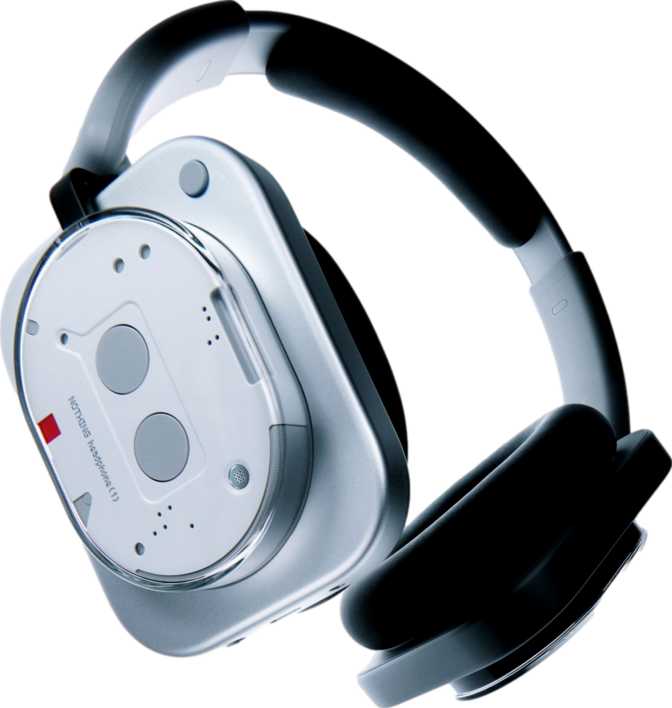
Nothing Headphone 1 Review: An Honest Look at Sound, Battery and Build
HeadphonesQuick Overview
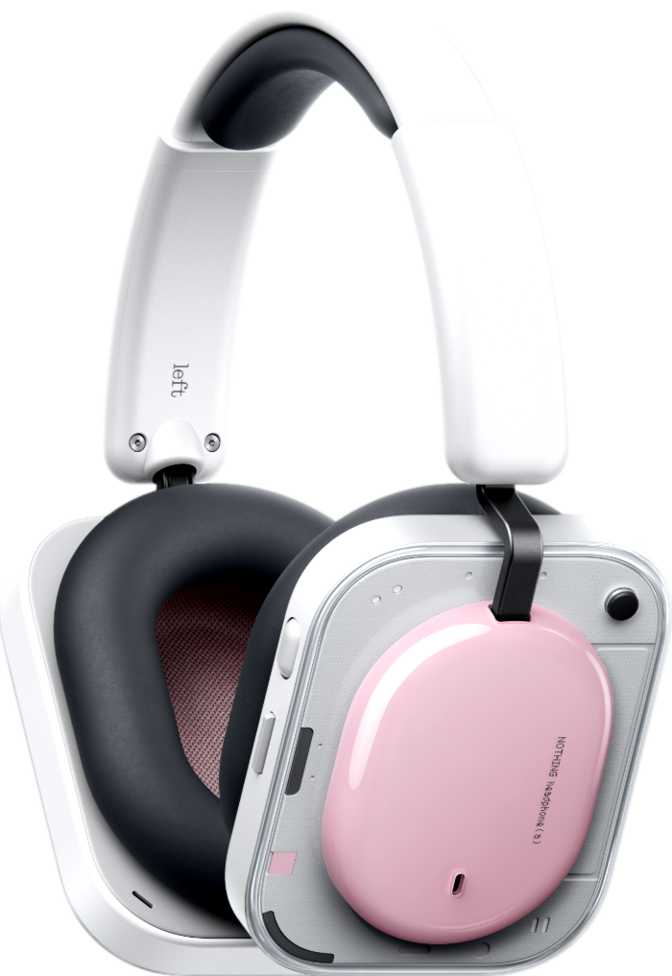
A company that built its identity on transparent earbuds and minimalist phones taking on full-size, noise-cancelling headphones is the kind of move that invites scrutiny. The Nothing Headphone 1 isn't just another entry in a crowded over-ear category, it's a statement about what the brand thinks a premium listening device should do well, and just as tellingly, what it's willing to leave out. Below we break down comfort over long sessions, how the noise cancellation actually performs, what the battery numbers mean day to day, and where this headphone wins or loses against the established names in the space.
80 Hrs
Battery, ANC Off
35 Hrs
Battery, ANC On
329 g
Weight
IP52
Ingress Rating
40 mm
Driver Size
5.3
Bluetooth
2 Hrs
Charge Time
6 Mics
Call Array
Design, Build Quality & Everyday Comfort
How Comfortable Is It to Wear?
At 329 grams, the Headphone 1 sits on the heavier side of the over-ear spectrum. That weight isn't a flaw by itself, it often correlates with larger drivers, bigger batteries, and sturdier hinges, but it does mean comfort over long stretches will depend heavily on how well the clamping force and headband padding distribute that load across your head. For a quick call or a commute you won't notice it. For a six-hour work-from-home session you'll want to budget in the occasional break, the same way you would with most headphones in this weight class.
Just How Water and Sweat Resistant Is It?
The Headphone 1 carries an IP52 rating, which breaks down into two practical promises: solid protection against dust and fine particles, and resistance to light moisture like dripping sweat or a stray splash, but not rain, splashes, or submersion. Paired with its sweat-resistant build, that makes it a reasonable companion for an indoor workout or a sweaty commute, but it is not a headphone you should wear running in the rain or take into the shower.
If your use case leans toward outdoor training in unpredictable weather, treat the IP52 rating as a guardrail, not a guarantee.
Does It Fold for Travel?
Despite shipping with a dedicated travel bag, the Headphone 1 does not fold flat or collapse for storage. That's a real trade-off worth flagging before you buy. The included bag protects the headphone in transit, but it won't shrink the package, expect it to occupy roughly the same footprint in your bag as it does on your head. If you're a frequent flyer who prioritizes a slim travel profile, this is the first compromise you'll run into.
Cable, Connector and Cord Management
The included cable is detachable and tangle-resistant, running 1.2 meters, long enough to comfortably reach a laptop on a desk or a seatback entertainment system, short enough to avoid becoming a hazard underfoot. Because the cable detaches, a damaged or lost cord doesn't mean the headphone itself is compromised, a replacement is a simple swap rather than a repair.
Sound Quality and Audio Performance
Driver Size and Frequency Range Explained
Each ear cup houses a 40mm driver, a size that strikes a practical balance: large enough to move real air and deliver authoritative bass and dynamic range, without the added bulk and battery draw of the oversized 50mm-plus drivers found in some bass-forward competitors. The stated frequency range stretches from 20Hz up to 40,000Hz, well beyond the roughly 20Hz to 20kHz ceiling of human hearing. In practice you won't consciously hear anything above 20kHz, but that extended upper range is typically a marker of a driver built for Hi-Res Audio certification and finer high-frequency detail, which matters most when paired with a codec capable of carrying that extra resolution wirelessly.
The spec sheet doesn't list a neodymium magnet in the driver assembly, which many premium headphones use for a strong magnetic field in a compact size. That doesn't necessarily mean inferior sound, but it's a small data point enthusiasts chasing maximum driver efficiency may want to weigh.
How Good Is the Active Noise Cancellation?
The Headphone 1 combines active noise cancellation (ANC) with passive noise isolation from the closed-back ear cup design. This two-layer approach is the right one: passive isolation physically blocks higher-frequency sounds like chatter and clattering keyboards through the ear cup seal, while the active system targets the low, droning frequencies, engine hum, HVAC noise, airplane cabin rumble, that physical padding alone can't touch. Closed-back construction also means almost none of your audio leaks out to people sitting near you, a fair trade against the wider, more open soundstage that open-back designs are known for. If your priority is blocking out a noisy office or a long flight, the closed-back-plus-ANC combination here is the right call. If you're a critical listener who values the airy staging of open-back headphones for quiet home listening, know upfront this isn't that kind of headphone.
What Does Spatial Audio Support Add?
Support for spatial audio means the Headphone 1 can process compatible content to simulate a wider, more three-dimensional soundstage rather than the flat left-right image of standard stereo. It's most effective with movies, certain music masters, and content specifically mixed to take advantage of it, it won't transform every track, but for content built to use it, it adds a noticeable sense of space.
Connectivity and Codec Support
The Headphone 1 connects over Bluetooth 5.3, the current mainstream Bluetooth generation, which brings meaningfully better power efficiency and connection stability compared to older versions, directly relevant to a headphone built around long battery life. It also supports a wired connection through its detachable cable, giving you a fallback when you'd rather not draw on the battery, or want zero-latency audio for a flight or gaming session.
Where things get more interesting is in codec support, the behind-the-scenes technology that determines how much audio detail makes it from your phone to your ears wirelessly.
| Codec / Feature | Supported | What It Means For You |
|---|---|---|
| LDAC | Supported | A high-bitrate, Hi-Res-capable codec primarily supported on Android. Best paired with an Android phone for the highest possible wireless audio detail. |
| AAC | Supported | The standard codec for iPhone and most streaming apps. Solid, dependable quality, but a step below LDAC's ceiling. |
| aptX Family (HD, Adaptive, Lossless) | Not supported | Not supported. Some Android phones and many Windows laptops favor aptX over LDAC, those devices won't get this headphone's best wireless quality tier. |
| Bluetooth LE Audio | Not supported | No support for the newer low-energy Bluetooth audio standard some newer devices are starting to adopt. |
| Auracast | Not supported | Can't receive or broadcast public Auracast audio streams used in some venues for shared listening. |
| Fast Pair | Supported | Near-instant pairing the first time you turn it on near an Android device. |
| NFC Pairing | Not supported | No tap-to-pair via NFC, you'll pair through standard Bluetooth discovery instead. |
The practical takeaway: this is, functionally, an Android-and-AAC headphone. iPhone users get clean, reliable AAC streaming, but won't unlock the LDAC tier reserved for Android pairing. Android users with LDAC-compatible phones get the best version of this headphone's sound; Android users on aptX-only devices land in the same AAC tier as iPhone owners. With a maximum Bluetooth range of about 10 meters, expect reliable connection within a room but a drop in stability across walls or rooms.
Multipoint support lets you stay connected to two devices simultaneously, a laptop and a phone for example, and switch between a video call and an incoming notification without manually re-pairing. That's a genuinely useful convenience for anyone who splits their day between a computer and a phone.
Battery Life and Charging
This is where the Headphone 1 makes its strongest case. With ANC switched off, the rated battery life reaches 80 hours, enough for roughly two full work weeks of eight-hour daily listening on a single charge. Switch on active noise cancellation, which always demands more power, and that figure drops to a still-substantial 35 hours. Even at the more power-hungry ANC setting, a listener doing two hours of noise-cancelled listening a day would stretch a single charge past two weeks.
A full charge takes about 2 hours over USB-C, a modern, widely available connector that means you can top up with the same cable you likely already use for your phone or laptop. There's no wireless charging here, so you'll always need to plug in, but given how rarely you'll actually need to given the battery life on offer, that's a minor inconvenience rather than a daily annoyance. A built-in battery level indicator means you'll know where you stand before heading out the door.
The battery is fixed, not user-removable. Like most rechargeable lithium batteries it will gradually lose capacity over years of charge cycles, worth knowing if you plan to keep this headphone for the long haul rather than upgrading every couple of years.
Smart Features That Matter Day to Day
-
Six-Microphone Array With Noise-Cancelling Calls
Designed to isolate your voice from background noise during calls, which matters most in open offices, busy streets, or windy outdoor settings.
-
Ambient Sound Mode
Lets outside sound through without removing the headphone, useful for hearing transit announcements or having a quick conversation mid-session.
-
Automatic In/On-Ear Detection
Pauses playback the moment you take the headphone off and resumes when you put it back on, saving battery and your place in the queue.
-
On-Device Physical Controls
Controls live directly on the ear cup rather than a separate remote, so playback, calls, and volume are manageable without reaching for your phone.
-
Headset-Ready for Calls
Combined with the microphone array, this functions as a full headset for voice and video calls, not just a music listening device.
There's no in-line control panel on the wired cable. When connected via the cable rather than Bluetooth, you lose on-cable volume, track, and call controls, treat wired mode as a clean audio pass-through, not a fully-controllable wired headset.
Who the Nothing Headphone 1 Is Built For
Built For
- Android users who want long battery life without constant charging anxiety, the 80-hour and 35-hour figures comfortably outlast most daily routines.
- Commuters and office workers who need reliable noise cancellation, solid call quality, and the convenience of multipoint switching between laptop and phone.
- Listeners who value substance over style flourishes, wireless charging and folding hinges are absent, but the fundamentals are all present and accounted for.
Not Built For
- iPhone-first users chasing the absolute best wireless audio fidelity, AAC performance is solid but not the LDAC-tier detail Android pairing unlocks.
- Frequent flyers prioritizing a compact travel footprint, the lack of a folding hinge means it takes up real space in a bag, travel pouch or not.
- Anyone needing serious water resistance, IP52 covers sweat and light splashes, not rain or submersion.
- Open-back sound purists, the closed-back design favors isolation and bass over an airy, expansive soundstage.
How It Stacks Up Against Other Premium ANC Headphones
Against the established flagship ANC over-ears from brands like Sony, Bose, and Sennheiser, the Headphone 1's clearest differentiator is endurance. Most mainstream flagship ANC headphones in this category land meaningfully short of an 80-hour ceiling, so a listener who hates managing charge cycles will likely notice the difference within the first week of ownership. Bluetooth 5.3 and dual multipoint also keep it competitive on the connectivity fundamentals that matter for daily multitasking between devices.
Where it concedes ground is codec breadth and future-readiness. Headphones in this price tier from more established audio-first brands frequently support a wider spread of codecs, including some flavor of the aptX family alongside LDAC and AAC, which broadens compatibility across more phones and laptops regardless of platform. The absence of LE Audio and Auracast support also means this headphone isn't built with next-generation Bluetooth broadcast features in mind. If outright battery longevity and dependable day-to-day connectivity are your top priorities, the Headphone 1 holds its own. If you want the broadest possible codec compatibility or the newest Bluetooth standards, established audio brands currently have an edge.
The Honest Take: Strengths and Weaknesses
What We Liked
- Class-leading battery life. An 80-hour ceiling with ANC off and 35 hours with it engaged puts this headphone in a different conversation than most ANC competitors.
- Fast top-ups. A 2-hour charge time means even a depleted battery isn't a long wait away from full.
- Sensible dual-layer noise reduction. Active cancellation backed by a closed-back passive seal, a well-considered approach rather than a gimmick.
- Genuine attention to calls. The six-microphone setup signals real care for a feature easy to under-spec on music-first headphones.
Where It Falls Short
- No folding mechanism. This undercuts the value of the included travel bag, you get protection, not compactness.
- Narrower codec story than some rivals. The best wireless audio quality is reserved for Android users on LDAC-compatible phones.
- No wireless charging, and missing in-line cable controls mean wired use sacrifices convenience for simplicity.
Frequently Asked Questions
Final Verdict
The Nothing Headphone 1 earns its place as a strong recommendation for Android users, especially those who hate thinking about charging, who want dependable active noise cancellation, solid call quality, and genuinely class-leading battery endurance in a closed-back over-ear design. The 80-hour and 35-hour battery figures alone separate it from a meaningful chunk of the competition, and the underlying fundamentals, driver size, frequency range, dual-layer noise reduction, six-mic call array, are all sound, sensibly chosen specs rather than marketing filler.
Where it asks for compromise is just as clear: no folding hinge despite the included travel bag, no wireless charging, narrower codec support that favors Android over iPhone, and no in-line controls for wired use. None of these undermine the core listening experience, but they matter if your priorities lean toward maximum travel compactness, the broadest possible device compatibility, or the newest Bluetooth audio standards.
If your daily reality is long listening sessions, frequent device switching, and a genuine dislike of charging cables, the Headphone 1 is built specifically for you. If portability, open-back staging, or iPhone-optimized wireless fidelity top your list, weigh those priorities against what this headphone deliberately leaves out before committing.