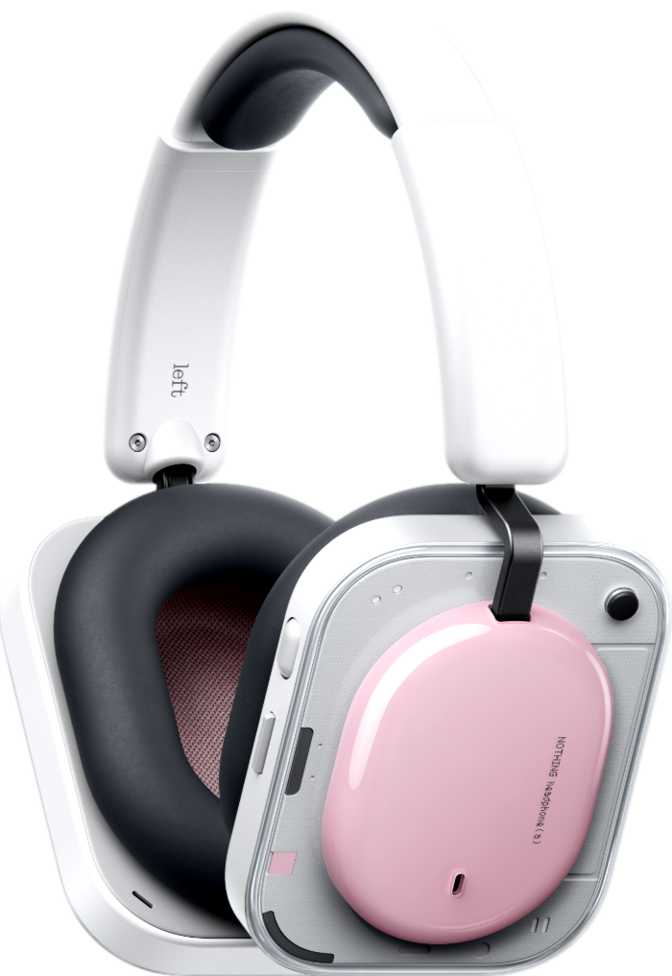
Nothing Headphone (a) Review: Exceptional Battery, Real Trade-offs
HeadphonesNothing has built its reputation on making technology that looks like it came from a different decade—in the best possible way. The Nothing Headphone (a) carries that philosophy into the over-ear headphone space, arriving with a spec sheet that punches well above its expected price tier, most notably with a battery life that borders on the absurd and a codec selection that audiophiles will actually appreciate. The real question is whether this headphone delivers a complete, polished experience—or whether the flashy numbers mask compromises that matter in daily use. Here is the full picture.
Design and Build Quality
Fit, weight, materials, and day-to-day wearability
Fit, Weight, and Wearability
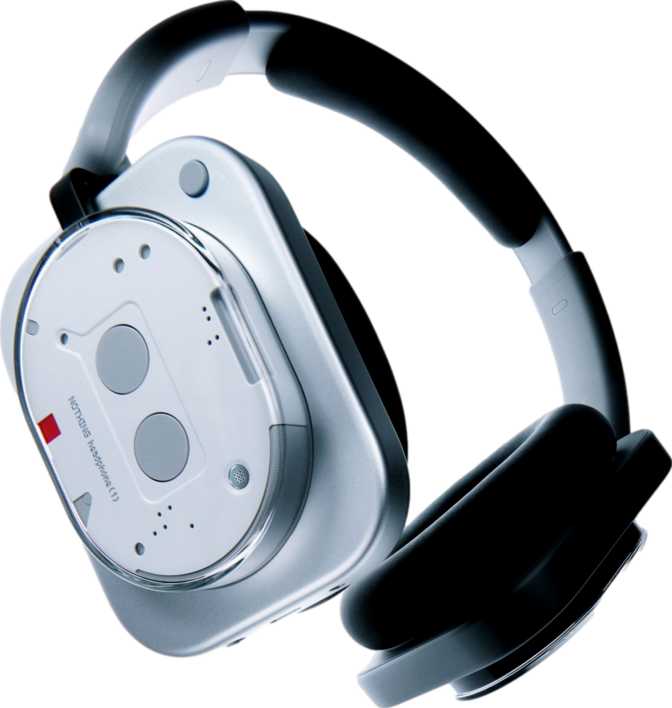
The Headphone (a) is a closed-back, over-ear design—meaning the earcups fully surround your ears rather than resting on them. This is the right choice for a headphone targeting everyday and commuter use: you get natural passive isolation from street noise, a more immersive sound stage, and better bass containment than open-back alternatives.
At 310 grams, it sits at the upper-middle end of the comfort spectrum for wireless over-ears. It is not the lightest headphone in this category—something you will notice during extended sessions beyond two or three hours. For commuters, office workers, and casual listeners, that weight is entirely manageable. For people who wear headphones for five or six hours straight, it is worth being aware of.
The frame folds flat, which matters more than it sounds. A headphone you cannot fold is a headphone you stop carrying. The included travel bag means Nothing also thought about what happens after you fold it—a small but meaningful detail that many competitors skip.
Cable Design
The Headphone (a) ships with a 1.2-metre detachable, tangle-free cable. Detachability is a durability feature: the most common way headphone cables fail is at the connection point, and with a removable cable, that failure becomes a cheap fix rather than a reason to buy new headphones. The 1.2-metre length is practical for desktop use without being unwieldy.
- Fit TypeOver-ear (Closed)
- Weight310 g
- FoldableYes
- Cable1.2m Detachable
- IP RatingIP52
- Travel BagIncluded
Sound Quality Analysis
Driver performance, active noise cancellation, and what the specifications actually mean
Driver and Frequency Range
The Headphone (a) uses a 40mm driver—a size that sits squarely in the mainstream sweet spot for over-ear headphones. Drivers of this diameter have enough surface area to move air convincingly in the low frequencies without the diminishing returns of larger, heavier drivers that can introduce sluggishness in the mids.
The frequency response runs from 20Hz at the bottom to 40,000Hz at the top. The 20Hz floor aligns with the human hearing limit, covering sub-bass frequencies you feel as much as hear—relevant for electronic music, film scores, and anything with significant low-end presence.
The 40,000Hz ceiling extends well beyond what any human ear can detect. The practical benefit is better high-frequency headroom and reduced phase distortion in the audible upper range—both subtle but real advantages for high-resolution audio playback.
Active Noise Cancellation
ANC is present and functional. The Headphone (a) benefits from a layered approach: the closed-back physical design blocks a meaningful amount of ambient noise before the electronics even activate, which means the ANC system does not have to work as hard—a factor that benefits both sound quality and battery efficiency.
The eight-microphone array is a meaningful number. For context, premium competitors typically use between four and eight microphones. Eight here suggests a sophisticated beamforming and noise-rejection setup capable of isolating your voice clearly during calls even in noisy environments.
Ambient sound mode feeds external audio through the microphones so you can hear your surroundings without removing the headphones. For commuters and office workers, this is no longer optional—it is essential.
Spatial Audio
Support for spatial audio means the Headphone (a) can process positional sound cues to create a three-dimensional listening experience—particularly relevant for gaming, immersive content, and compatible streaming services. Whether the implementation feels genuinely spatial or merely simulated depends on the source content and app ecosystem, but the hardware capability is present.
- 40mm drivers — optimal over-ear size
- 20Hz–40kHz frequency response
- Active noise cancellation (ANC)
- Passive isolation (closed-back design)
- 8-microphone beamforming array
- Ambient / transparency mode
- Spatial audio support
Codec Support: Why LDAC Is the Right Call
Understanding what your Bluetooth audio codec actually does to your music
Bluetooth audio has historically compressed music significantly to transmit wirelessly. LDAC, developed by Sony and now openly licensed, transmits audio at up to three times the data rate of standard Bluetooth audio—meaning you hear considerably more of what the original recording actually contains.
For listeners using lossless streaming services or high-resolution audio files, LDAC is the codec that makes that investment meaningful. Without it, even a premium hi-res audio subscription gets compressed down toward CD quality before it reaches your ears. With LDAC, you are getting substantially closer to the full-resolution source.
The Headphone (a) also supports AAC—the relevant codec for Apple device users. AAC on iOS transmits at a higher effective quality than standard Bluetooth SBC, so iPhone users will still get a noticeably better result than they would on a headphone limited to SBC alone.
Supported
- LDACHi-Res wireless
- AACApple devices
- Bluetooth 5.4Latest standard
Not Supported
- aptX / aptX HD / aptX Adaptive
- LDHC
- Bluetooth LE Audio / Auracast
- NFC pairing
Battery Life: A Genuine Standout
Why these numbers are not just marketing — and what they mean in weekly real-world use
At 137 hours of wireless playback with ANC off, the Nothing Headphone (a) offers one of the longest battery lives in its category—full stop. To put that in relatable terms: if you listen to music for four hours a day, five days a week, you would charge these headphones roughly once every seven weeks. That is a fundamentally different relationship with charging than most headphones require.
With ANC active, runtime drops to 75 hours—still extraordinary by any reasonable standard. At four hours of daily ANC listening, you are still looking at charging roughly once every two to three weeks.
The underlying 1,060mAh battery achieves this runtime because the overall system—including the Bluetooth chipset, ANC processing, and drivers—operates with genuine efficiency. This is not simply a matter of packing in an oversized battery.
Charging Practicalities
A full charge takes two hours via USB-C, the current universal standard. Wireless charging is not supported—a clear cost-related decision. Given the battery life figures, the absence of wireless charging is almost impossible to frame as a real-world problem. You will simply charge far less often than you do with any other device in your bag.
A battery level indicator is included, so you are never left guessing when you need to plan for a charge.
Nothing Headphone (a) — ANC Off
Category benchmark
Nothing Headphone (a) — ANC On
Exceptional with ANC active
Typical Mid-Range Competitor
ANC-off category average
Typical Premium Competitor
ANC-off category average
Controls, Connectivity, and Daily Use
How you interact with the headphone and where convenience features land
On-Device Controls
Controls are placed directly on the earcups rather than an inline cable remote—the right approach for a wireless-first headphone. Physical on-device controls are easier to find by feel without looking, and they work regardless of whether you are using the wired or wireless connection.
There is no automatic ear-detection feature, meaning music will not pause automatically when you remove the headphones. This is a convenience omission that some users will miss—particularly those who frequently take headphones off mid-track. It is not a dealbreaker, but it represents a feature present on competing headphones at and above this price range.
Pairing and Wireless Connection
Fast pairing is supported, meaning connecting to a compatible device for the first time takes seconds rather than requiring a manual Bluetooth menu hunt. NFC pairing—tap-to-pair—is not included.
The Headphone (a) functions as a full headset, meaning the microphone array is usable for calls and voice input, not just ANC. The Bluetooth range of approximately 10 metres is standard for this class—reliable in open space, with some reduction through walls.
Who Should Buy the Nothing Headphone (a)
Matching the headphone's strengths to real purchase scenarios
- Frequent travellers and commuters who want ANC without the anxiety of running out of battery mid-trip. The multi-week battery life removes that concern entirely.
- Android users with LDAC-compatible devices who want high-resolution wireless audio without paying for a flagship Sony or Sennheiser.
- Everyday listeners frustrated by frequent charging who want a headphone that simply never seems to need charging.
- Remote workers and hybrid professionals who need reliable call quality throughout the workday—the 8-microphone system is built for this.
- Gym users and light-weather commuters for whom IP52 provides the necessary peace of mind without over-specifying.
- Serious gamers who need the lowest possible audio latency. Without aptX Low Latency or aptX Adaptive, audio delay during gameplay will be more noticeable.
- Listeners who rely on auto-pause—removing the headphones mid-conversation and expecting music to pause automatically will not happen here.
- Users in very loud industrial or aircraft environments who need the strongest available peak ANC performance from a proven noise-cancellation specialist.
- Marathon-session listeners who wear headphones for five or more hours continuously, where 310g becomes a genuine factor in comfort.
How It Compares to the Competition
Feature-by-feature positioning against typical alternatives in and above this price range
| Feature | Nothing Headphone (a) | Typical Mid-Range | Typical Premium |
|---|---|---|---|
| Battery — ANC Off | 137 hours | 30–60 hours | 30–40 hours |
| Battery — ANC On | 75 hours | 20–40 hours | 20–30 hours |
| LDAC Audio Codec | Varies | Often Yes | |
| Active Noise Cancellation | |||
| Microphone Count | 8 | 2–4 | 4–6 |
| Wireless Charging | Varies | Often Yes | |
| Auto Ear Detection | Often Yes | Often Yes | |
| IP Weather Rating | IP52 | Often None | Often None |
| Detachable Cable | Rarely | Sometimes | |
| Foldable Design |
Comparison reflects general category averages. Individual competitor specifications vary by model and version.
Honest Assessment: Strengths and Weaknesses
A balanced look at what Nothing got right and where they made deliberate trade-offs
The battery life on the Nothing Headphone (a) is not a marketing number you mentally discount—it holds up to scrutiny when you examine the underlying capacity and the system efficiency producing it. For the majority of users, this single feature resolves a persistent frustration with wireless headphones in a way that feels genuinely liberating.
The codec selection shows maturity. LDAC plus AAC covers the majority of high-quality listening scenarios on both Android and iOS. Skipping the aptX variants is defensible given LDAC's quality ceiling—this is not a cost-cutting decision that hurts the listening experience.
The eight-microphone setup raises call quality expectations above what you typically find at this price point. Hardware count is a necessary—if not sufficient—condition for excellent call performance, and this headphone has done its part on that front.
The weight is a genuine consideration for long-session listeners. 310 grams is not heavy in absolute terms, but it is meaningfully heavier than ultralight competitors—and that difference becomes noticeable across three or four hours of continuous wear.
The absence of auto ear detection becomes habitual friction. You will miss it specifically in the moments when you need it most—removing the headphones mid-conversation and finding your music still playing is a small irritation that compounds over time.
The absence of LE Audio and Auracast is a forward-looking gap rather than a present-day problem. Buyers who intend to keep this headphone for several years may find that the wireless connectivity landscape has moved on around them.
Common Questions Before You Buy
Answers to what real buyers search for before making their decision
Final Verdict
Nothing Headphone (a) — Reviewer's Conclusion
The Nothing Headphone (a) makes a compelling case built on two pillars that most competitors cannot match simultaneously: exceptional battery endurance and serious audio codec support. The 75-hour ANC runtime puts it in a class of its own for travellers and infrequent chargers, and the inclusion of LDAC confirms that audio quality was not sacrificed to achieve that runtime.
What you give up is meaningful but not critical for the majority of buyers: no auto ear detection, no wireless charging, no aptX Adaptive for low-latency Android gaming, and a weight that demands respect for longer listening sessions.
If your primary frustrations with current headphones are frequent charging and audio compression on your streaming service, the Nothing Headphone (a) addresses both directly and confidently. If you prioritise the lowest-latency gaming audio or near-invisible weight for marathon sessions, look at headphones built specifically around those requirements.
For the broad audience of commuters, remote workers, and everyday music listeners who want a headphone that sounds genuinely good, handles calls reliably, and simply never seems to need charging—
this is a well-considered buy.