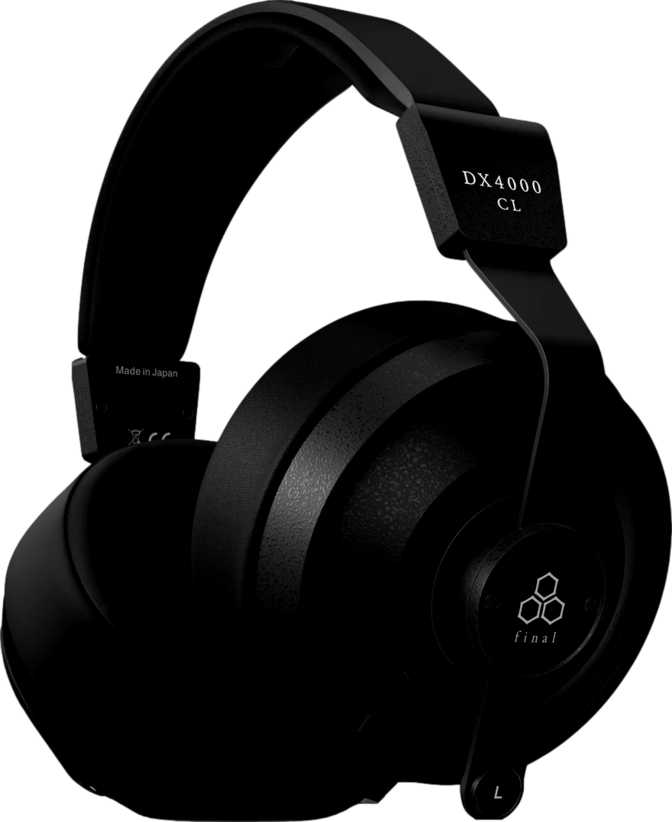
Final DX4000 CL Review: A Pure Wired Headphone for Serious Listeners
HeadphonesThere is a shrinking category of headphones that refuses to negotiate: no Bluetooth, no touch controls, no voice assistant integration, no noise-cancellation algorithm quietly coloring your audio in the background. The Final DX4000 CL belongs firmly in that category. It is a closed-back, over-ear, fully wired headphone built around a single premise — that the listening experience itself is the product, and everything else is a distraction.
For a buyer coming from a world of wireless earbuds and feature-loaded headsets, that might sound limiting. It is not. It is a choice, and understanding why that choice matters is the difference between this being the right headphone for you or completely the wrong one.
Design and Build: Restrained, Purposeful, and Portable
Physical Construction
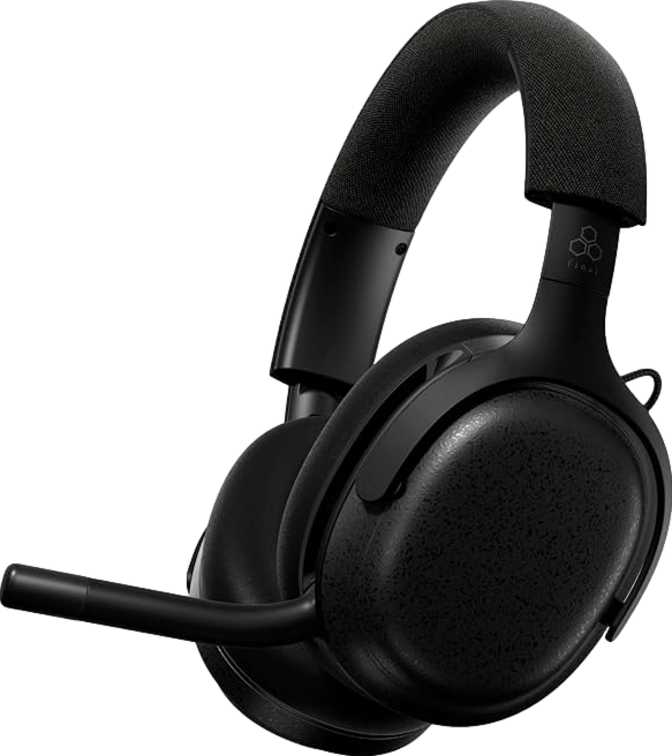
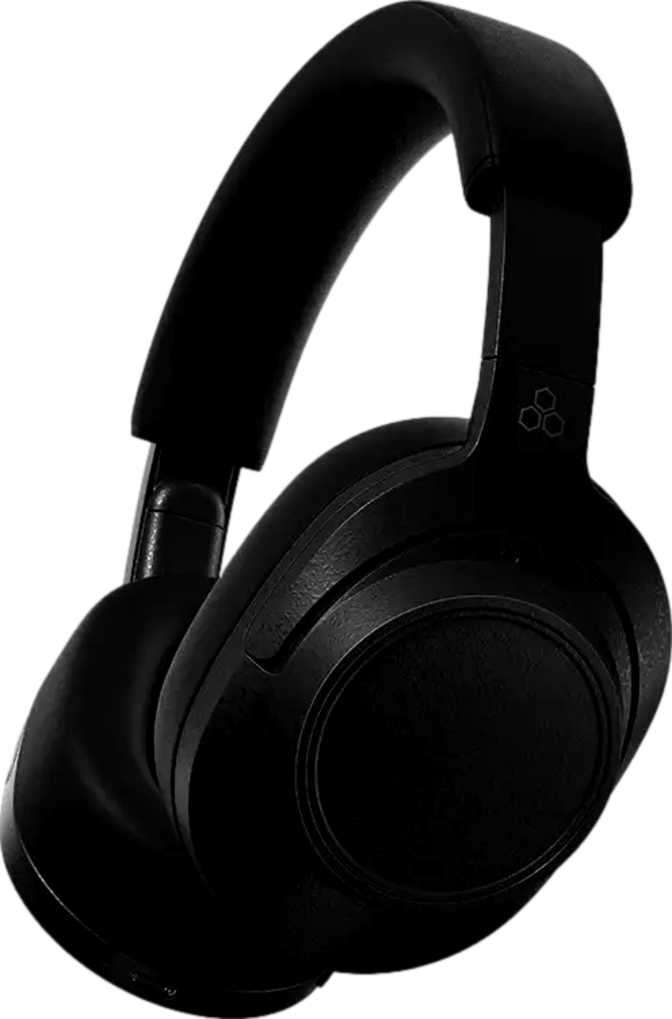
The DX4000 CL is an over-ear design, meaning the ear cups encircle the ears rather than pressing against them. This matters for comfort during extended sessions — pressure fatigue, which plagues on-ear designs after an hour or so, is far less of a concern when the cushions sit around the ear rather than on it.
At 375 grams, the headphone sits in the mid-range for its category. It is not ultralight — some competitors shave this down to the 250–280g range — but it is not heavy enough to cause discomfort during typical listening sessions. Expect that weight to become noticeable only after two or more continuous hours of wear, and even then, clamping force and pad material will matter more than raw grams.
The foldable construction is a meaningful practical addition. A full-size over-ear headphone that does not fold becomes a desk-or-nothing proposition. The DX4000 CL can be collapsed into a more compact form for transport without compromising its structural integrity in normal use.
The Cable Setup
The cable is detachable, which is one of the more underappreciated features on any wired headphone. A fixed cable that frays or breaks at the connector renders the entire headphone unusable. A detachable cable means a replacement costs a few dollars rather than the full price of new headphones.
The included cable runs two meters in length. This is a deliberate choice for desk and home listening — long enough to connect a headphone amplifier, desktop audio interface, or home stereo receiver without pulling taut. It is not designed for walking around with a phone in your pocket; for that use case, a shorter aftermarket cable would be the practical solution.
Sound Quality: What the Specifications Actually Mean
Driver Design and Magnetic System
The DX4000 CL uses 40mm dynamic drivers — a standard diameter for full-size over-ear headphones and one that provides adequate surface area for moving air across the full frequency range from deep bass through high treble. Forty millimeters is the baseline for a reason; it represents decades of engineering refinement at this size.
The driver uses a ferrite magnet rather than neodymium. Neodymium magnets are smaller and lighter for the same magnetic field strength, which is why they dominate premium headphone engineering. Ferrite magnets are larger and heavier to achieve equivalent flux density, but they are also more stable in variable temperature conditions and are sometimes preferred in studio-adjacent applications where absolute consistency matters more than miniaturization. The DX4000 CL's driver likely prioritizes a particular voicing or tonal character over the size savings a neodymium system would offer.
Impedance and Source Compatibility
At 37 ohms, this headphone sits in a practical middle ground. It is low enough to produce usable volume from a smartphone headphone output but high enough that it rewards a dedicated headphone amplifier or DAC with improved control and dynamics. Plugging this into a laptop's headphone jack will get you sound — but feeding it through even a modest desktop DAC/amp will noticeably improve separation and low-frequency authority.
This is not a difficult headphone to drive. It does not require the kind of dedicated amplification that 250-ohm or 600-ohm studio monitors demand. Think of the 37-ohm rating as: works acceptably with most sources, performs best with a clean, moderately powerful output.
Sensitivity and Listening Levels
The 96 dB per milliwatt sensitivity tells you how efficiently the driver converts electrical power into sound pressure. This is a moderate figure. High-sensitivity headphones around 110 dB/mW get loud with very little power and are preferred for portable use. Options below 90 dB/mW require more driving voltage for the same perceived volume.
At 96 dB/mW, the DX4000 CL balances adequate loudness from consumer sources with the driver control that comes from not being excessively efficient. You will not be maxing out your volume slider, and you will not need an amplifier just to reach comfortable listening levels.
Passive Noise Isolation
The closed-back construction provides passive noise isolation — physical attenuation of ambient sound through the seal of the ear cups against your head. This is fundamentally different from active noise cancellation. ANC uses microphones and phase-inverted signals to electronically subtract repetitive sounds like engine hum. Passive isolation simply blocks sound through physical barriers.
Passive isolation performs well across the frequency spectrum without adding any electronic processing to the signal path. There is no ANC hiss, no phase artifacts on transient sounds, and no battery consumption tied to noise management. What you lose is the ability to dial in how much ambient sound you hear — it is either on or off based on the seal quality. For home and desk listening, this is often the more transparent and reliable choice.
What the DX4000 CL Does Not Have — And Why That Matters
This section is as important as any other. The DX4000 CL is defined in part by its omissions, and every buyer should understand each one clearly before purchasing.
| Feature | DX4000 CL | Typical Wireless Competitor |
|---|---|---|
| Active Noise Cancellation | No | Often included |
| Bluetooth / Wireless | No | Core feature |
| Inline Remote / Controls | No | Standard |
| Microphone | No | Usually present |
| Spatial Audio Processing | No | Increasingly common |
| In-ear Detection (Auto-pause) | No | Often included |
| USB-C Charging | N/A — Wired only | Required for wireless |
There are no inline controls on the cable — no play/pause, no volume wheel, no microphone for calls. This is a pure listening device. It does not support hands-free calling, video conferencing, or gaming communication without a separate microphone.
There is no ambient sound mode, which means when the headphone is on your ears, you are isolated from your environment. This is a deliberate acoustic choice, not an oversight — but it means you will need to physically remove the headphone if someone needs your attention.
Spatial audio processing is absent. The DX4000 CL presents stereo audio as a traditional stereo image, not a head-tracked virtual surround field. For two-channel music listening and standard stereo mixes, this is irrelevant. For gaming or cinematic surround sound applications, it is a genuine limitation.
Real-World Usage: Who This Headphone Is For
- Music listeners at a desk or home setup. The two-meter cable, detachable connection, and over-ear comfort profile are engineered for stationary listening, working best connected to a dedicated audio source.
- Critical listeners and casual audiophiles. The all-wired, closed-back, no-processing signal chain is exactly what someone who wants to hear the recording without enhancement or alteration is looking for.
- Students and focused workers. Passive isolation reduces open-plan office noise or ambient household sound without the cost and complexity of ANC headphones.
- Anyone frustrated by wireless unreliability. A wired connection works every time, with zero pairing steps and zero charging cycles to manage.
- Remote work or call center use. Without a microphone, this headphone cannot handle voice calls or video conferencing. A separate microphone would be required.
- Commuting and active use. No water resistance, a two-meter cable, and 375g make this a poor fit for movement-heavy or outdoor environments.
- Gamers who need team communication. No microphone, no spatial audio, and no inline controls mean this requires separate communication hardware for any team play.
- Listeners who need on-headphone volume control. There are no controls anywhere on the DX4000 CL — all adjustments must happen at the source device.
Competitive Positioning
The DX4000 CL competes on acoustic design rather than feature count. Here is how it stacks up against the logical alternatives in the wired and wireless segments at a similar price point.
| Criteria | DX4000 CL | Budget Wireless | Mid-Range Studio Monitors |
|---|---|---|---|
| Signal chain purity | High — wired, no DSP | Lower — Bluetooth codec processing | High |
| Source flexibility | Moderate — 37 Ω | High — self-powered | Low — often high-impedance |
| Portability | Good — foldable design | Excellent | Poor — typically non-folding |
| All-day comfort | Good — over-ear cushions | Variable | Good |
| Feature set | Minimal | Extensive | Minimal |
| Cable replaceability | Yes — detachable | N/A | Usually yes |
The DX4000 CL is not competing with wireless lifestyle headphones on features — it would lose that comparison immediately. Its real competition is other wired, passive headphones in the same price tier, where acoustic tuning and build quality are the deciding factors.
Warranty and Long-Term Ownership
The two-year warranty period is a strong signal for a headphone in this category. Combined with the detachable cable — the single most failure-prone component on any wired headphone — the DX4000 CL is built with long-term ownership in mind. You can replace the cable independently, and the manufacturer backs the drivers and construction for two full years.
This matters more than it might seem at purchase time. A headphone that lasts five years with one cable replacement costs less per year of use than a cheaper model that fails at the connector eighteen months in. The math on longevity often favors the better-built product, and the DX4000 CL's detachable cable makes it a more repairable, sustainable long-term investment.
Strengths and Honest Weaknesses
Strengths
- Wired signal chain. No Bluetooth codec, no ANC algorithm, no processing between the source and your ears. What you send is what you hear.
- Passive isolation without electronic artifacts. Closed-back isolation introduces no hiss, no phase distortion, and requires no power to function.
- Detachable cable for longevity. The most vulnerable component is replaceable. A broken cable does not mean a broken headphone.
- Foldable and transport-friendly. Unlike most studio-adjacent headphones, the DX4000 CL can be folded and packed for travel between desk setups.
- Two-year manufacturer warranty. Solid coverage for a passive wired headphone with no battery or wireless components to fail prematurely.
- Source-flexible at 37 ohms. Compatible with laptops, adapters, and dedicated DACs without demanding specialist amplification.
Weaknesses
- No microphone or inline controls. This headphone handles audio playback only. Calls, volume, and playback require separate hardware or source-level management.
- Ferrite driver magnet. May present a different tonal character compared to neodymium-equipped headphones at this price level — worth auditioning before committing if possible.
- No weather or moisture resistance. Unsuitable for outdoor use and offers no protection against sweat or rain.
- Cable prone to tangling. The two-meter cable lacks tangle-resistant coating or braiding, requiring storage discipline or a cable management accessory.
- Not suited for commuting or active use. Weight, cable length, and the absence of weather protection make this a desk-first headphone with limited real-world mobility.
Common Buyer Questions
Final Recommendation
The Final DX4000 CL is a headphone built for people who know exactly what they want: clean, wired audio in a closed-back over-ear form that travels reasonably well and lasts. If your priority is music listening at a desk, extended focused work sessions, or critical audio monitoring without any electronic processing in the chain, this headphone delivers on its core promise without compromise.
It is not the right headphone for calls, commuting, active use, or anyone who needs hands-free control at their ear. Those needs require a different product entirely, and no amount of justification changes that.
If you are buying a headphone to listen to music — genuinely, as the primary activity — and you are tired of the battery anxiety, pairing steps, and codec compromises that wireless brings, the DX4000 CL deserves serious consideration. The two-year warranty, detachable cable, and foldable design mean it is built for real-world longevity, not just shelf presence.
Buy it for focused listening. Do not buy it as your only headphone if calls and mobility are part of your daily routine.