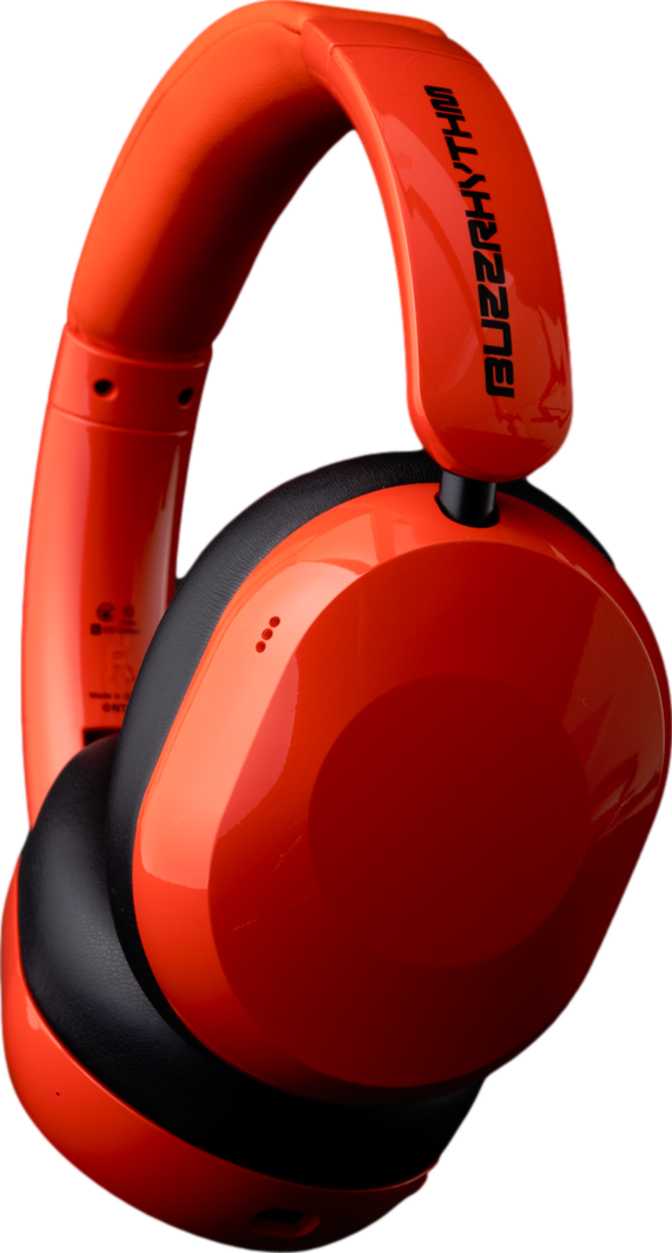
Final UX1000 Review: Exceptional Battery Life Meets Reliable ANC
HeadphonesThere is a crowded middle ground in the over-ear headphone market — products that promise premium features without demanding a premium price. The Final UX1000 plants its flag squarely in that territory, arriving with active noise cancellation, a battery life that towers above the category average, and a closed-back over-ear design built for extended daily use. Whether it delivers on those promises or quietly cuts corners where you will feel them most is exactly what this review works through.
Design and Build Quality
Fit, Weight, and Long-Session Comfort
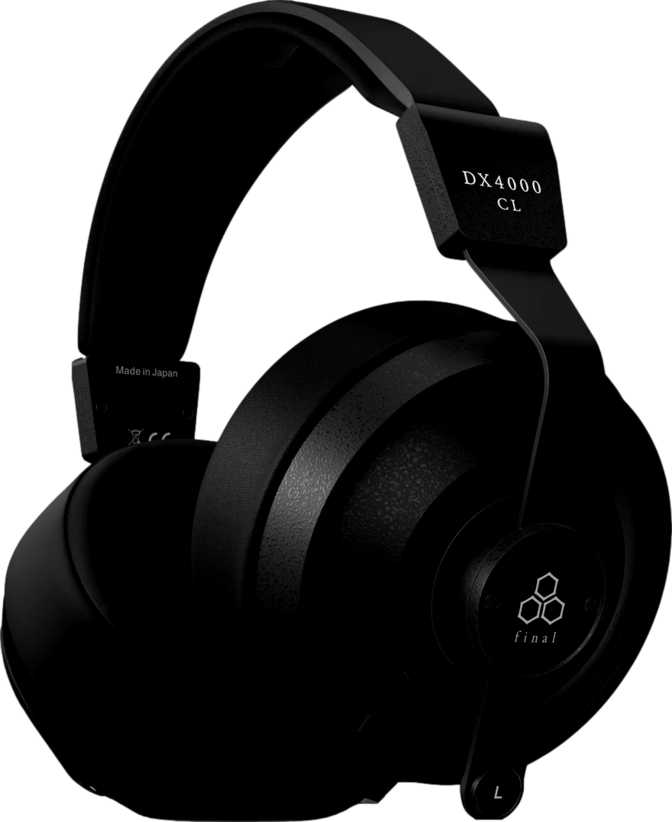
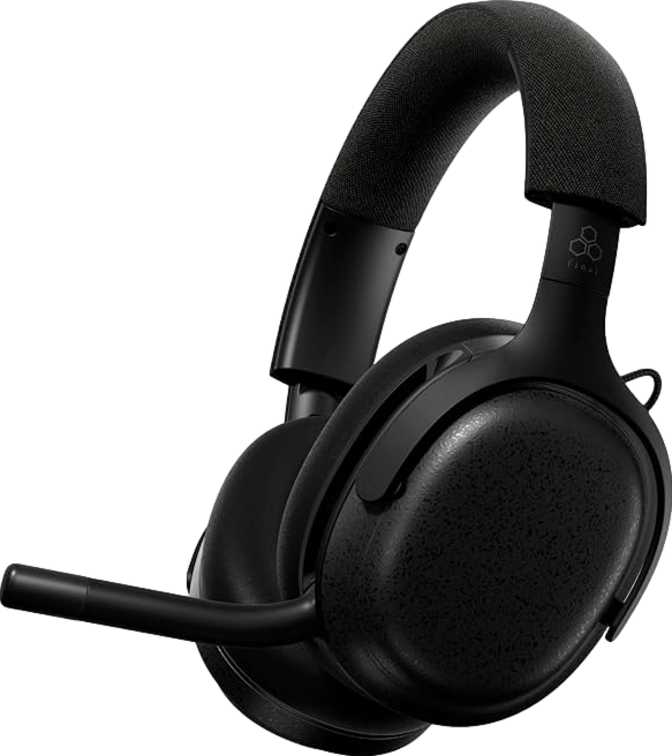
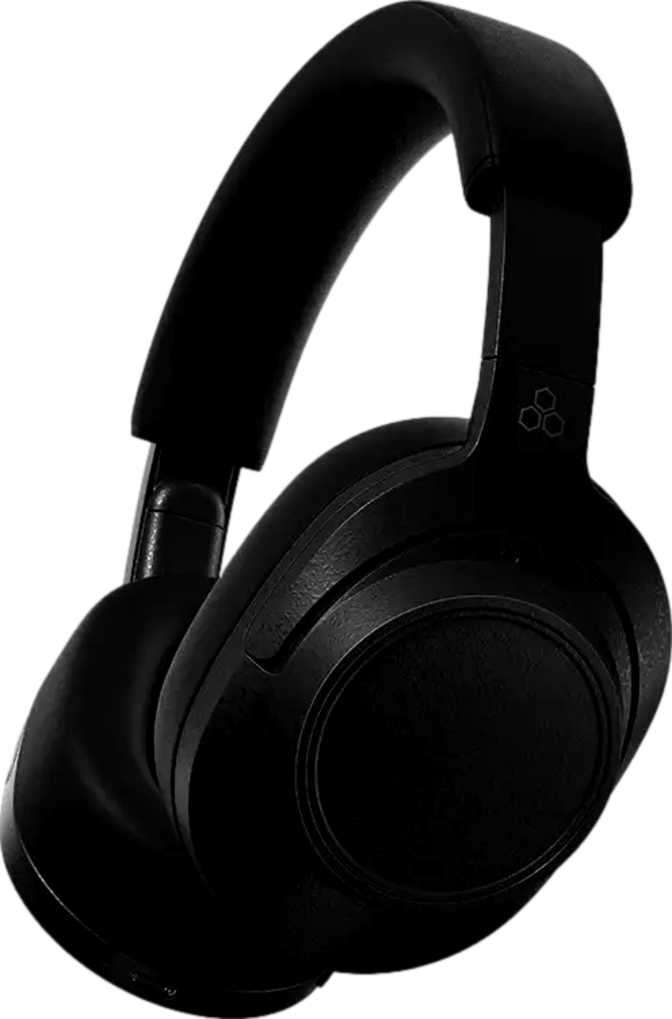
At 225 grams, the UX1000 is genuinely light for a full-size over-ear headphone. Most comparable ANC models sit between 250 and 300 grams — that difference accumulates into real comfort relief after two or three hours of continuous wear. If you have ever ended a long work call with a sore neck or pressure marks on your ears, this lighter frame is a meaningful advantage, not a trivial specification.
The closed-back design forms a sealed chamber around each ear. This is the right architectural choice for a headphone that also relies on passive noise isolation — the physical seal works with the active electronics rather than competing with them.
Portability and a Key Limitation
The UX1000 folds flat, turning a full-size over-ear headphone into a realistic daily carry. A headphone that does not fold can dominate a backpack or laptop bag; this one fits neatly into a side pocket without consuming the entire compartment.
Sound Performance
Full-Spectrum Audio
The UX1000 covers the entire audible range — from the deepest bass frequencies a person can physically perceive to the uppermost edge of high-frequency detail. Low-end rumble in electronic music, the resonance of a double bass, the crack of a snare, and the shimmer of a cymbal all fall within what these drivers are built to reproduce. Nothing is architecturally cut from your music before it reaches your ears.
Dual-Layer Noise Control
Active noise cancellation works through external microphones that listen to ambient sound and generate a cancelling signal before noise reaches your ears — most effective against the low-frequency drone of aircraft engines, air conditioning, and transit. The closed-back physical seal handles the broader mid-to-high frequency noise that active systems struggle with.
An ambient sound mode lets external audio pass through intentionally — useful at boarding gates or when a colleague needs your attention without removing the headphones entirely.
Wireless Codec: Honest Trade-Off
Audio transmits via AAC — sufficient for streaming at standard and high quality on Spotify, Apple Music, and similar services. The UX1000 does not support aptX, aptX HD, LDAC, or any lossless wireless codec.
For streaming listeners, this distinction is entirely academic. For audiophiles with locally stored high-resolution audio libraries who want lossless wireless transmission, it is a genuine limitation that should direct them toward LDAC-capable alternatives instead.
Battery Life and Charging
The UX1000's most compelling differentiator is its endurance — and the numbers are worth sitting with carefully.
Battery Life vs. Category Average
Scale based on 80-hour maximum. Category averages are representative of common mid-range ANC headphones.
At four to five hours of daily use, the UX1000 needs charging roughly once a week — or less. Heavy users running ANC for six hours daily still comfortably reach a full week between charges. The USB-C port means the same cable used by a modern laptop or Android phone works here; a full recharge from empty takes approximately two hours. There is no wireless charging, but given how rarely this headphone demands attention, that omission carries little practical weight.
Bluetooth Connectivity
Bluetooth 5.4 — What the Version Actually Means
Bluetooth 5.4 is the most current generation of the wireless standard, and its inclusion here is genuinely meaningful. The newer specification brings improved connection stability and more efficient power management compared to older 5.0 or 5.1 implementations found in many competitors — translating to fewer dropouts during use and a modest contribution to the headphone's impressive battery endurance.
The stated wireless range reaches approximately 10 meters in open-air conditions. Walls and signal interference reduce this, as with any Bluetooth device. This is an indoor, personal-use headphone — not designed for streaming audio across a large open space.
Two-Device Multipoint and Pairing
The UX1000 connects to two Bluetooth devices simultaneously — a laptop and a phone, for instance. When a call arrives on your phone while you work at your computer, the headphone handles the transition automatically. This is a practical daily feature and its inclusion at this level is welcome.
What is absent:
- No NFC tap-to-pair or fast pairing shortcut
- No LDAC, aptX, aptX HD, or lossless wireless codec
- No Bluetooth LE Audio or Auracast broadcasting
- No spatial audio or three-dimensional sound processing
Microphone and Call Performance
The UX1000 includes a noise-canceling microphone and functions fully as a headset for voice and video calls. The microphone is designed to separate your voice from background noise — relevant in the same environments where the ANC earns its keep: open offices, public transit, and anywhere ambient sound competes with call clarity.
Controls are integrated directly onto the ear cups — there is no in-line remote on a cable. Playback, volume, and call management all happen at the headphone itself. The built-in battery indicator gives you a visible signal of remaining charge so you are not caught off-guard mid-call or mid-commute.
- No dedicated mute button
- No automatic pause on ear removal
- No in-line cable remote option
Who This Headphone Is For — and Who It Is Not
- Works in open offices or shared spaces and needs dependable noise isolation throughout the workday
- Travels regularly and wants to get through a long-haul flight without searching for a charger
- Switches between a laptop and a phone daily and wants seamless two-device audio management
- Wants a foldable, lightweight over-ear headphone that stays comfortable during long sessions
- Streams music on services like Spotify or Apple Music and does not need lossless wireless audio
- Exercises in headphones or is regularly exposed to sweat and rain — there is no moisture protection
- Has invested in hi-resolution audio files and wants LDAC or lossless wireless transmission
- Wants spatial audio or immersive three-dimensional sound processing
- Prefers headphones that automatically pause playback when removed from the ears
- Needs a dedicated mute button for frequent and fast video call toggling
How the UX1000 Stacks Up Against the Competition
| Feature | Final UX1000 | Typical Mid-Range Competitor |
|---|---|---|
| Battery — ANC Off | ~70 hours | 30–50 hours |
| Battery — ANC On | ~40 hours | 20–30 hours |
| Charge Time | ~2 hours (USB-C) | 1.5–3 hours |
| Bluetooth Version | 5.4 | 5.0–5.3 |
| Multipoint Connections | 2 devices | 2 devices |
| Hi-Res Codecs (LDAC / aptX HD) | No | Varies by model |
| Water Resistance | No | Varies by model |
| Weight | 225 g | 250–300 g |
| Spatial Audio | No | Sometimes |
Competitor figures represent category averages across common mid-range alternatives. Individual models vary.
Honest Assessment: Strengths and Weaknesses
The battery life is the headline, and it earns that attention — nearly three times longer between charges than typical ANC headphones, with the ANC-on figure still comfortably beating most competitors' maximum rated endurance.
The weight is a quiet strength that reveals itself over time. At 225 grams, it sits meaningfully below the category norm, and the difference accumulates into real comfort relief during long work sessions. The foldable design adds daily-carry practicality without sacrificing size or build integrity.
Bluetooth 5.4, two-device multipoint, USB-C charging, and a battery indicator form a practical, well-considered feature set. Final's reputation for careful acoustic tuning adds reasonable confidence in sound quality that the specification sheet alone cannot convey.
The complete absence of water resistance is a genuine constraint — not a minor footnote. It limits where and how the UX1000 can be used, and premium competitors at comparable price points increasingly offer at least basic moisture protection.
The codec situation — AAC only, with no aptX or LDAC — limits the UX1000's appeal to anyone serious about high-resolution wireless audio. It is a real trade-off, not an afterthought to be ignored.
The missing auto-pause sensor and mute button are small but real friction points that premium competitors have already resolved. They will not bother every user — but knowing they are absent before buying is better than discovering it after.
Common Questions Before You Buy
Final Verdict
The Final UX1000 makes a specific and coherent argument: a well-built, lightweight, foldable ANC headphone whose battery life is so far ahead of the category norm that it effectively removes charging from your daily considerations. For professionals who spend long hours at a desk or in transit — and who move between two devices throughout the day — that argument is genuinely compelling.
It is not the right choice for buyers who treat their headphones as gym gear, who want spatial audio processing, or who care about extracting the maximum quality from high-resolution audio files over Bluetooth.
If your primary use case is focused work, commuting, and calls — and you want a headphone that simply stays charged and stays out of your way — the UX1000 delivers exactly what it promises, without pretending to be something it is not. That kind of clear-eyed product design earns a direct recommendation for the audience it was built for.
Best For
Office workers, frequent travelers, and multi-device users who put battery endurance and daily wearing comfort first.
Consider Alternatives If
You exercise in headphones, require LDAC or lossless audio, or need spatial sound and moisture protection.