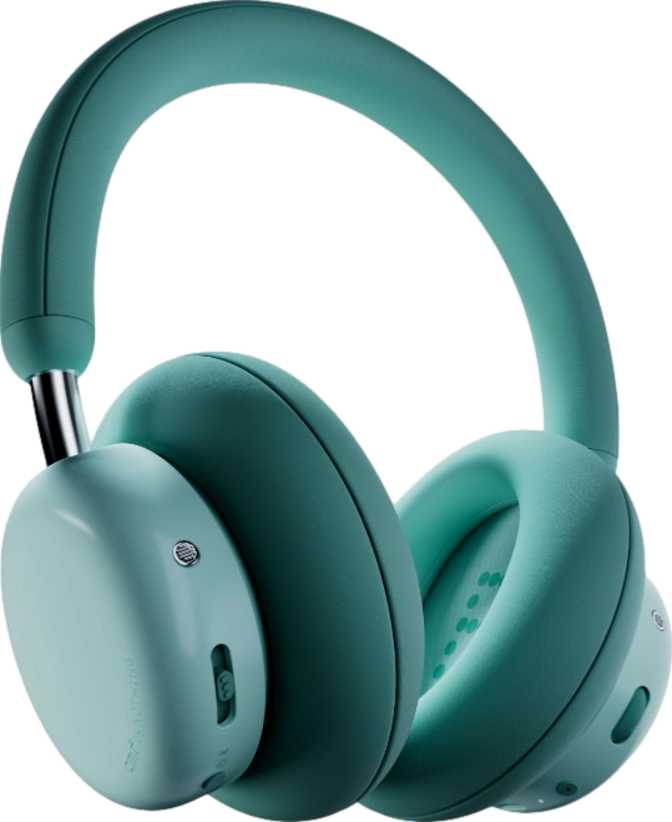
CMF Headphone Pro: An Honest Full Review of the Budget ANC Headphone
HeadphonesCMF Headphone Pro — Editor's Assessment
Quick Verdict
Category-leading battery life combined with LDAC high-resolution audio and a 10-microphone ANC system makes the CMF Headphone Pro one of the most specification-dense headphones at its price tier. A handful of missing convenience features are the only meaningful trade-offs.
Build Quality and Physical Design
Fit, weight, materials, and what the hardware actually feels like
Fit, Weight, and Long-Session Wearability
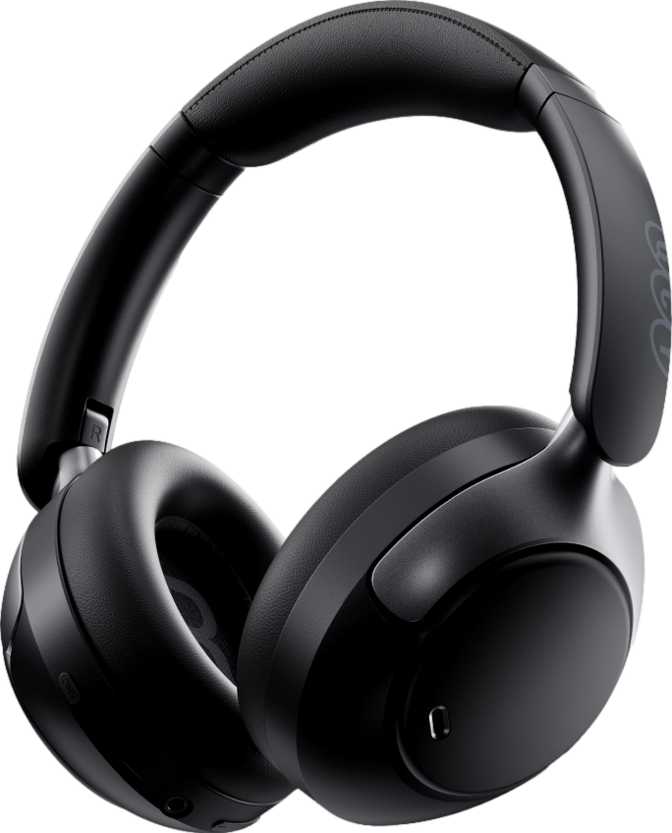
At 283 grams, the CMF Headphone Pro sits in a comfortable mid-range for over-ear headphones — noticeably lighter than many full-size ANC competitors that creep toward 300–350 grams. That difference becomes meaningful during extended listening sessions. Over two or three hours, even 30 extra grams translates to real fatigue on the crown of your head and across the ear cups. The CMF Headphone Pro avoids that problem without compromising the structural feel.
The closed-back design — meaning the ear cups are sealed rather than open — serves a dual purpose. It reinforces the effectiveness of both the active and passive noise isolation, and it keeps sound from leaking out in quiet environments like offices or libraries. This is the right engineering call for a headphone built around noise cancellation.
Materials, Cable, and Practical Durability
The build won't be mistaken for a premium flagship. At this price, expect a mix of plastic with metal reinforcement in the headband. What matters more is how it's assembled — and the CMF Headphone Pro shows thoughtful engineering details rather than corner-cutting.
The detachable cable is the most practical durability feature on this headphone. Cables are the first thing to fail — the stress point where wire meets plug degrades over time with repeated bending and tension. Being able to replace just the cable rather than the entire headset extends the product's useful life significantly. The tangle-free cable design adds convenience for users who carry these in a bag every day, and the included travel bag provides basic protection for commuting and short trips.
-
Over-Ear, Closed-BackSealed cups maximize passive isolation
-
283 g — Light for the CategoryComfortable across long listening sessions
-
Detachable, Tangle-Free CableReplaceable — extends product lifespan
-
IPX2 Splash ResistanceLight rain and sweat — not gym-proof
-
Travel Bag IncludedBasic daily-carry protection included
Sound Quality
40mm drivers, LDAC codec, and spatial audio — what the hardware means in practice
Driver Performance and Frequency Range
The 40mm dynamic drivers cover the full range of human hearing — from the lowest bass rumble a listener can feel, to the upper ceiling of what most human ears can detect. That's a textbook specification, and on its own it tells you only that the hardware is designed to reproduce everything you might want to hear. Execution is what separates headphones that technically cover a range from those that do it with accuracy and presence.
What's more telling here is the codec support — specifically LDAC, which is the highest-quality wireless audio transmission standard available to consumers today.
LDAC: Why It Matters More Than Most Specs
LDAC is Sony's high-resolution wireless audio codec, capable of transmitting up to three times the data of standard Bluetooth audio. For listeners, this means what arrives at the driver is substantially closer to the original recording than standard Bluetooth can deliver. The difference is most audible with well-mastered music — classical, jazz, acoustic recordings, and high-bitrate streaming — where fine detail and spatial clarity are part of the experience.
The catch: LDAC requires both the headphone and source device to support it. Most recent Android devices are compatible. iPhone users won't get LDAC at all — Apple's ecosystem uses AAC, which the CMF Headphone Pro also supports. AAC is still a step above standard Bluetooth, and for streaming services at typical quality settings, most listeners won't notice a meaningful gap between AAC and LDAC in everyday use.
Spatial Audio
Spatial audio support creates a three-dimensional sound environment from a stereo signal — particularly relevant for movies, gaming, and immersive content. Effectiveness varies by implementation and by the content itself; it's most impressive with properly mixed material and can sound artificial with standard stereo music recordings.
| Codec | Supported | Works With |
|---|---|---|
| LDAC | Android (most devices) | |
| AAC | iOS + Android | |
| aptX / aptX HD | Not supported | |
| aptX Adaptive | Not supported | |
| aptX Low Latency | Not supported | |
| LE Audio / Auracast | Not supported |
iPhone users: LDAC is unavailable on iOS. AAC is the wireless ceiling. All other features — ANC, spatial audio, transparency mode, and the full microphone array — work normally regardless of device.
Noise Cancellation
Two independent layers working together to block the world out
Active Noise Cancellation
The ANC system uses a 10-microphone array — a notably high count for this price tier. The microphones sample ambient sound so the headphone can generate an inverse signal to cancel it out. More microphones, when implemented well, means better environmental sampling and more effective cancellation across a wider frequency range. Low-frequency noise — airplane cabin hum, air conditioning, train rumble — responds especially well to ANC processing.
Passive Noise Isolation
The closed-back design provides passive isolation independently of the electronics. Even with ANC disabled and no power, the physical seal of the ear cups blocks a meaningful amount of ambient sound. This is the layer that works when the battery is depleted or when using the wired cable. Combining ANC and passive isolation means the headphone addresses noise from two directions simultaneously — the approach taken by the best noise-cancelling headphones at any price.
Ambient Sound Mode
Ambient mode inverts the purpose of the microphone array. Instead of cancelling outside noise, it picks it up and pipes it into your listening experience — so you can hear an airport announcement, a colleague calling your name, or traffic before crossing a street, without removing the headphones. It sounds like a minor feature until you use it daily, at which point it becomes one of the most-reached-for controls on the headset.
Battery Life
The number that earns real attention — and puts competitors on notice
A 100-hour rated battery without ANC is exceptional by any standard. At two hours of listening per day, you'd charge these headphones roughly once every seven weeks. Even heavy users doing four to five hours daily would go two to three weeks between charges. This claim would be impressive in a flagship headphone — at CMF's price point, it's remarkable.
With ANC engaged, that figure drops to 50 hours — still outstanding. Many competing ANC headphones in this range offer 30–40 hours with ANC on. The halving of battery life when ANC activates is a physically expected result of running a processor-intensive noise-cancelling algorithm continuously; 50 hours remaining puts these well ahead of what most users need in a week.
Charging to full takes two hours via USB-C — a universal standard, meaning no proprietary cable hunting. A battery level indicator means you're never caught off guard by an empty charge. Wireless charging is not supported, which is not unusual at this price but worth noting if you've built a Qi-based charging routine.
Battery Life — Category Comparison
Connectivity
Bluetooth 5.4, dual-mode operation, and pairing convenience
Bluetooth 5.4 is the latest generation of the wireless standard, bringing improvements in efficiency, stability, and connection reliability over older versions. The 10-meter rated range is conservative — real-world Bluetooth in open space routinely exceeds this — but through walls and in congested wireless environments, 10 meters is the practical working distance for walking around a home or small office.
Fast pairing means getting connected to a new device is quick, with no extended menu navigation. NFC pairing is not supported — this would have allowed one-tap connection to compatible Android phones — but fast pair covers most of the same convenience without the additional hardware requirement.
Both wireless and wired operation are fully supported. Plugging in the detachable cable bypasses the Bluetooth system entirely — useful when battery is depleted, or in environments that restrict wireless devices such as certain aircraft or production settings. The ability to go fully passive is a practical advantage that pure-wireless headphones simply cannot match.
- Bluetooth Version5.4
- Connection ModesWireless + Wired
- Max Wireless Range10 m
- Fast Pairing
- NFC Pairing
- LDAC
- AAC
- Bluetooth LE Audio
- Auracast
Microphone Performance and Headset Use
10-microphone array, call quality, controls, and notable omissions
Ten microphones is a significant count for a consumer headphone at this price. In call and communication contexts, this density allows the headset to do meaningful spatial processing — identifying the direction of your voice versus ambient noise and suppressing the latter. For video calls, remote work, and voice communication, the array should produce clean call audio even in moderately noisy environments.
An in-line control panel on the cable provides physical controls during wired use — useful for playback and volume adjustments without touching your device. The on-device control panel handles the same functions wirelessly. Both control methods are present and function independently.
What's Present
- 10-mic noise-cancelling call array
- On-device wireless control panel
- In-line cable control panel
- Full headset functionality
Notable Gaps
- No hardware mute button
- No in-ear auto-pause detection
- No NFC tap-to-pair
The absence of a hardware mute button is a genuine gap for anyone on frequent calls who wants a single reliable button to cut their microphone. If conference calls are a primary use case, this omission is worth factoring into your decision — it's a daily friction point that accumulates quickly in back-to-back call scenarios.
- Remote workers on daily video calls in open offices or noisy home environments
- Frequent travelers taking calls in transit — airports, trains, and busy commuter spaces
- Voice assistant users who need clean pickup in ambient noise without repositioning the headphone
Who Should Buy the CMF Headphone Pro
Real-world fit — matched to specific listener types and use cases
A Strong Fit For
- Commuters and Frequent TravelersLong battery life and effective ANC make this a natural travel companion without the premium price tag.
- Android Users with LDAC-Capable DevicesAccess to high-resolution wireless audio at a price that makes serious listening genuinely accessible.
- Remote Workers on Regular CallsA competent 10-mic headset built into an audio product — two use cases, one purchase decision.
- Casual to Moderate AudiophilesAbove-average sound hardware at a price that doesn't require entering the enthusiast bracket.
- Anyone Who Has Broken a Non-Detachable CableA replaceable cable means this headphone can realistically last years longer than typical competitors.
Not the Right Choice For
- iPhone Users Prioritizing Maximum Audio QualityAAC is the wireless ceiling on iOS — LDAC won't activate, removing one of the headline purchase reasons.
- Heavy Conference Call UsersNo hardware mute button is a genuine daily friction point for anyone on back-to-back video calls.
- Users Who Rely on Auto-PauseNo in-ear detection means music continues playing when headphones are removed — a habit to work around.
- Gamers Requiring Low-Latency AudioNo aptX Low Latency means wireless audio sync may lag behind video in gaming or video production contexts.
- Intense Workout or All-Weather ListenersIPX2 handles light sweat but not a soaking gym session or outdoor use in rain.
How It Stacks Up Against the Competition
CMF Headphone Pro vs. the budget and mid-range ANC field
| Feature | CMF Headphone Pro | Typical Budget ANC | Mid-Range ANC (~2x Price) |
|---|---|---|---|
| Battery (ANC Off) | ~100 hours | 40–60 hours | 30–60 hours |
| Battery (ANC On) | ~50 hours | 20–30 hours | 25–40 hours |
| LDAC Support | Rarely | Common | |
| Microphone Count | 10 | 2–4 | 4–6 |
| Detachable Cable | Rarely | Occasionally | |
| Spatial Audio | Sometimes | Common | |
| IPX Rating | IPX2 | Often none | IPX4 typical |
| NFC Pairing | Rarely | Sometimes | |
| Auto-Pause (In-Ear Detection) | Sometimes | Common |
Honest Assessment
Where the CMF Headphone Pro excels — and where it falls short
Strengths
The CMF Headphone Pro's most defensible strength is its value-to-specification ratio. The battery life alone would justify serious consideration; combining it with LDAC, a 10-microphone array, ANC with transparency mode, spatial audio, and a detachable cable at this price tier creates a package that would have seemed unrealistic at a budget price point a few years ago.
The detachable cable adds a durability dimension that most competing headphones overlook entirely. In a product category where cable failure is the primary cause of premature retirement, this single feature can extend useful life by years — a real cost advantage that doesn't appear in spec comparison tables.
For Android users on LDAC-capable devices, the wireless audio quality ceiling is meaningfully higher than what any aptX-based alternative at this price can offer. This is one of the few budget headphones where the codec specification genuinely matters for everyday listening quality.
Weaknesses
The weaknesses are real but contained. No auto-pause means music plays into empty air when you pull the headphones off — a small friction that becomes a habit to consciously work around. No hardware mute is a genuine gap for heavy call users who want a single reliable button, and its absence speaks to a product designed primarily for music listening rather than communication-first use.
The IPX2 rating offers light protection — fine for everyday carry but limiting if you plan to wear these during intense workouts or unpredictable weather. Users coming from IPX4-rated headphones will notice the reduced confidence level.
Sound quality, without physical testing, remains an architectural inference rather than a confirmed verdict. The hardware — 40mm drivers, LDAC, closed-back design — suggests strong potential. But driver tuning lives in firmware and physical materials, not spec sheets, and is ultimately determined by listening rather than reading.
Common Questions Before Buying
The questions real buyers search for — answered directly
Final Recommendation
Strong Buy — For the Right Listener
The CMF Headphone Pro makes a genuinely compelling case at its price point. For Android users who want LDAC-quality wireless audio, effective noise cancellation, and a battery that simply doesn't run out on normal schedules, this is one of the most practically capable headphones available without entering the mid-range price bracket.
The 10-microphone array signals serious intent around call quality, and the detachable cable adds a practical durability angle that most competing headphones ignore entirely. If the battery claims hold in practice — and the hardware architecture gives no obvious reason to doubt them — this headphone represents category-leading value in both stamina and wireless audio quality simultaneously.
Missing features — auto-pause, hardware mute, NFC pairing — are real omissions, not imagined ones. For a commuter, traveler, or work-from-home listener, none of those gaps will register in daily life. For a conference-call-heavy professional or someone who finds auto-pause indispensable, they're worth factoring in. But for the vast majority of listeners, the CMF Headphone Pro earns a strong recommendation without reservation.