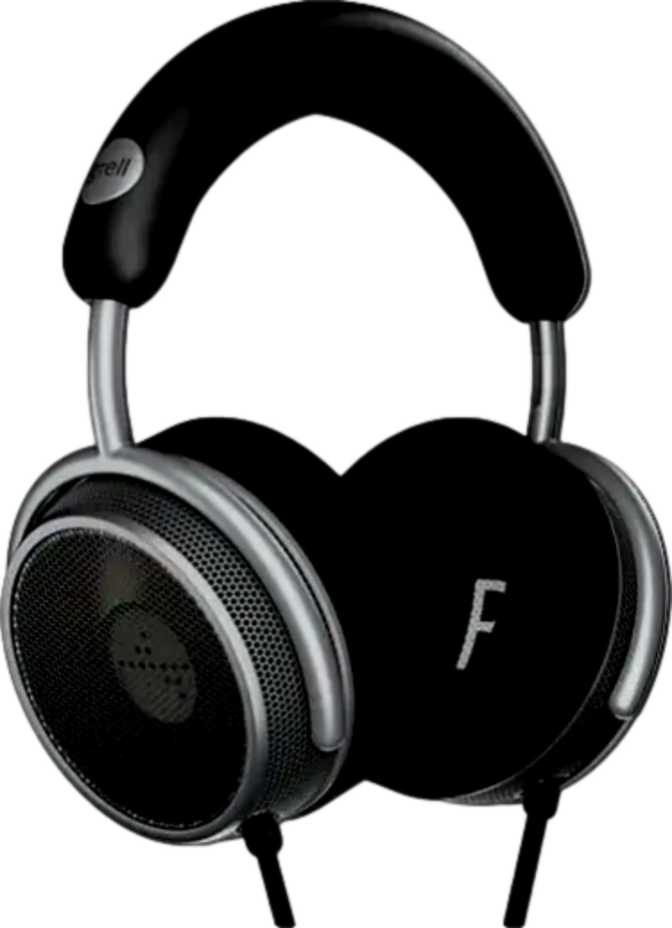
Grell OAE2 Review: A Wired Headphone Built Without Compromise
HeadphonesEditor's Rating
4.3 / 5
Critical Listening Specialist
Some headphones try to be everything — wireless, noise-cancelling, mic-equipped, app-connected. The Grell OAE2 is none of those things, and that is precisely the point. This is a closed-back, wired-only over-ear headphone with no microphone, no controls, no active electronics of any kind — just two drivers, a cable, and an ambition to reproduce sound as accurately as physics allows. If that sentence made you curious rather than concerned, read on.
Grell as a brand carries genuine weight in audiophile circles. Its founder spent decades as a lead headphone engineer at one of the most respected names in the industry before striking out to build headphones on his own terms — without corporate compromise. The OAE2 is that philosophy made physical.
Type
Closed-Back Over-Ear
Connection
Wired Only
Frequency Range
6 Hz – 46,000 Hz
Impedance
38 Ohms
Sensitivity
100 dB/mW
Weight
378 g
Microphone
None
Cable
1.8 m, Tangle-Resistant
Design and Build: Purposeful, Not Pretty
Physical construction, ergonomics, and real-world wearability
A Tool, Not an Accessory
The OAE2 does not chase lifestyle aesthetics. At 378 grams, it sits in the upper-middle range of weight for over-ear headphones — heavier than casual daily commuters, but comparable to other serious studio-oriented designs. That weight is not sloppy mass; it reflects the materials needed to house drivers capable of the OAE2's acoustic ambitions. Most buyers in this category accept the trade-off willingly.
The headphone does not fold. There are no hinges, no collapsing mechanisms, no carrying-case compromises baked into the structure. The frame is built to sit on a desk or a headphone stand — not to be crushed into a backpack pouch. If portability is a priority, this is the wrong shortlist entirely.
The cable runs 1.8 metres — long enough to reach an amplifier or DAC sitting on a desk without snagging, and short enough to avoid dramatic tangles mid-session. Grell has treated the cable to resist tangling, which is a meaningful quality-of-life detail for anyone who has untangled a knot from a cheaper cable at 11pm.
Non-Detachable Cable: A Real Concern
The cable is fixed and cannot be swapped out. If it fails at the jack or at the cup, repair requires either a competent solder technician or a warranty claim. This is the OAE2's most significant durability vulnerability, and it deserves honest weight in any buying decision.
There is no water resistance rating of any kind. The OAE2 is an indoor, stationary listening instrument. Rain, sweat, and humidity are not its environment.
Sound Performance: Where the Engineering Lives
Technical analysis grounded in real-world listening implications
Frequency Response: What That Range Actually Means
The OAE2 covers a frequency range from 6 Hz to 46,000 Hz. To put that in perspective: human hearing, for most adults in their prime, spans roughly 20 Hz to 20,000 Hz. The OAE2 extends well beyond both ends of that range — nearly an octave below the lowest threshold of human hearing, and more than an octave above the highest frequency most listeners can perceive at all.
The practical significance of the deep low-frequency extension is this: the drivers are engineered to operate with total control long before they reach bass frequencies you can actually hear. A driver that strains at 30 Hz will distort; a driver that reproduces 6 Hz cleanly has significant headroom when playing bass guitar or kick drum. You hear the benefit as tightness and accuracy in low-end reproduction — not as rumble for its own sake.
The upper extension to 46 kHz is relevant primarily for high-resolution audio listeners. High-resolution formats contain content above the standard CD-quality threshold, and some audiophiles argue — with genuine debate behind it — that ultrasonic harmonics influence perceived naturalness even when inaudible in isolation. Whether or not you subscribe to that theory, the specification confirms the drivers can physically respond to sources that standard headphones simply cannot.
Human Hearing Range
20 Hz – 20 kHz
Typical adult perception limit
OAE2 Driver Range
6 Hz – 46 kHz
Confirmed by specification
Extension Headroom
14 Hz + 26 kHz
Beyond human hearing limits
Impedance and Sensitivity: What Source Gear You Need
At 38 ohms, the OAE2 sits in a practical middle ground. It is not so demanding that it requires a dedicated headphone amplifier to reach listenable volume — a modern smartphone, laptop, or audio interface can drive it. But it will not deliver its best performance from a weak source. A dedicated DAC/amp combination — even a modest portable one — will reveal noticeably more resolution, dynamic range, and bass control than a laptop headphone jack alone. This is a headphone that scales upward as your source equipment improves.
The sensitivity of 100 dB per milliwatt means the OAE2 is relatively efficient for its impedance class. A signal of modest power produces ample volume, avoiding the thin, compressed sound that high-impedance, low-sensitivity headphones produce on underpowered sources.
Noise Isolation: The Honest Truth
The closed-back design provides a degree of natural passive isolation through the physical seal of the ear cups. However, there is no active noise cancellation and no dedicated passive noise reduction engineering. This is not a commuter headphone. It is built for listening environments where you control the acoustic conditions — a home listening room, a recording studio, a quiet study.
Features — Or Rather, the Intentional Absence of Them
Understanding what is missing and why it is a deliberate choice
The OAE2 has no microphone. Zero. It cannot be used for calls, voice chat, video conferences, or voice assistants. There is no inline remote, no button on the cup, no touch surface. There is no ambient sound mode, no in-ear detection that pauses music when you lift a cup, no spatial audio processing, no Bluetooth, no USB-C charging — because there is nothing to charge.
What the OAE2 has is a plug on one end of a 1.8-metre tangle-resistant cable, and two drivers on the other. For the target listener, what follows is not a list of missing features — it is a list of things deliberately removed so nothing interferes with the signal path between the source and your ears.
What's Excluded — and Why It Matters
- No microphone — removes a noise source and extra circuit path from the signal
- No inline controls — eliminates impedance variations caused by inline circuitry
- No active noise cancellation — removes digital processing artefacts from the signal
- No Bluetooth — eliminates codec compression losses inherent to wireless transmission
- No battery — no performance degradation or ownership cost over years of use
Who This Headphone Is For — and Who It Is Not
Match your real-world needs before making a commitment
The Right Buyer
| Buyer Profile | Why the OAE2 Fits |
|---|---|
| Home Audiophile / Critical Listener | Pure wired signal path, wide frequency response, zero active processing colouration |
| Studio Musician / Mixing Engineer | Closed-back isolation, accurate reproduction, no electronics adding artefacts |
| Hi-Res Audio Enthusiast | 46 kHz upper extension handles high-resolution source material fully |
| Upgrading From Mid-Fi | Meaningful step up in driver engineering and frequency capability |
The Wrong Buyer
| Buyer Profile | Why to Look Elsewhere |
|---|---|
| Remote Workers / Video Callers | No microphone — cannot function as a headset under any configuration |
| Commuters and Gym Users | Not foldable, no water resistance, cable-only — impractical in transit or outdoors |
| Wireless-First Listeners | Wired only, no Bluetooth, no option to go cable-free ever |
| Open-Plan Office Workers | No ANC, no dedicated passive isolation — ambient noise will intrude |
Competitive Positioning
How the OAE2 stands against logical alternatives at a similar price point
The OAE2 competes in a focused segment: wired, closed-back, audiophile-grade over-ear headphones built for critical listening rather than lifestyle use. Its nearest conceptual rivals include offerings from established names who share the same philosophy — brands that prioritise driver quality and signal purity over wireless convenience or smart features.
Against wireless noise-cancelling headphones at a similar price, the comparison is almost a category mismatch. Those headphones offer enormous convenience and real-world versatility; the OAE2 offers none of that. What it provides in return is a signal chain that wireless audio, by its nature, cannot match — no compression codec, no digital-to-analogue conversion inside the earcup, no battery degradation affecting performance over years of ownership.
| Feature | Grell OAE2 | Wireless ANC Headphones | Other Wired Audiophile Rivals |
|---|---|---|---|
| Signal Chain Purity | |||
| Wireless Freedom | |||
| Hi-Res Frequency Extension | Varies | Rarely matched | |
| Microphone / Call Capability | Varies | ||
| Detachable Cable | N/A | ||
| No Long-Term Battery Concern | |||
| Portability | Varies |
Against other wired audiophile headphones, the OAE2's 6–46,000 Hz frequency response is a differentiating technical ambition. Many well-regarded competitors do not extend that far in either direction. The non-detachable cable remains the one area where established rivals at similar price points consistently do better — and it is a meaningful long-term ownership consideration.
Honest Assessment: Strengths and Weaknesses
A balanced evaluation without the marketing language
Where It Excels
The OAE2's case rests on a coherent philosophy executed with technical seriousness. The frequency response specification is not a marketing stretch — it reflects driver engineering that has genuine implications for how the headphone behaves across the audible spectrum and beyond.
The 38-ohm impedance makes it accessible without being a lowest-common-denominator design. It rewards better source equipment progressively — a quality that cheaper headphones simply do not possess.
The closed-back configuration gives listeners acoustic privacy without the colouration trade-offs of some sealed designs. The tangle-resistant fixed cable, while non-detachable, is clearly a considered engineering choice rather than a cost-cutting measure.
Where It Falls Short
The non-detachable cable sits uncomfortably alongside the OAE2's overall ambitions. At the level of care invested in the driver design, a replaceable cable would have been the right choice. If the cable fails outside a warranty window, the repair path is uncertain and potentially costly.
At 378 grams, comfort over extended sessions will vary considerably between individuals. Listeners planning three-hour sittings should verify that the fit and clamping force suit them before committing — something impossible to do without a physical audition.
The complete absence of microphone functionality is not a design flaw — it is a deliberate constraint. But it does mean the OAE2 serves exactly one purpose. Buyers who occasionally need call capability will need a separate solution entirely.
Questions Real Buyers Ask
Straight answers to what people search before purchasing the Grell OAE2
Final Verdict
Our definitive recommendation on the Grell OAE2
Overall Rating
4.3 / 5
The Grell OAE2 is a headphone for listeners who have already made up their minds about what matters to them. If you listen at home, at a desk, through a proper source, and you want the signal between the recording and your ears to be as unmediated as possible — this headphone deserves serious consideration.
Its frequency extension is genuinely ambitious, its wired-only signal path is philosophically consistent with its design goals, and it carries the DNA of someone who spent decades engineering reference-grade headphones. The 38-ohm impedance sweet spot means it is accessible to newcomers without ceilings for those who invest in better source equipment over time.
It is not for everyone, and it does not pretend to be. If you need wireless freedom, call capability, noise cancellation, or portability, look at something designed with those requirements in mind. The OAE2 will disappoint you not because it fails, but because it never tried to be those things.
Purchase Verdict
Buy it if you are an intentional, stationary listener with a proper source. Skip it if you need anything beyond pure, unmediated audio playback. For the listener it was built for, the OAE2 is a focused, technically credible instrument from a brand with every reason to get it right.