Noise Airwave Max 5 Review: Does the 80-Hour Battery Claim Hold Up?
HeadphonesThere is a moment every regular headphone user knows: you glance at the battery indicator on day three of a trip, or on a Tuesday morning when you forgot to charge Sunday night, and the red light stares back. The Noise Airwave Max 5 was designed specifically to eliminate that moment. Its eighty-hour wireless runtime sits so far above the category average that it changes the psychological relationship between user and headphone — these are something you charge once, then stop thinking about. That is the core promise. But a single standout specification cannot carry a headphone, and this review examines whether everything else — sound, comfort, features, and honest limitations — holds up well enough to make the Airwave Max 5 a purchase worth making.
Design & Build Quality
A Compact, Commute-Ready Form Factor
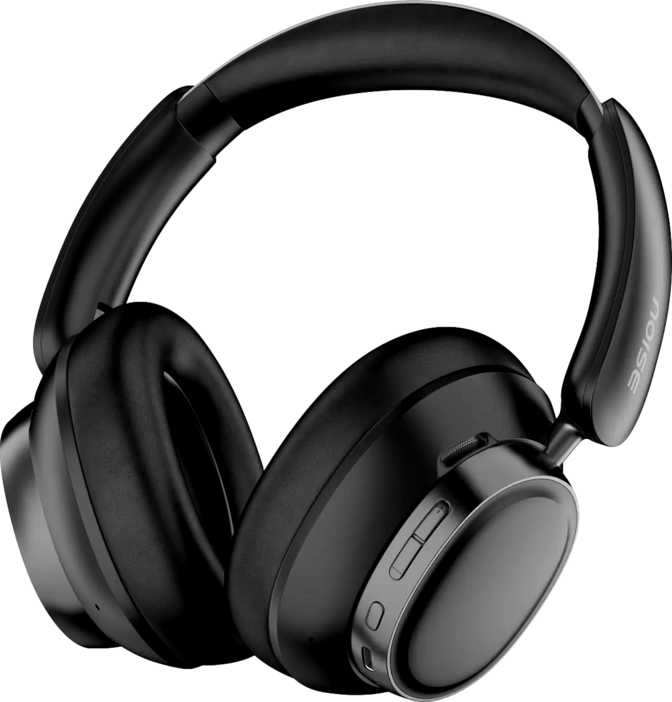
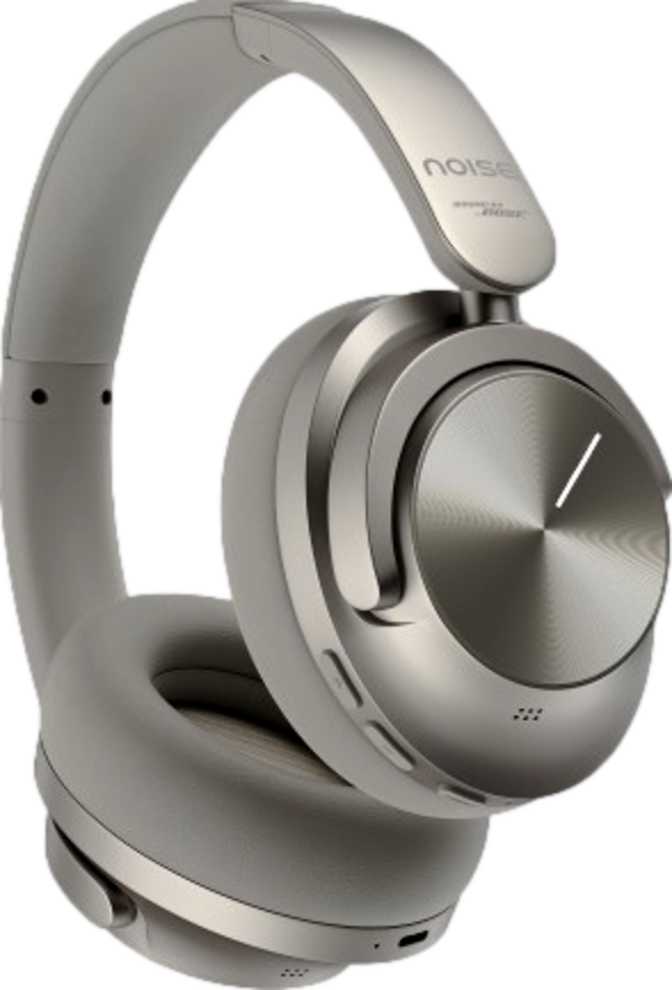
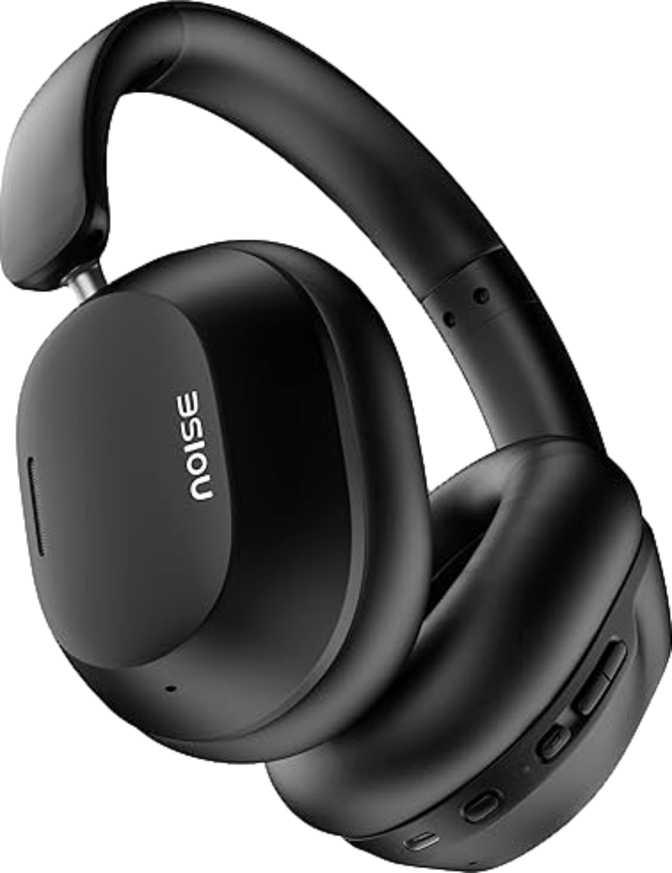
At 250 grams, the Airwave Max 5 lands in the moderate weight range for over-ear headphones. Not ultralight territory — you will notice them during very long sessions — but far from the neck-strain heaviness of some larger cans. For commutes and focused work sessions, 250 grams is entirely manageable. The closed-back, over-ear construction works on two fronts: it physically cups the ears to block environmental noise, and it keeps sound from leaking out in quiet public spaces. The closed design also contributes to better low-frequency body than open-back alternatives can offer.
Foldability and the Missing Case
The headphones fold down for transport, turning a full-sized over-ear into something genuinely bag-friendly. What undercuts this portability story is the absence of a carrying case in the box. A headphone pitched at travelers and commuters should ship with some form of protection. Sourcing a compatible sleeve separately is a simple fix, but it is a fix that should not have been necessary.
No carrying case included. For travel and commute use, budget for a protective sleeve separately to keep the cups scratch-free in a packed bag.
The Detachable Cable: A Longevity Feature
The tangle-free detachable cable matters more than it initially appears. Cable connections are among the first components to fail on heavily-used headphones; replacing the cable rather than the entire headphone extends the product's real-world lifespan significantly. The tangle-free treatment means it comes out of a bag ready to use — not knotted. And when the battery eventually degrades years from now, the wired connection remains fully functional.
IPX5: Real-World Water Protection
IPX5 means the headphones withstand sustained water streams at low pressure from any direction. Heavy gym sweating, light rain during a commute, and unexpected drizzle are all handled without concern. Submersion is not covered — IPX5 is gym-safe and commute-safe in wet weather, not pool-safe. For the active, mobile use case this headphone targets, the rating removes everyday anxiety appropriately.
Physical Specifications
- Fit Type
- Over-ear (closed-back)
- Weight
- 250 grams
- Foldable
- Yes — compact for bag storage
- Cable
- Detachable, tangle-free
- Water Resistance
- IPX5 certified
- Carrying Case
- Not included
Sound Performance
Driver Architecture & What It Implies
The Airwave Max 5 uses 40-millimeter drivers — a widely used diameter in the over-ear category for good reason. A 40mm element has enough surface area to move meaningful volumes of air, producing the bass weight and dynamic range that smaller drivers in earbuds or on-ear designs cannot replicate. Driver diameter sets a physical ceiling on potential performance, and 40mm sits comfortably within the range where full, engaging audio is achievable.
One technical detail worth examining: these drivers use a non-neodymium magnet configuration. Most headphones at this and higher price points use neodymium — a rare-earth magnet that generates stronger magnetic force relative to its size and weight, translating to more precise driver control and tighter transient response. The magnet structure here is less costly to produce. Whether this produces audible differences depends on the full tuning, but listeners with a reference point on neodymium-equipped headphones may notice less precision in high-speed musical passages.
Covers the complete audible range — from the deepest sub-bass through the highest harmonic overtones.
Toggleable virtual surround processing widens the soundstage for immersive film and gaming experiences.
A cost-conscious magnet structure that may affect transient precision compared to premium alternatives.
Spatial Audio: Optional Processing, Not a Permanent Setting
Spatial audio adds a processing layer that widens the perceived soundstage beyond what the physical driver placement would normally allow. For films, gaming, and cinematic content, this meaningfully expands immersion. Purist music listeners who prefer a natural stereo presentation will likely prefer switching it off. The key point: it is a toggleable option — an enhancement for the right content, not an imposition on every session.
Noise Cancellation
The Airwave Max 5 combines active noise cancellation with the inherent passive isolation of its closed-back over-ear design. These two mechanisms address sound at different points in the signal path and handle different types of noise effectively — together, they cover a wide range of real-world environments.
Physical Blocking
Works mechanically — the ear cushions form a physical seal, blocking mid- and high-frequency sounds like voices, keyboards, and mechanical noise before they reach the driver. Requires no power, introduces no processing artifacts, and is always active when the headphones are worn.
Electronic Cancellation
Addresses what passive isolation cannot: the consistent low-frequency drone of aircraft engines, train carriages, road traffic, and building HVAC systems. Microphones sample incoming noise and generate an opposing signal. Most effective on predictable, sustained low-frequency sound — ideal for long-haul flights and open-plan offices.
Ambient Sound Mode
Inverts the isolation logic entirely. When enabled, microphones pipe in environmental audio so you can hear an announcement, a colleague, or approaching traffic without removing the headphones. This feature elevates daily usability beyond headphones that force a binary choice between full isolation and taking them off. Its inclusion alongside ANC reflects real-world use-case thinking rather than spec-sheet padding.
Battery Life: The Defining Feature
Understanding What 80 Hours Actually Means
Eighty hours of wireless playback is not a specification to pass over quickly. For a daily commuter spending ninety minutes each way, this represents nearly three weeks of commuting on a single charge. For a frequent traveler, it covers multiple long-haul flights, several working days of use, and the return journey — without seeking a power outlet. For a student or desk worker using headphones six to eight hours daily, it covers ten full working days before requiring a charge.
The battery capacity achieving this is surprisingly modest in absolute terms — what matters is efficient system design: low-draw drivers, a power-optimized Bluetooth 5.4 chipset, and carefully managed ANC processing. The engineering story here is efficiency, not a brute-force large cell. This also keeps the headphone's weight from being elevated by an oversized battery pack.
Charge Speed & Daily Reality
A full recharge completes in ninety minutes — fast given the endurance on offer, as many headphones with half this battery life take two or more hours to top up. USB-C charging means the same cable used for phones and laptops works here. A battery level indicator on the headphones eliminates guesswork about remaining runtime. With eighty hours of capacity, most users will charge once a week and never experience a mid-session shutdown.
Power Specifications
- 1.5-hour full chargeFast for the capacity it restores
- USB-C charging portUniversal cable — no proprietary connector
- Battery level indicatorAlways know remaining runtime at a glance
- No wireless chargingInconsequential given how rarely charging is needed
Connectivity & Codec Reality
The Airwave Max 5 supports SBC only over Bluetooth — no aptX, LDAC, or AAC codecs are available. Listeners who use lossless streaming services or maintain high-resolution audio libraries will not hear any quality improvement from those sources over Bluetooth. For standard streaming quality, this difference is largely inaudible. This is the headphone's most significant functional trade-off and the clearest reason a prospective buyer might choose an alternative.
Improved stability, efficiency, and pairing reliability over earlier generations
Below the threshold where most viewers perceive audio-to-visual sync issues
Adequate for same-room use; limiting for multi-room wireless movement
Simultaneous connection to phone and laptop with automatic switching
Bluetooth 5.4 in Practice
Bluetooth 5.4 is a recent iteration of the standard, bringing improvements in connection stability, power efficiency, and pairing reliability. These benefits — fewer dropouts, stronger connections through walls, better behavior when multiple Bluetooth devices are nearby — are felt daily even when invisible. Most budget competitors ship with older Bluetooth generations, making 5.4 a tangible hardware advantage for the segment.
Dual-Device Multipoint: Quietly Useful
Maintaining simultaneous pairing with two devices — typically a laptop and a phone — means switching from a conference call to personal music requires no manual re-pairing. For anyone who moves between work and personal devices throughout the day, this reduces friction that gets noticed every single time it would otherwise occur. Initial pairing is standard Bluetooth discovery — no fast pair or NFC shortcut, a once-only inconvenience.
Features & Daily Controls
What Works Day to Day
On-device controls on the ear cup handle playback, volume, and mode switching without requiring you to reach for your source device. The headphones function as a full headset — microphone included — for phone and video calls.
- Noise-canceling microphoneFilters environmental noise from your voice during calls — effective in cafes, streets, and open offices
- Full headset capabilityHandles phone and video calls — replaces a dedicated handset for daily call users
- On-device physical controlsVolume, playback, and mode switching placed directly on the ear cup
- Wireless-first designCable is a passive backup — all active controls live on the headphone itself
Features That Are Missing
These omissions are quality-of-life gaps rather than fundamental failures, but buyers accustomed to polished headphone experiences will notice them in daily use.
- No auto-pause on removalRemoving the headphones does not pause playback — there is no ear-detection sensor
- No dedicated call mute toggleMuting requires reaching for the source device or call software — disruptive for heavy call users
- No in-line cable controlsThe cable is passive audio only — all controls are on the ear cups
Who the Airwave Max 5 Is For
The Right Buyer
- Frequent Travelers & Multi-Day Commuters
A single charge outlasts an entire business trip. For anyone who has ever hunted for a power outlet in an airport, this headphone solves the problem definitively.
- Gym Users & Outdoor Commuters
IPX5 means genuine workout durability. Sweat, light rain, and outdoor conditions are covered without anxiety about headphone damage.
- Dual-Device Professionals
Simultaneous phone and laptop pairing means switching between a call and music requires no manual intervention throughout the working day.
- Value-Conscious Buyers
ANC, spatial audio, wired-wireless flexibility, and extraordinary battery life without paying a premium for codec support that most listeners will not notice.
Consider Alternatives If...
- You Are an Audiophile or Lossless Listener
SBC-only transmission means no quality benefit from LDAC, aptX, or AAC sources. The codec becomes the ceiling for every wireless session.
- You Need Serious Wireless Range
The 10-meter Bluetooth ceiling limits multi-room wireless listening. Moving freely through a home with your source device in another room may produce dropouts.
- You Are a Heavy Conference Call User
No dedicated hardware mute toggle means muting during calls requires a separate device or application — a friction point on high-call-volume days.
- You Want a Complete Accessory Kit
Comparable headphones at similar price points often include a protective case. The Airwave Max 5 does not, leaving portability protection to chance.
How It Compares to the Competition
The Airwave Max 5 competes in a segment occupied by value-focused brands including Anker, JBL, and boAt. The table below maps its feature set against category benchmarks to show clearly where it leads and where it concedes ground.
| Feature | Noise Airwave Max 5 | Budget ANC Competitor | Mid-Range ANC |
|---|---|---|---|
| Wireless Playback | 80 hours | 25–40 hours | 30–40 hours |
| Active Noise Cancellation | |||
| Ambient Sound Mode | Sometimes | ||
| Premium Codec Support | SBC Only | Varies (often AAC) | aptX / LDAC |
| Bluetooth Standard | 5.4 | 5.0–5.2 | 5.2–5.3 |
| Water Resistance | IPX5 | Often absent | Rarely included |
| Dual-Device Multipoint | Rarely | ||
| Wired Fallback | Sometimes | ||
| Carrying Case | Sometimes |
Category benchmarks reflect typical current market offerings. Individual model specifications vary.
Honest Assessment
What It Gets Right
Extraordinary battery engineering. Eighty hours of playback from a modest battery cell — while keeping the weight to 250 grams and including ANC — speaks to genuinely efficient system design. This is the standout achievement of the Airwave Max 5 and its clearest competitive advantage.
Dual-layer noise management. Combining active and passive isolation is the correct approach for commuters and travelers. Including ambient mode alongside ANC shows real-world use-case thinking rather than feature-list padding.
Bluetooth 5.4 in a value headphone. Most budget competitors ship with older Bluetooth generations. The latest standard here delivers better daily stability, fewer connection interruptions, and more efficient power draw from the wireless circuitry.
Detachable cable for genuine longevity. Cable failures are among the most common hardware issues on headphones. The detachable design means a broken cable is a cable replacement — not a headphone replacement — meaningfully extending the product's useful life.
Where It Falls Short
SBC-only codec is the most significant functional limitation. It affects every listening session for users with high-quality streaming sources. This is a deliberate cost trade-off, but it must be stated clearly because it impacts the headphone's suitability for a specific group of buyers.
Ten-meter Bluetooth range is below the modern category average. Most contemporary wireless headphones specify considerably more. This limits multi-room wireless use and may produce dropouts when the source device is more than a room away.
No carrying case is an oversight. A foldable headphone implies portability, and portability implies a need for protection during transit. Shipping without any protective accessory feels incomplete at this feature level.
Missing call mute and auto-pause. These quality-of-life features are standard on polished headphones at similar price points. Their absence creates small but repeated friction — particularly for professionals on frequent calls throughout the day.
Your Questions Answered
The most common questions buyers search for before purchasing the Noise Airwave Max 5.
Final Verdict
The Noise Airwave Max 5 is an honest product: it knows what it is, executes its primary promise exceptionally well, and makes trade-offs that are legible rather than hidden.
For most buyers — commuters, travelers, students, and dual-device workers — the eighty-hour battery life is not just a marketing headline but a functional shift in how the product fits into daily life. Combined with IPX5 durability, proper active noise cancellation, ambient mode, and multipoint pairing, the Airwave Max 5 delivers a feature set that genuinely earns its place at its price point.
The SBC-only codec limitation is the clearest reason a buyer might choose something else. If lossless-grade wireless transmission is a priority, this is not the right headphone. If it is not — if you stream at standard quality, or plan to use the wired connection when fidelity matters most — the limitation is a known variable, not a surprise.
Buy the Airwave Max 5 for the battery life, the IPX5 durability, and the practical ANC-plus-ambient combination. Know its codec ceiling and range limits going in. On those terms, it delivers more than its price implies — and its extraordinary endurance genuinely earns the Max in its name.
- Best-in-class battery life for the segment
- IPX5 — gym and commute ready
- Bluetooth 5.4 — latest standard
- ANC + Ambient Mode + Wired fallback
- SBC only — no premium codec
- No carrying case included