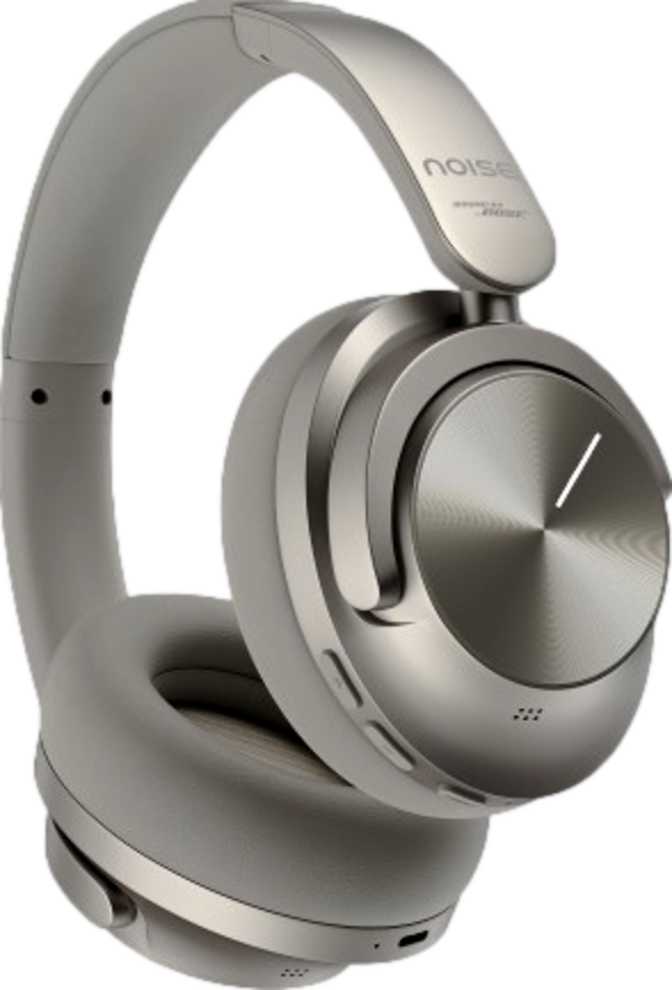
Noise Master Buds Max Review: Built for Calls, Designed to Last
HeadphonesThe over-ear headphone market at the mid-to-upper tier is brutally competitive. Sony, Bose, and a growing number of challenger brands have trained buyers to expect active noise cancellation, long battery life, and versatile connectivity as baseline features — not selling points. Against that backdrop, the Noise Master Buds Max arrives with an unusually stacked specification sheet: a massive microphone array, marathon-level endurance, and a dual-codec wireless stack that positions it squarely at work-from-home professionals, long-haul travelers, and anyone who needs their headphones to perform across multiple devices without constantly re-pairing. Whether it delivers on the promise those specs imply is exactly what this review unpacks.
Performance at a Glance
Editorial ratings based on specification and feature analysis
Design and Build: Practical First, Stylish Second
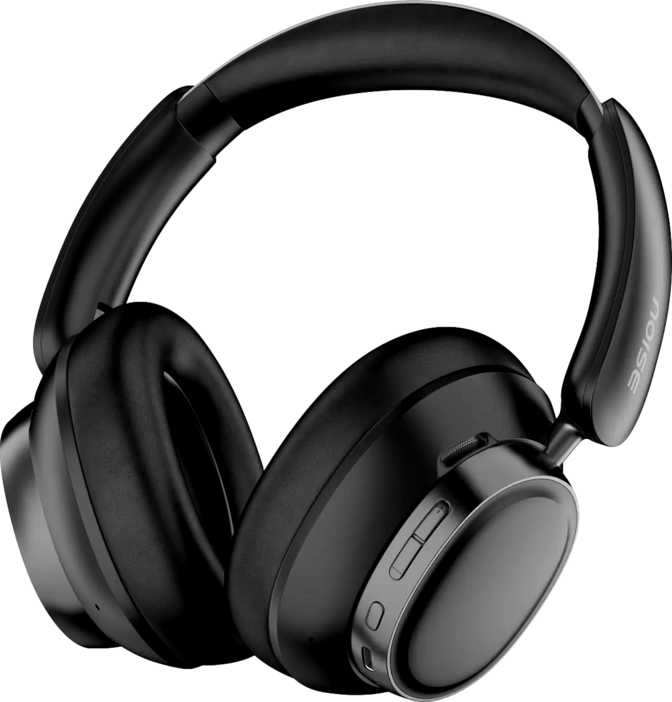
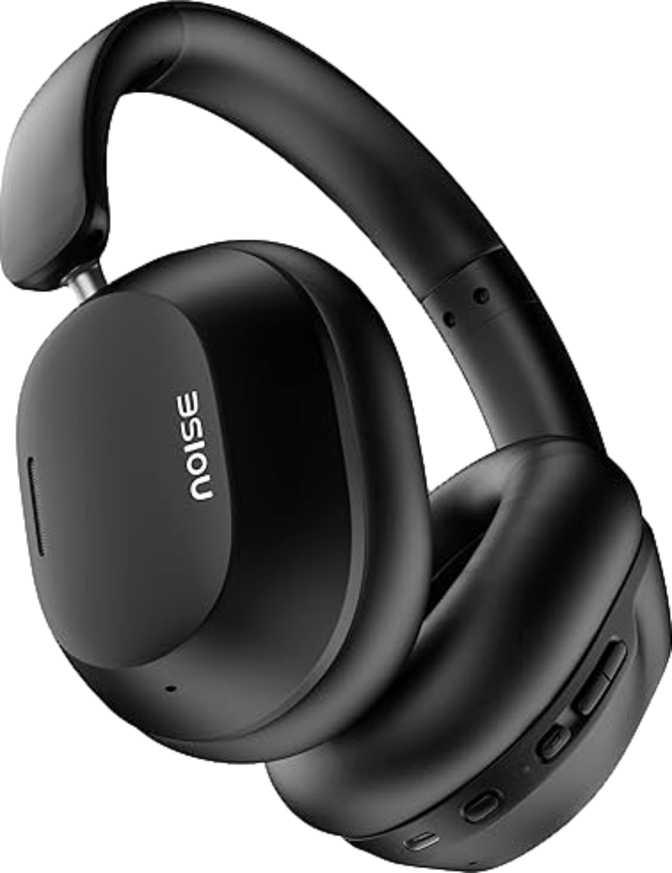
At 262 grams, the Buds Max sits comfortably in the middle of what over-ear headphones typically weigh. It is not as featherlight as Sony's flagship line, but noticeably less dense than bulkier studio-adjacent options. In practical terms: you will know you are wearing these during a two-hour video call, but they will not become an active distraction. The balance matters as much as the raw number — how that weight distributes across the headband and ear cups determines comfort more than the figure alone.
The closed-back design is a deliberate choice. Unlike open-back headphones — which let sound breathe in both directions and are typically reserved for studio monitoring or quiet home listening — the sealed acoustic chamber serves a dual purpose: it blocks ambient sound passively and prevents audio from leaking to the person sitting next to you on a plane or in a meeting.
Foldability is a genuinely useful inclusion. The headphones collapse into a more compact form for bag storage, which matters when carrying them daily. The detachable cable adds long-term flexibility — if the wire wears out over time, or if you prefer going wired on a flight to preserve battery, you are not locked into one mode. The cable itself is tangle-resistant, which sounds like a small thing until you have spent thirty seconds unknotting one before an early morning call.
The IPX5 water resistance rating means these handle sweat and light rain without concern. IPX5 specifically indicates protection against water projected from a nozzle — a rain-caught commute or a gym session is fine, but submersion is not. For over-ear headphones used primarily indoors or in transit, this level of protection is more than sufficient and genuinely reassuring.
Build Highlights
- 262g Closed-Back Over-EarPractical daily-carry weight with sealed acoustic chamber
- Foldable FrameCollapses compact for bag and travel storage
- Detachable CableTangle-resistant and replaceable over time
- IPX5 Water ResistanceHandles sweat and rain — not submersion
Sound Quality: What the Hardware Actually Delivers
40mm Drivers and Full-Range Tuning
The 40mm driver units are standard-sized for over-ear headphones in this category — not unusually large, not compromised. Driver diameter influences how much air the speaker element can move, affecting bass response and overall volume capability. At 40mm, you have adequate surface area for full, controlled low-end reproduction without the distortion risk that comes from pushing smaller elements too hard. The frequency response spans the full range of human hearing — from the lowest rumble a healthy ear can detect to the upper ceiling of audible sound — meaning the headphones handle every genre, from bass-heavy electronic music to the delicate high-frequency detail of classical recordings.
Spatial Audio Support
Spatial audio support means these headphones can decode and render directional sound fields — placing audio elements around you in three-dimensional space rather than only left-right. This is meaningful for cinematic content where sound design is built around directionality, and for supported gaming environments. For music in standard stereo formats, spatial audio processing is a stylistic choice — some listeners prefer it, others find it artificially diffuse. The fact that it is supported means you have the option; whether you use it depends on your listening preferences.
Active and Passive Noise Cancellation: Two Layers Working Together
Comes from the physical design — the closed-back ear cups seal around your ears and physically block sound waves from reaching the drivers. Works on all frequencies with no electronics required, and functions whether the headphones are powered or not. It handles mid and high-frequency intrusions most effectively.
Adds an electronic layer on top: microphones sample ambient noise and the headphones generate an opposing sound wave that cancels it out. Particularly effective on consistent, low-frequency sounds — airplane cabin hum, train rumble, office HVAC. Less effective on sharp, unpredictable sounds like sudden voices or alarms.
Battery Life: The Most Competitive Specification on the Sheet
This is where the Noise Master Buds Max makes its most compelling argument. Without ANC running, the headphones last through an exceptional amount of continuous use — long enough that weekly charging is entirely realistic for moderate daily use. Even with ANC active, the endurance covers multiple full days without interruption.
A person who wears headphones for six to eight hours on a working day — morning commute, office use, evening wind-down — would need to charge these roughly once a week without ANC, or every four to five days with it active. That is meaningfully better than most competitors at this price tier, where ANC-on battery life tends to drop far more sharply.
Connectivity: Bluetooth 5.4 and the Codec Reality
Bluetooth 5.4 is the current generation standard and brings meaningful improvements: more stable connections, lower power consumption, and better handling of interference in crowded wireless environments. A busy office or a commuter train with dozens of competing devices is where this generation advantage matters most.
Fast pairing support means that on first setup, the headphones connect to compatible devices without manual Bluetooth menu navigation. The listed wireless range reaches approximately ten meters under ideal conditions — in real-world use through walls with interference, expect somewhat less, though for a headphone used with a nearby device this is never a practical constraint.
Wireless Codec Support
| Codec | Supported | Best Device Match |
|---|---|---|
| LDHC | Yes | Huawei ecosystem — high-res wireless |
| AAC | Yes | Apple devices and general Android use |
| LDAC | No | Android audiophiles (Sony devices) |
| aptX HD | No | Android audiophiles (Qualcomm) |
| LE Audio | No | Next-gen multi-device scenarios |
Microphone System: Built Seriously for Calls
Ten microphones in a headset is an unusually high count and signals a specific design philosophy: the Noise Master Buds Max is engineered with call quality as a primary use case, not an afterthought. A multi-microphone array allows the headphones to use beamforming — isolating your voice from the direction of your mouth while identifying and suppressing noise arriving from other directions. It also enables more sophisticated echo cancellation and wind noise rejection.
In practice, the people you speak with on calls hear you more clearly, with less background noise bleeding through, compared to headphones relying on one or two microphones. For someone who regularly joins video conferences from a busy environment — a home with background noise, a café, or an open-plan office — the difference is immediately noticeable to call participants.
Smart Features: Ambient Mode, Auto-Pause, and Controls
Ambient Mode
Uses the external microphones to pipe in your surroundings so you can hear a conversation, announcement, or approaching traffic while keeping the headphones on. No need to pull off an ear cup mid-conversation or pause what you are listening to.
Auto-Pause
In-ear detection automatically pauses playback when you remove the headphones and resumes when you put them back on. Your audio state when you return is exactly where you left it — no fumbling for your phone to find your place in a podcast or video.
On-Device Controls
Physical controls sit directly on the ear cup — the correct location for a wireless-first headphone. Volume, playback, and call management are all handled without reaching for your source device. There is no in-line remote on the cable, which is a reasonable omission given the cable's role as a backup connection.
Who Should Buy the Noise Master Buds Max
A Strong Match For
- Remote workers and professionals who spend significant time on video calls and need microphone clarity combined with effective noise blocking in busy environments
- Frequent travelers — particularly air and rail commuters — who benefit from ANC and multi-day endurance across long journeys without anxiety about charging
- Apple and Huawei ecosystem users where AAC and LDHC codec support is most relevant and the wireless audio quality ceiling is not a limitation
- Multi-device professionals who work across a laptop and phone simultaneously and need the automatic switching that dual multipoint delivers
- Active daily users who need weather-resistance and a durable, foldable build that holds up to real commuting and gym use
A Weaker Fit For
- Android audiophiles on Samsung or Google hardware who rely on LDAC or aptX HD for high-fidelity wireless playback — the codec gap is real and meaningful for critical listeners
- Call-intensive users needing a hardware mute button — frequent manual muting in video meetings is less convenient without a dedicated physical toggle
- Home hi-fi listeners whose primary use is reference-quality listening and who would benefit from an open-back design and reference tuning rather than a noise-canceling closed-back
- Wireless-charging-first users who have built a Qi-based charging ecosystem and prefer not to carry a separate cable specifically for their headphones
How It Compares to the Competition
The Buds Max stacks up against category benchmarks across the specifications that matter most to real buyers.
| Feature | Noise Master Buds Max | Sony / Bose Tier | Budget ANC |
|---|---|---|---|
| Noise Cancellation | ANC + Passive | Active + passive (varies) | Basic ANC only |
| Battery with ANC On | ~40 hours | 20–30 hours | 15–25 hours |
| Multipoint Pairing | 2 devices | 2 devices (some models) | 1 device (often) |
| Microphone Count | 10 mics | 4–8 mics | 2–4 mics |
| Codec Support | LDHC + AAC | LDAC or aptX HD + AAC | SBC + AAC |
| Wired Fallback | Sometimes | ||
| Water Resistance | IPX5 | IPX4 (varies) | Rare |
| Hardware Mute | Some models | Rare | |
| Wireless Charging | Some flagships |
An Honest Assessment: Strengths and Weaknesses
Where It Excels
The Noise Master Buds Max earns its strongest marks in endurance, call quality infrastructure, and connectivity flexibility. Sixty hours of total battery life in a product that also offers dual multipoint pairing, ANC, spatial audio, and ten microphones is genuinely unusual — most headphones this feature-rich compromise on battery to fit everything else in.
The microphone array is a genuine differentiator. Ten-microphone beamforming at this category tier consistently outperforms the basic setups on most competing headphones, and it shows in call quality — participants on the other end of calls notice the difference immediately, particularly in noisy environments.
The foldable build with detachable cable, combined with IPX5 water resistance, rounds out a practical package that holds up to real daily use. Dual multipoint connectivity is the kind of feature that earns daily loyalty once you have experienced it — the automatic device switching becomes invisible infrastructure for anyone who works across a laptop and phone.
Where It Falls Short
The absence of LDAC and aptX places a ceiling on wireless audio quality that audiophile-minded listeners will bump against, particularly on Android. For Apple users or within the Huawei ecosystem this matters less — but for the large segment of Android users on Samsung or Google devices, the codec gap is a real limitation that better-specified competitors avoid.
The lack of wireless Qi charging is an omission that feels out of step with the product's overall ambition. At this tier, wireless charging has become an expected convenience for users who have invested in a cable-free charging setup. Having to carry a USB-C cable specifically for the headphones breaks that experience.
The absent hardware mute button is a legitimate gap for call-intensive professional users. In a world of constant video meetings, being one button-press away from muting — without touching your laptop or phone — is a workflow efficiency that this headphone does not offer. Soft-mute via your conferencing app works, but it adds friction at the worst possible moments.
Questions Real Buyers Ask Before Purchasing
Straightforward answers to the most searched questions about the Noise Master Buds Max
Our Recommendation: A Confident Yes — For the Right Buyer
The Noise Master Buds Max is a well-considered over-ear headphone with a clear target user in mind. On those terms, it delivers convincingly.
The battery life at this level — particularly with ANC active — is a class leader. The ten-microphone beamforming array is a genuine differentiator for anyone who spends meaningful time on calls. Dual multipoint connectivity and the practical build with IPX5 water resistance round out a package that holds up to real, demanding daily use better than most headphones at this tier.
- Call quality and clarity are your top priority
- You regularly work across two devices at once
- You need battery that outlasts even the longest trips
- You use Apple, Huawei, or AAC-native devices
- LDAC or aptX HD is non-negotiable for your Android setup
- A hardware mute button is essential for your workflow
- Wireless Qi charging is a must-have in your setup
For everyone in between — the practical, daily-use listener who wants reliable ANC, impressive endurance, and a microphone setup that does not embarrass them on professional calls — the Noise Master Buds Max makes a compelling, well-rounded case. It is not a perfect headphone, but it is a very good one built for a specific kind of user, and it serves that user very well.