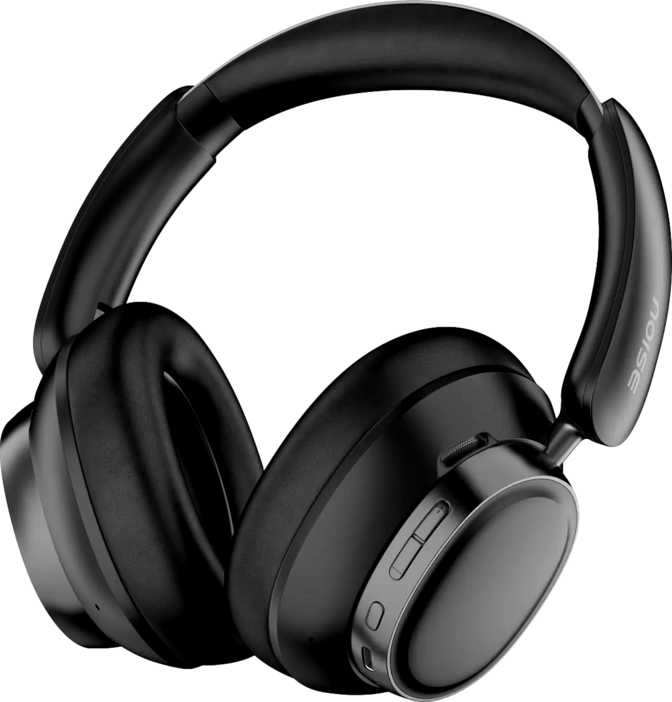
Noise Airwave Max 6 Review: A Headphone That Outlasts Everything
HeadphonesWhy the Airwave Max 6 Deserves Serious Attention
The Noise Airwave Max 6 delivers a 120-hour battery alongside Bluetooth 6.0, LDAC hi-res audio, a four-microphone active noise cancellation array, and IPX5 water resistance — a combination that genuinely outpaces most competitors at this price tier. For travelers, remote workers, and commuters exhausted by daily charging cycles, this headphone fundamentally resets what to expect.
Jump to Section
Editor's Rating
Key Specifications at a Glance
Design, Build Quality, and Physical Experience
How it looks, feels, and holds up in daily use
Form Factor and Everyday Comfort
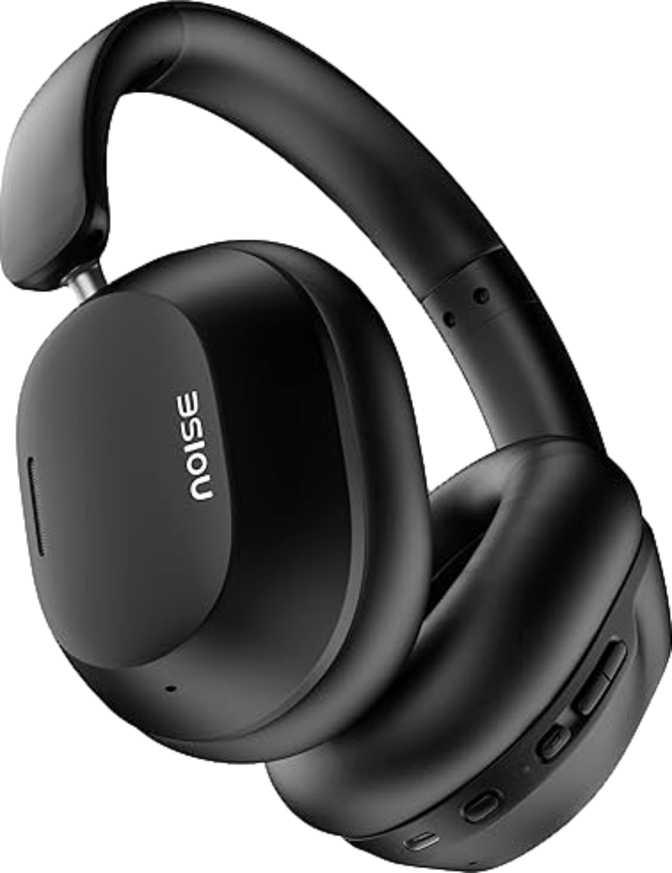
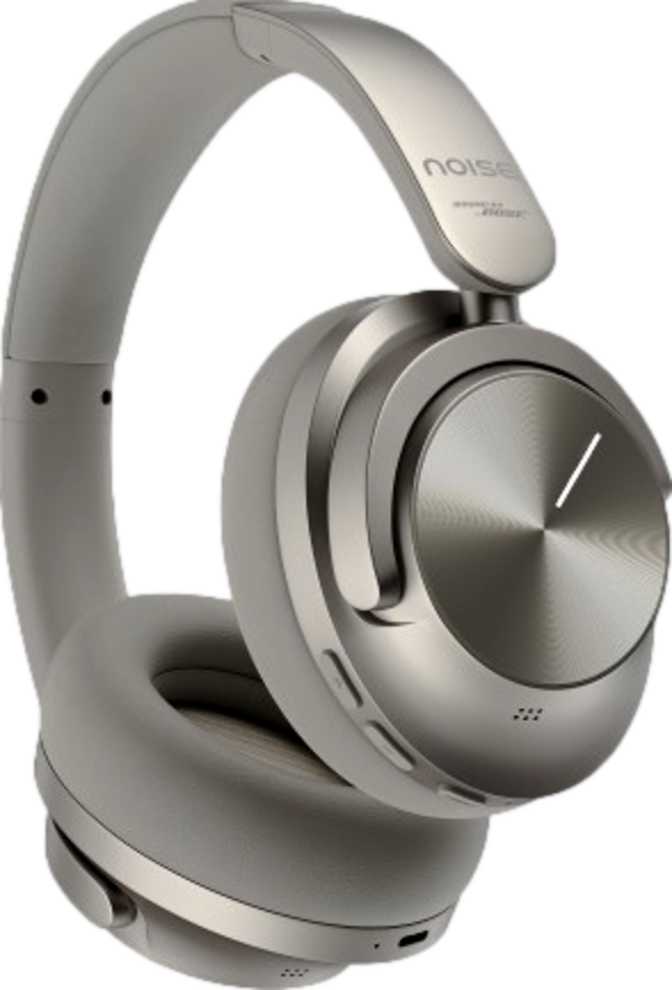
At 251 grams, the Airwave Max 6 occupies the comfortable middle of the over-ear weight spectrum — lighter than full-sized audiophile headphones that push past 300 grams, yet substantial enough to register as premium in hand. Extended listening sessions of three to four hours at a stretch are well within comfortable reach at this weight.
The closed-back design does double duty: it creates a physical seal that contributes passive noise isolation on top of active cancellation, and it keeps sound from leaking outward — which matters in offices, planes, and library settings where your audio is nobody else's concern.
Portability Features
Collapses flat for clean packing into carry-on bags and backpacks
Protective case ships in the box — not sold separately as many competitors do
Wired use always available; compatible with in-flight entertainment ports
Full playback and call management on the ear cup; no in-line remote needed
IPX5 certifies protection from sustained, low-pressure water jets in any direction. In everyday terms, that means:
- Light rain and unexpected downpours
- Gym sweat during intense sessions
- Accidental splashes and moisture exposure
- Not rated for submersion or heavy rain
Sound Performance Analysis
Driver hardware, codec support, and what the specs mean for your listening experience
40mm Drivers and Full-Spectrum Coverage
The Airwave Max 6 uses 40mm dynamic drivers — the standard diameter for full-size over-ear headphones at this tier. A 40mm driver has enough physical surface area to move air meaningfully at low frequencies, producing bass presence and impact that smaller in-ear drivers cannot replicate without heavy digital signal processing.
The drivers cover the complete range of human hearing, from the lowest audible bass tones to the highest treble detail. This confirms the headphone is not frequency-limited; actual tonal balance is always a product of how the driver is voiced, but full-range coverage is the necessary starting point.
Active Noise Cancellation
The four-microphone ANC array is a genuine hardware advantage. Budget ANC headphones typically use two microphones, limiting how precisely the cancellation algorithm can model the surrounding noise. Four microphones provide more data points for finer-grained mapping — delivering better performance across aircraft engine drone, air conditioning hum, and open-plan office chatter simultaneously.
Spatial Audio
Spatial audio support allows compatible streaming services and devices to create a three-dimensional sound field — music and content that appears to originate from positions around the listener rather than entirely from within the cups. Films and spatially mixed recordings benefit noticeably; standard stereo content receives a widening effect that most listeners find pleasant.
Codec Compatibility
| Codec | Status | Best For |
|---|---|---|
| SBC | Default | Universal fallback on all devices |
| AAC | Supported | Apple iPhone & iPad users |
| LDAC | Supported | Android hi-res audio |
| aptX | Not supported | |
| aptX HD | Not supported | |
| aptX Adaptive | Not supported |
Battery Life: The Headline Feature in Context
What 120 hours actually means for how you live with this headphone
How Long Is 120 Hours, Really?
A user who wears headphones for eight hours every working day would charge the Airwave Max 6 roughly three times per month. A more typical listener using headphones for four hours daily would reach for the charger perhaps twice a month.
The practical consequence goes beyond the obvious. International long-haul flights, multi-day work travel, and week-long trips all fall within a single charge. The background anxiety of checking battery percentage before leaving the house simply disappears.
This figure also explains one of the headphone's trade-offs: achieving this capacity requires a larger battery cell, which contributes to the 251-gram weight. The engineering priority was clearly endurance over slimness — a rational choice for a commuter and traveler audience.
Charging Details
Battery Life vs. the Competition
Approximate endurance comparison across headphone tiers
Bluetooth 6.0 and Connectivity Features
How the headphone connects, its range, and where it has honest limitations
Bluetooth 6.0 — What It Means in Practice
Bluetooth 6.0 is the most current version of the standard. The primary advancement for headphone users is improved connection stability and more efficient channel management. In congested wireless environments — busy offices, airports, train carriages where dozens of devices compete for spectrum — a 6.0 device maintains its connection more reliably than hardware built on older generations.
The 10-meter rated range is standard for consumer headphones. In practice, this means freedom of movement within a typical room — walking to a kitchen from a living room source device without signal loss, for example.
Audio Latency: An Honest Assessment
The 80-millisecond Bluetooth latency deserves direct discussion. For music listening and podcast consumption, 80ms is completely imperceptible — human hearing cannot detect the delay. For video content, 80ms sits at the upper edge of the tolerable range; most viewers find lip-sync acceptable, though some may notice occasional drift depending on the content and source device.
Two-Device Multipoint Pairing
The headphone maintains simultaneous paired connections with two source devices — a laptop and a phone simultaneously, for example. Audio from the active source takes priority; incoming calls or new audio from the secondary device can interrupt or be managed without a manual reconnection. For hybrid workers switching between devices throughout the day, this removes a genuine daily friction point.
Connectivity Specs
- Bluetooth Version
- 6.0
- Range
- Up to 10m
- Audio Latency
- ~80ms
- Multipoint
- 2 devices
- Hi-Res Codec
- LDAC
- Apple Codec
- AAC
- Fast Pair
- NFC Pairing
- Wired Operation
- Wireless Charging
Microphone Performance and Call Quality
Four microphones, beamforming, and ambient sound passthrough
Four microphones is a meaningful implementation for an over-ear headphone. The array enables beamforming — a technique that combines signals from multiple microphones to focus voice pickup while filtering ambient noise. Call quality in moderately noisy environments benefits directly from this; voices come through cleaner when the algorithm has more input to work with.
On-device controls on the ear cup handle all call management, so muting and answering are accessible without reaching for a source device. There is no in-line control on the detachable cable, which is consistent with a product designed primarily for wireless use.
The ambient sound mode uses the microphone array to pipe in external audio deliberately — allowing you to hold a conversation or catch a station announcement without removing the cups. A four-microphone setup provides the hardware to make passthrough audio sound natural rather than metallic, which is a common weakness in cheaper single-mic implementations.
- Beamforming on CallsFocuses voice pickup toward the speaker while suppressing background noise
- Precision ANC MappingMore data points for accurate noise cancellation across different noise types
- Natural Ambient Sound ModePassthrough audio with reduced metallic artifacts versus two-mic systems
- Full Headset FunctionalityOn-ear controls handle mute, answer, end call without touching the source device
Who Should Buy the Noise Airwave Max 6
Matching the right headphone to the right listener
Ideal Buyers
- Frequent Travelers and Commuters
IPX5 protection, a travel bag, foldable design, detachable cable, and a battery that outlasts most international itineraries. ANC for transit noise and ambient mode for station announcements complete a thorough commuter package.
- Remote and Hybrid Workers
Four-microphone call quality, two-device multipoint for laptop-and-phone setups, and a battery that rarely needs charging address the daily realities of home office and coffee shop working.
- Android Users with LDAC Devices
LDAC is a genuine audio quality improvement for hi-res streaming and local file playback. It is now standard on most mid-range and flagship Android phones, so most Android users can take full advantage.
- Active Listeners and Gym Users
IPX5 handles gym sweat and caught-in-the-rain scenarios without treating the headphone as precious hardware that needs constant careful handling.
Consider Alternatives If You...
- Game Competitively or Need Real-Time Audio
The 80ms Bluetooth latency rules out competitive gaming and real-time interactive audio. A gaming headset with a USB audio adapter or aptX Low Latency support is the better fit here.
- Need aptX HD or aptX Adaptive Specifically
Android users on LDAC-compatible phones are fully covered. However, if your device supports aptX variants but not LDAC, the connection will fall back to AAC or SBC rather than aptX.
- Rely on Auto-Pause When Removing the Headphone
Without in-ear detection sensors, audio continues playing when the cups come off. Manual pause is always required. A small quality-of-life gap, but worth knowing if you depend on this feature daily.
- Prefer to Charge Wirelessly
Wireless charging is absent. USB-C is the only option. Given the exceptional battery life, this matters far less than it would for a headphone needing daily charging — but it remains a real omission.
Competitive Positioning
How the Airwave Max 6 stacks up against typical alternatives at a similar price level
| Feature | Noise Airwave Max 6 | Budget ANC Headphone | Mid-Range ANC Headphone |
|---|---|---|---|
| Battery Life | 120 hours | 30–40 hours | 50–70 hours |
| Bluetooth Version | 6.0 | 5.0–5.2 | 5.2–5.3 |
| Hi-Res Codec | LDAC + AAC | AAC only | AAC + aptX |
| ANC Microphones | 4 | 2 | 2–3 |
| Water Resistance | IPX5 | None or IPX4 | IPX4 |
| Multipoint Pairing | 2 devices | Often absent | 2 devices |
| Ear Detection | Sometimes | Often yes | |
| Wireless Charging | Sometimes |
Competitor specifications represent typical category averages, not a specific model. Individual products vary.
An Honest Assessment
The genuine strengths and the real limitations — without spin
Where It Leads
The Airwave Max 6's strongest qualities are not incremental improvements over the competition — they are category-level differentiators. A 120-hour battery is not 20% better than average; it is three to four times better, and that changes how you relate to the product day-to-day. Charging becomes a fortnightly maintenance task rather than a daily ritual.
Bluetooth 6.0 and LDAC together represent a genuinely modern connectivity stack. Most headphones at this price still use Bluetooth 5.2 or 5.3 with AAC-only codec support. The combination here is a meaningful, future-facing advantage.
The build makes a strong argument for itself. IPX5 on a feature-complete wireless headphone is a meaningful differentiator at this tier. A travel bag in the box and a foldable design that genuinely works for travel reflect considered product thinking rather than spec-sheet padding.
Where It Falls Short
The 80ms latency rules out the Airwave Max 6 as a gaming or real-time audio device. This is not a caveat for most buyers, but it is a genuine limitation for that specific use case. The absence of aptX Low Latency is the direct indicator that low-latency performance was not a design priority.
Wireless charging is absent. For a product that needs charging perhaps twice a month, this is a minor inconvenience rather than a meaningful flaw — but buyers habituated to a Qi pad will notice the change in routine.
No in-ear detection means music doesn't pause automatically when you remove the headphone. This is a quality-of-life feature that many buyers won't miss, but users who rely on it elsewhere will notice its absence here. It is a small but honest gap to name.
Common Buyer Questions Answered
The questions real buyers search for before purchasing