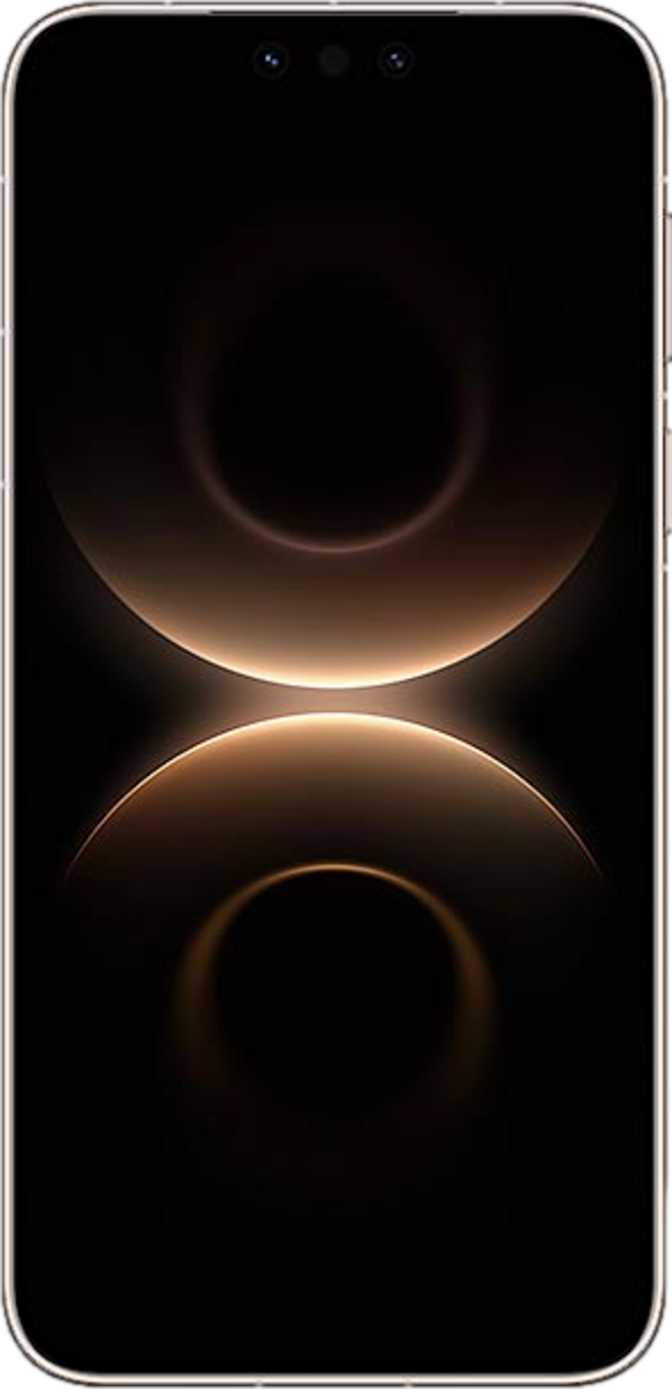
Huawei Mate 80 Pro Max Wind: Full Review & Real-World Verdict
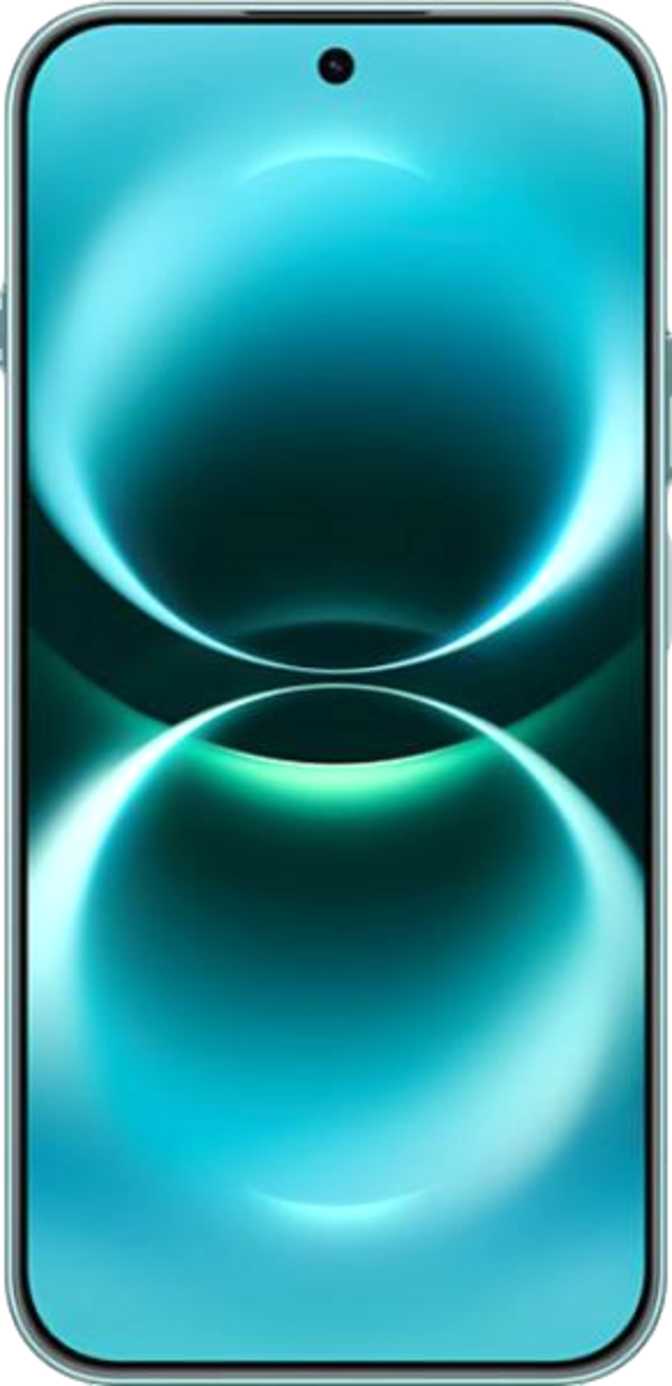
SmartphonesThe Huawei Mate 80 Pro Max Wind occupies a very specific position in the market: it is not a device that makes compromises to hit a price. It is built to demonstrate what Huawei's engineering teams believe a flagship smartphone can be, and then push slightly further. The 6.9-inch OLED panel, a 6,000 mAh battery paired with 100W wired and 80W wireless charging, a 14-core tri-cluster processor, and a triple-camera system anchored by a wide f/1.4 aperture lens — these are not features layered on top of an acceptable foundation. They are the foundation. Whether this phone is the right choice for you depends entirely on what ecosystem you live in, how much you value raw hardware excellence, and how willing you are to accept a few meaningful trade-offs. This review will walk you through every one of them.
Design and Build: Serious Hardware in a Large Frame
Dimensions and Weight
At 164.4 mm tall, 79 mm wide, and 8.3 mm thin, the Mate 80 Pro Max Wind is unambiguously a large phone. It will reach the edges of most hands and will not disappear into a shirt pocket. At 239 grams, it sits firmly in the heavier tier of flagship smartphones — comparable in feel to holding a slim paperback novel. One-handed use is possible but not comfortable for extended sessions. If you are upgrading from a phone in the 180–200g range, the weight will be noticeable for the first week.
For those willing to carry it, the reward is a device that feels substantial in the best sense — dense, premium, and engineered. There is nothing hollow or plastic about it.
Water Resistance
The IP68 certification here is not a baseline achievement — it reflects a waterproofing depth rating of 6 meters, which is above what the standard IP68 designation technically requires. In practice, this means the phone can survive not just a drop in a shallow sink but genuine submersion in a swimming pool or a rain-soaked outdoor event. This level of protection is what separates a flagship from a premium mid-ranger.
Beyond standard IP68 requirements. Handles pool submersion, not just rain splashes or accidental sink drops.
Display Glass
The display is covered with damage-resistant glass from a branded manufacturer, providing meaningful protection against everyday scratches and drops. The screen is flat — not edge-curved — which eliminates accidental touches and makes screen protectors dramatically easier to apply and more effective.
Display: Beautiful, but with One Notable Omission
Size, Sharpness, and Smoothness
The 6.9-inch OLED panel runs at a resolution of 1320 × 2848 pixels, which works out to a pixel density of 455 pixels per inch. That number puts it comfortably beyond the threshold where the human eye can detect individual pixels at normal viewing distance — text appears razor-sharp, and fine photographic detail is rendered with clarity that smaller or lower-resolution panels cannot match.
The panel refreshes at 120 times per second. Scrolling feels physically smooth — almost frictionless — and animations in apps and games carry a fluidity that 60Hz displays simply cannot replicate. Once you use a 120Hz OLED daily, returning to anything slower feels like watching a film with dropped frames.
The touch response goes a step further at 300Hz sampling rate. This is primarily relevant for gaming — specifically for precision games requiring rapid, accurate input — and it places the Mate 80 Pro Max Wind on par with dedicated gaming phones in this specific metric.
The HDR Gap
Streaming content from HDR-capable platforms will not trigger an enhanced viewing mode on this panel, despite its OLED technology.
Despite being an OLED panel capable of significant peak brightness, this display carries no HDR certification. In practice, streaming content from platforms that serve HDR-mastered video will not trigger an enhanced viewing mode. If you watch a great deal of premium streaming content and that experience matters to you, this is a real limitation — not a catastrophic one, but worth understanding before you buy.
There is also no Always-On Display mode — a surprising omission given the OLED technology. OLED panels are well-suited to always-on features because only the active pixels consume power. Its absence here means you will need to wake the screen fully to check the time or see notifications at a glance.
Performance: The Kirin 9030 Pro in Context
Processor Architecture
The HiSilicon Kirin 9030 Pro uses a 6-nanometer manufacturing process and a tri-cluster CPU layout across 14 threads. Two high-performance cores handle demanding single-threaded tasks, four efficiency-focused cores manage sustained workloads, and eight lower-power cores handle background activity and light tasks. This arrangement matches each workload to the most power-efficient core that can handle it — extending battery life while preserving peak responsiveness.
| Cluster | Cores | Clock Speed | Primary Role |
|---|---|---|---|
| Performance | 2 cores | 2.75 GHz | Peak single-thread tasks, demanding apps |
| Efficiency+ | 4 cores | 2.27 GHz | Sustained multi-thread workloads |
| Low-Power | 8 cores | 1.72 GHz | Background tasks, light system activity |
The 6nm fabrication node is not the most current manufacturing process in the broader market, but it remains a capable node. Thermal behavior, power efficiency, and sustained performance under load are all materially better on 6nm than on the 8nm or older chips found in many mid-range devices. Expect strong everyday performance and capable gaming — particularly with DirectX 12 and OpenGL ES 3.2 graphics support covering all current mobile game engines.
Memory and Storage
Sixteen gigabytes of RAM at 2,750 MHz with a maximum memory bandwidth of 44 GB/s means the phone can hold many apps active simultaneously without dropping them from memory. Power users who switch frequently between heavy applications — a photo editor, a browser with many tabs, a messaging app, and a streaming service in the background — will appreciate this headroom.
The 1TB of internal storage is the maximum configuration. To be clear about what that enables: 1TB can store approximately 200,000 high-resolution photos at typical smartphone file sizes, or around 200 hours of 4K video footage. There is no external memory slot, so this internal capacity is what you have. For most users, it is more than they will ever fill.
GPU
The Maleoon 935 GPU handles graphics rendering and supports the same DirectX 12 and OpenGL ES 3.2 standards found on current competitor flagships. This covers the full range of graphically intensive mobile games without compatibility gaps.
Camera System: A Serious Three-Lens Arrangement
The wide f/1.4 aperture collects significantly more light than competing f/1.8–f/1.9 lenses. Combined with optical image stabilization and dual phase-detection plus laser autofocus, this is the strongest low-light performer in the system. Focal range starts at 13mm for close-up shots.
Delivers 4× optical zoom up to 125mm equivalent. Optical zoom physically magnifies the subject rather than cropping a lower-resolution digital image — so 4× is genuinely 4× quality, not a processed approximation.
Completes the 13mm–125mm focal range, covering everything from wide architectural shots to portrait-distance telephoto compression. Versatile enough that a second dedicated camera is rarely necessary.
Autofocus, Video, and Manual Controls
The camera uses laser autofocus working in tandem with phase-detection autofocus. Laser AF is particularly effective in extremely low light where the system cannot find enough contrast for phase detection alone. The two systems together mean focus lock is fast and reliable across almost all shooting conditions.
For video, the maximum resolution is 4K at 30 frames per second with continuous autofocus active during recording. Slow-motion recording is also supported. Manual controls are comprehensive: shutter speed, ISO, white balance, focus, and exposure compensation are all accessible for photographers who want to compose and expose deliberately.
What the Camera System Does Not Do
- No 360-degree panorama shooting
- No HDR10 or Dolby Vision video recording
- No 3D photo or video capture
- Front camera is single-lens with no dedicated LED flash
Battery and Charging: One of the Strongest Packages Available
Capacity
The battery holds enough charge to support genuinely heavy daily usage without needing a midday top-up for the vast majority of users. The combination of the 6nm processor architecture — efficient under sustained load — and this large capacity positions the Mate 80 Pro Max Wind as a phone power users can carry through a full day and into the following morning on a single charge. Moderate users may find two days of use achievable between charges.
Charging Speed in Context
Wired and Wireless Charging
At 100W of wired charging, this phone can go from empty to full in a time frame typically measured in under an hour — in the same ballpark as some laptops charge. For users who forget to charge overnight, a short plug-in session while getting dressed in the morning becomes genuinely viable.
The 80W wireless charging speed is exceptional. Most wireless chargers on the market operate between 7.5W and 30W. At 80W, the time gap between plugging in a cable and setting the phone on a pad narrows to the point where many users will choose wireless for daily charging. This is a meaningful quality-of-life advantage.
Reverse Wireless Charging
At 20W, the reverse wireless charging capability turns the Mate 80 Pro Max Wind into a wireless charger for other devices — earbuds, a smartwatch, or another Qi-compatible phone. Twenty watts is a practical speed for accessories, not just a token feature on the specification sheet.
Software and Ecosystem: The Most Important Consideration
This section determines more than any hardware specification whether the Mate 80 Pro Max Wind is right for you.
This device does not run a standard Android environment with Google Play Services. It operates on Huawei's own software ecosystem. If Google services are part of your daily life, this is a decisive hardware limitation that no camera or battery can offset.
This phone runs on Huawei's own software ecosystem rather than a standard Android environment with Google Play Services. This reflects Huawei's current operating position, and it is the single most important purchase consideration — more important than the camera, the battery, or the processor.
Access relies on Huawei's AppGallery. Popular global apps — banking, social media, navigation, productivity — may or may not be available, and the experience varies significantly by region and by specific app.
Gmail, Google Maps, Google Drive, YouTube, and any Google-dependent services will not function natively on this device. These cannot be substituted by hardware quality alone.
Privacy controls, dark mode, battery health, split-screen, customizable notifications, widgets, voice commands, child lock, and multi-user profiles are all present. The core smartphone experience is functional.
Connectivity: Current Generation Across the Board
Wireless Standards
Wi-Fi 7 (802.11be) support makes the Mate 80 Pro Max Wind among the most current devices available in terms of wireless networking. Wi-Fi 7 delivers significantly higher throughput and lower latency than Wi-Fi 6 when paired with a compatible router. Bluetooth 6 is the latest Bluetooth specification, offering improved connection stability, audio latency, and energy efficiency compared to the 5.x generation. 5G support is present for compatible carrier networks.
Included
- NFC for contactless payments and data transfer
- USB-C with USB 3.1 data transfer speeds
- Dual SIM support
- GPS with Galileo satellite positioning support
- Fingerprint scanner
- Gyroscope and accelerometer
- Barometer
- Stereo speakers
Not Included
- 3.5mm headphone jack (USB-C or wireless audio required)
- Compass — directional map orientation will not function
- Satellite emergency SOS
- Crash detection
- LDAC, aptX HD, or aptX Adaptive Bluetooth codecs
- ANT+ for fitness equipment connectivity
- Infrared sensor
- FM radio
Applications that show which direction you are facing will not rotate the map as you turn. GPS positioning still works, but directional map orientation does not — a notable gap for anyone who relies on turn-by-turn navigation.
Who This Phone Is For — and Who It Is Not
Strong Fit
- Users where Huawei AppGallery covers essential apps and Google services are not a daily dependency
- Photographers who want a multi-lens system with full manual control and excellent low-light hardware
- Users who prioritize battery capacity and charging speed above almost everything else
- Anyone who wants maximum internal storage without ever worrying about managing space
- Users who value IP68 waterproofing at a meaningful 6-metre depth
- People who frequently charge wirelessly and want wireless charging that is actually fast
Poor Fit
- Users who rely on Google services — Gmail, Maps, Drive, YouTube, Play Store — as daily infrastructure
- Audiophiles using LDAC or aptX HD headphones who want the full high-fidelity codec chain
- Users who need satellite emergency SOS for outdoor or remote travel
- Those who prioritize HDR streaming certification for premium video content consumption
- Buyers who want a lighter phone — 239 grams is heavy by any current flagship standard
How It Compares to Logical Alternatives
| Feature Area | Huawei Mate 80 Pro Max Wind | Typical Flagship (A) | Typical Flagship (B) |
|---|---|---|---|
| Battery Capacity | Very Large (6,000 mAh) | Large (4,800–5,000 mAh) | Large (4,700–5,100 mAh) |
| Wireless Charging | 80W — class-leading | 15–50W | 30–67W |
| Wired Charging | 100W | 45–120W | 67–120W |
| Display | 6.9″ OLED | 6.7–6.9″ OLED | 6.8–7.0″ OLED |
| HDR Certification | None | HDR10+ / Dolby Vision | HDR10+ |
| Google Ecosystem | Not Available | Full Support | Full Support |
| Max Internal Storage | 1TB | 512GB–1TB | 256GB–512GB |
| BT Audio Codecs | SBC / AAC Only | LDAC & aptX | LDAC |
| Compass | Not Present | Present | Present |
| Satellite SOS | Not Present | Some Models | Some Models |
| Wi-Fi Generation | Wi-Fi 7 | Wi-Fi 6E or Wi-Fi 7 | Wi-Fi 6E or Wi-Fi 7 |
The competitive story is hardware-strong and ecosystem-complicated. On pure hardware metrics — battery, charging speed, storage, camera aperture, and wireless connectivity — the Mate 80 Pro Max Wind stands with or ahead of most of the market. The software ecosystem gap is where it gives ground.
Strengths and Weaknesses, Honestly Assessed
Where It Excels
The Mate 80 Pro Max Wind's most compelling arguments are its charging ecosystem and its battery. An 80W wireless charging speed and a 100W wired speed on a 6,000 mAh cell changes daily behavior — the anxiety of a dying battery becomes largely irrelevant because a meaningful recharge takes minutes, not hours. The 20W reverse wireless charging is practical enough to actually use.
The camera hardware is genuinely strong, anchored by that f/1.4 main lens aperture. Low-light photography is a direct function of how much light the lens can physically collect, and f/1.4 collects considerably more than the f/1.8 or f/1.9 lenses common on many competing flagships. For people who photograph events, interiors, or nighttime scenes, this matters.
The storage ceiling of 1TB removes a category of worry entirely. The 16GB of RAM ensures sustained multitasking performance remains fluid over the phone's usable lifespan.
Where It Falls Short
The software ecosystem is the central purchasing decision, not a footnote. The absence of Google services is a concrete functional limitation in markets where those services are embedded. The hardware cannot compensate for that gap.
The missing compass is an oddity in a flagship that will quietly annoy anyone who uses their phone for navigation. The lack of HDR display certification on an OLED panel capable of high brightness is a missed opportunity for premium content viewers. At 239 grams, the weight is real and sustained.
The audio codec situation — no LDAC, no aptX — means users with premium wireless headphones are leaving performance on the table relative to competing devices.
Questions Real Buyers Ask
Final Verdict
The Huawei Mate 80 Pro Max Wind is, in hardware terms, one of the most fully specified smartphones available. Its battery and charging ecosystem are best-in-class. Its camera system leads with optical hardware that produces excellent low-light results. Its display is large, sharp, and smooth. Its storage and memory configuration removes every ceiling a power user might encounter.
Buy This Phone If…
- You operate in a market where Huawei AppGallery meets your essential app needs
- Google services are not part of your daily working life
- You want maximum hardware capability in every measurable category the hardware layer can offer
Skip This Phone If…
- Google Play, Maps, Gmail, or any Google-dependent app is part of your daily routine
- You need LDAC audio, satellite SOS, HDR streaming, compass navigation, or crash detection
- The hardware cannot compensate for ecosystem gaps that affect how you actually work and live
For the right buyer in the right market, the Mate 80 Pro Max Wind is an exceptional piece of hardware. For the wrong buyer, its specifications are impressive but irrelevant to daily life. Know which category you fall into before you decide.