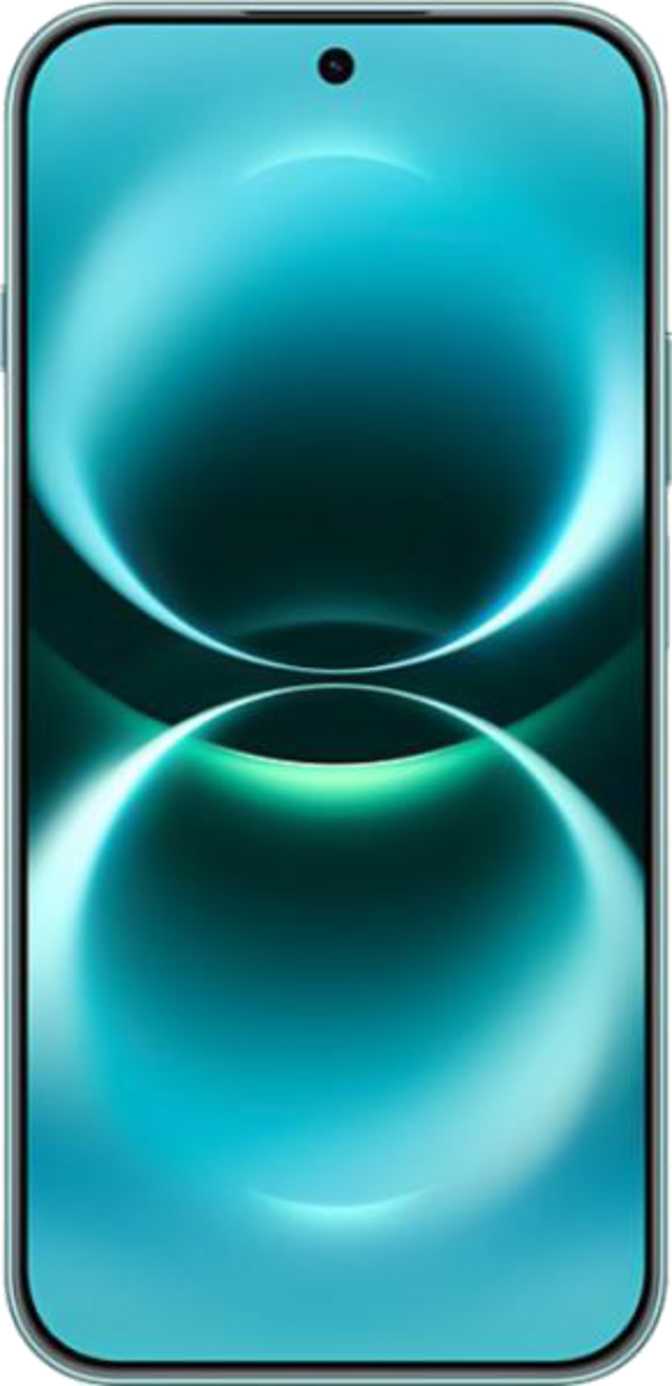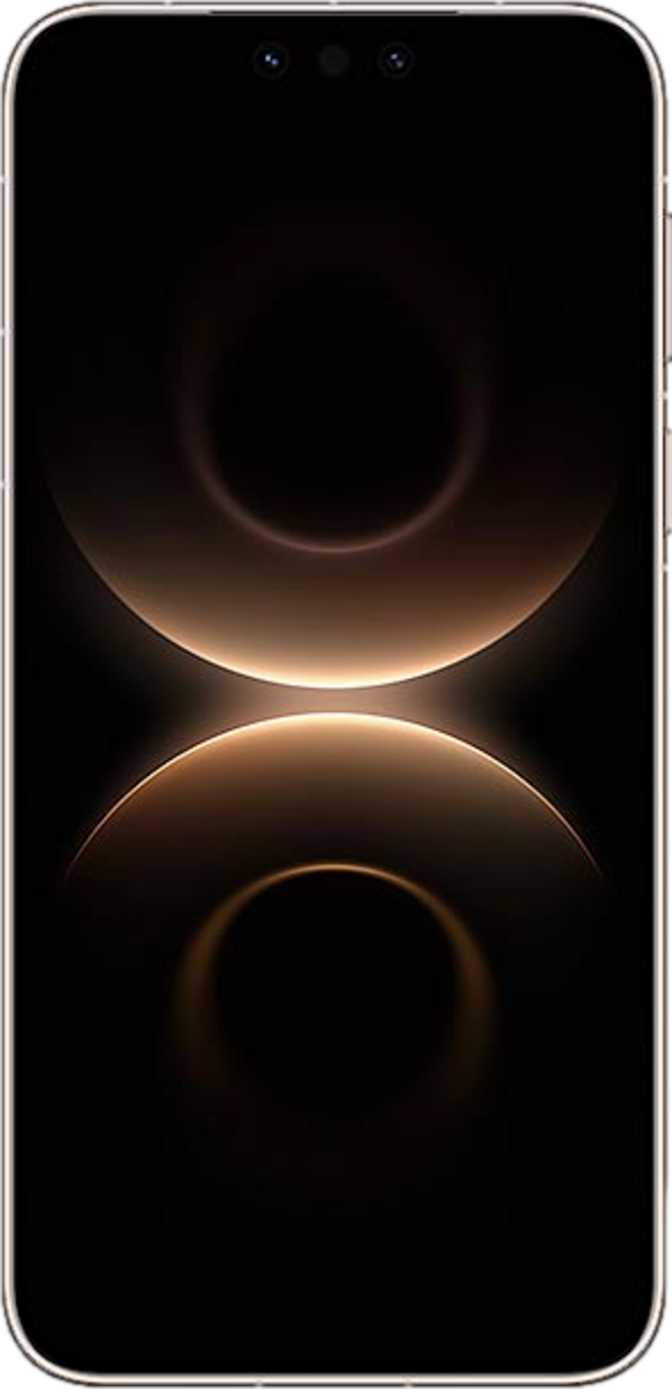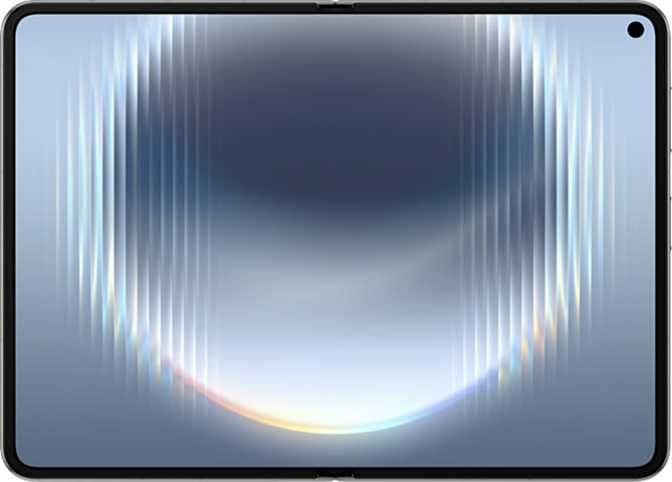
Huawei Pura X Max Review: An Ultra-Thin Foldable Tested in Full
Smartphones7.7″ OLED
412 ppi · 120Hz
Kirin 9030 Pro
6nm · 16GB RAM
1TB Storage
Fixed · No card slot
5300 mAh
66W · 50W wireless
Triple Camera
50+50+12.5MP · 3.5x
IP58 Rated
5.2mm thin · 229g
Huawei's Pura X Max arrives as one of the most technically ambitious foldable smartphones the company has ever built. It doesn't try to be a slightly better version of last year's device — it reframes what a large-format foldable should feel like in hand, on a desk, and in a bag. With a display that opens to tablet proportions, a chipset built entirely in-house, and a thickness that challenges even traditional candy-bar phones, this is a device that invites scrutiny. It also invites a few hard questions, which this review answers directly.
Design and Build: Remarkably Thin for Something This Capable
The Dimensions Tell a Story
At 5.2 mm thick when unfolded, the Pura X Max occupies a category of its own. Most foldable phones, even good ones, carry a noticeable heft when open — a reminder that you are holding engineering compromise. The Pura X Max feels different. It sits closer in profile to a premium slim flagship than to a folding device, and that has a real effect on how willing you are to use it all day without switching to something smaller.
The footprint when unfolded is intentionally landscape-oriented — roughly 166.5 mm wide and 120 mm tall. This is not a tall, narrow foldable like most of its category peers. It opens wide, more like a small tablet held horizontally than a phone held vertically. That shapes everything: how you type, how you watch video, how you split the screen. It is a deliberate design philosophy, not an accident of engineering.
At 229 grams, weight is present but not punishing. Foldable phones concentrate mass differently than slabs, and Huawei has managed to keep the balance point reasonable. Extended one-handed use for calls or quick tasks is manageable; two-handed use for reading or working is clearly where this device is most comfortable.
Key Dimensions
- Thickness (unfolded)
- 5.2 mm
- Width
- 166.5 mm
- Height
- 120 mm
- Weight
- 229 g
The Cover Screen
The secondary display — the outer screen you use when the device is folded — runs at a resolution of 1264 x 1848 pixels, oriented vertically. This means the Pura X Max in its closed state behaves like a conventional tall smartphone, giving you a full-featured surface for notifications, calls, messages, and quick app interactions. You are not squinting at a narrow strip or navigating a cramped interface. The cover experience is genuinely usable, which matters enormously for a device you will open and close dozens of times per day.
Water Resistance
The IP58 rating means the Pura X Max is rated for submersion in fresh water up to one metre. For a folding device — a category where water resistance has historically been an afterthought due to the complexity of the hinge mechanism — this is a meaningful achievement. You can use it in rain without concern and recover quickly from accidental splashes or a brief drop into water. This is not a phone for swimming or saltwater, but it handles real-world moisture exposure confidently.
What Is Missing From the Build
The Display: A 7.7-Inch Canvas That Earns Its Size
7.7″
OLED / AMOLED
412
Pixels per inch
120Hz
Adaptive refresh rate
AOD
Always-On Display
Inner Screen Quality
The main display stretches to 7.7 inches, using OLED/AMOLED panel technology. OLED means each pixel produces its own light, so blacks are genuinely black, colours are vivid and accurate, and the panel can dim individual zones with no backlight bleed. At 412 pixels per inch, text renders with the kind of sharpness that makes reading extended documents comfortable. You will not see individual pixels — the image appears continuous and sharp at any normal viewing distance.
The 120 Hz refresh rate means the display updates its image up to 120 times per second. In practice, scrolling feels fluid rather than mechanical, animations look smooth, and the transition between apps has a polish that lower-refresh panels cannot match. Always-On Display functionality means the screen can show time, notifications, or status information without requiring a full wake — useful for a device that sits on a desk in tablet mode or serves as a reference screen during meetings.
Resolution in Context
The 2584 x 1828 pixel resolution across 7.7 inches results in a pixel density that competes with premium tablets. Web pages, documents, and photographs all benefit from the real estate. Split-screen multitasking — which the software supports — becomes genuinely productive at this size rather than merely functional. Running two apps side by side gives each one the equivalent screen area of a mid-size smartphone. That changes how you work.
Performance: The Kirin 9030 Pro Under the Hood
What the Chipset Is and What It Implies
The HiSilicon Kirin 9030 Pro is Huawei's flagship system-on-chip, manufactured on a 6-nanometre process. Smaller semiconductor processes generally mean the chip can perform more operations per watt — less heat during sustained workloads and better battery endurance. A 6 nm chip positions the Kirin 9030 Pro as a high-performance processor, though it trails the leading-edge 3 nm and 4 nm chips found in some competing flagships — a factor worth considering for buyers who prioritise absolute benchmark performance.
| Cluster | Cores | Clock Speed | Primary Role |
|---|---|---|---|
| Performance | 2 cores | 2.75 GHz | Heavy workloads & peak demand tasks |
| Efficiency+ | 4 cores | 2.27 GHz | Sustained moderately intensive use |
| Efficiency | 8 cores | 1.72 GHz | Background tasks & power saving |
Memory and Storage
Pairing 16 GB of high-speed RAM with the processor means app switching is fast and multitasking is genuinely smooth. On a 7.7-inch screen where you are likely running multiple apps simultaneously, having enough memory to keep several of them resident in the background without constant reloading is practically important. The RAM operates at 2750 MHz with a memory bandwidth of 44 GB/s — figures that support rapid data movement during intensive tasks like video editing, large file handling, or complex gaming.
The 1 TB of internal storage is the maximum configuration in this class. For a device with a high-resolution triple camera system and a large display ideal for storing media libraries, eliminating the anxiety of running out of space is a real quality-of-life benefit. There is no external memory card slot — this 1 TB is everything you get, so plan accordingly.
GPU and Graphics
The Maleoon 935 GPU supports DirectX 12 and OpenGL ES 3.2, placing it in the capable category for gaming, graphic design apps, and video playback. The 7.7-inch display and smooth refresh rate are natural partners for gaming, and the GPU is equipped to feed that display with complex scenes. Video editing and image processing applications also benefit from the dedicated graphics capability.
Camera System: Three Lenses, One Unified Purpose
Main: 50MP
f/1.4 aperture
Primary wide — low-light leader
Ultra-wide: 50MP
f/2.2 aperture
Wide-angle perspective lens
Telephoto: 12.5MP
f/2.2 · 3.5x optical
81mm equivalent — portrait-ready
The Main Triple Array
The primary 50 MP sensor shoots with an f/1.4 aperture — a wide opening that allows significantly more light into the sensor than the f/2.2 aperture on the other two lenses. In practical terms, f/1.4 delivers noticeably better results in low-light environments: evening shots, indoor scenes, and situations where lighting is inconsistent.
The 3.5x optical zoom covers a focal range from 24 mm wide to an 81 mm telephoto equivalent. Optical zoom uses physical lens elements to magnify the image before it reaches the sensor, meaning quality does not degrade the way it does with digital zoom. An 81 mm equivalent is excellent for portraits — it compresses backgrounds pleasingly and allows comfortable shooting distance from subjects. Wildlife, events, and street photography all benefit from genuine optical reach.
Autofocus and Stabilisation
Laser autofocus works by measuring the time it takes for an infrared beam to return from a subject, giving the camera processor an immediate distance reference. Combined with phase-detection autofocus for stills, the system locks onto subjects quickly and maintains that lock during video recording through continuous autofocus. Optical Image Stabilisation physically compensates for hand movement by shifting lens elements in response to detected motion — reducing blur in low-light stills and smoothing video footage during walking or handheld recording.
Manual Controls Available
Front Camera
The 8-megapixel front camera shoots through an f/2.2 aperture with no under-display placement — it sits in a cut-out or bezel, preserving the full inner display area for content. Video calls, self-portraits, and face unlock are all served here. The resolution is modest compared to some competitors, but adequate for its intended purposes. There is no front-facing flash.
What the Cameras Do Not Do
Battery and Charging: Power That Keeps Pace
66W
Wired Fast Charging
Charger included in box
50W
Wireless Charging
Requires compatible Huawei pad
7.5W
Reverse Wireless
Charge earbuds & accessories
Capacity in Context
The 5300 mAh battery is a large cell by any current standard, particularly impressive inside a device as thin as 5.2 mm. A battery this size, paired with an efficient 6 nm chipset, should comfortably carry most users through a full day of mixed use — video, browsing, calls, and productivity — and into a second day for lighter users. The large display is the primary variable: screen-on time at full brightness on a 7.7-inch OLED panel will draw more power than a typical smartphone. Heavy video streaming or gaming sessions should be planned around a charger nearby.
Charging Speed in Practice
At 66W, wired fast charging refills the battery meaningfully in a short window — enough to move from near-empty to a comfortable reserve in under an hour for most usage scenarios. Wireless charging at 50W is genuinely fast for wireless delivery — many competing devices cap wireless charging at 15W or 30W. This means a wireless charging pad is not a slow-charging convenience option; it is a legitimate daily charging method. Reverse wireless charging at 7.5W allows the Pura X Max to act as a charging pad for accessories, suitable for topping up earbuds or a smartwatch rather than charging another large device from empty.
Connectivity: Current Specifications Across the Board
Wireless and Cellular
Wi-Fi 7 (802.11be) is the latest generation of wireless networking, offering higher throughput, lower latency, and better performance in congested environments than Wi-Fi 6 or earlier. For a device used in productivity contexts — transferring large files, video conferencing, cloud workflows — the headroom that Wi-Fi 7 provides is meaningful. 5G cellular support is present for carrier plans that offer it. Bluetooth 6 enables efficient connection to wireless audio devices and peripherals. The USB-C port operates at USB 3.1 speeds, supporting fast wired data transfer and external display output.
SIM Configuration
Support for two physical SIMs plus two eSIMs offers genuine flexibility for travellers, people managing personal and work lines, or those who prefer carrier-switching without swapping physical cards. This is a thoughtful inclusion in a flagship device.
Sensors and Special Features
The Stylus
A stylus ships in the box. On a 7.7-inch inner display, a stylus moves from novelty to practical tool: note-taking, annotation, sketching, and precise selection all benefit from stylus input in ways that fingertip interaction cannot fully replicate. The inclusion in the box means this capability is available from day one without an additional purchase.
Audio Trade-offs
Stereo speakers are present, and on a 7.7-inch form factor, the speaker separation delivers better stereo imaging than a typical smartphone. There is no 3.5 mm headphone jack. More significantly, there is no support for high-resolution Bluetooth audio codecs — no LDAC, no aptX HD, no aptX Adaptive. Listeners using high-end wireless headphones that depend on these codecs for lossless-level quality over Bluetooth will not get them here. Wired listening through the USB-C port with an adapter remains an option.
The Operating System and Software Ecosystem
Critical before you buy: HarmonyOS and Google Services
The Pura X Max runs HarmonyOS — Huawei's own operating system. The device does not include Google Play Services. Applications from the Google ecosystem — Gmail, Google Maps, YouTube, and the Play Store — are not natively available. Buyers who depend heavily on specific Android or Google applications must research AppGallery availability for those specific apps before committing to this device.
Huawei's AppGallery serves as the primary application marketplace, and it has grown considerably in breadth. Many essential productivity applications, regional apps, and Huawei's own software suite are available. The software layer is genuinely capable: split-screen multitasking, widgets, multi-user profiles, voice commands, child lock, customisable notifications, and a full privacy management suite including camera and microphone access controls are all present. Battery health monitoring is built in. The system is polished. The ecosystem constraint is real, but it varies enormously in its impact depending on what you actually use your phone for.
Who This Phone Is For — and Who It Is Not
- Productivity-focused professionals who want one device that replaces both a smartphone and a small tablet, with genuine screen real estate for documents, spreadsheets, and split-screen workflows.
- Photographers and videographers comfortable within HarmonyOS who want a versatile multi-focal camera with manual controls and 3.5x optical zoom.
- Huawei ecosystem users already invested in HarmonyOS devices, services, and the AppGallery — for whom the software story is already familiar.
- Travellers who want one device that does what two usually accomplish, with multi-SIM flexibility and a capable camera system.
- Design-conscious users for whom thin profile, large display, and included stylus represent a toolkit no conventional smartphone can match.
- Google-dependent users: If your daily workflow relies on Gmail, Google Drive, Google Maps, or YouTube, the absence of Google Play Services creates friction that cannot be resolved with workarounds alone.
- One-handed smartphone users: The wide landscape form factor, even folded, does not lend itself to single-handed operation the way a tall narrow foldable does.
- Budget-conscious buyers: The specification profile and form factor place this firmly in the premium tier, and its pricing reflects that fully.
- Audiophiles with hi-res wireless headphones: The absence of LDAC and aptX codecs will be a tangible limitation for listeners who depend on these for lossless-level Bluetooth audio quality.
How the Pura X Max Compares to Its Closest Rivals
| Feature | Huawei Pura X Max | Competing Foldable A | Competing Foldable B |
|---|---|---|---|
| Inner screen size | 7.7″ | 7.6″ | 7.9″ |
| Unfolded thickness | 5.2 mm | ~5.6–6.4 mm | ~5.4–6.2 mm |
| RAM | 16 GB | 12–16 GB | 12–16 GB |
| Internal storage | 1 TB | 256 GB–1 TB | 256–512 GB |
| Wired charging | 66W | 25–45W | 67–80W |
| Wireless charging | 50W | 10–15W | 50W |
| Stylus included | Yes | No | No |
| IP rating | IP58 | IP48 | IP48 |
| Bluetooth | 6.0 | 5.3 | 5.3 |
| Wi-Fi generation | Wi-Fi 7 | Wi-Fi 7 | Wi-Fi 6E |
| Google services | No | Yes | Yes |
Honest Assessment: Where It Excels and Where It Compromises
- At 5.2 mm unfolded, the thinness is genuine and immediately noticeable compared to any other foldable on the market.
- IP58 water resistance is class-leading for a folding device, meaningfully more durable than IP48 competitors.
- The 7.7-inch OLED at 412 ppi is vivid, sharp, and genuinely productive for split-screen multitasking on a single device.
- 50W wireless charging is among the fastest in its category, making wireless a legitimate daily charging method — not just a slow alternative.
- The f/1.4 primary aperture, laser autofocus, and full manual controls make this a versatile photographic tool with genuine range.
- The stylus ships in the box at no extra cost, turning the large inner display into a note-taking and annotation canvas from day one.
- The lack of Google Play Services is not a minor footnote — it is a platform-level distinction that affects app availability every single day for many users.
- Neither display surface includes branded damage-resistant glass, meaning the inner screen is more scratch-prone than rigid alternatives.
- No high-resolution Bluetooth audio codecs — LDAC, aptX HD, and aptX Adaptive are all absent — limiting wireless audio quality for audiophiles.
- The wide landscape-oriented form factor is excellent for productivity but less natural for incidental, one-handed phone use.
- The 6 nm chipset is capable but trails leading-edge 3 nm and 4 nm processors in competing flagships for absolute benchmark performance.
Answers to the Questions Buyers Ask Before Purchasing
Final Verdict
Who Should Buy the Huawei Pura X Max
The Huawei Pura X Max is the right phone for a buyer who wants the most capable foldable hardware currently achievable — the thinnest chassis, the most storage, the strongest IP rating in its category, fast dual-mode charging, a stylus, and a large OLED canvas — and who either lives within the HarmonyOS ecosystem already or is prepared to evaluate their app needs carefully against AppGallery's current catalogue.
It is not the right phone for someone whose daily life runs through Google's apps and services, who needs Google Maps offline navigation, or who expects to install anything from the Play Store without friction.
For the buyer this phone was built for, it delivers on nearly every hardware promise it makes. The thinness is real. The water resistance is meaningful. The display is excellent. The camera system is capable and flexible. The battery and charging combination is among the best in the folding category.
Bottom Line
If your use case aligns and your software needs are met by HarmonyOS, the Pura X Max is among the most accomplished foldable smartphones available today. Hardware this refined — at this thinness, with this level of IP protection and charging capability — sets a benchmark the rest of the category is still catching up to.