Beelink SER10 Max Review: A Compact PC That Finally Gets It Right
Mini PCsKey Specifications at a Glance
The figures that define what the SER10 Max actually delivers
Editorial Rating
The Beelink SER10 Max sets a new benchmark for what a compact PC can achieve — pairing workstation-grade RAM, a next-generation integrated GPU, and an impressive array of high-speed ports inside a chassis that fits in your palm.
Design and Build Quality
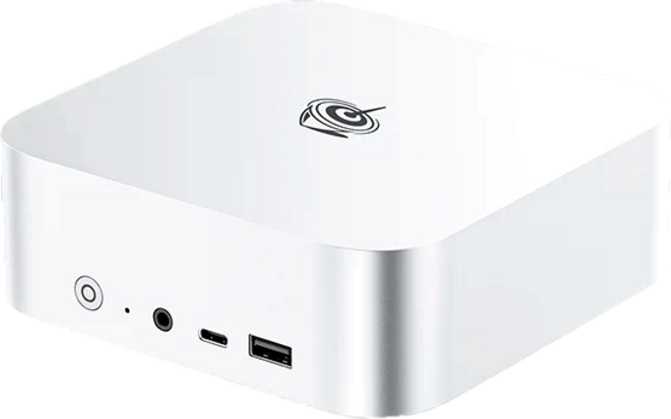
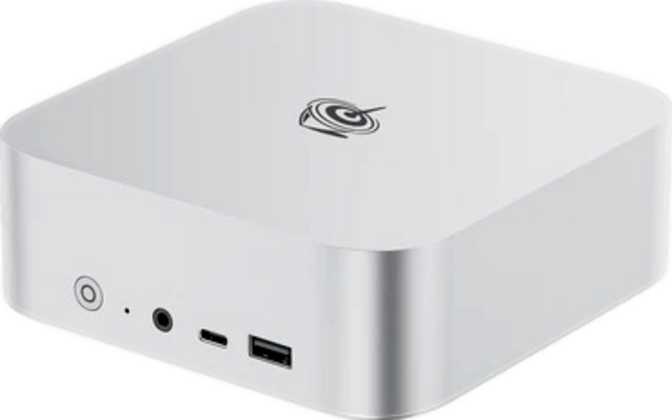
The SER10 Max occupies roughly the same footprint as a paperback novel — 135mm on each side and under 45mm tall. At just over 500 grams, it weighs less than a can of soda. You can mount it behind a monitor, tuck it behind a TV, drop it in a bag, or sit it on a desk where it disappears entirely. For anyone tired of tower PCs dominating their workspace, this form factor is genuinely liberating.
Beelink's build quality sits in the comfortable middle ground you'd expect from a hardware company that keeps costs lean by investing in internals rather than exterior flourishes. The chassis feels substantial — not flimsy plastic, but not premium aluminium either. It's a practical enclosure built to house capable components without apology.
The ventilation design is worth understanding before you buy. Despite the compact dimensions and the thermal demands of the hardware inside, the unit relies on active air cooling — a fan is present and audible under sustained load. During light work like browsing and video streaming, it's nearly silent. During prolonged gaming sessions or heavy file exports, you'll hear it working. This is a predictable and honest trade-off for a machine this small.
- Width
- 135 mm
- Depth
- 135 mm
- Height
- 44.7 mm
- Weight
- 520 g
- Volume
- 814 cm³
- Cooling
- Active fan
- Warranty
- 1 year
Processor Performance
The SER10 Max is built around AMD's latest hybrid core architecture — twelve cores split between high-performance Zen 5 cores that handle demanding tasks and compact Zen 5c efficiency cores that manage lighter background work. Together they support 24 simultaneous processing threads, which means genuinely smooth multitasking even when you have video editing software, a browser with 30 tabs, and a video call running at the same time.
The peak clock speed hits 5.2GHz on the performance cores — competitive with chips found in premium laptops costing three to four times as much. The processor is built on a 4-nanometre fabrication process, which means more processing capability per watt, better efficiency, and lower heat generation compared to older chip generations. A 24MB L3 cache further smooths out performance in data-intensive applications.
The single-core PassMark score of 4,264 ensures that individual application tasks — opening software, running scripts, rendering single frames — feel snappy and responsive. This isn't a benchmark result that vanishes in daily use; the architectural foundation behind it is legitimately capable.
The honest caveat is the 28-watt thermal ceiling. This is what keeps the unit cool, quiet, and compact — but it also means that during hours-long maximum-load workloads, a dedicated desktop tower with a higher-wattage processor will sustain higher peak performance. For bursts of intense work — exporting a file, compiling code, rendering a scene — the SER10 Max delivers full speed. For truly sustained all-day heavy lifting, manage expectations accordingly.
Benchmark Context
Higher is better. Comparison values represent typical category averages.
Integrated Graphics: The Radeon 890M
Why this GPU changes the mini PC conversation entirely
The Radeon 890M is built on AMD's RDNA 3.5 graphics architecture — the same design foundation used in AMD's discrete GPU lineup. With over a thousand shader processors, 64 texture processing units, 32 render output units, and a peak clock speed above 3GHz, it produces nearly 6 TFLOPS of compute performance. That figure places it in the same ballpark as the PlayStation 4 Pro and meaningfully above many previous-generation integrated solutions.
For the mini PC category specifically, this matters enormously. Most users considering a compact desktop don't need a dedicated gaming card — they need a graphics unit that handles everyday acceleration, light gaming, and multi-display work without a separate GPU consuming power, space, and budget. The 890M removes the need for a discrete card entirely for the majority of use cases.
Ray tracing support is present — a feature most integrated GPUs simply don't offer at any level. In practice, enabling ray tracing at high resolutions pushes the 890M to its limits, but its architectural presence means this is a current-generation, forward-looking GPU rather than a cut-down leftover.
One important note for the technically minded: DLSS — NVIDIA's AI-powered upscaling system — is not supported on AMD hardware. AMD's FSR (FidelityFX Super Resolution) is widely available in modern games and can meaningfully recover frame rates on demanding titles, but buyers who specifically prioritise DLSS should note this platform difference.
Gaming Performance by Category
Estimates based on GPU architecture and TFLOPS rating. Actual frame rates vary by title and driver version.
eGPU Expansion Available
The Thunderbolt 4 port supports external GPU enclosures, giving the SER10 Max a potential upgrade path for heavier gaming workloads in the future.
Memory and Storage: No Compromises
64 GB DDR5 RAM
The SER10 Max ships with 64 gigabytes of DDR5 memory — both the installed amount and the platform maximum. DDR5 running at 5,600MHz is materially faster than the DDR4 found in previous-generation systems. It feeds the Radeon 890M GPU more data per second, which directly improves graphics performance, and it reduces bottlenecks in applications that process large datasets.
For almost every workload a non-specialist user would throw at this machine, 64GB means you will never need to think about memory again. Running multiple virtual machines, editing large layered files, keeping every application you own open simultaneously — none of these exhaust this pool. The memory operates in dual-channel configuration, which doubles the communication bandwidth between processor and RAM compared to a single-stick setup.
1 TB NVMe PCIe 4.0 SSD
The storage uses a PCIe 4.0 NVMe interface — the current mainstream performance standard for solid-state drives. These drives transfer data at speeds that make traditional spinning hard drives look laughably slow: software loads in seconds, large file transfers finish in moments, and the operating system boots quickly from a cold start.
One terabyte provides comfortable headroom for most users. A full Windows installation, a suite of creative applications, a library of games, and a year of project files will typically consume less than half of it. The NVMe interface uses a standard M.2 connector, which is broadly replaceable should you ever want to upgrade to a larger drive — though opening the chassis may affect your warranty terms.
Connectivity and Port Selection
A port lineup that rivals many desktop motherboards
- 1× HDMI 2.1
Supports 4K at 120Hz or 8K output - 2× DisplayPort 2.1
Latest standard — very high resolution and refresh rate capable - Up to 4 simultaneous displays
Independent screens across all three outputs
- 1× USB4 (40 Gbps)
Fastest USB standard — supports eGPU and high-speed docks - 1× Thunderbolt 4
External GPU, fast storage, and Thunderbolt dock support - 2× USB 3.2 Gen 2 (Type-A)
Fast enough for external SSDs and demanding peripherals - 1× USB 3.2 Gen 2 (Type-C)
Additional fast Type-C for cables and accessories - 2× USB 2.0 (Type-A)
Adequate for keyboards, mice, and low-bandwidth accessories
- Wi-Fi 6 (802.11ax)
Faster and less congested than Wi-Fi 5 — especially in crowded environments - Bluetooth 5.2
Current-generation wireless for audio, peripherals, and accessories - 1× Gigabit Ethernet (RJ45)
Wired network for reliability-critical environments - 3.5mm Audio Jack
Headphones and speakers supported - No S/PDIF Output
Optical digital audio is absent — relevant for legacy AV receivers
Who Should Buy the SER10 Max
- Home office and remote workers — fast, compact, nearly silent during everyday tasks, and powerful enough to replace a traditional desktop for productivity workloads
- Content creators in video and photo editing — 64GB RAM and a capable CPU handle moderate-resolution projects without a dedicated workstation budget
- Casual to mid-range gamers — esports titles, indie games, and older AAA titles run well without any discrete GPU investment
- Multi-monitor productivity users — driving four independent screens from a machine this small is rare and genuinely useful for traders, analysts, and power users
- Home theatre PC builders — 4K playback and occasional gaming in a box that hides behind any television
- Developers and technical users — 64GB of headroom removes a major constraint for running virtual machines, local AI models, containers, and development environments simultaneously
- Sustained professional 3D rendering or simulation — users who need hours of uninterrupted maximum CPU output will encounter throttling in a 28W chassis
- Competitive high-refresh gaming at 1440p or 4K — the 890M handles lighter titles well, but demanding AAA games at high resolutions and settings are beyond its comfortable reach
- Users who need ECC memory — error-corrected computing for sensitive scientific, financial, or server applications is not supported
- Audiophiles with legacy home theatre equipment — the absence of S/PDIF digital audio output will be a dealbreaker for receivers that rely on optical connections
How It Stacks Up Against Alternatives
Comparing the SER10 Max against the segments it competes with most directly
| Feature | Beelink SER10 Max | Typical Prev-Gen Mini PC | Budget Mini PC |
|---|---|---|---|
| CPU Architecture | Hybrid 12-core, 24-thread | Quad to octa-core | Dual to quad-core |
| GPU Tier | RDNA 3.5 integrated | Older integrated | Basic integrated |
| RAM | 64 GB DDR5 | 16–32 GB DDR4 | 8–16 GB DDR4/LPDDR5 |
| Storage | 1 TB NVMe PCIe 4 | 512 GB NVMe | 256–512 GB NVMe |
| Display Outputs | 4 screens | 2–3 screens | 1–2 screens |
| USB4 / Thunderbolt 4 | Both present | Rarely present | Not present |
| PassMark Score | ~36,000 | ~15,000–22,000 | ~5,000–10,000 |
Comparison values represent typical category ranges and are based on commonly available configurations at similar price tiers.
Honest Assessment
Where It Excels
The SER10 Max gets a great deal right. The RDNA 3.5 Radeon 890M GPU is the most consequential integrated graphics solution available in a mini PC at this tier — it genuinely replaces the need for a discrete card for most users, something that wasn't true of previous generations. Combined with 64GB of high-speed DDR5, this machine handles creative workloads, developer environments, and casual gaming without blinking.
The port selection is remarkable for the size. USB4 at 40Gbps and Thunderbolt 4 on the same machine opens up expansion options — particularly the ability to add an external GPU — that competitors at this price simply don't offer. Driving four independent displays from a 135mm cube is a genuine capability that earns serious attention from productivity users.
The DisplayPort 2.1 outputs are forward-looking: they support the high-refresh, high-resolution monitors coming to market, meaning this machine won't be the bottleneck as display technology advances. Wi-Fi 6 and Bluetooth 5.2 round out a connectivity picture that is thoroughly current-generation across every category.
Where It Falls Short
Thermal throttling under sustained maximum loads is the honest cost of a 28-watt ceiling and a compact chassis. This isn't a flaw unique to Beelink — it's a physics constraint every mini PC in this category shares. For workflows involving hours of uninterrupted peak CPU output, a larger machine with a higher power budget will maintain better sustained performance.
The one-year warranty is shorter than what established brands offer on premium hardware. For personal use this is generally acceptable; for business deployment where downtime is expensive, the limited coverage and Beelink's smaller service network are legitimate considerations worth weighing.
Minor friction points include the audible fan under load, the absence of an SD card slot, and the lack of S/PDIF audio. None are dealbreakers for most buyers, but each is a real-world limitation worth knowing before committing. The RAM configuration being both fully populated and non-expandable also means there is no future upgrade path — what you buy is what you keep.
Common Questions from Real Buyers
Answers to what people actually search for before purchasing
Final Verdict
The Beelink SER10 Max is the mini PC that justifies taking the category seriously. It isn't trying to replace a purpose-built gaming rig or a workstation tower — those machines have thermal and power advantages that physics won't allow a 135mm cube to match. What it does instead is cover an enormous range of real-world computing needs with genuine competence.
A fast, responsive everyday experience. Capable light-to-mid gaming without a separate GPU. 64GB of headroom for multitasking and creative work. A port selection that supports complex multi-monitor and high-speed peripheral setups. For a home office worker, a content creator who doesn't need a render farm, a casual gamer, a developer running local workloads, or anyone who simply wants a powerful computer that doesn't dominate their physical space — the SER10 Max makes a compelling case without requiring significant compromise.
Buy it if:
You want maximum capability in minimum space — for home office work, light gaming, creative projects, local AI inference, or multi-monitor productivity. The 64GB RAM, RDNA 3.5 GPU, and USB4 / Thunderbolt 4 combination is hard to beat at this form factor.
Consider alternatives if:
You need hours of unthrottled peak CPU performance for sustained rendering or simulation, or if your gaming ambitions run to demanding AAA titles at 1440p or 4K on high settings. Know the 28W thermal ceiling before committing.