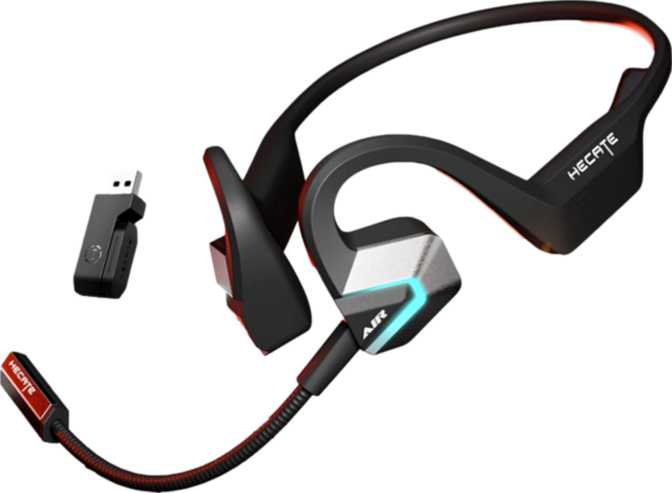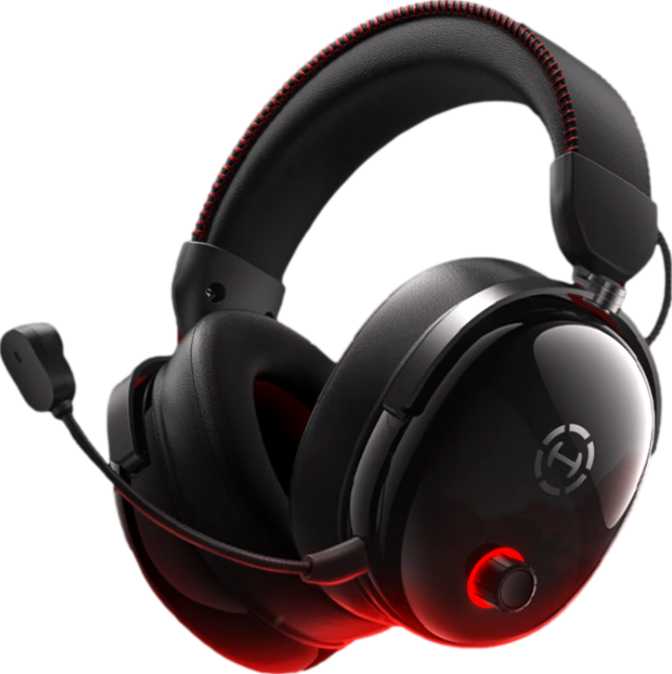
Edifier Hecate G3 Max Review – Gaming Endurance Done Right
PC and Gaming Headsets227 hrs
Rated Battery Life
53 mm
Driver Size
BT 6 + 2.4G
Dual Wireless
3 Platforms
PC / PS5 / Switch
Gaming headsets at this tier are everywhere, and most of them follow the same formula: big drivers, flashy lights, mediocre microphone, battery that dies mid-session. The Edifier Hecate G3 Max does not follow that formula. It brings a few genuinely unusual specifications to the table — most strikingly, a battery life figure that sounds like a misprint until you look twice — and pairs them with multi-platform wireless connectivity that covers the three major gaming platforms most players actually own. Whether this headset deserves a spot on your desk comes down to a handful of deliberate trade-offs Edifier made, and whether those trade-offs align with how you actually game.
Design and Build: Comfortable Weight, Gaming Aesthetics
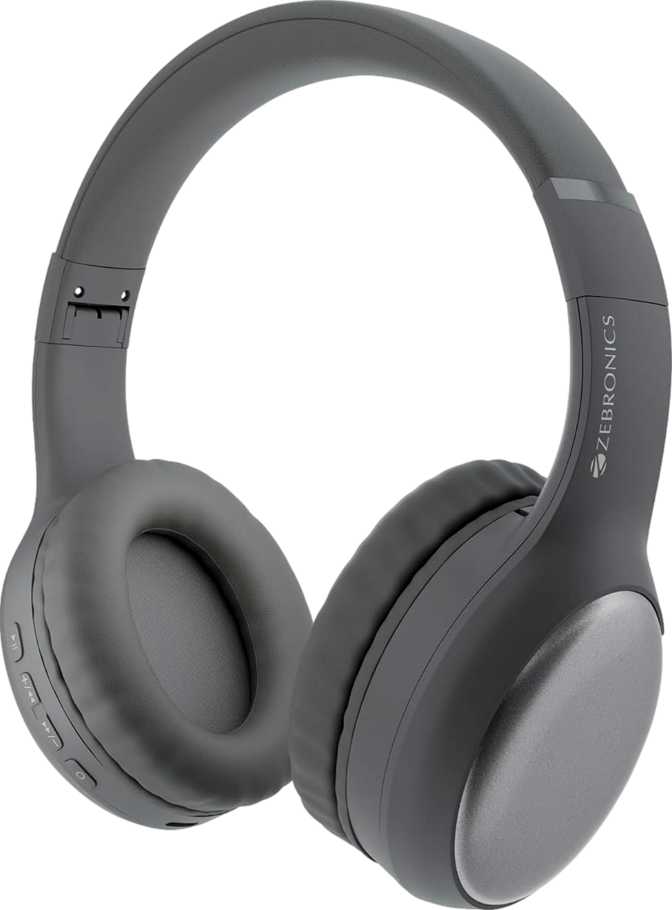
At 280 grams, the Hecate G3 Max lands in comfortable territory for an over-ear gaming headset. That is light enough that extended sessions — the three, four, five-hour marathons that serious players know well — should not result in the neck fatigue that heavier headsets cause. Many full-sized gaming headsets push past 300–350 grams, and every extra gram compounds over hours of wear.
The fit is over-ear, meaning the ear cups fully surround the ear rather than pressing against it. This closed-back design creates a physical seal around the ear, which is central to how the headset handles ambient sound. The construction uses this seal as both a comfort and acoustic asset.
Design note: RGB lighting is present. If your gaming setup embraces it, the Hecate G3 Max fits naturally. If you prefer a clean, minimalist look, be aware the lighting does not switch off entirely — it is part of the aesthetic Edifier intends for this headset.
The on-device control panel means you manage volume and other functions directly on the headset cups — no fumbling for an in-line remote on a cable. For a wireless-first headset, this is the correct and expected approach.
Audio Performance: Large Drivers, Wide Frequency Reach
The Driver Story
The Hecate G3 Max is built around a pair of 53-millimeter drivers. Driver size is not the only factor in headphone sound quality — tuning, driver material, and acoustic chamber design all play significant roles — but 53mm is notably large even by gaming headset standards, where 40–50mm is the common range. Larger drivers generally produce more physical air movement, which can translate to better low-frequency reproduction and a more immersive sense of scale in cinematic soundscapes and game audio.
Frequency Range and What It Means for Gamers
The headset is tuned to cover a frequency range from the lowest bass a human ear can perceive all the way up to 40,000 Hz — well beyond the 20,000 Hz ceiling of standard human hearing. This extended high-frequency reach is not about hearing sounds you cannot actually hear; it is about ensuring that sounds within the audible range are reproduced with more accuracy and less phase distortion at the upper end. In practical terms: greater detail in high-frequency audio — the crack of a sniper shot, the metallic shimmer of a game soundtrack, the directional cues embedded in game audio mixes.
For gaming specifically, this kind of frequency reach pairs well with spatial audio, which this headset supports. Spatial audio processing — the technology that takes a standard audio signal and creates a three-dimensional sense of positional sound — relies on accurate high-frequency reproduction to simulate the subtle acoustic reflections your ears use to locate sounds in real space. The Hecate G3 Max's driver tuning is clearly designed with this in mind.
Passive Noise Isolation
There is no active noise cancellation (ANC) here. ANC uses microphones and signal processing to actively cancel out ambient sound waves — the technology that makes commuter headphones feel like you stepped into silence. The Hecate G3 Max relies instead on passive noise isolation: the physical seal of its closed-back, over-ear design blocking ambient sound through sheer acoustic insulation.
For gaming at a desk, this is often the preferable approach. ANC introduces a processing chain that can affect audio quality, adds cost, and drains batteries. Passive isolation consumes no power, introduces no processing artifacts, and for gaming environments where the primary intrusion is keyboard noise, room fan hum, or household activity, it is usually more than sufficient.
Microphone: Removable, Noise-Canceling, with One Noticeable Gap
The Hecate G3 Max includes a single detachable microphone with noise-canceling capability. The detachable design is a genuine quality-of-life feature: when listening to music or watching a film rather than communicating in a game, the boom arm comes off entirely, and the headset transitions into a clean pair of headphones without a microphone stub in your line of sight.
Noise-canceling on the microphone side means the mic is designed to suppress background sound — keyboard clicks, room reverb, ambient noise — before your voice reaches your teammates. This is distinct from ANC on the listening side; microphone noise cancellation makes your voice transmission cleaner, not your listening experience quieter.
Notable omission: No hardware mute button
For a gaming headset — where muting yourself quickly during a live game is close to essential — this is a meaningful gap. Players who rely on voice chat will need to mute through software (Discord, the platform's party system, or the game itself), which adds a step that, in competitive play, can matter at exactly the wrong moment. This is the most functionally significant compromise in the headset's design.
Battery Life: The Number That Makes You Stop and Reread
227
hours of rated battery life
Roughly nine and a half continuous days — or weeks of real-world gaming at typical daily session lengths.
The Hecate G3 Max carries a 2,000 mAh internal battery, and Edifier rates it for approximately 227 hours of use. That is not a weekly figure. For a player who games three to four hours daily, this implies charging intervals measured in months rather than days.
Even accounting for real-world variables — volume levels, wireless mode (2.4GHz draws more power than Bluetooth), and whether lighting is active — this figure implies a headset you charge once every several weeks under typical gaming patterns. Strong performers in the gaming headset category typically offer 20–40 hours of wireless battery life. Even premium flagship headsets rarely exceed 70–80 hours. The Hecate G3 Max's stamina is an order of magnitude beyond the category norm.
The headset includes a battery level indicator so you are not flying blind on remaining charge, and it uses USB-C for charging — the same cable as your phone, controllers, and most other peripherals. The battery is internal and non-removable, which is standard across the category.
Connectivity: Dual Wireless with Modern Bluetooth
The preferred connection for gaming. Operating on a dedicated frequency band, 2.4GHz delivers virtually zero latency — ideal for fast-moving gameplay where audio sync to visuals matters. This is the connection to use when playing on PC or PlayStation.
Handles everything else — phone calls, streaming music from a mobile device, and connecting to devices without a USB-A port for the dongle. Bluetooth 6 is among the most current versions available, bringing improved connection stability and efficiency compared to the Bluetooth 4 and 5 variants found in older headsets.
Codec Considerations for Audio Enthusiasts
The direct answer: The Hecate G3 Max does not support advanced Bluetooth audio codecs — no aptX, no aptX HD, no LDAC, no AAC. Bluetooth audio uses SBC, the baseline standard.
For gaming over 2.4GHz, this is entirely irrelevant — that connection bypasses Bluetooth completely. For music listening over Bluetooth from a phone, it means you are not getting the highest possible wireless audio fidelity that some competing headsets offer. If Bluetooth is your primary listening mode, this trade-off is worth considering. If gaming is your primary use, it has no practical impact on daily experience.
Platform Compatibility at a Glance
| Platform | Compatible | Connection Method |
|---|---|---|
| PC | Yes | 2.4GHz dongle or Bluetooth |
| PlayStation (PS5 / PS4) | Yes | 2.4GHz dongle |
| Nintendo Switch | Yes | Bluetooth |
| Xbox | Not listed | Verify compatibility before purchasing |
Who This Headset Is For — and Who Should Look Elsewhere
Strong match for:
- PC and PlayStation players who want reliable, low-latency wireless without constantly managing a dead headset
- Multi-platform households that need one headset covering both PC and Nintendo Switch without constant repairing
- Players with long or irregular gaming sessions who find frequent charging genuinely disruptive to their routine
- Voice chat users who want a microphone that detaches cleanly when not gaming
- Desktop setups where a 10-meter wireless range is more than sufficient
Probably not the right choice for:
- Xbox-primary players — the platform is not listed in official compatibility specifications
- Competitive players who need instant one-touch hardware mute during fast-paced team games
- High-resolution Bluetooth audio enthusiasts — SBC-only Bluetooth means casual listening quality, not audiophile wireless
- Travelers — no carrying case is included, and the design is not optimized for portability
- Users who depend on active noise cancellation for office work or commuting
How It Compares to the Alternatives
| Feature | Edifier Hecate G3 Max | Typical Mid-Range Rival |
|---|---|---|
| Driver Size | 53 mm | 40–50 mm |
| Battery Life | ~227 hours | 20–40 hours |
| Wireless Modes | 2.4GHz + Bluetooth 6 | 2.4GHz or Bluetooth (rarely both) |
| Bluetooth Codec | SBC only | Often aptX or AAC |
| Microphone Design | Removable, noise-canceling | Usually fixed boom |
| Hardware Mute Button | Not present | Usually present |
| Active Noise Cancellation | No | Occasionally yes |
| Platform Support | PC, PlayStation, Switch | Varies by model |
| USB-C Charging | Yes | Increasingly standard |
Honest Assessment: Strengths and Weaknesses in Plain Terms
Where the Hecate G3 Max earns its place
The battery life is not a marketing figure to be dismissed — it reflects a genuine engineering priority that Edifier has built the product around. A headset you charge once a month has lower operational friction than one you charge every other day, and over months of use, that compounds in ways that genuinely change ownership experience.
Combined with a removable microphone, spatial audio support, modern Bluetooth 6, and USB-C, this headset shows genuine thoughtfulness about long-term daily usability. The 53mm drivers, frequency response extending to 40kHz, and closed-back passive isolation form a coherent audio package built around gaming demands. Multi-platform wireless coverage gives it daily flexibility that single-mode headsets simply lack.
Where you will notice the trade-offs
The missing hardware mute button will genuinely frustrate players deep in team communication. It is a daily inconvenience rather than an occasional one — in competitive voice chat, the extra step of muting through software adds friction precisely when you need none.
The Bluetooth codec limitation is a real concern only if Bluetooth is your primary listening connection. For gaming over 2.4GHz, it is completely irrelevant. And the absence of a carrying case signals clearly that Edifier built this headset for one place: your desk. It is not a headset you pack for travel or commuting, and it does not pretend to be.
Questions Real Buyers Are Asking
Final Verdict
The Edifier Hecate G3 Max earns its place in the market by doing one thing so well that it becomes a defining characteristic: you almost never think about charging it. For gamers who have grown tired of finding their headset dead when they sit down to play, that alone changes the daily experience of owning a wireless headset.
The audio hardware — large 53mm drivers, wide frequency response, spatial audio support, and passive isolation — is legitimately capable for gaming. The removable microphone with noise cancellation is a thoughtful practical feature. Multi-platform wireless coverage over both 2.4GHz and Bluetooth 6 gives it flexibility most single-platform headsets lack. The trade-offs are the missing hardware mute and SBC-limited Bluetooth — neither is a dealbreaker for the core audience this headset is built for.
If Xbox is your primary console, look elsewhere. If hardware mute is non-negotiable, look for a headset that has one. For PC and PlayStation gamers who want wireless freedom, exceptional battery stamina, and a microphone that comes off when gaming ends, the Hecate G3 Max is a confident recommendation.