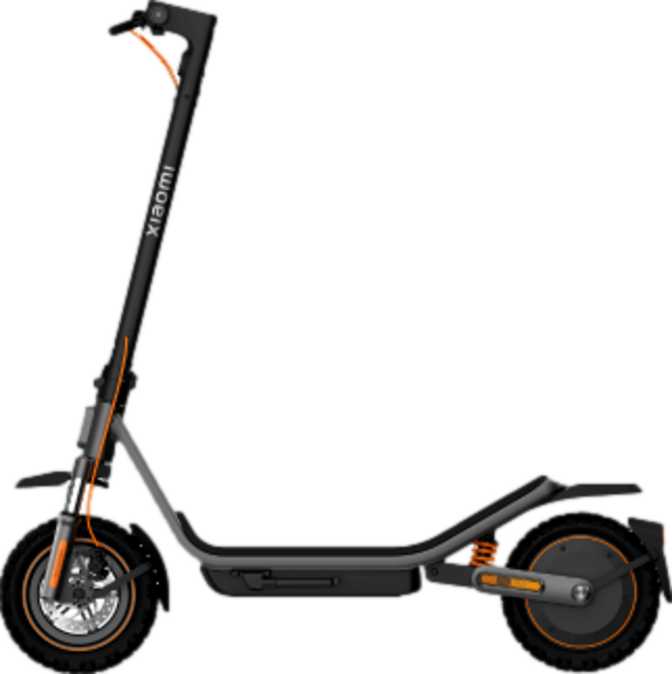
Xiaomi Electric Scooter 6 Max – Full Review and Real-World Performance Test
Electric ScootersMost electric scooters compromise somewhere obvious — range, power, or durability — and buyers only discover the trade-off after the fact. The Xiaomi Electric Scooter 6 Max takes a different approach: it is positioned squarely at riders who commute meaningful distances, navigate real urban terrain, and want a scooter that can handle a downpour without becoming a safety concern. At nearly 30 kilograms, this is not a casual weekend toy. It is a serious daily-use machine, and understanding that from the outset will tell you immediately whether it belongs in your life.
Design and Build Quality
A Scooter That Means Business
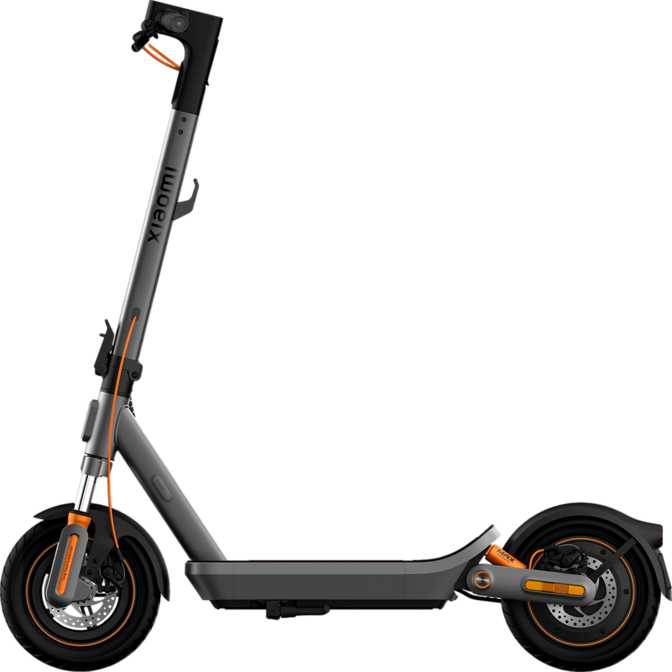
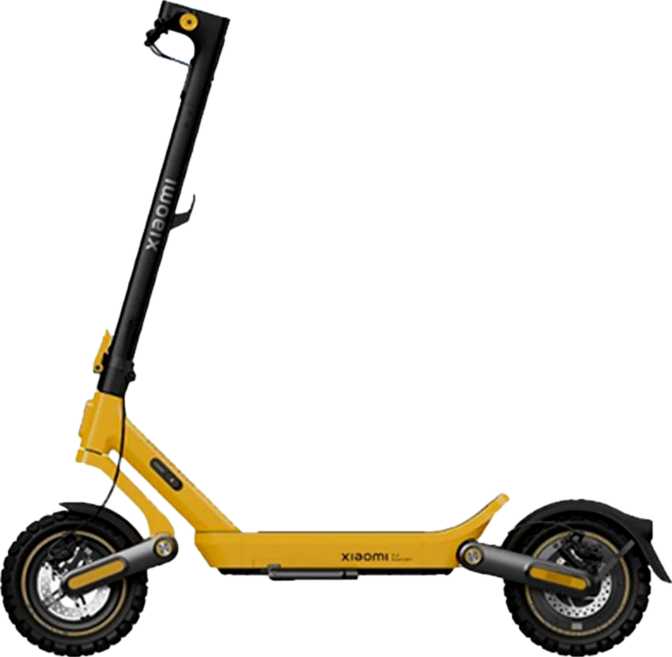
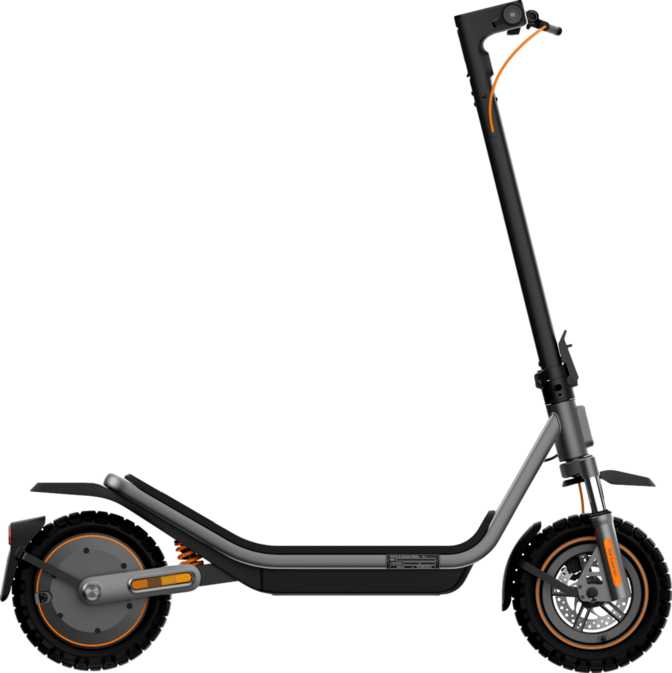
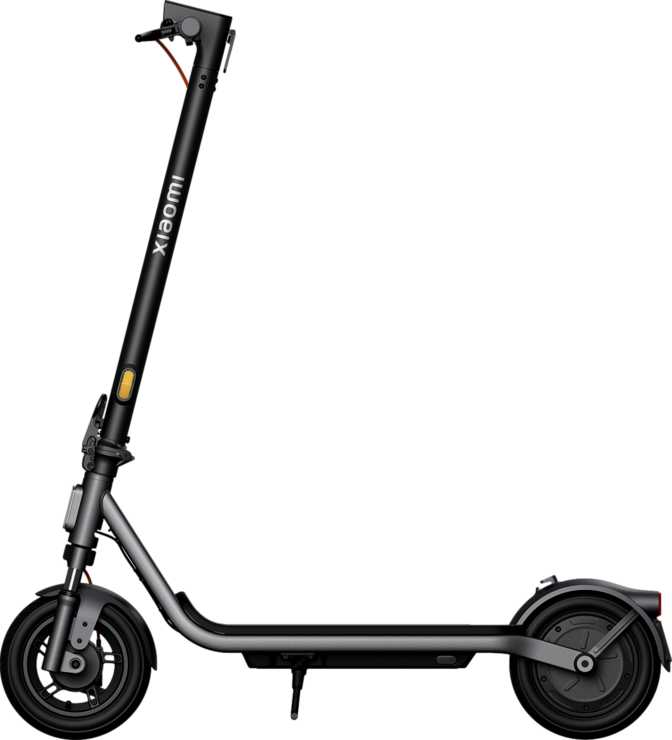
The first thing you notice when you stand next to the Xiaomi 6 Max is its physical confidence. The proportions are commanding — just under 1,300 mm both in height and width when unfolded — giving it a planted, road-ready stance that smaller scooters simply don't project. The aesthetic follows Xiaomi's familiar clean-line philosophy: minimal branding, smooth panel transitions, and an absence of the plasticky visual clutter that plagues budget alternatives.
The frame folds down for storage and transport, which matters more in practice than it sounds. Urban riders constantly face the question of where a scooter goes when it isn't moving — under a desk, in a hallway, in a car boot. The folding mechanism handles that reality. Just be honest with yourself about the weight: at nearly 30 kg, this is not a scooter you casually tuck under one arm. You will need both hands, a clear path, and perhaps a lift rather than stairs.
Tires, Suspension, and Ride Feel
The 12-inch pneumatic (air-filled) tires are larger than those found on the majority of urban scooters, which typically run 8- to 10-inch wheels. Larger diameter means the tire rolls over cracks, lips, and rough patches more smoothly — the contact geometry gives the wheel more time to absorb the obstacle rather than slamming into it.
Combined with genuine suspension — which many scooters at this tier still omit — the ride quality is materially better than rigid-deck alternatives. Riders who have endured the kidney-rattling experience of a suspension-free scooter on city streets will immediately appreciate why this matters.
Air-filled tires do require periodic pressure checks and are theoretically puncture-susceptible, unlike solid foam-filled alternatives. The trade-off is worth it: pneumatic tires offer grip and ride absorption that solid tires cannot match at any price.
Lighting and Weather Protection
Integrated Lighting
Front and rear lights are built into the frame rather than bolted on as afterthoughts. This supports safe riding in low-visibility conditions and maintains the scooter's clean aesthetic through every hour of the day.
IPX6 Weather Sealing
IPX6 protection means resistance to powerful water jets from any direction — riding in heavy rain is within spec. This is a meaningful step above the IP54 or IP55 ratings common on lower-tier models, which offer splash protection but not rain-ride confidence.
Performance: What 1,100 Watts Actually Means on the Road
Raw specs only tell half the story. Here is what the numbers translate to in everyday riding conditions.
Motor Power in Context
Most mid-range commuter scooters operate between 350–500W. Premium single-motor models often land around 500–750W. At 1,100W, the Xiaomi 6 Max generates roughly twice the output of the average commuter scooter from a single drive unit.
In practical terms: confident acceleration from a standstill, the ability to maintain full speed on inclines without the motor laboring, and a generally responsive power delivery that feels proportionate to the machine's size.
The 25 km/h Speed Ceiling
The 25 km/h top speed places this scooter squarely within the EU regulatory limit for electric personal light vehicles, with similar limits applying in many urban jurisdictions worldwide. This is a deliberate, legal design position — not a performance shortfall.
At that speed, you move faster than urban cyclists in congested conditions and fast enough to make meaningful time on commutes up to 10–15 km. If you're expecting highway-capable speeds, this is not the category.
Hill Climbing: A Real Differentiator
The 24-degree climbing angle is where the 6 Max separates itself most clearly from the competition. A typical parking ramp runs around 10–15 degrees; many "hilly" city roads peak around 15–20 degrees. The 6 Max handles those with torque to spare.
The 45 Newton-metre torque figure underpins this. Torque — not raw wattage — is what determines how well a motor pushes weight uphill. Riders up to 130 kg can ascend hilly terrain without the scooter struggling or slowing to a crawl.
Braking System
Both front and rear brakes are fitted — the correct setup for a machine of this weight and speed. Stopping a 30 kg scooter carrying a 100 kg rider at 25 km/h demands more than a single brake. Weight shifts forward under braking; a front brake alone can cause instability, while a rear brake alone increases stopping distances significantly.
Regenerative braking adds an additional layer: when you decelerate, the motor acts as a generator, converting kinetic energy back into stored charge. This marginally extends range on routes with frequent stopping — urban commutes with traffic lights, specifically — and reduces brake wear over time.
- Dual front + rear brakes
- Regenerative braking system
- Reduced brake wear over time
- Extended range in stop-start traffic
Battery and Range: The Core Argument for This Scooter
The 468 Wh battery is where the Xiaomi 6 Max builds its strongest case. Here is what that actually means for your weekly riding schedule.
How Far It Actually Goes
Many popular commuter scooters ship with 250–360 Wh packs, typically delivering 25–40 km of real-world range. The 6 Max is rated to 70 km on a charge — and even discounting optimistic manufacturer testing conditions, a realistic everyday range of 45–55 km under mixed urban conditions is well-supported.
What this means for your commute
Charge Speed and Fixed Battery Trade-off
Returning to full charge in under three hours is competitive for a battery this size. Larger-capacity scooters often require six to eight hours on a standard charger. The 6 Max's charge time suggests a higher-output charger or an optimized charging circuit — either way, an overnight charge is more than sufficient and a lunch-break top-up makes a material difference.
The battery is not removable, which is a trade-off worth naming. Riders who hoped to carry a spare pack or charge the battery at a desk while leaving the scooter locked outside cannot do so here.
Fixed Battery Context
For most urban commuters with access to an outlet at home or the office, the fixed battery is not a functional problem. The range is generous enough that mid-day charging is rarely necessary.
The Smartphone App: More Than a Gimmick
The dedicated companion app extends the scooter's functionality into territory the physical controls can't reach. For the rider who wants granular control over their commute, the app is genuinely useful.
For the rider who simply wants to get on and go, the scooter operates fully without the app. It is an added layer, not a dependency.
Ride Statistics
Track trip distance, speed history, and cumulative mileage over time.
Speed Mode Selection
Switch acceleration profiles — a gentler mode for wet weather makes a real safety difference.
Remote Lock / Unlock
Secure the scooter from your phone without physically interacting with the controls.
Firmware Updates
Keep the scooter's software current without visiting a service center.
Real-World Fit: Right Rider, Right Use Case
Knowing who a product is built for is as important as knowing what it can do. The 6 Max has a clear profile — and clear limits.
Who This Scooter Is Built For
- Urban or suburban commuters covering 10–30 km daily on mixed terrain that includes real hills and wet days
- Riders up to 130 kg who find most competitor scooters under-specced for their weight
- Those who store the scooter inside — at home or at the office — where the weight is managed once per day, not repeatedly
- Riders whose commute replaces a car trip or a series of bus connections, needing the scooter as primary transport rather than a supplement
- Anyone who rides through unpredictable weather and cannot afford a scooter that demands dry conditions
Who Should Look Elsewhere
- Riders who must carry the scooter up stairs daily — 29.7 kg will wear on you quickly; lightweight 12–18 kg alternatives sacrifice range and power but are meaningfully easier to handle
- Those with short, flat commutes under 10 km on dry, level terrain — the 6 Max's capabilities exceed what you need, and a less expensive model would serve just as well
- Riders who need a removable battery because outdoor parking is the only option — the fixed pack is a genuine inconvenience for this use case
Competitive Positioning
How the Xiaomi 6 Max sits relative to logical alternatives at similar price tiers.
| Feature | Xiaomi 6 Max | Typical Mid-Range Rival | Premium Dual-Motor Rival |
|---|---|---|---|
| Motor Output | 1,100W single | 500–750W single | 2× 500–800W |
| Realistic Range | ~45–55 km | ~25–40 km | ~40–60 km |
| Charge Time | ~2h 45min | 4–8 hours | 4–10 hours |
| Climbing Angle | 24° | 12–18° | 25–30° |
| Weight | ~30 kg | 12–20 kg | 25–35 kg |
| Weather Rating | IPX6 | IP54–IP55 | IPX5–IPX6 |
| Top Speed | 25 km/h | 25 km/h | 25–45 km/h |
Rival specifications are representative category averages, not figures for a specific competing model.
Honest Assessment: Strengths and Weaknesses
Every product has a real profile. Here is ours — unfiltered.
Where It Genuinely Excels
The Xiaomi Electric Scooter 6 Max earns genuine credibility on the specifications that affect daily riding the most. The range is class-leading for a single-motor machine at this size — a direct consequence of the large battery pack — and the charging speed is unusually quick for the capacity involved. That combination transforms the charging experience from a daily discipline into an occasional errand.
The hill-climbing capability addresses one of the most persistent frustrations with urban scooters: the humbling slowdown every time the road tilts upward. At 24 degrees of supported gradient with 45 Nm of torque behind it, the 6 Max handles real hills without drama.
The weather sealing deserves special mention because IPX6 protection is not marketing language at this level. It genuinely changes the ownership experience: you ride in rain rather than walking, and you stop mentally checking the weather forecast before every journey.
Where It Asks for Honesty
The weight is the primary counterargument to everything else on this page. Nearly 30 kg is a real number with real consequences. It is manageable for most adults in most urban scenarios — getting a scooter from a hallway to street level is not a daily ordeal for the majority of riders. But it is not something to minimize or explain away when evaluating purchase fit.
Anyone whose commute involves regular lifting, narrow doorways, or staircases needs to factor this in before purchasing — not discover it afterward.
The non-removable battery is a genuine limitation for a specific group of riders. It is not a design flaw — fixed batteries often integrate more efficiently and can be more reliably sealed against weather — but it eliminates flexibility that some use cases require.
Questions Buyers Commonly Ask
The questions that appear in search boxes before a purchase are usually the most honest questions. Here are direct answers.
Final Verdict
The Xiaomi Electric Scooter 6 Max makes a compelling case for riders who have outgrown entry-level scooters and want something that can genuinely replace short-to-medium urban car trips. The combination of substantial range, rapid charging, real hill-climbing capability, and meaningful weather protection adds up to a machine you can commit to as primary transportation rather than a fair-weather supplement.
The weight is the honest counterargument. If your lifestyle requires frequent lifting or stair navigation, acknowledge that before purchasing — not after. The fixed battery is a secondary consideration for the specific rider whose only parking is outdoors.
For the rider whose route is hilly, whose commute exceeds 15 km daily, and who wants to leave range anxiety behind entirely: the 6 Max is the most capable single-motor scooter in its class, and the specifications support that position clearly.
It is not the right choice for everyone, but for the rider it is built for, it is close to exactly right.
Quick Verdict
- Best-in-class single-motor range
- Exceptional hill-climbing for city use
- Rapid charge for the battery size
- IPX6 all-weather confidence
- Heavy — not stair-friendly
- Battery not removable
Our Rating