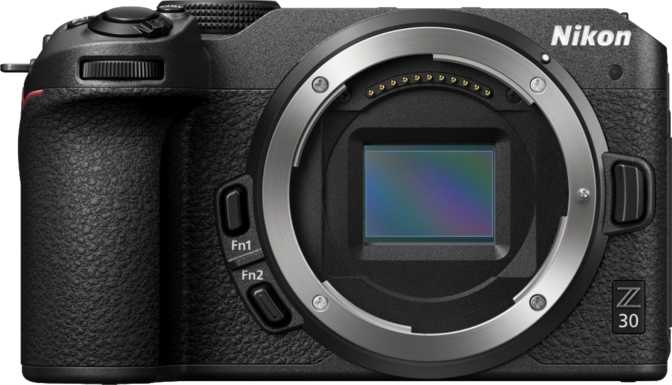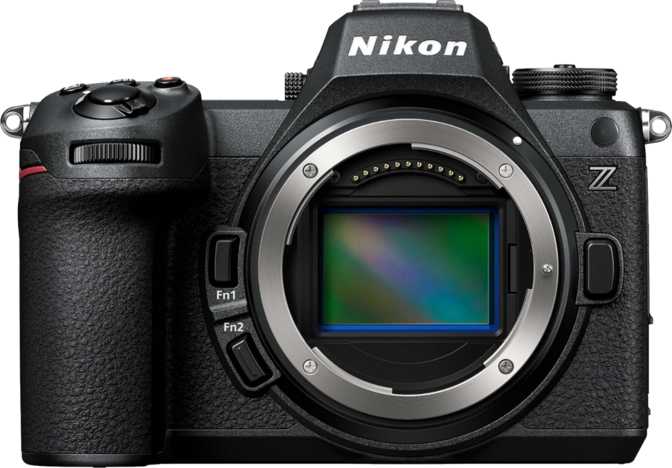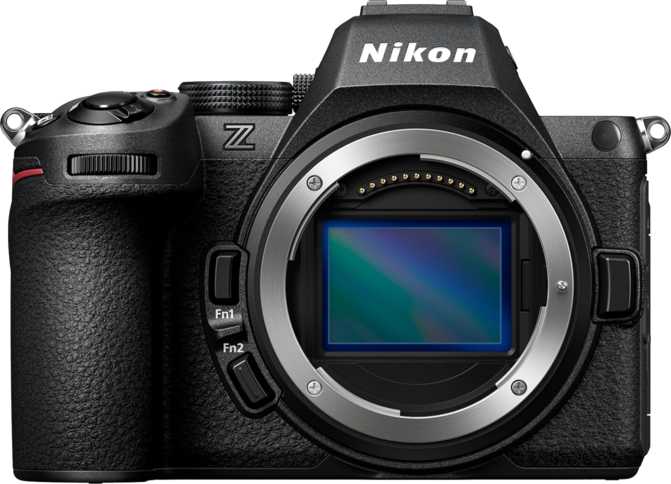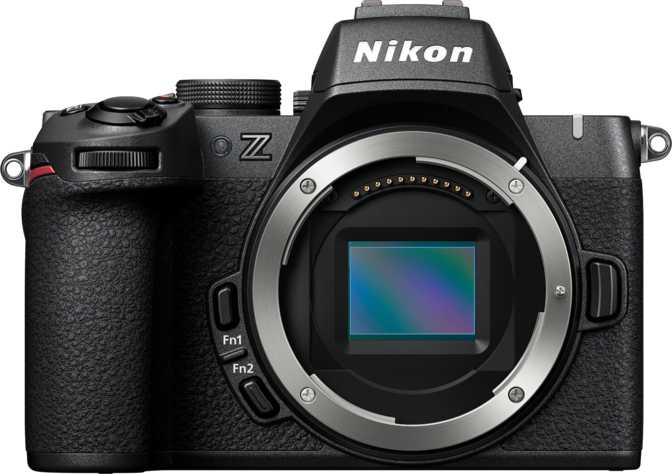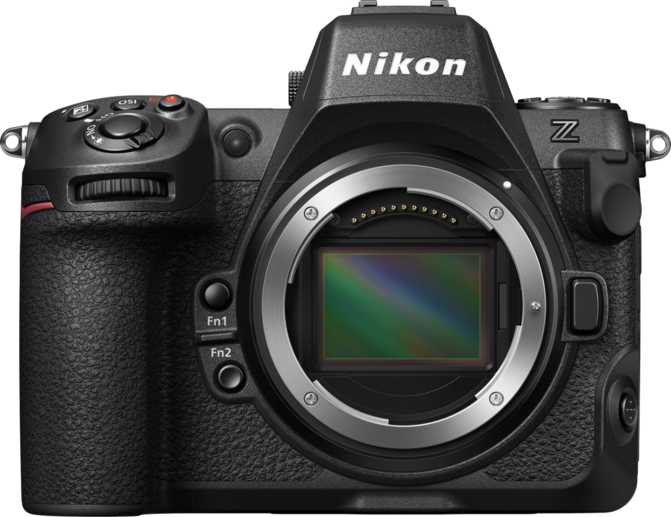
Nikon Z8 Review: Flagship Performance in a Compact Full-Frame Body
CamerasA 45.7-megapixel stacked sensor, near-flawless subject tracking, and serious 8K video capability — the Z8 is Nikon's most complete single body for professionals who don't need an integrated grip.
The mirrorless camera market has matured to the point where flagship performance no longer requires flagship pricing — at least, that's the promise the Nikon Z8 makes. Positioned as the compact, more accessible sibling to the Z9 professional workhorse, the Z8 packs a sensor, processor, and feature set that would have defined the absolute top of the market just a few years ago. Whether you're a working professional who wants a second body that doesn't compromise, an advanced enthusiast ready to invest seriously in a system, or someone migrating from an aging DSLR and wanting their final camera for a long time — the Z8 is worth understanding deeply before you decide.
Design and Build: Serious Tool, Thoughtful Form
Physical Presence and Ergonomics
The Z8 sits at 144mm wide, 118.5mm tall, and 83mm thick — compact enough for a full-frame mirrorless with this capability level, but still a substantial piece of equipment. At 910 grams, it isn't light. This is a camera you feel in your hand and in your bag, and that's largely a feature, not a flaw. The grip depth and overall volume give it the solid, planted feel that professionals demand when shooting for hours.
What you won't find here is a pop-up flash, a built-in GPS chip, or NFC — all deliberate omissions that signal this body is aimed at experienced shooters who connect flash wirelessly, geotag via paired smartphone apps, and aren't interested in paying for features they'll never use.
Key Physical Specifications
-
Dimensions144 × 118.5 × 83 mm — professional body without integrated grip
-
Weight910g body only — plan for a real rig when paired with professional glass
-
Weather SealingFull professional sealing; rated from -10°C to 40°C
-
Rear Screen3.2-inch fully articulating touchscreen at 2,100,000 dots
-
Electronic Viewfinder100% frame coverage — what you see is what you capture
About the Flip-Out Screen
The Z8's fully articulating screen is a genuine quality-of-life addition that shouldn't be taken for granted at this performance level. Nikon's decision to include a flip-out mechanism — rather than a simple tilt screen — meaningfully expands shooting positions for both video operators and photographers working at extreme angles.
Sensor Performance: Where the Z8 Earns Its Place
The Z8 uses a 45.7-megapixel full-frame stacked BSI CMOS sensor — and each of those descriptor words matters independently.
Full-Frame
Sensor matches a 35mm film frame — delivering better background separation, superior low-light capability, and full intended field of view across Z-mount glass.
BSI Architecture
Back-Side Illuminated design repositions circuitry behind the photodiodes, directing more light to each pixel before conversion — cleaner images as sensitivity increases.
Stacked CMOS
An integrated DRAM memory layer accelerates sensor readout dramatically — enabling near-instantaneous capture of all 45.7 million pixels with minimal rolling shutter distortion.
DxOMark Sensor Ratings Explained
| DxOMark Metric | Score | What It Means for Real Photography |
|---|---|---|
| Overall Sensor Score | 98 | Near the top of any class tested — a benchmark-leading result |
| Portrait (Color Depth) | 26.3 bits | Exceptional tonal gradation — skin tones, fabric texture, and subtle hue shifts render with nuance |
| Landscape (Dynamic Range) | 14.2 EV | Approximately 14 stops of recoverable information — hold shadow detail and bright skies in a single raw frame |
| Sports (Low-Light ISO) | 2548 ISO | Usable image quality extends well into higher sensitivities — strong result for action and event shooting |
ISO Performance and Low-Light Reach
The camera's native sensitivity extends to ISO 25600. Above that, an expanded range reaches ISO 102400 — appropriate for situations where getting any usable shot matters more than technical quality, such as photojournalism in near-darkness.
The individual pixels measure 4.35 micrometers — a size that balances resolution density against per-pixel light gathering well. It's a genuinely useful equilibrium between the two competing demands of a high-resolution sensor.
Autofocus: 493 Points and Subject Tracking
Phase-detection autofocus operates across 493 focus points covering the frame. Phase-detection calculates both the direction and magnitude of focus correction needed simultaneously — it's what makes modern mirrorless cameras fast enough to track unpredictable subjects reliably.
Subject tracking works for both stills and video, maintaining focus on a moving subject — person, animal, or vehicle — even when partially obscured. Touch autofocus is also supported, allowing mid-shot focus priority shifts from the rear screen.
In-Body Stabilization: Handheld Shooting Redefined
The Z8 incorporates sensor-shift image stabilization rated at 5.5 stops under CIPA standards. To put that concretely: if the slowest shutter speed at which you can reliably handhold a given focal length is 1/100s, five and a half stops of compensation theoretically allows sharp captures down to roughly 1/3s.
The system can also combine with optically stabilized lenses for a coordinated dual-axis approach — the lens handles some corrections while the sensor handles others, extending the effective range beyond what either can achieve independently.
Burst Shooting and Shutter Performance
The stacked sensor architecture is the enabling technology behind the Z8's continuous shooting capability. The electronic shutter reaches 1/32,000 of a second — a speed that freezes subjects moving far faster than any mechanical shutter can match, and enables shooting in very bright conditions with wide apertures that would otherwise require neutral density filtration.
Video Capabilities: 8K in a Non-Cinema Body
The Z8 takes video seriously — but in a way that serves hybrid shooters and documentary-style operators rather than dedicated cinema rigs.
Resolution, Frame Rates, and Cinema Mode
The Z8 records video up to 8K resolution at 30 frames per second. Most working videographers will find the practical sweet spot at 4K, but 8K provides significant future-proofing and — more immediately — the ability to extract very high-resolution still frames from footage.
24p cinema mode is supported, which matters for filmmakers targeting output that matches theatrical frame rates. Slow-motion recording is available for editorial use, and timelapse functionality is built in.
Phase-detection autofocus works during video recording with continuous tracking — the same subject recognition system that serves stills shooters operates fully while the camera rolls, which is critical for solo operators.
Note: There is no first-party live streaming mode built into the camera. Users who want to stream directly to a platform will need a third-party solution or a capture card setup.
Video Feature Summary
-
8K / 30fpsMaximum resolution with future-proof headroom
-
24p Cinema ModeTheatrical frame rate for film-style output
-
Slow-Motion RecordingHigh-speed capture for editorial use
-
HDMI 2.1 OutputClean, high-bandwidth signal to external recorders
-
3.5mm Mic + HeadphoneProfessional audio input and real-time monitoring
-
No Native Live StreamingRequires third-party tools or capture card
Battery Life: The One Honest Limitation
The Z8's battery delivers approximately 340 shots per charge under CIPA standardized testing. For context, CIPA ratings tend to be conservative — measured with a mix of shooting behaviors that include significant review and menu time. Real-world yield varies, but the rating is toward the lower end for a professional-class body.
This is a known and accepted trade-off. The stacked sensor, the high-resolution EVF, the always-on subject tracking, and the processing demands of 45.7 megapixels all draw power. Professional photographers working long days will want at minimum one spare battery in the bag — likely two.
The battery is removable and rechargeable with a prominent level indicator always accessible. You will not be caught off guard. The USB Type-C port also supports charging from external battery banks in the field — a practical option for location work.
Connectivity, Memory, and Advanced Features
- Wi-Fi 5 (802.11ac) and Wi-Fi 4 (802.11n) — dual-band support
- Bluetooth 5 — persistent low-power smartphone connection
- Smartphone remote control — trigger, adjust, review remotely
- No NFC — tap-to-pair not available; setup via Wi-Fi or Bluetooth only
- USB Type-C at USB 3.2 — fast transfer and in-field USB charging
- HDMI 2.1 output for external recorders and monitors
- Dual card slots — CFexpress Type B and UHS-II SD
- No built-in GPS — geotagging requires smartphone pairing
- Pixel shift shooting — full-color data at every pixel site for static subjects
- Lossless compressed RAW — smaller files, no information loss
- Built-in HDR mode for in-camera processing
- Expeed 7 processor — Nikon's current flagship processing engine
The Nikon Z Mount: System Investment Context
The Z8 uses the Nikon Z mount — the bayonet standard shared across Nikon's mirrorless lineup. The Z mount is notable for its large inner diameter and short flange distance, which gives optical designers more freedom to build high-performance lenses — particularly ultra-wide angles and fast primes — than older mounts allowed.
Nikon's native Z-mount glass has expanded substantially. The FTZ adapter allows the full library of legacy F-mount DSLR lenses to be used with full electronic communication, including autofocus on many lenses, though tracking performance varies by lens motor design.
The Z8's value is intrinsically connected to the lenses used with it. Buying this body is a commitment to the Z system — and that commitment is increasingly well-supported.
Nikon Z Mount
Native Z-mount lenses + F-mount compatibility via FTZ adapter
Large inner diameter enables optically superior lens designs
Who Should Buy the Nikon Z8
- Are a working photographer in commercial, wedding, portrait, sports, or wildlife photography who needs top-tier resolution and autofocus in one body
- Shoot demanding mixed lighting regularly and need dynamic range that allows significant post-processing latitude
- Produce both stills and video professionally and want a body that handles both seriously without being a cinema-specific tool
- Are building or deepening a Nikon Z system and want the body that maximizes that investment
- Frequently shoot in variable or difficult weather and need reliable professional-grade sealing
- Primarily shoot fast-moving action and prioritize maximum burst rate above all else — some bodies are purpose-built around that single metric
- Are new to mirrorless and want a gentler learning curve — the Z8 rewards those who already understand exposure, focus systems, and file management
- Shoot in extreme low-light scenarios where consistent ultra-high ISO is paramount — lower-resolution sensors with larger pixels can sometimes offer cleaner results at the absolute limit
- Need built-in GPS geotagging without smartphone dependency
- Travel extremely light — 910 grams before a lens is a real commitment that accumulates across long trips
Competitive Positioning
The Z8 occupies a specific and interesting place in the full-frame mirrorless market. Understanding it requires comparing it against the cameras a buyer actually considers alongside it.
| Comparison Point | Nikon Z8 | Nikon Z9 | Sony A7R V | Canon EOS R5 II |
|---|---|---|---|---|
| Sensor Resolution | 45.7 MP | 45.7 MP | 61 MP | 45 MP |
| Sensor Architecture | Stacked BSI CMOS | Stacked BSI CMOS | BSI CMOS | Stacked BSI CMOS |
| Body Form Factor | Compact Pro | Full Pro Grip | Compact Mirrorless | Compact Mirrorless |
| Built-In Grip | ||||
| Weather Sealing | ||||
| 8K Video | ||||
| IBIS (Claimed) | 5.5 stops | 6 stops | 8 stops | 8 stops |
| Built-In GPS | ||||
| NFC |
Z8 vs Z9
The Z8 shares the same sensor and largely the same processing pipeline as the Z9 in a significantly smaller, lighter, and lower-cost body. The Z9 gains a built-in vertical grip with dedicated portrait-orientation controls and a marginally higher stabilization rating. For photographers who don't depend on the integrated grip for extended shooting, the Z8 delivers nearly identical image quality.
Z8 vs Sony A7R V
Sony's 61-megapixel sensor offers the highest pixel count in this comparison and a stabilization system that tests extremely well. Sony's autofocus subject recognition has been highly regarded. The trade-off is a non-stacked sensor architecture, which limits electronic shutter performance and burst capability relative to the Z8.
Z8 vs Canon EOS R5 II
Canon matches the Z8 closely on resolution and stacked sensor architecture. Built-in GPS is a meaningful practical advantage for Canon. Canon's color science and JPEG rendering have a loyal following. The choice between the two often comes down to existing lens investment and brand ecosystem.
Questions Buyers Actually Search For
The Nikon Z8 — Our Recommendation
The Z8 is a camera built for photographers who take their craft seriously enough to invest in it properly. Its 45.7-megapixel stacked sensor is among the most technically accomplished available, the autofocus system performs at a level previously reserved for dedicated sports bodies, and the integration of professional video capability makes it a credible dual-purpose tool rather than a stills camera with video added as an afterthought.
Its limitations — battery endurance, no GPS, no NFC, real weight — are all predictable and manageable for the working photographer it targets. None of them disqualify it. For Nikon Z system users, the recommendation is clear: the Z8 represents the highest practical value point in the lineup for photographers who don't specifically require an integrated vertical grip.
For shooters considering it as a first system investment or as a migration from an aging DSLR, the Z mount glass ecosystem and this body's long-term capability ceiling make it a defensible anchor for a serious kit. This is a camera you grow with, not out of.
- Best-in-class sensor performance
- Pro-grade autofocus and tracking
- Serious 8K hybrid video capability
- Full weather sealing and robust build
- Compact relative to Z9 — same sensor
- Battery life requires active management
- No GPS or NFC built in