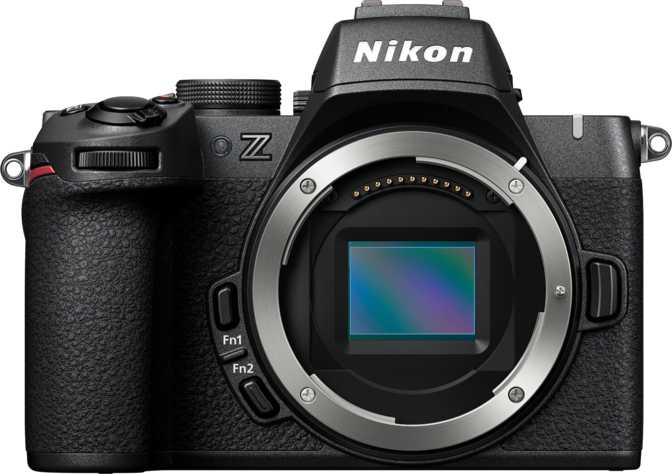
Nikon Z50 II Review: Fast AF, 4K60 Video, Real-World Performance
CamerasThe APS-C mirrorless market is brutally competitive. Every camera at this price point is trying to answer the same question: how do you give a serious photographer everything they need without the weight, bulk, and cost of a full-frame system? The Nikon Z50 II takes a direct swing at that question, arriving with Nikon's latest processing engine, a fully articulating screen, and respectable video credentials tucked into a body that won't break your back or your budget. Getting this camera right for your needs means understanding exactly where it shines — and being honest about the corners that were cut to get here.
Expert Rating
Key Specifications at a Glance
Design and Build: Compact Without Feeling Cheap
At roughly 127mm wide, 97mm tall, and 66mm deep, the Z50 II sits in a genuinely compact category for a mirrorless interchangeable-lens camera. At 550 grams with battery and card, it's substantial enough to feel purposeful in your hand but light enough that a full day of shooting won't leave you searching for a physiotherapist.
The body follows Nikon's established APS-C mirrorless design language: a pronounced grip, logically grouped controls, and a layout that won't feel alien to anyone who has used a Nikon DSLR or any Z-series sibling. The build quality conveys durability without the premium materials of the upper Z lineup.
No Weather Sealing — This Matters
The Z50 II has no splash or dust protection at the seams. If you regularly shoot in unpredictable outdoor conditions — hiking, beach sessions, or winter street photography in wet climates — this is a genuine limitation. For users working in controlled or predictable environments, it's largely academic.
Physical Specs
- Width
- 127 mm
- Height
- 96.8 mm
- Depth
- 66.5 mm
- Weight
- 550 g
- Camera Type
- Mirrorless
- Weather Sealed
- No
- Lens Mount
- Nikon Z
The Screen: Flip-Out for Creators
The 3.2-inch fully articulating touchscreen rotates to face forward — vloggers, solo content creators, and anyone doing self-facing video gets an unobstructed view of their own composition. Unlike tilt-only screens that pivot up and down, the fully flip-out design transforms content creation workflows. Touch-to-focus and drag-to-reposition AF points are both supported, reducing the need to break your composition to redirect focus.
Viewfinder: 100% Coverage
The electronic viewfinder delivers 100% frame coverage — exactly what you see in the eyepiece is what the sensor records. No guessing about what's sneaking in at the edges. For sports, wildlife, or any shooting where edge-of-frame subjects matter, this accuracy is a meaningful operational advantage. The EVF is fixed in the traditional top-left position and does not tilt or pull out.
Sensor and Image Quality: 20.9 Megapixels in the Right Hands
Resolution in Real-World Terms
The Z50 II's 20.9-megapixel APS-C sensor produces image files with enough resolution to print large — exhibition-sized prints at standard viewing distances, or A2 and beyond for wall art. For digital-first workflows (social media, web, 4K display), this is more resolution than most photographers will realistically ever need. Practically, you have meaningful cropping room: if a subject is a bit farther than ideal, you can crop in post and still deliver a sharp, detailed final image.
The APS-C format means the imaging area is smaller than a full-frame sensor. Two primary real-world effects follow: lenses produce a narrower angle of view (a 50mm lens behaves more like 75mm equivalent), and at extreme sensitivities full-frame sensors maintain an edge in noise control due to larger photosites. Neither of these is a deal-breaker — they're variables to plan around.
Low-Light and the Expeed 7 Advantage
The native sensitivity range extends very high, with an expanded mode pushing far beyond that into territory used primarily for extreme low-light scene detection rather than critical image capture. The key differentiator is the Expeed 7 processor — Nikon's most current image processing engine, shared with significantly more expensive Z bodies.
In practical terms: clean, publishable images at moderate sensitivities, capable performance across a wide working range, and usable results with some visible luminance noise at settings most photographers would only use when the alternative is no shot at all. The expanded maximum is an emergency-only mode, not a creative working range.
Autofocus: Where the Z50 II Earns Respect
231 Phase-Detection Points
Reads focus error directly rather than hunting through contrast — faster acquisition and better subject tracking across the frame.
Subject Tracking AF
Locks onto a subject and follows it across the frame — critical for children, athletes, pets, and unpredictable street scenes.
Full AF During Video
Phase-detection tracking stays active when you hit record — the system does not downgrade to a slower mode during video capture.
Continuous Shooting: 11 Frames Per Second
At 11 frames per second with the mechanical shutter, the Z50 II shoots fast enough to cover most action photography competently. Shooting a subject moving toward you, 11fps gives you the density of coverage to select multiple sharp frames from a short burst — you're not going to miss the peak moment because the camera wasn't firing fast enough.
For wildlife photographers shooting birds in flight, or sports shooters working unpredictable sequences, this rate is competitive with cameras at similar and higher price points. It's not the absolute ceiling available in the category, but it covers the realistic needs of most photographers working outside professional sports assignments. The electronic shutter matches the mechanical shutter's top speed, and at the fastest settings, exposures of 1/4000th of a second are achievable — useful for freezing fast motion or managing exposure in bright light with wide apertures.
Shutter & Burst Specifications
| Mechanical Burst Rate | 11 fps |
| Fastest Shutter Speed | 1/4000s |
| Electronic Shutter Max | 1/4000s |
| Longest Exposure | 30 sec |
| Flash Sync Speed | 1/250s |
| Two-Stage Shutter | Yes |
Video Capabilities: A Serious Upgrade for Creators
4K at 60 Frames Per Second
The Z50 II records 4K video at up to 60 frames per second. That frame rate matters for two distinct reasons. First, 60fps 4K delivers smooth motion playback on 4K displays without any artificial feel. Second, 60fps footage can be slowed down to 24fps or 30fps in editing software to produce slow-motion sequences without switching to a dedicated mode — 2.5× slow motion at full 4K resolution is a useful creative tool readily available in post.
The 24p cinema mode records at 23.976 or 24 frames per second — the frame rate associated with cinematic film aesthetics. If narrative video, short films, or a filmic visual quality matter to your work, this mode is worth having and is genuinely useful at this price tier.
Audio: Better Than Expected
The Z50 II's audio capabilities go meaningfully beyond what entry-level cameras typically offer. The built-in dual stereo microphones provide reasonable ambient sound capture. More importantly, the camera includes both a 3.5mm microphone input for external mics and a headphone jack for real-time audio monitoring — so you can hear exactly what the camera is recording as it records.
For YouTube content, interviews, documentary-style footage, or any video where sync sound quality matters, this combination means you don't need an external audio recorder. Connect a lapel mic or a small shotgun mic to the input, monitor through the headphone jack, and your audio workflow stays inside the camera.
Note on live streaming: The Z50 II does not include native first-party support for direct live streaming. If streaming is a primary use case, you'll need a capture card or encoding software as an intermediary step. This is worth knowing before purchase if streaming is central to your workflow.
Battery Life: Know What You're Getting Into
The Z50 II's CIPA-rated endurance sits at approximately 250 frames per charge. In real-world shooting, actual numbers vary considerably. Cold temperatures, heavy use of the electronic viewfinder, continuous video recording, and active wireless connections all draw power faster. Conversely, shooting intermittently with the screen off and connectivity disabled can extend this meaningfully.
250 shots per charge is below average for mirrorless cameras at this tier. A full day of active photography — events, travel days, extended outdoor sessions — will typically require either a spare battery or access to charging during the day. The practical upside: USB-C charging means you can top up from a power bank, laptop, or wall adapter without removing the battery from the body.
Practical advice: Budget for at least one additional battery if you intend to shoot all-day sessions. This is not a camera you can reasonably expect to carry for eight hours without planning for power.
Battery Snapshot
- CIPA Rating
- ~250 shots
- Capacity
- 1250 mAh
- Removable
- Yes
- USB-C Charging
- Yes
- Level Indicator
- Yes
Connectivity and Ecosystem
Wireless and Physical Connections
The Z50 II connects via Wi-Fi 5 for solid transfer speeds and Bluetooth 5 for low-power persistent connections. The Bluetooth link enables remote smartphone control — useful for self-portraits, group shots, or remote triggering. USB-C handles both charging and data transfer, which is the right choice at this tier: one cable, universally compatible with modern laptops and power banks.
- Wi-Fi 5 (802.11ac) + Wi-Fi 4 (802.11n) dual-band wireless
- Bluetooth 5 for persistent remote control
- USB-C for charging and data transfer
- HDMI output for external recorders and monitors
- Hot shoe for external flash and radio triggers
- No NFC — phone pairing requires app, not tap
- No GPS — location tagging requires companion app
The Single Card Slot Question
The Z50 II has one memory card slot, not two. For photographers who use dual slots as a real-time backup system — writing simultaneously to two cards to protect against card failure during important shoots — this is a genuine structural limitation. Professional event or wedding photographers where a corrupted card would be catastrophic should note this carefully.
For all other users — enthusiasts, content creators, travel photographers — a single slot with a high-quality, high-capacity card is functionally adequate. The risk of card failure is real but statistically low with reliable cards. It is a segmentation decision by Nikon, not a hidden engineering failure.
The Nikon Z Mount: Long-Term Lens Investment
The Z50 II uses Nikon's Z-mount — a modern, wide-diameter lens mount that accommodates both lenses designed natively for the Z system and, via adapter, the entire legacy Nikon F-mount DSLR lens library. Photographers transitioning from Nikon's film or DSLR era don't need to replace existing glass immediately. F-mount lenses work with autofocus functionality preserved through Nikon's official FTZ adapter.
Full-frame Z-mount lenses are physically compatible with the Z50 II's APS-C sensor — the camera uses the central portion of the image circle. This means Z-series users can start with an APS-C body and upgrade to full-frame later without replacing lenses. The ecosystem investment transfers upward.
Who Should Buy the Nikon Z50 II
This Camera Is a Strong Fit If You...
- Are moving from a Nikon DSLR and want to stay in the ecosystem while adopting a modern mirrorless platform
- Create video content for YouTube, social media, or personal projects and want serious audio and 4K60 without additional hardware
- Photograph fast-moving subjects — children, sport, wildlife — where AF tracking and burst rate matter most
- Travel light and want a body smaller and lighter than full-frame with no compromise in resolution or AF
- Shoot primarily in predictable or controlled environments where weather sealing isn't a daily requirement
This Camera Is Not the Right Choice If You...
- Frequently photograph in rain, dust, or harsh conditions where weather sealing is a safety net you depend on
- Work professionally at weddings or events where dual card slot redundancy is a contractual or ethical baseline
- Need stabilized handheld video — the Z50 II has no in-body image stabilization, so smooth footage depends entirely on optically stabilized lenses or external stabilization
- Need GPS location tagging built into every image without extra workflow steps
- Are a birder or wildlife shooter who finds 11fps limiting for the fastest action at extreme telephoto reach
Competitive Positioning
How the Z50 II stacks up against typical APS-C mirrorless rivals at a similar price point.
| Feature | Nikon Z50 II | Typical Rival A | Typical Rival B |
|---|---|---|---|
| Sensor Resolution | ~21MP | 24–26MP | 20–24MP |
| In-Body Stabilization | No | Some models | Varies |
| Weather Sealing | No | Some models | Some models |
| 4K Max Frame Rate | 60fps | 30fps (many) | 60fps (some) |
| Headphone Jack | Yes | Not universal | Not universal |
| Processor Generation | Current (Expeed 7) | Varies | Varies |
| Flip-Out Screen | Yes | Not universal | Not universal |
| Dual Card Slots | No | Some models | Some models |
| Lens Ecosystem | Strong (Z + F adapter) | Strong | Varies |
The Z50 II's primary competitive edge is the combination of Expeed 7, 4K60, and fully flip-out screen at its price point — plus access to the Z-mount ecosystem including adapted F-mount glass. Its primary competitive disadvantage is the absence of in-body stabilization, which rivals sometimes include.
Honest Assessment: Strengths and Trade-Offs
Where It Delivers
The Z50 II is a camera built by a company that understands photography — and that knowledge shows in the places it counts most. The autofocus system is legitimately excellent, the video feature set outpaces many competitors at this price, and the Expeed 7 engine brings processing performance previously reserved for much more expensive bodies. For stills, 11fps with reliable AF tracking is a combination that genuinely delivers.
The flip-out screen and dual audio jacks transform the content creation workflow without requiring additional equipment. The Z-mount compatibility — including the F-mount adapter path — gives buyers long-term optionality that competing systems can't match for Nikon users specifically.
Where It Asks You to Compromise
The absence of in-body image stabilization is the one limitation that will affect the most users most often. It means handheld video requires either an optically stabilized lens or deliberate physical technique — a gimbal, braced posture, deliberate movement. Photographers accustomed to IBIS on competing bodies may find the adjustment significant, particularly at shorter focal lengths where lens-based stabilization is less commonly built in.
The battery life requires management rather than just memory. The single card slot is a genuine risk factor for anyone shooting unrepeatable moments professionally. Neither is unusual in this segment — both are calculated compromises that reward prepared shooters and penalize unprepared ones.
Questions Buyers Are Actually Asking
A Considered, Capable APS-C Camera That Rewards Prepared Photographers
The Nikon Z50 II is built by a company that understands photography, and that knowledge shows in the places it counts most. The autofocus system is legitimately excellent, the video feature set outpaces many competitors at this price, and the Expeed 7 engine brings processing performance previously reserved for much more expensive bodies.
For content creators, enthusiast photographers stepping up from entry-level gear, or Nikon DSLR users ready to commit to the Z system without full-frame weight and cost, the Z50 II makes a coherent and persuasive case. Manage the battery, budget for optically stabilized lenses if video is central to your work, and the limitations become calculated compromises rather than dealbreakers.
Recommended